hadi javeed

118 posts

hadi javeed banner
hadi javeed

hadi javeed

@HadijPk

CTO at RevelAI Health. Tinkering with Byaan, an open-source local-first AI data agent. Previously Vincere Health (acquired)

Washington, DC شامل ہوئے Ocak 2015
496 فالونگ136 فالوورز
پن کیا گیا ٹویٹ
hadi javeed
hadi javeed@HadijPk·
Spider benchmark says text-to-SQL is 86% accurate. Spider 2.0, which uses real enterprise schemas, says 6%. That is not a rounding error. That is the difference between a demo and production. Most AI data tools are optimized for the demo.
English

0
0
0
8
Teknium (e/λ)
Teknium (e/λ)@Teknium·
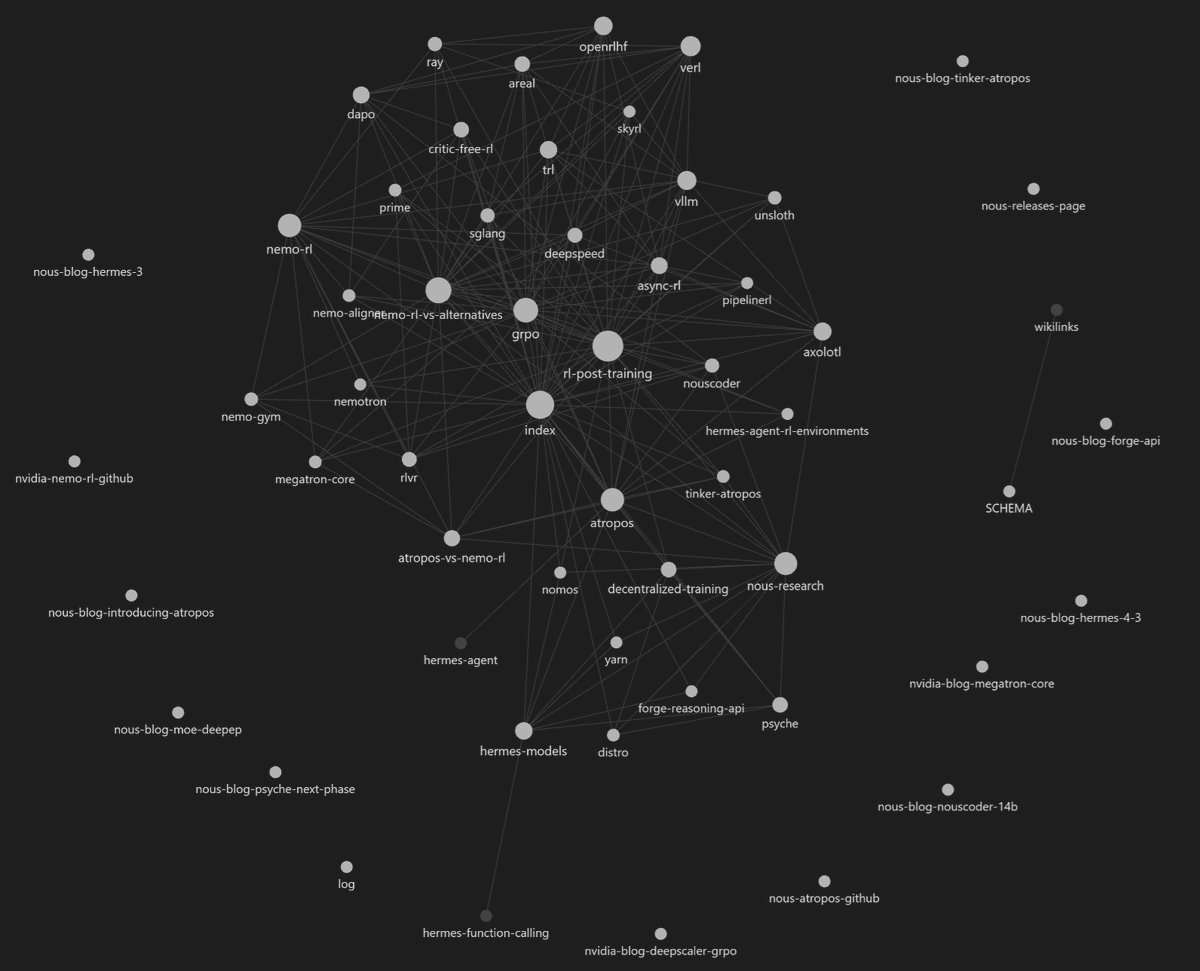
Hermes Agent now comes packaged with Karpathy's LLM-Wiki for creating knowledgebases and research vaults with Obsidian! In just a short bit of time Hermes created a large body of research work from studying the web, code, and our papers to create this knowledge base around all of Nous' projects. Just `hermes update` and type /llm-wiki in a new message or session to begin :) github.com/NousResearch/h…
Teknium (e/λ) tweet media
English
73
100
1.1K
53.3K
hadi javeed
hadi javeed@HadijPk·
@dabit3 @DevinAI how to Devin decide to build new features? is there a way to schedule a task where Devin do research and tell you what needs to be built?
English
0
0
0
271
nader dabit
nader dabit@dabit3·
At Cognition we're seeing coding agents handling the entire SDLC, going way beyond just coding. Here are some tips and tricks we're seeing dev teams use with agents like @devinai to handle the SDLC: 1. Scheduling daily E2E smoke tests: an automation signs up for your app, goes through onboarding, exercises core flows, and gets a pass/fail report in Slack every morning. You can even watch the screen recording or have it sent directly to you via Slack. x.com/ryancarson/sta… 2. Auto-triaging production errors: it's easy to wire Sentry (or other) webhooks so new errors get root-caused, fixed, and shipped with a regression test before an on-call even has to look at their phone. docs.devin.ai/api-reference/… 3. Scheduling weekly dependency updates: a scheduled session checks for outdated packages, runs your full test suite, and opens upgrade PRs grouped by patch, minor, and major bumps. Merge what's green, review what's not. docs.devin.ai/product-guides… 4. Morning health digests: a scheduled session queries Datadog for error spikes, latency regressions, and failing monitors, then posts a severity-rated summary to Slack before standup. 5. Auto-fix on every PR: Sophisticated review agents like Devin Review catch bugs, security issues, and style violations on open PRs, then automatically push fixes directly to the branch. No back-and-forth in review comments, the agent handles the entire loop. cognition.ai/blog/closing-t… 6. Parallelization of large migrations: for instance scope a REST-to-GraphQL or JS-to-TS migration, split it into conflict-free work packages, and run 8+ sessions in parallel. 7. Scheduling feature flag cleanups after releases: teams leave flags in place as a kill switch after new launches, then never get around to removing them. You can set a one-time session for a week after ship day and the cleanup actually happens: dead code path removed, tests updated, PR opened. (done via Scheduled Sessions) 8. Weekly changelogs: once per week, a scheduled session groups merged PRs by category (features, fixes, improvements), posts the digest to Slack + anywhere else relevant, and updates CHANGELOG.md 9. Reproducing customer-reported bugs from support tickets: paste a customer issue into Slack, tag Devin, and it attempts to reproduce the problem in the browser. You get a screen recording of the reproduction and a filed bug with exact steps-to-reproduce attached. 10. Enforcing your design system: schedule a session that scans merged PRs for hardcoded colors, missing design tokens, style violations, etc... Auto-creates tickets or kicks off sessions for anything that slipped through. 11. Auto-generating API docs from a ticket: create a docs Playbook, sync it as a Linear label, and apply it to any ticket. Devin generates documentation following your conventions and opens a PR. 12. Keeping docs in sync with code changes: schedule a daily session that reviews the previous 24 hours of merged PRs against your documentation. If an API endpoint changed, a config option was renamed, or a feature works differently now, it opens a PR to update the docs before users hit stale information. 13. Racing competing solutions against the same problem: if have a slow API endpoint you launch 3 parallel sessions, each trying a different optimization strategies (caching, query rewrite, denormalization). Compare the benchmarks and merge the winner (this can also be automated) 14. Automated visual regressions tests before every PR: add a repo skill that triggers whenever UI files change. Devin starts the app, screenshots every affected page at multiple viewports, and flags layout breakage, overflow, or missing elements (or you can have Devin autofix them) This type of work is already partially being automated by a lot of teams, but usually by a human in the loop meaning they're taking time away from more important work to do things that don't usually provide immediate impact or business value It's obvious that automating these repetitive tasks frees up engineering time, but to me it's also not a bad recruiting tactic - if you work here you won't be spending any of your time doing boring work.
English
15
16
316
31.6K
hadi javeed
hadi javeed@HadijPk·
this isn’t about AI replacing doctors. It’s about access. Patients are already using AI as their first touchpoint. Consumer-driven healthcare is here. Health systems need to meet patients where they are through technology
Chengpeng@CPMou2022

This isn’t an edge case. From anonymized U.S. ChatGPT data, we are seeing: • ~2M weekly messages on health insurance • ~600K weekly messages from people living in “hospital deserts” (30 min drive to nearest hospital) • 7 out of 10 msgs happen outside clinic hours

English
0
0
0
23
hadi javeed
hadi javeed@HadijPk·
@mdancho84 the big issue is the tribal knowledge and the semantic layer. how do you build that across an organization? also how do you migrate years of work at an enterprise level from PowerBi, Tableau or looker
English
0
0
0
37
hadi javeed
hadi javeed@HadijPk·
@DataRecce I am actually building a tool exactly what you described. let me know if you are interested to give it a try it is all local and I will be open-sourcing it soon
English
0
0
0
3
Recce - Making Data Productive.
AI coding tools generate plausible but wrong SQL constantly. The fix isn't waiting for a smarter model. AI skills are markdown files that encode domain knowledge into coding tools. No framework, just structured text in a repo.
English
2
0
0
10
hadi javeed
hadi javeed@HadijPk·
@kirsten_lum_ codebase, db metadata and company docs should directly be integrated into AI tool. semantic layer is not that helpful, but if it can build self improving skills, compress business knowledge into skills, the tool could improve. still not close to replacing data scientists though
English
0
0
0
18
kirsten lum
kirsten lum@kirsten_lum_·
Text-to-SQL is going to have to get a lot better before this is true. Not in the way most people think though. AI writes amazing SQL, it just doesn’t understand what the data means, and it is so excruciating to document it that humans have been opting out of the task for decades
Matt Dancho (Business Science)@mdancho84

RIP BI Dashboards. Tools like Tableau and PowerBI are about to become extinct. This is what's coming (and how to prepare):

English
15
5
57
11.6K
hadi javeed
hadi javeed@HadijPk·
@kevarmstech I do think there is a room for integrating codebase, DB metadata and other documents into a BI tool. With evolving schema, the AI layer should re-index and build better skills and understanding it won't solve the problem all the way, but can improve compared to what exists today. Skills.md can compress lot of business knowledge and they can be auto-improving skills
English
0
0
1
11
Kevin Armstrong
Kevin Armstrong@kevarmstech·
@kirsten_lum_ At Amazon we had a text-to-SQL homegrown to understand our table schema, and most of the time it would break as old tables got sunsetted for new ones. AI SQL is useless without a comprehensive understanding of how the data is stored, and imparting that on the LLM
English
2
0
1
141
hadi javeed
hadi javeed@HadijPk·
My Claude Code setup right now: export CLAUDE_CODE_NO_FLICKER=1 alias cc="~/.local/bin/claude --permission-mode auto" Two lines. Biggest productivity unlock I’ve had in months. What changed: No flicker modeL feels like a real app, not terminal spam Auto permissions: no more clicking “approve” 40 times Just give it a task: come back to a PR The key insight: Manual approvals aren’t safety. They’re just friction. Auto mode handles the risky stuff. Everything else moves. A few quick upgrades: Run /powerup (this is very new, to learn features) Add a CLAUDE.md (teaches it your stack + conventions) Create custom slash commands for repeat workflows or skills super helpful Try the CLI for a week. Same product… but the CLI UX just hits different. Feels faster, locks you in, and honestly way more fun with tmux.
English
0
0
0
12
DHH
DHH@dhh·
Next version of Omarchy will have a delightfully configured Tmux setup out of the box. Many terminals, including Ghostty, have panes and tabs built-in, but let me show you why I've still come to prefer Tmux.
English
110
70
1.6K
113.3K
Numman Ali
Numman Ali@nummanali·
Why should you use Tmux? - Coding agent session alive even when you close terminal - Access the same session from anywhere ie mobile Top tips: - New: tmux new -s <name> - Attach: tmux a -t <name> - Mouse scroll: set -g mouse on in ~/.tmux.conf Plenty more but start with this
English
29
10
371
38.1K
DHH
DHH@dhh·
I had no idea that local model dictation had gotten this good and this fast! I'm blown away by how good hyprwhspr with Omarchy is just using a base model backed by the CPU. Unbelievably accurate. github.com/goodroot/hyprw…
English
72
113
2.3K
133.9K
hadi javeed
hadi javeed@HadijPk·
@dhh @dhh big fan of what you guys have been building But try Linear, it’s fast and fun. Fizzy is no where close. It’s slow, DnD is slow and keyboard is not as responsive either
English
1
0
1
464
DHH
DHH@dhh·
Fizzy feels fast, delightful, and fun. All with a minimum of JavaScript. We have more lines of CSS than we do JS! Just 55 tiny Stimulus controllers. You just don't need much with Hotwire. github.com/basecamp/fizzy…
DHH tweet media
English
34
20
560
74.1K
jack friks
jack friks@jackfriks·
i have been using claude code but i feel like im still just using it like i used cursor (1 chat, wait, repeat) whats the best way to get claude autonomously building out a feature by itself while i chat and iterate on a separate task?
English
166
21
1.1K
232.9K
hadi javeed
hadi javeed@HadijPk·
Claude Code Made Me Fall in Love with the Terminal Like many of you, I recently made the full switch from Cursor to Claude Code. This transition marked more than just a tool change – it fundamentally transformed how I think about development environments. For years, I lived in VSCode (recently Cursor), relying heavily on mouse navigation and minimal keyboard shortcuts. I resisted the pull of Neovim and keyboard-centric workflows. But after embracing Claude Code, I discovered something profound: the terminal is the new IDE. You can run it everywhere with a consistent workflow – be it a Linux box, your Mac, or a VPS. That's all you need.
English
1
0
1
76
hadi javeed
hadi javeed@HadijPk·
For years, I lived in VSCode (recently Cursor), relying heavily on mouse navigation and minimal keyboard shortcuts. I resisted the pull of Neovim and keyboard-centric workflows. But after embracing Claude Code, I discovered something profound: the terminal is the new IDE. You can run it everywhere with a consistent workflow – be it a Linux box, your Mac, or a VPS. That's all you need.
English
0
0
0
59
hadi javeed
hadi javeed@HadijPk·
Like many of you, I recently made the full switch from Cursor to Claude Code. This transition marked more than just a tool change – it fundamentally transformed how I think about development environments.
English
1
0
0
27