Kyubi
2.4K posts

@Kyubi_Style
Artist. Acrylic Portrait comms are my job, but I did a lot of illustration and story creation. Trying to reignite the creative spark. Based Vtuber enjoyer.


Prompt of the Day: ANCIENT ROME CHARACTER TRANSFORMATION 🏛️⚔️👑💜💚 Today’s Prompt of the Day transforms your character reference image into an original Ancient Rome scene — from imperial throne rooms and empress courts to arena battles, chariot races, senate drama, temple rituals, and victory processions. Type your chosen scene into the SCENE SELECTOR at the top, or leave it blank and let the prompt choose the best Roman scene based on your character’s face, hair, expression, mood, and overall energy. Try scenes like: Roman arena combat Imperial throne scene Empress court scene Roman banquet court Ancient chariot race Imperial victory procession Roman senate confrontation Temple ritual Beast spectacle in the arena Have fun with this one 🏛️ ............................PROMPT STARTS HERE............................ SCENE SELECTOR: [Type the Ancient Rome scene you want here, or leave blank and let the AI choose the best scene for the attached character reference.] Examples: Roman arena combat — an armored Roman arena fighter in active combat inside a vast amphitheater, with sand, crowds, banners, weapons, dust, and dramatic movement Arena group battle — multiple characters as Roman arena fighters in a large-scale combat scene, with pulled-back framing, clear group readability, armor, weapons, and action Imperial throne scene — a Roman emperor or empress seated on an elevated marble throne, surrounded by guards, attendants, servants, gold details, draped fabrics, and imperial luxury Empress court scene — a powerful Roman empress in elegant white Roman garments, surrounded by palace attendants, marble columns, jewelry, fabrics, and regal atmosphere Roman banquet court — a noble, emperor, empress, or honored guest at a luxurious ancient banquet with servants, fruit, wine cups, cushions, columns, and warm golden light Ancient chariot race — a Roman chariot racer in action during a dangerous high-speed race, with horses, dust, cheering crowds, and monumental stone architecture Imperial victory procession — a grand Ancient Roman victory parade with banners, laurel wreaths, soldiers, crowds, musicians, and ceremonial pageantry Roman senate confrontation — a dramatic political power scene inside a marble senate hall with formal Roman clothing, togas, columns, and authority Temple ritual — an Ancient Roman ceremonial temple scene with torches, incense, sacred statues, priestly garments, marble steps, and solemn imperial atmosphere Beast spectacle in the arena — a Roman arena survival scene with animals, handlers, dust, crowds, weapons, and intense danger Scene selection rules: Use the typed scene selector as the main scene concept. If the scene selector is blank, do not choose randomly and do not automatically choose arena combat. Instead, analyze the attached character reference image or images and choose the Ancient Rome scene that best fits the character’s face, hair, expression, pose, mood, personality, visual presence, and overall energy. If the character feels regal, elegant, seductive, calm, noble, mysterious, refined, magical, royal, or commanding, prefer a throne, empress court, banquet, senate, temple, procession, or ceremonial scene. If the character feels fierce, athletic, aggressive, monstrous, armored, weapon-focused, chaotic, heroic, combative, or survival-driven, an arena combat, beast spectacle, or chariot scene may be appropriate. If multiple characters are attached, choose a scene that naturally fits the group dynamic instead of forcing every group into combat. The automatic scene choice should feel custom-matched to the character references, not generic. Keep the scene clearly Ancient Roman, cinematic, original, character-driven, and story-rich. Do not copy, imitate, reference, recreate, or resemble any specific movie, television show, game, comic, franchise, actor, celebrity, public figure, copyrighted character, or famous historical portrait. Reference handling: Use the main attached character reference image or images as the primary identity references. Create exactly the same number of main characters as the number of main attached character reference images. Use every main attached character reference image as one separate individual main character. Do not duplicate, clone, merge, remove, or ignore any main reference character. Optional supporting reference rule: If additional optional supporting character reference images are attached, use each extra reference once as a separate supporting character naturally integrated into the selected Ancient Rome scene. Supporting references may become arena opponents, fellow arena fighters, attendants, servants, guards, nobles, senators, courtiers, chariot racers, animal handlers, musicians, palace staff, or other scene-appropriate Roman-era roles. Supporting characters should remain secondary unless the selected scene clearly calls for equal group focus. Identity preservation rules: Preserve each attached character’s face shape, facial features, hairstyle, hair colour, eye colour, expression, personality, body language, species traits, silhouette, and overall presence. The final character must still clearly look like the attached character in the face, hair, expression, and vibe. Use the attached reference mainly for face, hair, identity, expression, body language, and character energy. Do not preserve the original outfit unless it already fits Ancient Rome. Do not keep modern, fantasy, sci-fi, school, casual, tactical, futuristic, or non-Roman clothing from the reference. Do not redesign the face or hair into a different person. Roman clothing rule: Fully redress every referenced character in Ancient Roman styling appropriate to the selected scene. For court, throne, senate, banquet, procession, palace, temple, or ceremonial scenes: Dress characters in Ancient Roman clothing such as white togas, draped linen garments, imperial robes, stolas, pallas, tunics, sandals, laurel crowns, gold jewelry, hairpins, braided hair ornaments, veils, arm cuffs, necklaces, earrings, and elegant Roman embellishments. Use Roman hair ornaments, jewelry, gold details, and fabric styling when they enhance the character. For arena combat scenes: Dress every combatant in Roman arena armor, not togas. Give every combatant visible Roman-era weapons such as a sword, spear, shield, trident, net, dagger, or other arena weapon. Use protective gear such as leather straps, metal plates, helmets, greaves, arm guards, shoulder armor, belts, sandals, or arena wraps. The scene must show active combat, not a static pose. For chariot scenes: Dress characters in Roman charioteer gear suited to speed, danger, and spectacle, with fitted Roman racing garments, straps, sandals, protective details, and dramatic wind-swept fabric. Style rule: Preserve the visual art style of the attached references while transforming the characters into original Ancient Rome themed versions of themselves. If the references are anime, keep them anime. If they are stylized, keep that stylization. Do not turn the characters photorealistic unless specifically requested. Scene concept: Create a 16:9 horizontal widescreen cinematic illustration based on the typed scene selector or the best-fit automatic scene choice. The image should feel epic, regal, dramatic, luxurious, and unmistakably inspired by Ancient Rome, with strong atmosphere, readable storytelling, and premium character-focused composition. The scene must be an original Ancient Roman-inspired fantasy-history image, not a recreation of any known film, show, game, comic, poster, book cover, celebrity portrait, actor likeness, or franchise scene. Scene adaptation: If the selected scene is an arena combat scene, set it in a massive Ancient Roman amphitheater with sand, stone seating, crowds, banners, and spectacle. Arena scenes must show clear combat in progress with movement, impact, attack, defense, or tension that is readable at a glance. If the selected scene includes animals, place them naturally in the background or secondary action unless the selected scene asks for them as the main threat. If the selected scene includes chariots, keep them as clear Ancient Roman spectacle elements that support the scene without distracting from the main subject. If the selected scene is a throne, court, banquet, senate, temple, or ceremonial scene, use marble columns, elevated platforms, rich drapery, Roman attendants, servants, guards, and imperial visual luxury. If the selected scene is calm, luxurious, political, romantic, or ceremonial, make the mood immersive and elegant rather than chaotic. Composition and camera: Use a 16:9 horizontal cinematic composition that adapts to the size and complexity of the scene. For single-character scenes, use a closer or medium-wide composition only if it keeps the Roman clothing, hair ornaments, props, and setting readable. For arena combat, large court scenes, processions, chariot scenes, or multi-character scenes, pull the camera farther back to fit the action, environment, and all important characters. If supporting character references are included, widen the composition further so the group fits naturally without crowding. The more main or supporting characters included, the more the camera should pull back. Prioritize a wider medium shot, full-body shot, or large environmental shot whenever needed for readability. Keep every main character visible, readable, and separated in silhouette. Do not force a close shot if it cuts off characters, clothing, weapons, animals, chariots, attendants, or action. Environment: Build the environment around the selected scene. Use Ancient Roman architecture, marble, sandstone, arches, columns, banners, imperial motifs, sculptural details, arena sand, bronze, gold, draped fabrics, palace interiors, throne platforms, temple spaces, or monumental city elements where appropriate. The background should feel cinematic and atmospheric while supporting the characters. Lighting and mood: Use lighting that matches the selected scene. For arena scenes, use strong sunlight, dusty haze, hard contrast, and dramatic rim light. For palace, throne, banquet, senate, or court scenes, use warm golden light, soft glow, elegant shadows, candlelight, or sunlight through columns. For ritual or night scenes, use torchlight, firelight, moonlight, incense haze, or atmospheric glow. The mood should feel epic, regal, dramatic, and immersive. Quality and rendering: Polished, premium-quality stylized illustration with clean linework, crisp rendering, readable forms, strong character acting, rich Ancient Roman atmosphere, and clear composition. Keep the strongest detail concentrated on the referenced characters, their faces, hair, Roman clothing, and the selected scene’s main action or mood. Do not: Do not ignore the SCENE SELECTOR. Do not choose arena combat automatically for every character. Do not choose randomly if the scene selector is blank. Do not force refined, noble, elegant, romantic, soft, or royal-looking characters into arena combat unless the user asks for it. Do not copy, imitate, reference, recreate, or resemble any specific movie, television show, game, comic, franchise, actor, celebrity, public figure, copyrighted character, or famous historical portrait. Do not use the likeness of any real person. Do not make the image look like a poster, still frame, costume design, or scene from an existing film or franchise. Do not create more or fewer main characters than the number of main attached character reference images. Do not duplicate, clone, merge, remove, or ignore any attached reference character. Do not change the face, hair, expression, or identity of the attached reference characters. Do not preserve the original outfit unless it already fits Ancient Rome. Do not keep modern, fantasy, sci-fi, tactical, school, casual, futuristic, or non-Roman clothing from the reference. Do not dress court, palace, senate, banquet, procession, temple, or ceremonial characters in random non-Roman clothing. Do not put arena combat characters in togas instead of armor. Do not make arena combat scenes into static posing scenes. Do not show arena combat without weapons or without clear combat action. Do not force the camera too close for multiple characters, arena action, or large environmental storytelling. Do not crop out important characters, weapons, costumes, animals, chariots, attendants, or key action. Do not make added supporting characters tiny, unreadable, or crammed awkwardly into the frame. Do not make the background busier than the characters. Do not make the composition crowded, flat, or hard to read. Do not make the main subjects blurry, tiny, hidden, or unreadable. Do not create messy anatomy, extra limbs, malformed hands, distorted faces, or muddy textures. Do not use photorealism unless specifically requested. Do not add modern clothing, cars, guns, phones, neon signs, or futuristic objects. Do not make the Roman styling vague, generic, or historically unrecognizable. Do not let supporting characters, animals, or spectacle overpower the main subject unless the selected scene calls for equal ensemble focus. ..............................END OF PROMPT.................................. #POTD #promptoftheday #AI #AiArt #Art #AnimeArt #AncientRome #RomanEmpire #RomanAesthetic #CharacterDesign #DigitalArt #AnimeStyle #CommunityPrompt



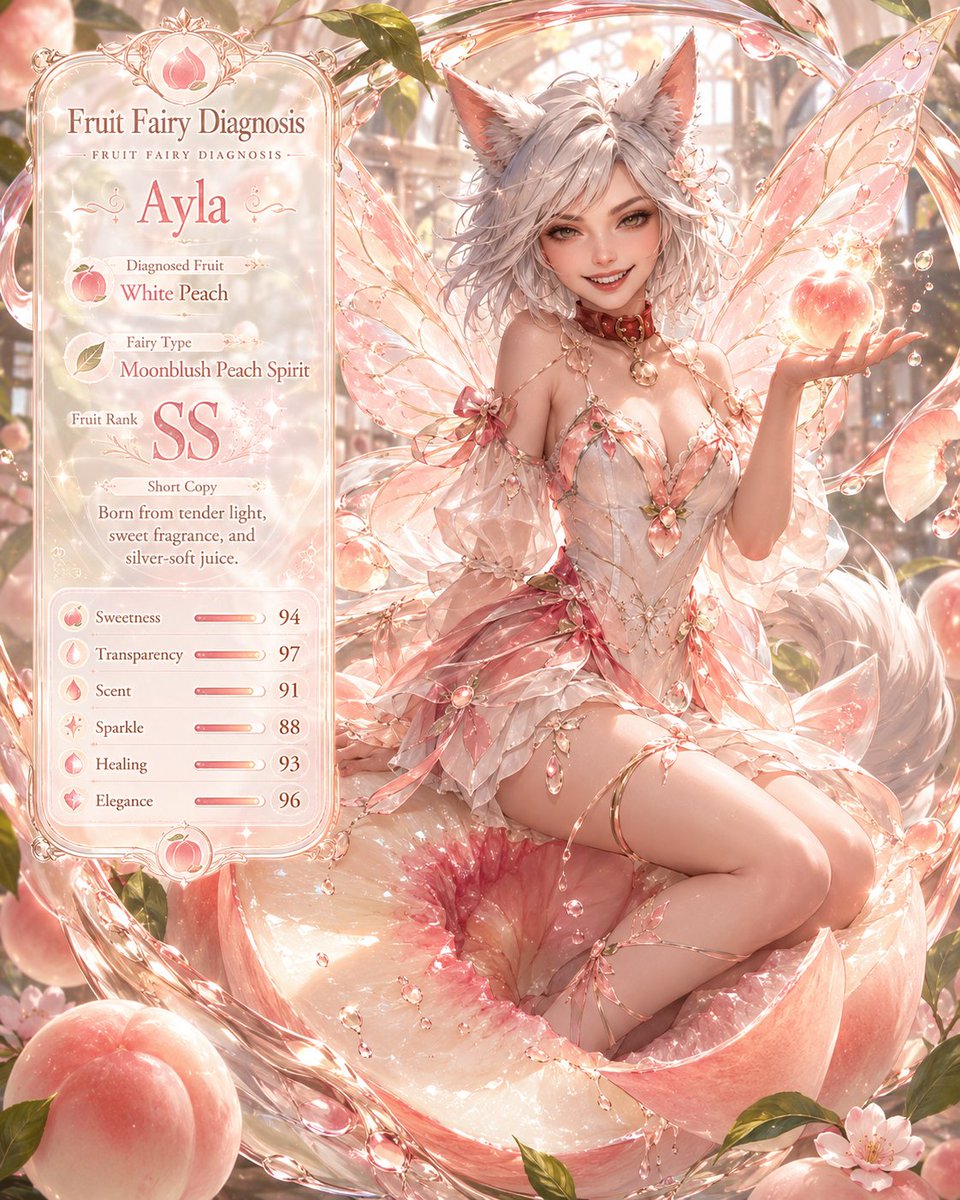
🔸ChatGPT image2プロンプト🔸 #のぞむプロンプト 「あなたのキャラは 何の果物から生まれた妖精?」 そんな感じの診断風プロンプトを 作ってみました🍓🍑🍇 果物、羽、衣装、ステータス、 コメント欄までキャラに合わせて 変わるようにしてます。 みんなの子でも試してみてください🍌 プロンプトはリプ欄で👇


Prompt of the Day: MAIN CHARACTER FUSION 🧬✨💜💚 Today’s Prompt of the Day lets you transform a main character, creature, object, or subject using the visual influence of any extra images you attach. Use your character as Image 1 if you want to preserve their look and create a result similar to the example. If you use your character as Image 2, they’ll be fused into whatever subject you place in Image 1. Image 1 = main subject Image 2+ = influence references Have fun mutating the pretty little thing 🧬 ............................PROMPT STARTS HERE............................ @Image1 = Main Subject @Image2 and any additional attached images = Secondary Influence References Use @Image1 as the absolute main subject reference. Use @Image2 and any additional attached images only as secondary influence references. Create a single 16:9 horizontal widescreen stylized illustration showing one new final image based on @Image1. Core concept: Transform the main subject from @Image1 into a new original design influenced by the secondary reference images. The final image should still be centered on the main subject from @Image1, but visually enhanced, reimagined, or transformed using color, texture, materials, atmosphere, motifs, accessories, clothing, background elements, symbolic details, or design language inspired by the secondary references. Main subject priority: @Image1 is the identity anchor. The final image must clearly remain based on the main subject from @Image1. Do not treat @Image2 or any additional images as equal subjects. Do not create a balanced fusion where all images have the same importance. The secondary images should influence the design, not replace the main subject. If @Image1 is a person or character: Preserve the main subject’s body proportions, face structure, hairstyle, silhouette, pose language, species traits, and overall identity as much as possible. Do not heavily mutate, deform, or rebuild the body. Keep the subject recognizably grounded in their original form. Use the secondary references mainly for color influence, texture, outfit changes, accessories, armor, props, background, lighting, atmosphere, surface details, symbolic motifs, or stylistic embellishments. The transformation should feel like the main character has been redesigned or styled through the influence of the other images, not biologically fused into an unrecognizable creature unless specifically requested. If @Image1 is an object: Preserve the object’s main shape language, structure, function, silhouette, material logic, and recognizable design foundation. Use the secondary references to influence color, texture, surface design, decoration, environment, mood, material upgrades, symbolic motifs, or additional design embellishments. Do not turn the object into something completely unrelated unless specifically requested. If @Image1 is a creature or animal: Preserve the creature’s core anatomy, species traits, silhouette, body proportions, posture, markings, and overall identity. Use the secondary references to influence colors, textures, markings, environment, accessories, magical effects, armor, decorative elements, or atmosphere. Do not mutate the creature so heavily that its original structure becomes unreadable unless specifically requested. Secondary influence rules: Use the secondary reference images as inspiration only. They may influence: color palette textures and materials patterns and markings clothing or armor accessories and props background and setting lighting and atmosphere symbolic motifs surface details mood and visual personality surreal or artistic embellishments The secondary references must not appear as separate full subjects in the final image. Do not place the secondary reference subjects beside the main subject. Do not create a collage, split image, sticker stack, or side-by-side mashup. Do not simply copy large pieces of the secondary images directly into the final image. Instead, reinterpret their visual qualities into one cohesive design centered on @Image1. Originality rule: The final image should feel new, original, and artistically transformed. It should not look like a direct copy of any secondary reference. It should not preserve the secondary references as recognizable standalone subjects. The secondary influence should be integrated naturally into the main subject’s design and scene. Style and presentation: Keep the result fully stylized and visually cohesive. Preserve the general stylization of @Image1 where possible. If @Image1 is anime or stylized, keep the result anime or stylized. Do not drift into photorealism unless specifically requested. Composition: Show exactly one main subject based on @Image1. Use a strong, readable single-image composition. Keep the main subject large, central, clear, and visually dominant. Use the secondary influences to support the main subject, not compete with it. The final image should feel like a clean character/object/creature reveal, fashion redesign, artifact redesign, surreal portrait, or cinematic showcase depending on the source images. Lighting and mood: Use polished, dramatic lighting and atmosphere that fits the new design. The mood may be cinematic, surreal, elegant, mysterious, powerful, beautiful, eerie, cute, strange, luxurious, or dreamlike depending on the influence references. Keep the final subject readable and visually compelling. Quality and rendering: Polished, premium-quality stylized illustration with clean forms, strong composition, clear visual hierarchy, crisp rendering, and cohesive design integration. Keep the strongest detail concentrated on the main subject from @Image1. Do not: Do not treat @Image2 or additional images as equal main subjects. Do not create a balanced fusion where the main subject from @Image1 loses priority. Do not show the secondary reference images as separate full subjects. Do not place the secondary reference subjects beside the main subject. Do not create a side-by-side mashup, split design, collage, or sticker-like combination. Do not copy-paste recognizable chunks of the secondary images into the final image. Do not mutate the main subject’s body proportions heavily if @Image1 is a person, character, creature, or animal. Do not make the main subject unrecognizable unless specifically requested. Do not replace the main subject with a new unrelated subject. Do not make the design cluttered, confusing, or visually incoherent. Do not hide the main subject under excessive effects, textures, armor, or background detail. Do not create multiple main subjects. Do not create messy anatomy, broken structure, extra limbs, malformed hands, distorted faces, or incoherent object construction. Do not use photorealism unless specifically requested. Do not reference copyrighted fusion techniques, named franchise transformations, or third-party branded concepts. Final result: A single original 16:9 stylized image where @Image1 remains the clear main subject, transformed and enhanced by the colors, textures, motifs, materials, atmosphere, clothing, accessories, background, and visual influence of the secondary reference images. ..............................END OF PROMPT.................................. #POTD #promptoftheday #AI #AiArt #Art #AnimeArt #CharacterDesign #ImagePrompt #FusionArt #AICommunity #DigitalArt #AnimeStyle #CreativePrompt


Prompt of the Day: MAIN CHARACTER FUSION 🧬✨💜💚 Today’s Prompt of the Day lets you transform a main character, creature, object, or subject using the visual influence of any extra images you attach. Use your character as Image 1 if you want to preserve their look and create a result similar to the example. If you use your character as Image 2, they’ll be fused into whatever subject you place in Image 1. Image 1 = main subject Image 2+ = influence references Have fun mutating the pretty little thing 🧬 ............................PROMPT STARTS HERE............................ @Image1 = Main Subject @Image2 and any additional attached images = Secondary Influence References Use @Image1 as the absolute main subject reference. Use @Image2 and any additional attached images only as secondary influence references. Create a single 16:9 horizontal widescreen stylized illustration showing one new final image based on @Image1. Core concept: Transform the main subject from @Image1 into a new original design influenced by the secondary reference images. The final image should still be centered on the main subject from @Image1, but visually enhanced, reimagined, or transformed using color, texture, materials, atmosphere, motifs, accessories, clothing, background elements, symbolic details, or design language inspired by the secondary references. Main subject priority: @Image1 is the identity anchor. The final image must clearly remain based on the main subject from @Image1. Do not treat @Image2 or any additional images as equal subjects. Do not create a balanced fusion where all images have the same importance. The secondary images should influence the design, not replace the main subject. If @Image1 is a person or character: Preserve the main subject’s body proportions, face structure, hairstyle, silhouette, pose language, species traits, and overall identity as much as possible. Do not heavily mutate, deform, or rebuild the body. Keep the subject recognizably grounded in their original form. Use the secondary references mainly for color influence, texture, outfit changes, accessories, armor, props, background, lighting, atmosphere, surface details, symbolic motifs, or stylistic embellishments. The transformation should feel like the main character has been redesigned or styled through the influence of the other images, not biologically fused into an unrecognizable creature unless specifically requested. If @Image1 is an object: Preserve the object’s main shape language, structure, function, silhouette, material logic, and recognizable design foundation. Use the secondary references to influence color, texture, surface design, decoration, environment, mood, material upgrades, symbolic motifs, or additional design embellishments. Do not turn the object into something completely unrelated unless specifically requested. If @Image1 is a creature or animal: Preserve the creature’s core anatomy, species traits, silhouette, body proportions, posture, markings, and overall identity. Use the secondary references to influence colors, textures, markings, environment, accessories, magical effects, armor, decorative elements, or atmosphere. Do not mutate the creature so heavily that its original structure becomes unreadable unless specifically requested. Secondary influence rules: Use the secondary reference images as inspiration only. They may influence: color palette textures and materials patterns and markings clothing or armor accessories and props background and setting lighting and atmosphere symbolic motifs surface details mood and visual personality surreal or artistic embellishments The secondary references must not appear as separate full subjects in the final image. Do not place the secondary reference subjects beside the main subject. Do not create a collage, split image, sticker stack, or side-by-side mashup. Do not simply copy large pieces of the secondary images directly into the final image. Instead, reinterpret their visual qualities into one cohesive design centered on @Image1. Originality rule: The final image should feel new, original, and artistically transformed. It should not look like a direct copy of any secondary reference. It should not preserve the secondary references as recognizable standalone subjects. The secondary influence should be integrated naturally into the main subject’s design and scene. Style and presentation: Keep the result fully stylized and visually cohesive. Preserve the general stylization of @Image1 where possible. If @Image1 is anime or stylized, keep the result anime or stylized. Do not drift into photorealism unless specifically requested. Composition: Show exactly one main subject based on @Image1. Use a strong, readable single-image composition. Keep the main subject large, central, clear, and visually dominant. Use the secondary influences to support the main subject, not compete with it. The final image should feel like a clean character/object/creature reveal, fashion redesign, artifact redesign, surreal portrait, or cinematic showcase depending on the source images. Lighting and mood: Use polished, dramatic lighting and atmosphere that fits the new design. The mood may be cinematic, surreal, elegant, mysterious, powerful, beautiful, eerie, cute, strange, luxurious, or dreamlike depending on the influence references. Keep the final subject readable and visually compelling. Quality and rendering: Polished, premium-quality stylized illustration with clean forms, strong composition, clear visual hierarchy, crisp rendering, and cohesive design integration. Keep the strongest detail concentrated on the main subject from @Image1. Do not: Do not treat @Image2 or additional images as equal main subjects. Do not create a balanced fusion where the main subject from @Image1 loses priority. Do not show the secondary reference images as separate full subjects. Do not place the secondary reference subjects beside the main subject. Do not create a side-by-side mashup, split design, collage, or sticker-like combination. Do not copy-paste recognizable chunks of the secondary images into the final image. Do not mutate the main subject’s body proportions heavily if @Image1 is a person, character, creature, or animal. Do not make the main subject unrecognizable unless specifically requested. Do not replace the main subject with a new unrelated subject. Do not make the design cluttered, confusing, or visually incoherent. Do not hide the main subject under excessive effects, textures, armor, or background detail. Do not create multiple main subjects. Do not create messy anatomy, broken structure, extra limbs, malformed hands, distorted faces, or incoherent object construction. Do not use photorealism unless specifically requested. Do not reference copyrighted fusion techniques, named franchise transformations, or third-party branded concepts. Final result: A single original 16:9 stylized image where @Image1 remains the clear main subject, transformed and enhanced by the colors, textures, motifs, materials, atmosphere, clothing, accessories, background, and visual influence of the secondary reference images. ..............................END OF PROMPT.................................. #POTD #promptoftheday #AI #AiArt #Art #AnimeArt #CharacterDesign #ImagePrompt #FusionArt #AICommunity #DigitalArt #AnimeStyle #CreativePrompt