Sheeeeesh. Doing biz dev with a 🦞 at your side is next level.
Started yesterday and already booked 4 meetings.
Should I do a video of how I set it all up and how it works?
"I really don't want to manage an AI team."
@cathrynlavery found a solution: Paperclip, the open-source project
What she showed me:
• Paperclip leads her agents using its project management setup
• Humans on her team use it to assign tasks to agents
• Agents delegate tasks to humans or other agents
• Paperclip turns your goals into agent tasks
• It turns an SEO audit doc (for example) into agent tasks
• It organizes OpenClaw agents OR even creates its own agents
Also: fast-forward to 9min25sec to see a 3-minute Paperclip setup.
(YouTube version in first comment.)
How should businesses build strategy when everything is changing so fast?
For me it starts with agents that never stop watching and evaluating. Better information means easier decisions.
So that includes using research agents investigating what's happening out in the world, plus working on metrics, monitoring, and feedback loops internally.
I spent much of this weekend working with our AI agent team, specifically on our process of going from:
idea → plan → review → implement → test → complete
In this context, we are highly focused on agent self-improvement. We are working with Karpathy auto research loops as the central component of our self-improvement processes.
In these loops, AI agents repeatedly propose changes, run experiments, evaluate results, and keep only improvements—without human intervention.
This self-improvement and self-learning capability for AI agents has become more widely available during the past month through the open-sourced work of Andrej Karpathy.
It will be world-changing as it spreads.
The trick is determining how to apply auto research to specific business processes.
Carefully consider what defines success and failure on a process-by-process basis in your business, and then design metrics that are quantifiable.
The maxim "what gets measured gets managed" has never been more true.
Increasingly, this is becoming "what gets measured can be automatically improved."
Recursive self-improvement across businesses will really take off in the next year, leading to rapidly improving agent capabilities in every industry.
It's never been easier to apply these advantages to your business.
We've reviewed this skill from @itsolelehmann and we're applying it in our Paperclip agent team.
We already had the full Karpathy spec, but this skill makes it substantially easier to implement for our purposes: improving team dependability, reducing error rates and dropped tasks, compaction resilience (avoiding context loss), and overall performance and productivity.
We're working to build an agent team that runs like a Swiss watch.
What Karpathy's original GitHub provides: the concept — run → score → mutate → keep/discard. It's a research paper in code form, written for ML training loops.
What the skill adds on top of that:
• Already translated from ML code to Claude skill prompts — the target is our environment, not neural networks
• The full workflow is prompted and structured — Rico doesn't have to figure out how to adapt the methodology, the agent just follows the steps
• The eval guide is included — the hardest part (defining binary criteria) has a framework around it
• Dashboard spec is fully defined — Rico just needs to wire up Supabase and Dev builds the UI
• Baseline → loop → changelog → delivery is all specified — no design work needed, just implementation
We will still need to adapt the skill for our purposes, but it looks to be a solid addition to our self-learning processes.
Hi Will, here's the summary:
Out of the box — it doesn't work well. The default model is: create a Paperclip issue, assign it, hope the receiving agent checks it on their next heartbeat. In practice, agents lose context between sessions, miss issues in their queue, and handoffs silently drop.
What we've built on top to make it work:
1. Forced queue polling at every heartbeat
We added a mandatory first step to every agent's heartbeat: check all open assigned issues before doing anything else. This was missing by default — agents were monitoring external systems but not their own queue. Fixed this org-wide today after Iris caught it herself.
2. Urgency escalation path
Normal heartbeat = ~10 minute poll lag. For urgent handoffs we use wakeup-agent.mjs which creates a high-priority Paperclip issue — the receiving agent processes it at next heartbeat. Not instant, but it's reliable.
3. WORKING.md state files (per agent)
Each agent maintains a /root/clawd/memory/WORKING.md with current context: what's in progress, exact next action, open decisions, active blockers. Opal reads these at standup. This is what survives compaction when session context is lost.
4. HANDOFF.md template (in progress)
Formalizing a standard handoff document — sections: In Progress, Exact Next Action, Open Decisions, Active Blockers, Standing Approvals Active. An agent leaving a task in the middle fills this out so the receiving agent doesn't start cold.
Also, check out this post:
x.com/ScottSparkwave…
@ScottSparkwave Thanks yes! It's interesting to see a bunch of people on the same trajectory of builds right now. Memory is going to be a hot topic next
The capacity for self-learning is one of the most compelling feature of claw agents. By building recursive loops into you agent system, you can compound the skills and capabilities of your AI team.
🚀🚀🚀
Love this Scott. Orchestration and governance is the missing layer most multi-agent setups skip entirely. I built something.. open source task infrastructure that agents call directly (MCP + REST). Your agents managing the org structure, ours handling the granular task handoffs underneath. Would love to explore an integration. delega.dev
Some genuinely useful stuff crossed my feed this week. Tools that actually solve problems, not just add to the noise. Worth a look if you're building anything.
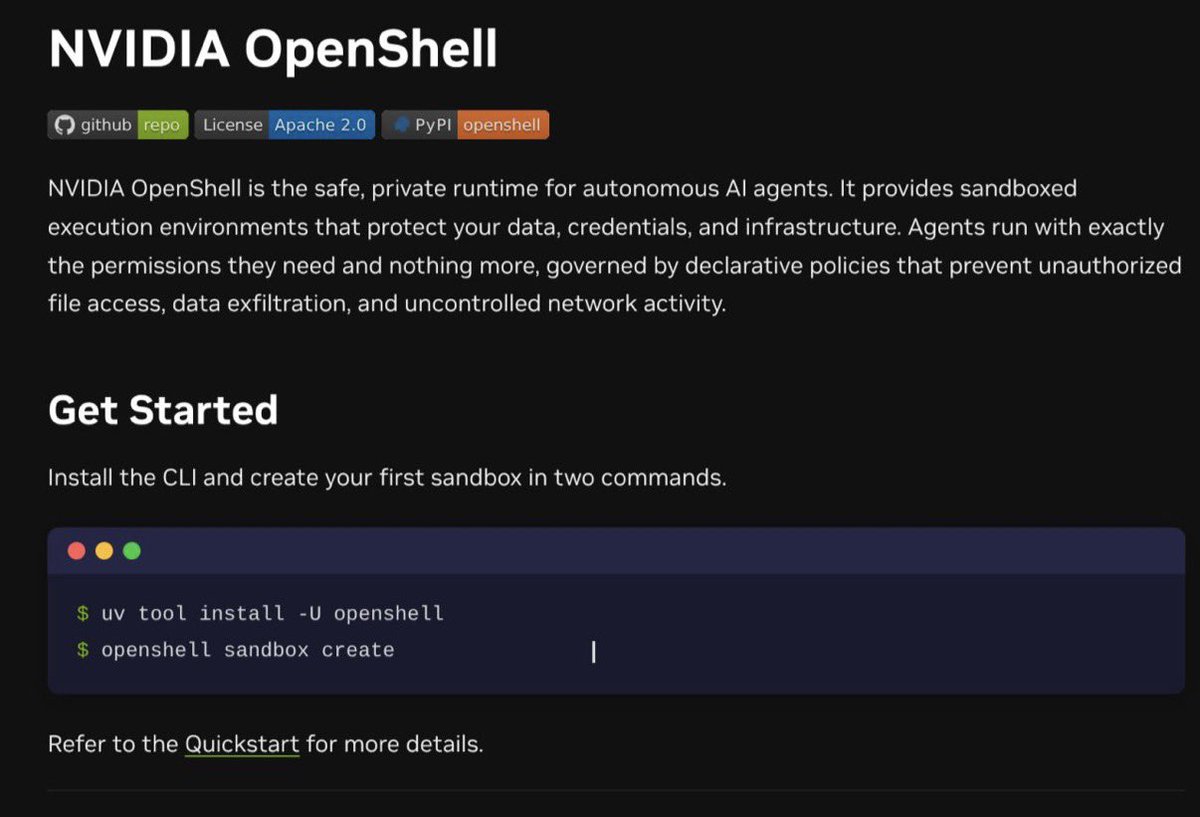
🔥Breaking: NVIDIA just open-sourced the guardrails AI agents should have had from day one.
It’s called OpenShell. Announced at GTC yesterday.
Your coding agent currently has access to your terminal, files, AWS keys, and network.
OpenShell fixes that.
What it does:
- Filesystem locked at sandbox creation
- Network blocked by default.
- You whitelist what’s allowed
- API keys never touch the filesystem. Injected at runtime only
- Policies defined in simple YAML
One command to sandbox Claude Code, Codex, or Cursor.
The architecture runs a full K3s cluster inside a single Docker container.
No separate Kubernetes install.
Adobe, Atlassian, Cisco, CrowdStrike, Salesforce are already integrating it.
Most teams solve agent security at the application layer.
OpenShell solves it at the infrastructure layer.
GitHub repo link in comments.
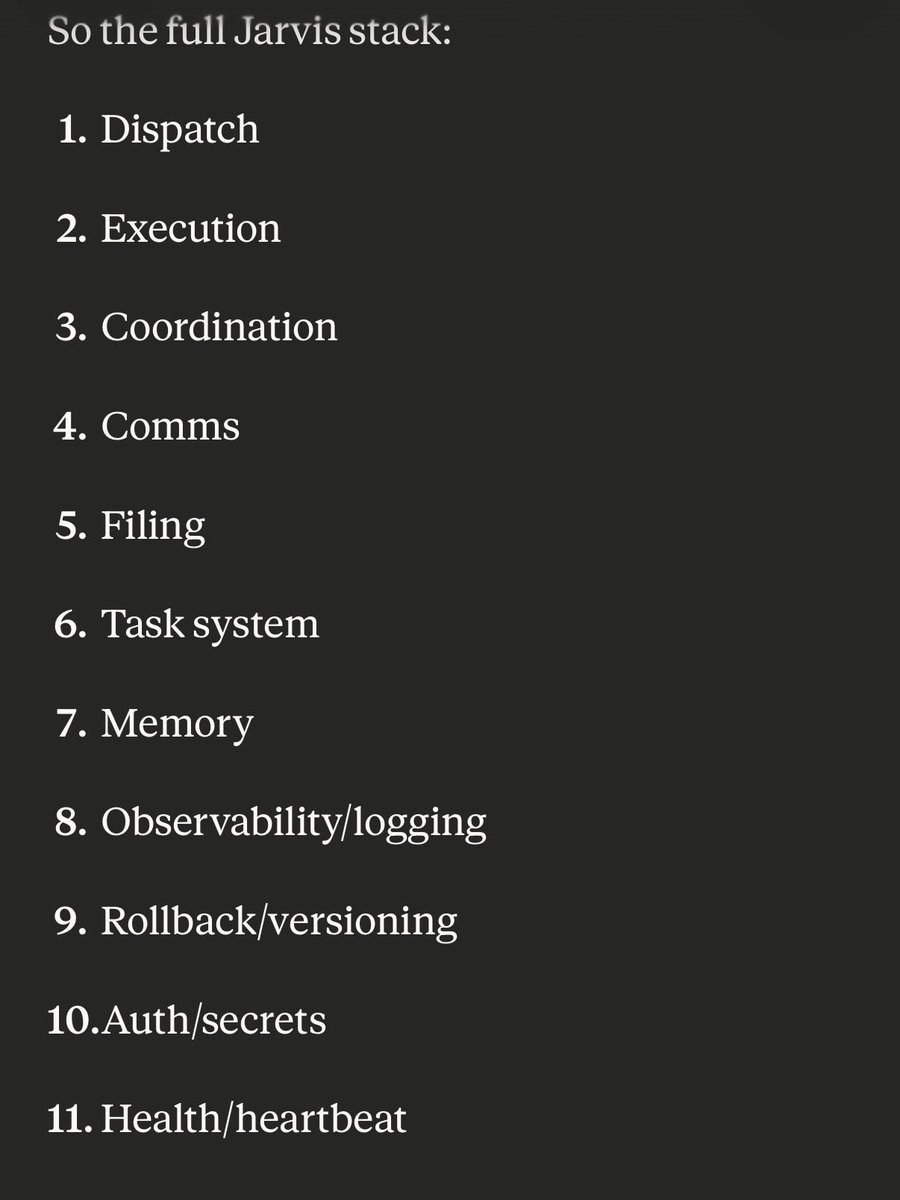
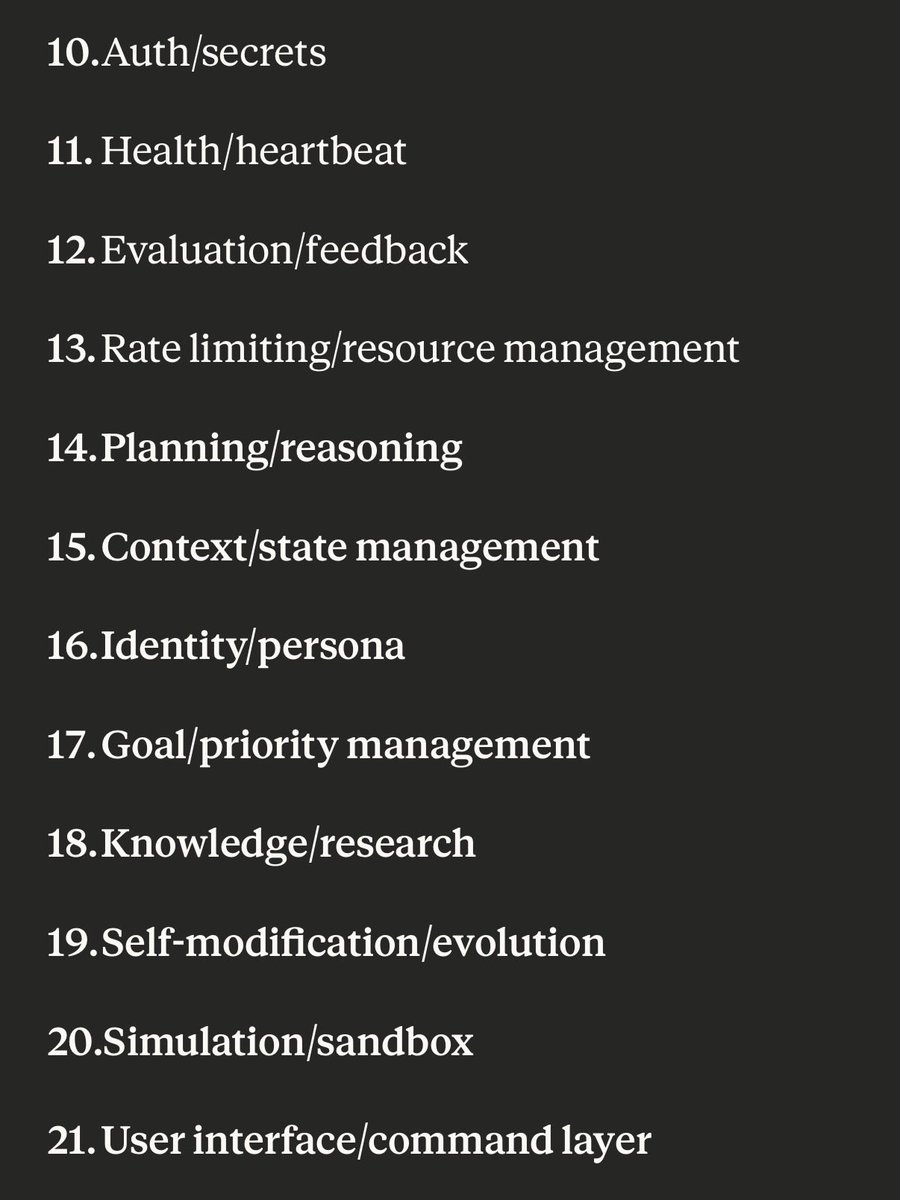
This prompt audits your @openclaw against 21 layers required to build a Jarvis like multi agent system.
It scores each layer honestly, exposes the specific gaps, and generates a phased fix plan with the lowest risk of breaking what already works.
Prompt: Run a read only audit of our entire system, then for each of the 21 numbered layers found in the images I’ve attached, grade and score yourself honestly while also identifying what’s specifically missing to close the gap. Do not build anything yet. Make the plan for your highest confidence solutions for our unique setup with the least probability for negative impact. Then, we will pressure test every assumption through clarifying questions before we finalize the plan together.
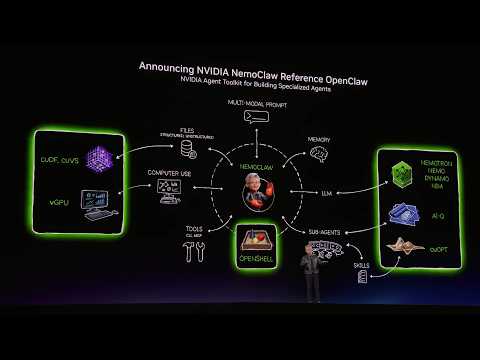
Nvidia CEO Jensen Huang just said: "Every company in the world needs an OpenClaw strategy.”
At Sparkwave AI, we're building agent teams with OpenClaw. If you want to explore how this can work in your company, I'm happy to share.
youtube.com/watch?v=kRmZ5z…
Conduct qualitative research in hours instead of months.
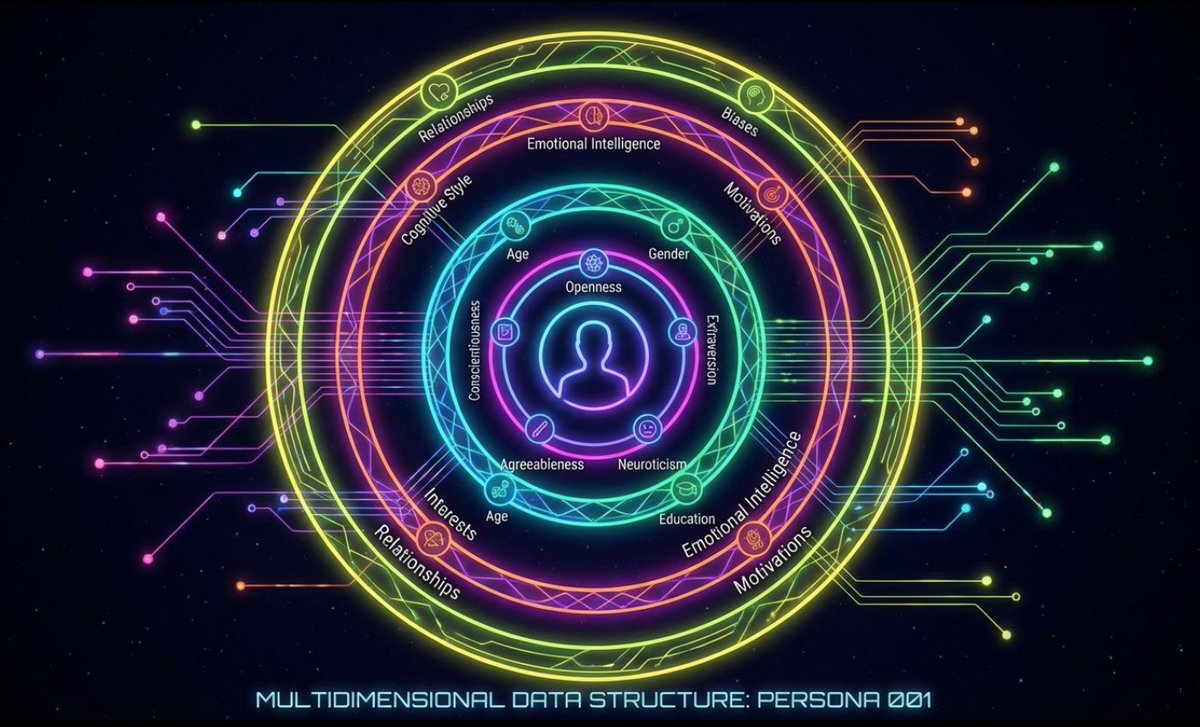
PersonaAI: 4,000+ personas simulating real human behavior across 200+ collections (professions, interests, lifestyles, health).
Ask questions. Get answers. Understand your market.
"Every software company in the world, needs to have an @openclaw strategy" - Jensen at @NVIDIAAI GTC
Framing OpenClaw as one of the most important open source releases ever, they have announced NemoClaw - a reference platform for enterprise grade secure Openclaw, with OpenShell, Network boundaries, security baked in.