Talus 🐸
3.2K posts

Talus 🐸
@TalusNetwork
Legacy account for Talus ecosystem, for all new updates follow 👉 @Talus_Labs https://t.co/C85bwlvsTE


Talus Weekly Update - W9 2026 > Protocol Update Nexus v0.6.0 shipped. Released across SDK, core, and tools for clearing the path for next-phase infrastructure work including leader distribution, tool payments optimization, and expanded agent capabilities. > Agent-game coordination framework live. Established simulation infrastructure and agent-game baseline tuning; LLM integration now informing real-time game mechanics experimentation for factual performance validation. > Infrastructure unblocks shipping. Leader-distribution-harness merged, tool-http-sync integrated, and development environment validated for seamless cloud run + inference gateway connectivity. > Ecosystem partnerships advancing. Conversations with community builders, Sui projects, and for BuidlAsia hackathon to align strategic players. Collaboration opportunities are progressing. GTM strategy + content roadmap locked. Advanced positioning work and content planning to scale awareness and adoption across channels is happening this quarter.

Talus Weekly Update - W6 2026 Shipping infrastructure this week at Talus 🛠️ > Protocol Rolled out encryption implementations and graceful shutdown mechanisms across our agent execution layer. Expanded test coverage and updated feature registry for building production-grade reliability into our protocol stack. > Infrastructure & Upgradeability Launched Talus upgradeability framework (in progress) to enable seamless protocol iterations without breaking existing agents. Completed major infra upgrades supporting our distributed agent architecture. > Protocol Research Deep-dived Hyperliquid and Lighter architectures analyzing TPS/censorship resistance tradeoffs for our own scaling approach. Modeling vault implementation patterns in AsyncLedger to optimize agent-managed treasury operations. > Agent Infrastructure (AvA) Shipped technical implementation plan and integrated Unity + Move build services into our agent deployment pipeline. Enabling developers to ship agents across multiple execution environments. > Process Innovation: Introduced IP/TCP framework (Idea Proposing Through Confirmed Plan) to formalize handoffs between protocol design and implementation for tightening our ship cycles. Bear markets separate builders from tourists. We're building.


🚨 NEW: AI agents can now rent real people through a new marketplace called Rent a Human.


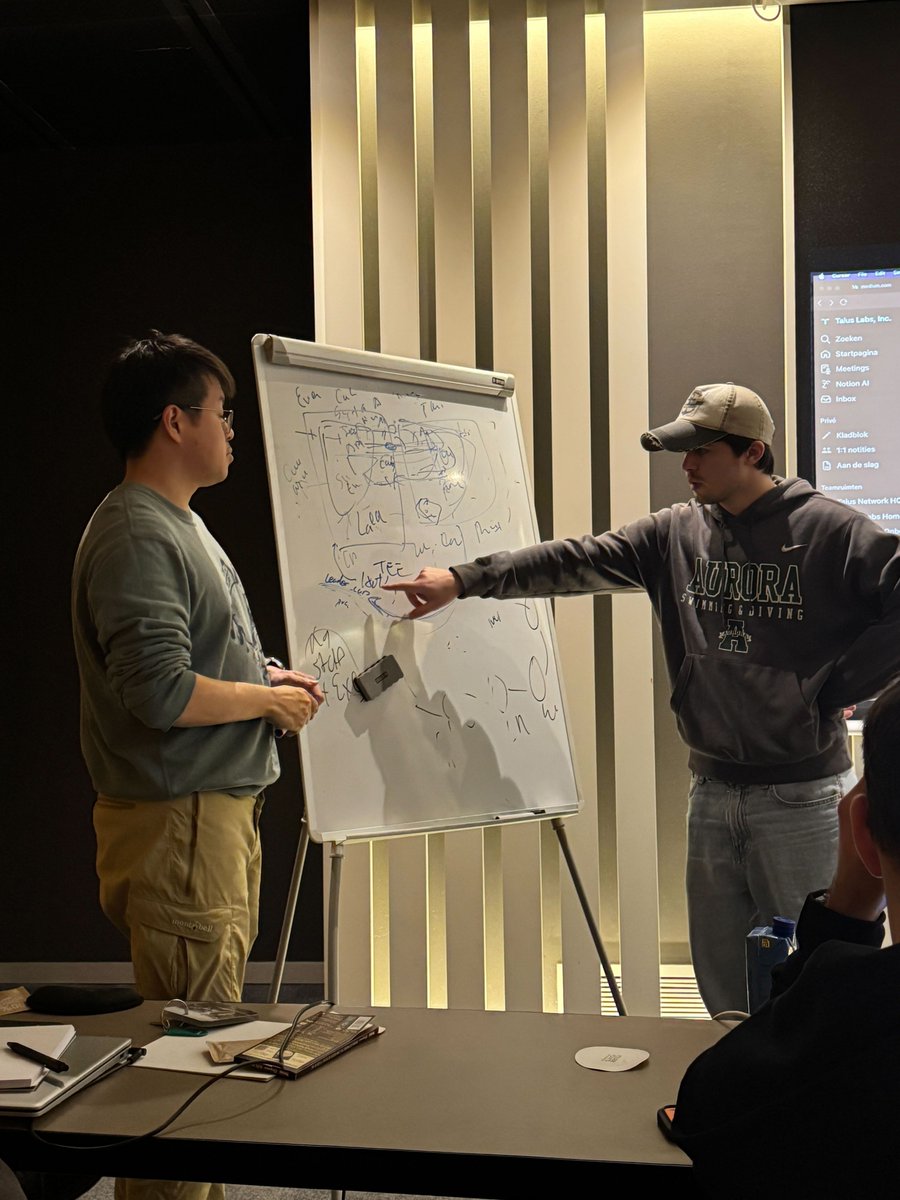
team has been hard at work today! at least i'm pretty sure they are, not like i can tell what any of this means anyway 😵💫


Talus Weekly Update – W3 2026 > BD & Expansion We’re shaping the next phase of BD by defining future candidate profiles and locking execution plans across Asia, starting with Korea and Hong Kong. > Asia GTM HK event planning, partnership discussions with INF, and a dedicated “Why Asia” workshop are aligning our on-the-ground strategy ahead of launch. > Ecosystem Growth Exploring hackathon partners to onboard builders directly into Nexus and AvA workflows, turning experimentation into production paths. > Engineering Momentum Nexus v0.5.0 is live with scheduler and onchain tools, while v0.6.0 is taking shape as the likely release candidate toward v1.0 mainnet. > AvA Gaming Progress Game lobby implementation is underway, setting the foundation for playable, agent-driven AvA experiences powered by Nexus. > Product Milestones The first AvA Gaming MVP game design is complete, unblocking engineering and accelerating toward an early playable preview. > Idol.fun Trajectory Product and marketing are now fully synced on Idol Agents, with a push to bring forward a playable experience in the roadmap. > Marketing Execution The Case for Talus is turning into a full content engine, with video, Discord activations, and GTM plans converging around idol.fun. > Looking Ahead Mainnet milestones are crystallizing fast. Everything now compounds toward a tighter, more confident protocol and idol.fun launch.


Continuing on our AI Agent Series... Most AI failures are memory failures. They happen when the model lacked the right context at the right time. That’s the gap RAG was built to close. Large language models are powerful, but they’re fundamentally constrained. They don’t know your internal docs. They don’t remember last quarter’s decisions. They don’t have access to policies, contracts, or CRM notes unless you explicitly give them that information. Prompting harder doesn’t fix this. This is where Retrieval-Augmented Generation (RAG) comes in. At a high level, RAG is simple. Instead of asking the model to answer from memory, you let it retrieve relevant information from your own data right before it responds. The model doesn’t guess, it grounds its answer in retrieved context. This one change makes systems more accurate, more auditable, and far easier to trust. You might ask: Why not just stuff all the data into the prompt? Because models have context limits. And more importantly, they get worse when flooded with irrelevant information. RAG solves this by being selective. Only the most relevant pieces of information are pulled in. Everything else stays out. In practice, a RAG system looks like this: A user asks a question. The system searches your data for relevant chunks. Those chunks are injected into the prompt. The model generates an answer grounded in that material. The model is better informed. This is why RAG became the dominant enterprise pattern. Enterprise knowledge changes constantly, and fine-tuning models is slow and expensive, whereas retrieval is fast, controllable, and reversible. Instead of teaching the model everything, you let it fetch what it needs, when it needs it. But classic RAG has a limitation: It’s usually one-shot. One query. One retrieval. One response. That works for simple questions like “What’s our PTO policy?” but it breaks down for real workflows. Real tasks unfold over time. An agent might need to: 1. Check a contract 2. Look up pricing 3. Reference past decisions 4. Verify constraints And then generate an output. This is where Agentic RAG comes in. In agentic systems, retrieval becomes part of the reasoning loop. The agent retrieves information, reasons with it, realizes something is missing, retrieves again, and adjusts its plan. Retrieval is a decision the agent makes repeatedly. RAG stops being a static context layer, and becomes an active thinking tool. Seen this way, RAG is just another kind of tool. One that supplies grounded knowledge on demand. In production systems, agents often combine: - Tools to act - RAG to stay grounded - Planning to sequence decisions This combination is what makes agents reliable instead of impressive. The key takeaway is this: Memory in agentic systems is rarely about recall. It’s about retrieval. If tools give agents hands, RAG gives them access to institutional knowledge. Tomorrow we’ll go over MCP, and why context itself is becoming programmable.

Talus Weekly Update — W2 2026 After the TGE and wrapping up last year, it’s good to be back posting. Now full focus now on shipping the Talus protocol and idol.fun. > Engineering Nexus v0.4.0 shipped (gRPC upgrade), v0.5.0 in motion with Scheduler + On-Chain Tools prepped, and Leader <--> Tool communication architecture now defined and under implementation. > Infrastructure Shipped staking hub fixes, progressed on the Contract Upgrade Tool, and continued hardening core infra ahead of launch. > Protocol Proposals Formalized two Talus proposals covering auto buy-burn and auto-harvesting, translating feature ideas into concrete protocol upgrades. > Marketing Revamped Discord docs, kicked off the Case for Talus content series, finalized KOL Arena rewards, and re-aligned the team for post-TGE content + product marketing. > Product Cleaned up and locked product milestones, scheduled key partner calls, drafted the Tallys AvA game design, and reshaped the offsite into an execution sprint. >BD & Strategy Advanced HK Consensus planning, synced with partners, progressed idol.fun reviews in Korea, and refined token strategy and launch coordination. > Execution Designed Talus auto-harvesting and priority fee buy-burn, updated core contracts, and pushed toward code freeze with tight cross-team coordination. Bottom line: the launch clock is ticking, scope is tightening, and Talus is moving from planning to showing.

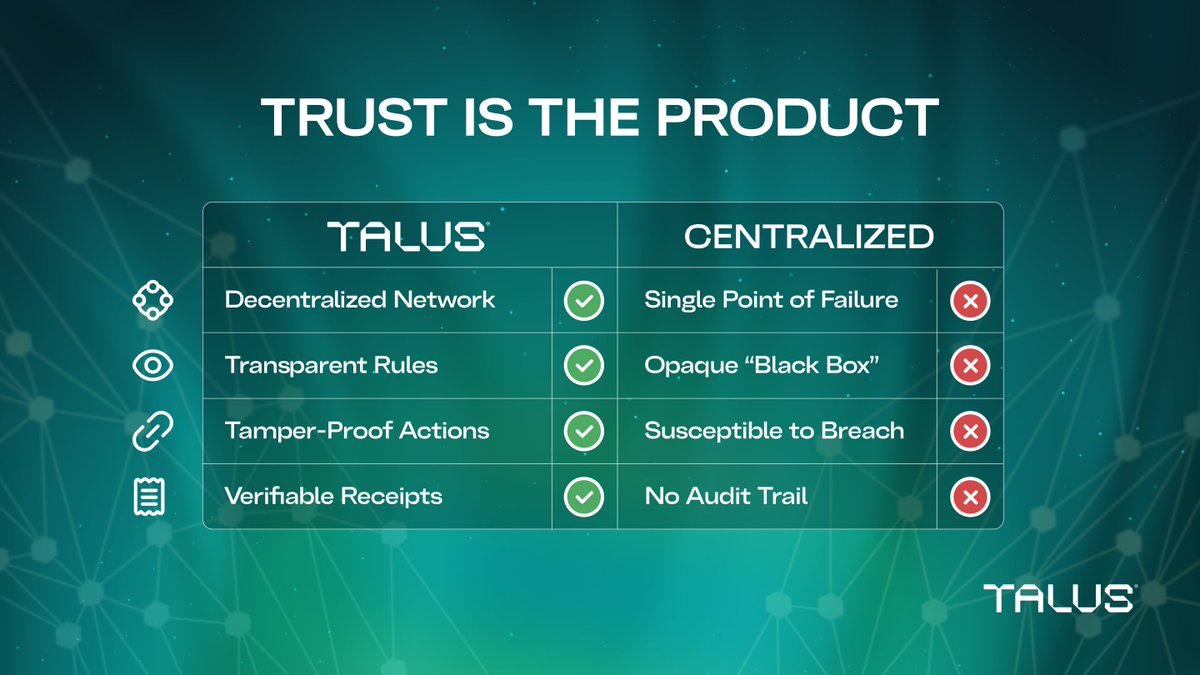
From data → decisions → payments: the loop is closed. AI isn’t “software on top” anymore - it is the system. So trust can’t be vibes. It has to be built in. Walrus → verifiable data Seal → programmable access Nautilus → secure execution Sui → control, audit, receipts Read on 👇 blog.sui.io/verifiable-ai-…

.@Talus_Labs had its TGE last month, and since then, a lot has happened. Time to dive into what it is, what's going on, and some real alpha you can capitalize on. 👇📷🧵