BREAKING: I asked Claude to upgrade my LinkedIn profile.
It didn’t just “upgrade” it. It turned it into a recruiter magnet.
Here are the exact 7 prompts I used:
In the 1970s, High Times asked Albert Hofmann what general medical uses LSD might be marketed for in the future.
His answer: "Very small doses, perhaps 25 micrograms, could be useful as a euphoriant or antidepressant."
This wasn't some armchair theorist.
Hofmann was the man who first synthesized LSD in 1938, accidentally discovered its psychoactive effects in 1943, and then continued to take small doses throughout his life.
James Fadiman, the world's leading authority on psychedelic microdosing, noted that Hofmann would microdose primarily while walking in the woods, saying it clarified his thinking.
At age 100, Hofmann was still giving two-hour lectures. He died in 2008 at 102.
So the guy who invented LSD microdosed it for decades, lived longer than almost anyone, stayed cognitively sharp into his final years, and told us exactly what he thought it could do.
Nobody listened.
Fifty years later, clinical research is finally testing what he was saying.
A Phase 2a open-label trial out of the University of Auckland gave patients with major depressive disorder an 8-week regimen of microdosed LSD, twice weekly, at doses between 6 and 20 micrograms.
Almost exactly the range Hofmann suggested in the 1970s.
Depression scores dropped by 59.5% by the end of the intervention, and the improvements were sustained for up to six months. No serious adverse events. No clinically relevant changes in cardiac or lab markers.
The same research group also ran a randomized controlled trial in healthy volunteers and found that microdoses of LSD produced significant acute increases in positive mood compared to placebo. A separate RCT published in JAMA Psychiatry showed that repeated low-dose LSD was safe and effective for ADHD treatment in adults.
The data keeps pointing in the same direction.
And all of it lines up almost perfectly with what Hofmann said in the 1970s. Sub-intoxicating doses eliciting mood elevation with antidepressant effects.
He wasn't guessing. He had decades of self-experimentation behind him and a deeper understanding of the pharmacology than anyone alive at the time.
What if the inventor of one of the most powerful psychoactive compounds ever discovered was right all along, and a 2-3x/week microdose is the antidepressant we've been overlooking?
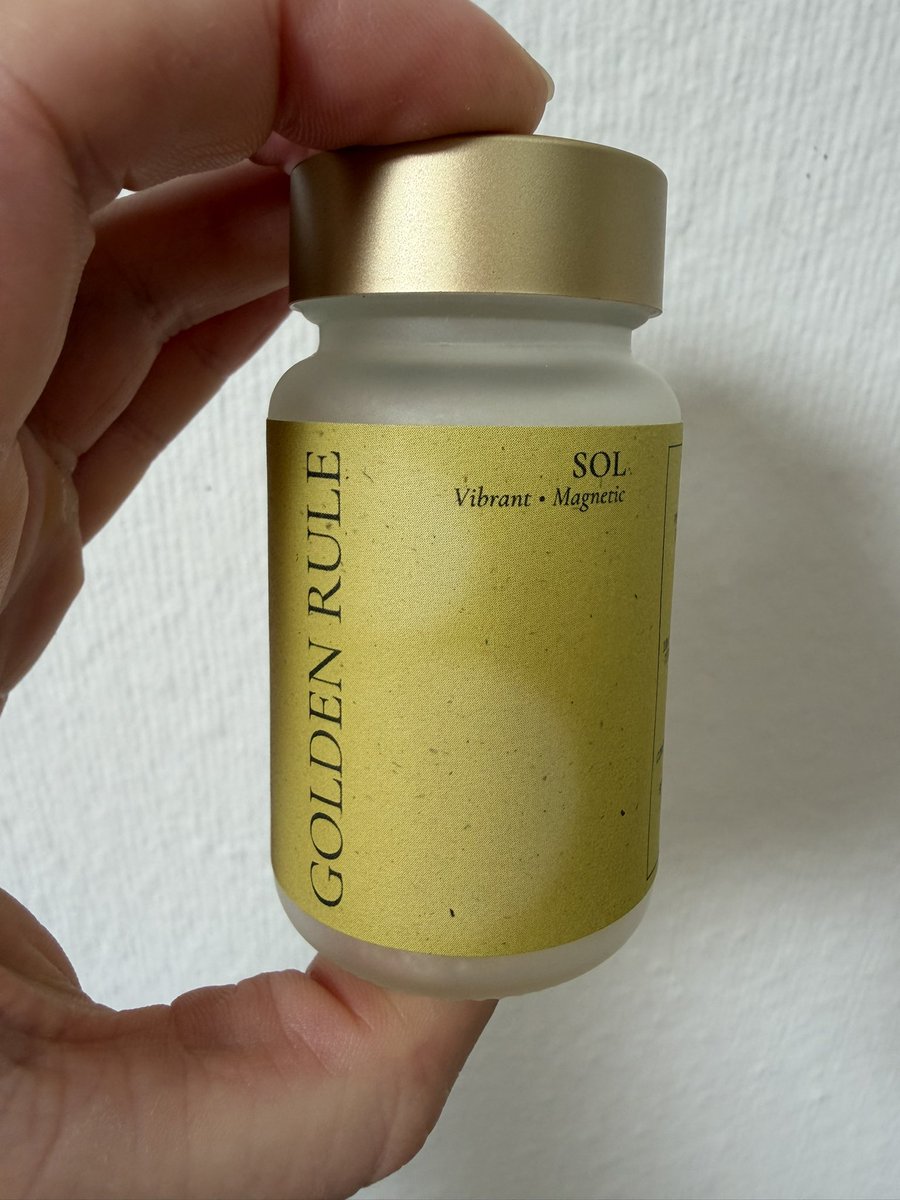
Pictured is the only easily available microdosing LSD product out there today. It comes from Golden Rule and ships out of Colorado to all 50 states.
It’s wild that this is now widely available.
ADIÓS ASESORES FISCALES
🔖 Guarda esto para la declaración de la renta de este año.
ChatGPT lo hace gratis en 10 minutos.
Sin colas. Sin 150€ de honorarios.
6 prompts según tu situación 👇
Un hombre deposita $10.000 en un banco.
El banco le agradece y registra el depósito en su balance. Pero no donde cabría esperar. Para el banco, esos $10,000 son en realidad un pasivo, porque técnicamente pertenecen al cliente y podrían tener que ser devueltos.
Entonces el banco hace lo que hacen los bancos do. : presta 9.000 dólares de ese dinero a alguien que compra un coche.
Ahora ocurre algo interesante. El préstamo de $9,000 aparece en los libros del banco como un activo, porque ahora alguien le debe dinero.
Así que los mismos $10,000 cumplen dos funciones a la vez. El depositante cree tener $10,000 seguros en el banco. El prestatario ahora tiene $9,000 para gastar.
Esos $9,000 se depositan en otro lugar. El siguiente banco presta $8,100. Esos se depositan de nuevo. Luego se prestan $7,290.
Pronto, los 10.000 dólares originales se han convertido silenciosamente en decenas de miles de dólares de préstamos repartidos por toda la economía.
Todos creen tener dinero. Los depositantes ven los saldos en sus cuentas. Los prestatarios tienen el dinero que gastaron. Los bancos muestran activos saludables en sus balances porque la gente les debe dinero.
Y aquí está la mejor parte.
Los bancos cobran intereses por todos esos préstamos, quizás un 7%. Pero el depositante que aportó el dinero original podría ganar solo un 0,5% en su cuenta de ahorros.
De esta forma, los bancos cobran intereses sobre un dinero que en su mayor parte no era suyo y se quedan con la diferencia.
El sistema funciona maravillosamente.
Siempre y cuando nadie pida la devolución del dinero al mismo tiempo.
Taking around 2 grams of omega-3s per day might be one of the highest-ROI habits for lifespan and cardiovascular protection
At that dose, most people can move their omega-3 index from ~4% to ~8%, a range associated in observational studies with about a 5-year increase in life expectancy and ~90% lower risk of sudden cardiac death
Omega-3s also support brain function and mood, with clear benefits for depression and cognition
Yet nearly 90% of Americans fall short of recommended EPA and DHA intake
Few interventions this impactful are this easy
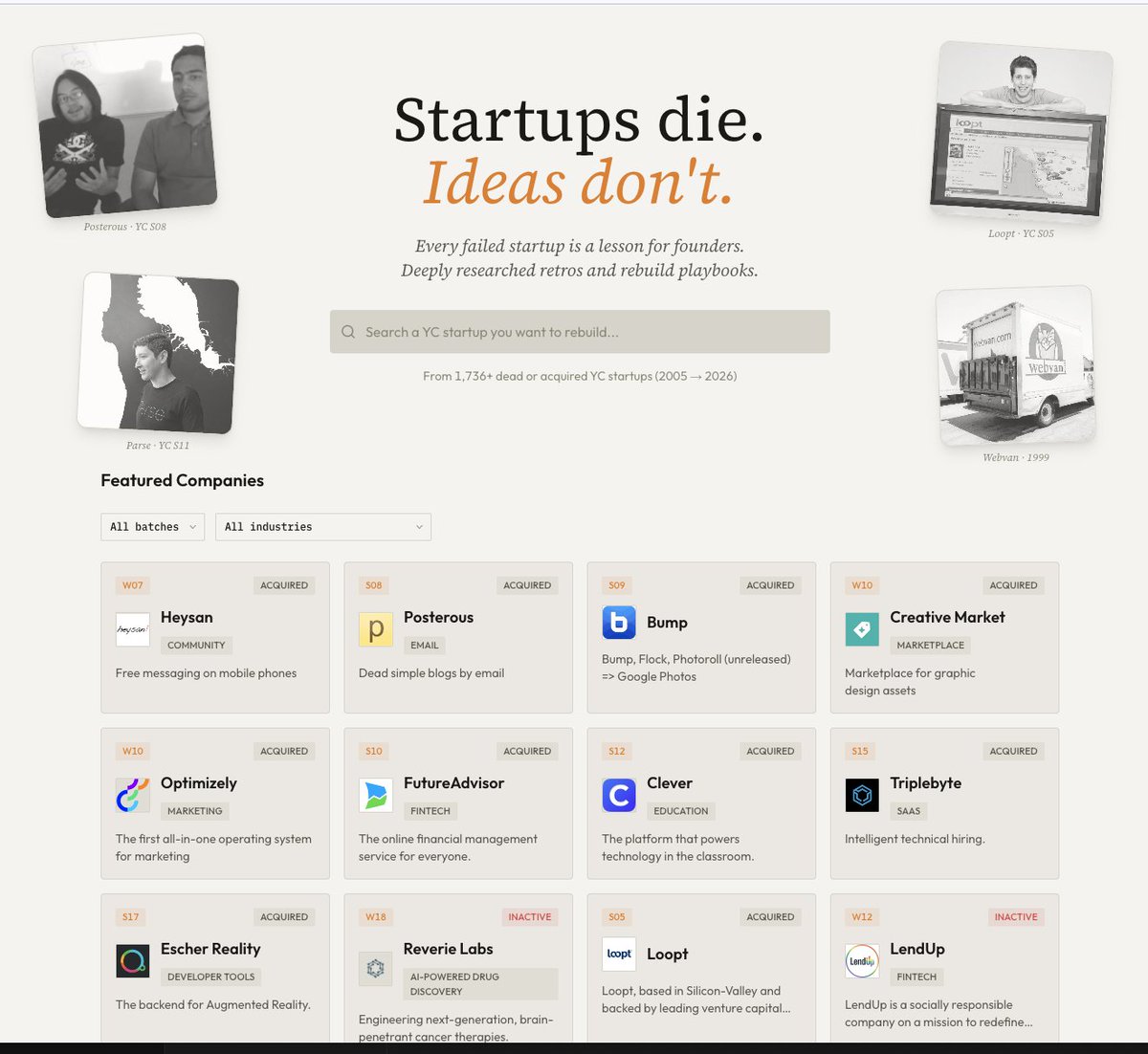
Muy interesante el proyecto startups.rip que recoge más de 1.700 startups de YC que han muerto. Con post mortem superdetallados y quién resolvió después el mismo problema con éxito.
Además también ofrece un playbook para revivir esos proyectos (con una parte de pago), pero aun así, mucha valiosa información libre.
Posterous murió. Substack llegó después. Webvan no sobrevivió. Instacart sí. Y como estas, un montón.
Las ideas no mueren, evolucionan.
El timing y la ejecución sí importan, y mucho.
Hay más recursos parecidos: killedbygoogle.com (todo lo que Google lanzó y abandonó), failory.com (400+ startups fallidas filtradas por industria y causa), o ideabrowser.com (de pago, de Greg Isenberg, convierte tendencias de Reddit en ideas con demanda real).
Lo que me parece interesante de todo esto con el potencial que hoy nos ofrecen las herramientas de IA es que el coste de explorar esas ideas se ha desplomado.
Muchas fallaron por timing, no porque la idea fuese mala. La infraestructura no estaba lista, el usuario no había madurado, el coste de construcción era inasumible para un equipo pequeño.
Esas tres barreras han bajado mucho.
Me da que en los próximos años vamos a ver bastantes relanzamientos de ideas que murieron entre 2010 y 2020.
No copias. Adaptaciones con equipos de 2-3 personas como mucho donde antes hacían falta 20.
Estos "cementerios" son en realidad bancos de ideas con autopsias incluidas.
@Alvaro_DMaria La verdad es que me parece un statement bastante malo. En Suiza es muy común todo el mundo comprar comida de los supermercados y tomarla en parques, trabajo o donde sea...
@stelzner_n1150 This is stupid. Someone will inherit it. If they don't want to live there, they will sell it sure. But they will more than probably buy another one in their desirable place... 1 to 1
Breaking: OpenAI fired Leopold Aschenbrenner at 22. Three years later, he manages $5.5 billion.
Timeline:
• Age 19: Graduates Columbia as valedictorian
• Age 22: Joins OpenAI's Superalignment team
• Age 22: Fired for raising AI safety concerns
• Age 23: Publishes viral manifesto on AGI
• Age 23: Launches hedge fund with $225M
• Age 24: Returns 47% in six months
• Age 25: $5.5B in equity exposure
One of the fastest-growing funds Wall Street has ever seen. Here's where he's placing his bets today