د. أمل حسين العوامي
34.4K posts

د. أمل حسين العوامي
@amel612
استشارية طب تطور وسلوك الاطفال /مستشفى جونز هوبكنز ارامكو تغريداتي تمثل رأيي وليس مكان عملي. Developmental Behavioral Pediatrician.


プリンストン大学などの研究により、効率的だと思われていた「ノートPCでのメモ取り」が、実は人間の学習能力を低下させているという衝撃の現実が明らかになりました。 タイピングという過剰な効率化が脳の「深い処理」をスキップさせ、認知システムをダウングレードさせている事象です。 その衝撃の全貌と学習効率の最適化を3つのポイントにまとめました。 1. 認知の『スキップ』 ノートPCを使用すると、タイピング速度の速さゆえに発言をそのまま書き写す「逐語録」に陥ります。この効率性が逆に脳の処理プロセスを浅くし、情報を概念として理解するコストを完全に削ぎ落としてしまいます。復習を重ねても、この理解度の欠如は修正されません。 2. 負荷の『強制稼働』 一方で手書きは物理的に遅いため、全ての情報を記録できません。逆に、この「遅さ」が話の要点を瞬時に自分の言葉で再構築する「生成効果」を強制稼働させます。これにより、脳に適切な負荷がかかり、記憶への深いエンコードが成立します。 3. 学習の『最適化』 この問題を修正するアプローチは明確です。記録する文字数を極限まで減らし、情報全体を聴き終えてから遅延してメモを取ること。そして、外部記録に頼らず脳内の記憶から再構築(想起)するプロセスを組み込むことで、学習システム全体が最適化されます。

ADHD is needing pressure to function then hating pressure


قد يكون التوحد أثرًا جانبيًا لتطور الذكاء عند البشر. adnan-alhajji.blogspot.com/2026/04/blog-p… @amel612


زوجها عزم أصحابه وأصدقائه فاجتمعوا في ديوانيته ، وهي في المطبخ تعد وليمة العشاء لهم تقديراً لزوجها ، وخلال جلوسهم تحدثوا عن فضل التعدد ، وينصحوا صديقهم إللي عازمهم أن يتزوج ويُعدد ، فٓـ لبست عبايتها واخذت سوط ودخلت عليهم في الديوانية ومردغتهم ومن ضمنهم زوجها .. 🤣🤣🤣🤣🤣🤣🤣🤣🤣 .

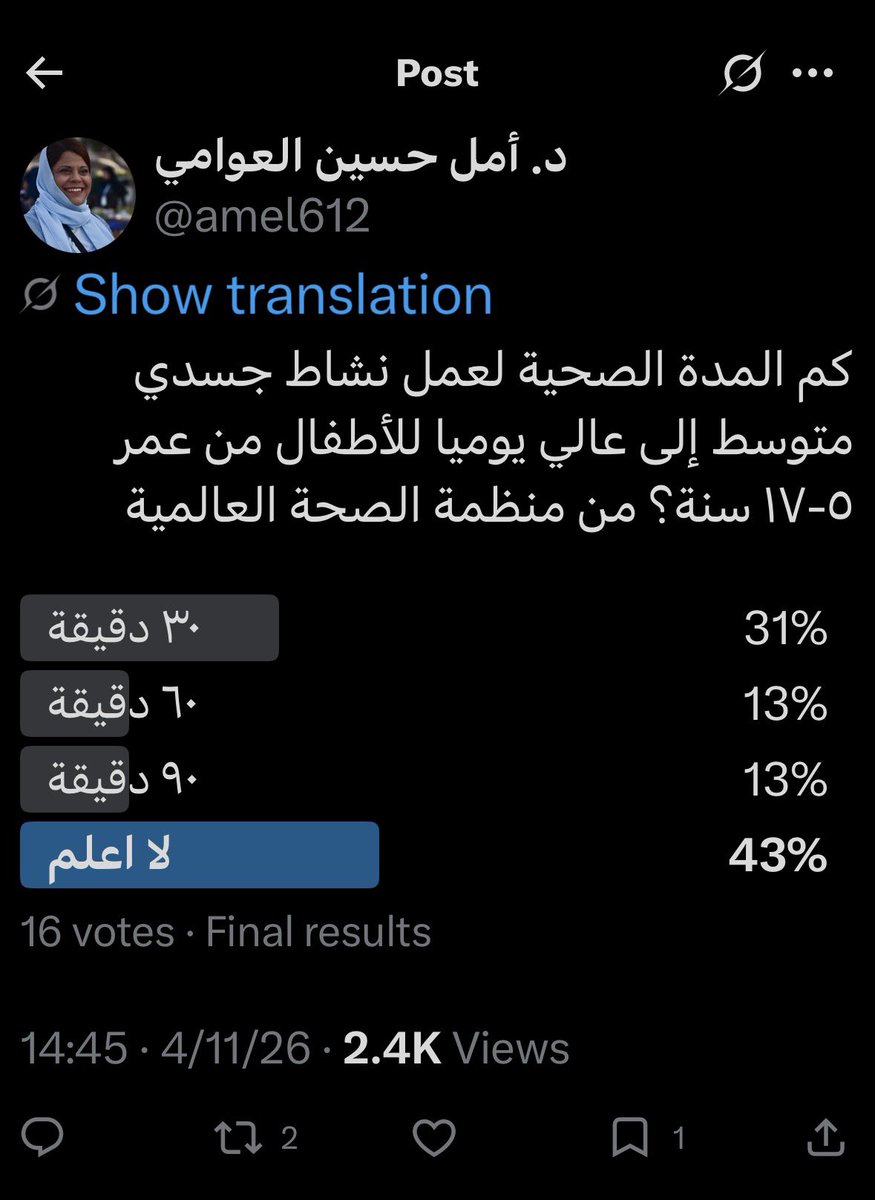
كم المدة الصحية لعمل نشاط جسدي متوسط إلى عالي يوميا للأطفال من عمر ٥-١٧ سنة؟ من منظمة الصحة العالمية


Your brain responds to music like it’s a survival tool. When music plays, almost the entire brain ignites. The motor cortex drives your body to the beat. The hippocampus ties melodies to memories. The amygdala unleashes waves of feeling. And in the orbitofrontal cortex—the brain’s reward and decision hub—the same circuitry that flares in OCD lights up with music’s cycles of tension and release.This overlap is no coincidence. It reveals how music hijacks our predictive wiring: we anticipate, we tense, we resolve, and dopamine floods in with relief and joy. The roots run deep. Early mammals survived by parsing every rustle; today that vigilance fuels standing ovations, film scores, and sing-alongs. In a crowd, heartbeats lock step. Strangers become kin. Music binds. Clinics now test its power: seizures quiet in epilepsy, gait steadies in Parkinson’s, memories flicker back in Alzheimer’s, mood lifts in depression. Even patients who no longer recognize a tune can still feel its pull.We aren’t merely equipped to hear music—we’re hardwired to crave it.

The scariest finding in this paper: the subjects couldn't tell it was happening. UPenn ran this study on 48 healthy adults. One group slept 8 hours. Another slept 6. Another slept 4. For 14 straight days. They tested cognitive performance every 2 hours from 7:30am to 11:30pm. The 6-hour group's reaction times, working memory, and sustained attention deteriorated on a near-linear curve. By day 14 they were performing at the same level as someone who hadn't slept at all in 48 hours. The 4-hour group hit that threshold by day 6. Here's the part that should unsettle everyone who thinks they "do fine" on 6 hours: the subjects' self-reported sleepiness flatlined after the first few days. Their brains kept getting worse. Their perception of how impaired they were stopped updating. The cognitive decline was invisible to the person experiencing it. The researchers found a hard threshold. Any wakefulness beyond 15.84 hours in a day produces cumulative neurobiological cost. That cost compounds every single day you exceed it and does not reset with a weekend of sleeping in. About 35% of American adults sleep less than 7 hours a night. 40% of those get 6 hours or less. In 1942 that number was 11%. We built an entire professional culture around a sleep schedule that this paper says is functionally equivalent to pulling consecutive all-nighters. "I'm fine on 6 hours" is the most common response to sleep research. The first thing chronic sleep debt destroys is your ability to notice chronic sleep debt.


*السلوك التخريبي عند الأطفال والمراهقين يرجع إلى خلل في الاتصالية الدماغية* sobranews.com/sobra/388338 @amel612 @sobranewscom

Just two minutes of laughter can benefit your heart as much as a 20-minute walk, according to research from the University of Maryland Medical Center. When you laugh, your blood vessels expand, increasing blood flow and improving circulation throughout your body. This temporary boost in vessel function helps deliver more oxygen to your tissues, similar to the effects of light aerobic exercise. Laughter also reduces stress hormones, which can otherwise strain the cardiovascular system over time. In a simple and natural way, a genuine laugh acts like a mini workout for your heart.