Jessica Chambers

2.7K posts

Jessica Chambers banner
Jessica Chambers

Jessica Chambers

@bad_candy

Making the technical approachable. :): Rapid cycling bipolar disorder :(: Storyteller. Web #A11Y advocate. IAAP CPWA.

Nottingham شامل ہوئے Şubat 2009
319 فالونگ138 فالوورز
پن کیا گیا ٹویٹ
Jessica Chambers
Jessica Chambers@bad_candy·
Tweeting is hard. I must learn to be more pithy.
English
1
0
5
0
Jessica Chambers ری ٹویٹ کیا
Aakash Gupta
Aakash Gupta@aakashgupta·
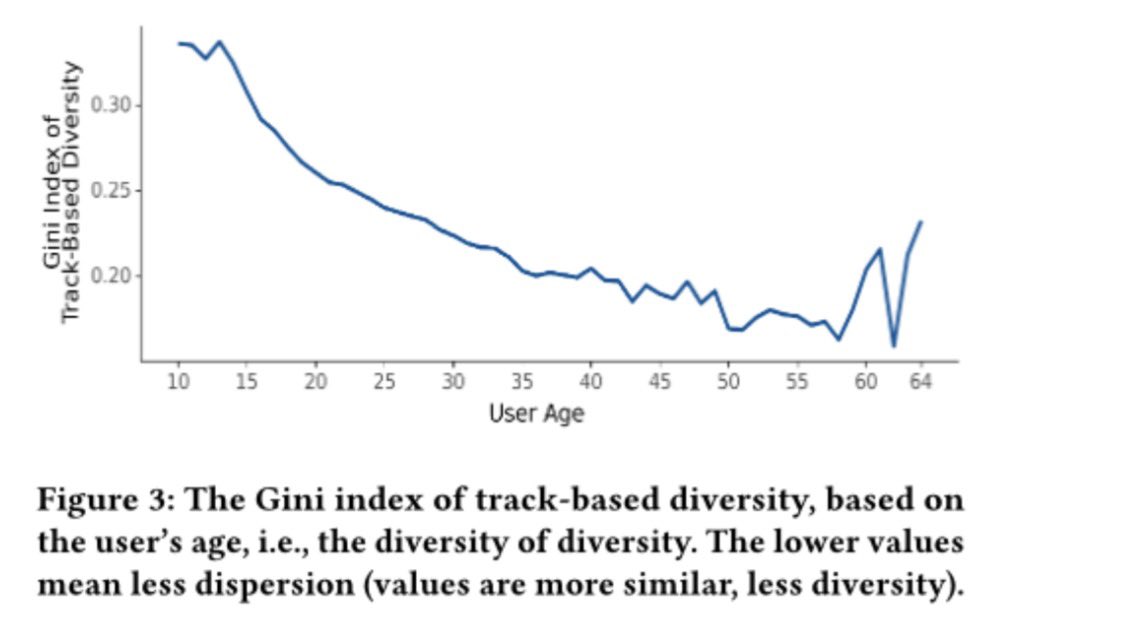
Your brain peaked musically somewhere around age 16. Everything since then has been a dopamine echo. Between the ages of 12 and 22, the mesolimbic dopamine pathway, the same circuit that processes cocaine and sex, fires at levels in response to sound that it will never reach again for the rest of your life. A 2011 McGill study used PET scans and fMRI simultaneously and found that music triggers dopamine release in the striatum at peak emotional arousal. The caudate nucleus lights up during anticipation of the good part. The nucleus accumbens lights up when it hits. Your brain is treating a guitar riff with the same reward architecture it uses for food-seeking and pair bonding. During adolescence, that response is dramatically amplified. Pubertal hormones are flooding the system. The prefrontal cortex is still wiring itself. Memories formed during this window get encoded with a density of emotional tagging that nothing in your 30s or 40s can replicate. Researchers at the University of Leeds identified this as the “reminiscence bump”: the period when your sense of self is forming, and the music playing during that formation becomes structurally integrated into your identity. A 2025 longitudinal study from the University of Gothenburg analyzed 40,000 users’ streaming data across 15 years. Younger listeners explored broadly across genres. Older listeners collapsed into increasingly narrow loops, almost entirely anchored to music from their teens and early twenties. Your brain stopped losing interest in new music years ago. It’s running a cost-benefit analysis. Familiar songs deliver guaranteed dopamine with zero processing cost. New songs require pattern recognition, expectation-building, and repeated exposure before the reward circuit kicks in. Past 25, most people stop paying that tax. The one variable that predicts whether someone keeps exploring: the personality trait “openness to experience.” Score high, you keep seeking. Score average, you default to the familiar forever. The fix, if you want one: deliberate exposure. Three listens minimum before your auditory cortex builds enough predictive models to generate a reward response. One passive listen on a playlist will never get there. Your brain needs repetition to find the pattern, and it needs the pattern to release dopamine.
Aakash Gupta tweet media
𐌁𐌉Ᏽ 𐌕𐌉𐌌𐌉@OrevaZSN

Unfortunately, as you get older, you gradually become less interested in new music and keep going back to the old favorite songs you once loved.

English
357
805
5.4K
780.9K
Jessica Chambers ری ٹویٹ کیا
𝐿𝒶𝒹𝓎 𝒱 🥀
𝐿𝒶𝒹𝓎 𝒱 🥀@V_Lady2024·
This was literally the most informative thing I’ve heard all year. All year. 🧈
English
110
2.9K
15.5K
399.6K
Jessica Chambers ری ٹویٹ کیا
Aakash Gupta
Aakash Gupta@aakashgupta·
I worked at Epic Games for two years. This is real, and the strategy behind it is smarter than most people realize. Tim Sweeney has spent nearly two decades buying North Carolina forest land. 50,000+ acres across 15 counties. He’s now one of the largest private landowners in the state. The purchases started in 2008, right after the real estate collapse wiped out developers who had been planning golf resorts and luxury communities on biodiverse wilderness. Sweeney paid $15 million for Box Creek Wilderness, a 7,000-acre stretch in the Blue Ridge foothills containing 130+ rare and threatened species. Developers had owned 5,000 of those acres before the crash. He bought them for conservation prices when nobody else was bidding. He runs the acquisitions through an LLC called “130 of Chatham.” He buys the land, holds it for years, then either donates it to the U.S. Fish and Wildlife Service, sells it at a discount to state parks, or hands it to land trusts. In 2021, he donated 7,500 acres in the Roan Highlands to the Southern Appalachian Highlands Conservancy. Largest private land donation in North Carolina history. The part people miss: he told the News & Observer that since 2021, land got too expensive to keep buying. So he shifted focus to converting his existing 50,000 acres into permanent conservation status. He’s locking the land into legal structures that make development impossible regardless of who owns it in the future. A billionaire worth roughly $6 billion is spending tens of millions acquiring wilderness specifically during economic downturns, then giving it away or placing it under permanent legal protection. The land will outlast him, Epic Games, and Fortnite. That’s the part that separates Sweeney from billionaires who write checks to get their name on a building. The building depreciates. The forest compounds.
Dudes Posting Their W’s@DudespostingWs

Huge W

English
1.2K
19K
178.4K
10.5M
Jessica Chambers ری ٹویٹ کیا
Massimo
Massimo@Rainmaker1973·
At Edinburgh Zoo, Gentoo penguins are starting their breeding season. Kids from Edinburgh Children’s Hospital Charity painted pebbles for the penguins to present to their mates and can watch the birds choose their favorite via livestream.
English
158
1.8K
13.5K
596.6K
Jessica Chambers ری ٹویٹ کیا
Roy E. Bahat
Roy E. Bahat@roybahat·
Outside Anthropic's office in SF... intense moment!
English
494
4.9K
33.7K
1.9M
Jessica Chambers ری ٹویٹ کیا
Ronke Lawal
Ronke Lawal@ronkelawal·
This is the full Transport for London advert which includes the portion which was turned into a short facebook advert that has now been banned. The full advert in context is actually very good. It's a shame that the facebook advert has distracted from the intention.
English
29
500
3.5K
203.3K
Jessica Chambers ری ٹویٹ کیا
Aakash Gupta
Aakash Gupta@aakashgupta·
This is one of the most important studies in sleep science. Van Dongen et al. ran the experiment that changed how we understand chronic sleep restriction. They had subjects sleep 4h, 6h, or 8h nightly for 14 days, testing cognitive performance every 2 hours. The 6h group’s reaction time deficits by day 14 matched subjects who had been awake for 24 hours straight. The 4h group? They performed like someone awake 48 hours. But here’s what makes this study terrifying. The Stanford Sleepiness Scale ratings in Panel B plateau after day 3-4. Subjects stopped feeling more tired even as their cognitive performance continued deteriorating through day 14. Your subjective experience of fatigue is a lagging indicator that eventually just… stops updating. This explains why chronic undersleeping feels sustainable. You’ve adapted to feeling tired. Your prefrontal cortex hasn’t adapted to being impaired. The PVT (Psychomotor Vigilance Task) in Panel A measures lapses in attention. These are the moments where you’re staring at a screen and your brain simply checks out for 500ms. Every additional day of 6h sleep adds more lapses. The curve never flattens. Panel C and D show working memory and processing speed. Same pattern: continuous degradation with no subjective awareness. The practical implications: If you’re sleeping 6h and think you’re functioning fine, you’ve lost the internal calibration to know you’re not. The subjects in this study would have told you they felt “okay” while performing like they’d pulled an all-nighter. For anyone doing cognitively demanding work, this means you cannot trust how you feel. You need to track objective markers: error rates, decision latency, problem-solving throughput. Sleep need is biological, not negotiable. Most adults require 7-9 hours, and the research shows no population-level adaptation to chronic restriction. “I only need 6 hours” is almost always “I’ve forgotten what baseline cognition feels like.“
Bailey Klemmensen@iiKlemm

Competitive gamers: 6h of sleep is a hidden nerf. 6h/night for 2 weeks → reaction time & attention decline to the equivalent of pulling MULTIPLE all-nighters. Worst part: subjective fatigue plateaus, so you stop noticing. If you're not getting 7+ hours/night, you're trolling.

English
231
4.1K
31.4K
4.1M
Jessica Chambers ری ٹویٹ کیا
Massimo
Massimo@Rainmaker1973·
Never gamble [📹 jeremytanmagic]
English
107
2.1K
14K
438.5K
Jessica Chambers ری ٹویٹ کیا
mitra
mitra@mitrajoy_·
what a time to have an anxiety disorder, a love of history, and a compulsive need to stay informed
English
349
12.8K
77.3K
1.1M
Jessica Chambers ری ٹویٹ کیا
Sebastian Siemiatkowski
Sebastian Siemiatkowski@klarnaseb·
Yes, we did shut down Salesforce a year ago, as we have many SaaS providers—an internal estimate is about 1,200 SaaS shut down. No, I don't think it is the end of Salesforce; might be the opposite. Here is what actually happened and how/why we originally intended to NOT share it publicly: At Klarna, we decided early to explore the potential of AI and LLMs—mostly ChatGPT—while being open to testing all things that seemed to be trending. We encouraged all employees to do so and allowed them to pursue ideas organically rather than following "management direction" on exactly what they should be building. In the early days of ChatGPT, we heard a lot: "this tool allows you to feed all your PDFs, all your data sources to a LLM!" However, the old universal truth of data scientists still holds true, even in AI: "shit in, shit out." Feeding an LLM the fractioned, fragmented, and dispersed world of corporate data will result in a very confused LLM. We started instead exploring a few key concepts: What of our data was actually valuable? What data was duplicative, incorrect, or contradicting? Why was it like that? While people nowadays can criticize things like Wikipedia, we also reflected on the fact that it is a remarkable achievement—having over 20,000 people collaborate on the largest graph of knowledge that is still fundamentally of high quality, accessibility, and accuracy. What could we learn from this? A Swedish company, @neo4j, and @emileifrem introduced us to the beautiful world of graphs. We further explored data modeling, ontology, and, of course, vectors, RAGs, and many things. Key to our explorations became the conclusion that the utilization of SaaS to store all forms of knowledge of what Klarna is, why it exists (docs), what it tries to accomplish (slides, tickets, kanban boards), how it is doing (sheets, analytics), who is it dealing with (CRM, supplier management), who works here (ERP, HR) and what it has learnt was fragmented over these SaaS—most of them having their own ideas and concepts and creating an unnavigable web of knowledge that required a tremendous amount of Klarna specific expertise to operate and utilize. We also recognized that enterprise software has a standard set of features that are vital for it to operate—features such as audit, versioning, access and edit management, and similar universal needs. We need them as well, but that fragmentation again adds friction, admin overhead, and more. So, we decided to start consolidating; to put things together, connect our knowledge, and remove the silos. The side consequence of this was the liquidation of SaaS—not all of them, but a lot of them. And not for the license fees, even though those savings have been nice, but for the unification and standardisation of our knowledge and data. So no, we did not replace SaaS with an LLM, and storing CRM data in an LLM would have its limitations. But we developed an internal tech stack, using Neo4j and other things, to start bringing data=knowledge together. Ultimately, we found this very interesting, but more importantly starting seeing serious productivity gains. We allowed our internal AI to use this knowledge, and we realised with the help of @cursor_ai we could quickly deploy new interfaces and interactions with it. So, I discussed with one of my board members: should we share this publicly? We decided not to. We hold no grudge against SaaS (not true—I hate some of it, but won't tell you which one). But we are a payments company and a neo bank, there is limited value for us to share this externally. However, Klarna, being a bank, holds quarterly calls with its investors, and in passing on of these calls, I mentioned that we had removed some SaaS software including Salesforce. It turns out that the recording was leaked to @SeekingAlpha, and they put out a news post about it. And from there, it went crazy. Suddenly, @Benioff was asked on stage why Klarna was leaving Salesforce. I was tremendously embarrassed. So, to summarise, what does this mean? Will all companies do what Klarna does? I doubt it. On the contrary, much more likely is that we will see fewer SaaS consolidate the market, and they will do what we do and offer it to others. Those are likely to be your next SaaS. And it is very likely that Salesforce will be one of those companies. As highlighted many times, they do so much more than CRM today and hence have the opportunity to become that hub of knowledge that modern companies will seek. But there are also risks for them and others; a lot of our large enterprise SaaS providers suffers from a fallacy. They started as companies with a clear opinion of how to do things, but over time, as they try to satisfy every whim of any random person working at any large enterprise, they become somewhat of a glorified database and lose their opinion. Opinionated software is worth something, as opinions represent an experience of what works, what produces results. And this is the ultimate value. So I hope with sharing this we can clarify a lot of speculation and misunderstandings and in the end same thing as is always true, just like when mobile came along, we talked about mobile first, now you need to be AI first. Of course all SaaS companies will need to learn adopt and evolve. But if they do there is tremendous opportunity ahead.
English
80
208
1.8K
328.6K
Jessica Chambers
Jessica Chambers@bad_candy·
I’m gonna need the director’s cut of The Running Man. Someone please make it happen. The ending music from Clue is stuck in my head.
English
0
0
0
15
Jessica Chambers ری ٹویٹ کیا
mickey friedman
mickey friedman@mickeyxfriedman·
she was beautiful, like code that compiles on the first try but also you just knew that there was something deeply wrong with her, like code that compiles on the first try
English
134
2.4K
29K
515.7K
Jessica Chambers ری ٹویٹ کیا
James Melville 🚜
James Melville 🚜@JamesMelville·
This is brilliant. ♥️ 🎶🎻
English
798
10K
43.3K
1.4M
Jessica Chambers ری ٹویٹ کیا
Jeffrey J. Hall 🇯🇵🇺🇸
Japan has a new stationmaster cat. The Wakayama Electric Railway Kishigawa Line is famous for its feline stationmasters. A new cat, Rokutama, has been appointed trainee stationmaster of 2 stations. Other cats received promotions. This is serious stuff.
English
1K
15.8K
127.8K
5.6M
Jessica Chambers
Jessica Chambers@bad_candy·
I’ve known many incredible game designers. Hell, I married one! The only upside I see is digging into the universality of mechanics (feels so nerdy to recognize so many) as a way to protect the entire industry moving forward. Just… ugh.
Paul Lesko@Paul_Lesko

I’m at the gym now so won’t be able to fully cover until I get to the office but this is big BIG news so wanted to share it straight from the docket. The #Lorcana case appears to be over…at least in regards to Ryan Miller…as his offer of judgment was accepted by UD.

English
0
0
1
92
Jessica Chambers ری ٹویٹ کیا
QueenDay
QueenDay@QueenDay824·
This love is Blind Season didn’t need to be released. I need to reclaim my time #LoveIsBlindS9
GIF
English
33
442
4.9K
119.2K
Jessica Chambers
Jessica Chambers@bad_candy·
@DaciaBigster @StephenKing Night Shift (short stories, the last sentences will haunt you). Misery (internal monologue is incredible). The Bachman Books (one of the 4 novellas has been removed, but The Running Man and The Long Walk are both feature films right now for a reason.)
English
0
0
8
1.7K
Jared Maxwell
Jared Maxwell@ThatRetiredDude·
I might buy one of your books. I mostly enjoyed the films and never read the books, but your recent leadership, largely absent from recent discussions, stands out. So thank you. What book would you recommend the most? I will buy it within 24hr. Is tithe first book in a series or standalone?
English
44
0
15
67K
Jessica Chambers ری ٹویٹ کیا
Stephen King
Stephen King@StephenKing·
I am now the most banned author in the United States--87 books. May I suggest you pick up one of them and see what all the pissing & moaning is about? Self-righteous book banners don't always get to have their way. This is still America, dammit.
English
18.2K
21K
117.9K
8.1M
Jessica Chambers
Jessica Chambers@bad_candy·
@Paul_Lesko You’re right; also having the means to defend yourself at all (we need more anti-SLAPP legislation.) The system doesn’t always work, and even when it does you can upend a good man’s life for an extended period even if your case never had merit. I really appreciate your posts
English
0
0
1
16
Paul Lesko
Paul Lesko@Paul_Lesko·
@bad_candy To be fair, very expensive lawyers from very expensive firms are better sometimes.
English
1
0
2
50