शल्यहर: 🕉️

20.8K posts

शल्यहर: 🕉️ banner
शल्यहर: 🕉️

शल्यहर: 🕉️

@docdkm

Joy of walking 🚶🏃🧍🏻‍♀️🏃🏻‍♀️ globetrotter, philanthropist

Bharat شامل ہوئے Temmuz 2018
188 فالونگ190 فالوورز
शल्यहर: 🕉️ ری ٹویٹ کیا
𝐊𝐫𝐢𝐬𝐡𝐧𝐚𝐩𝐫𝐞𝐞𝐭𝐢
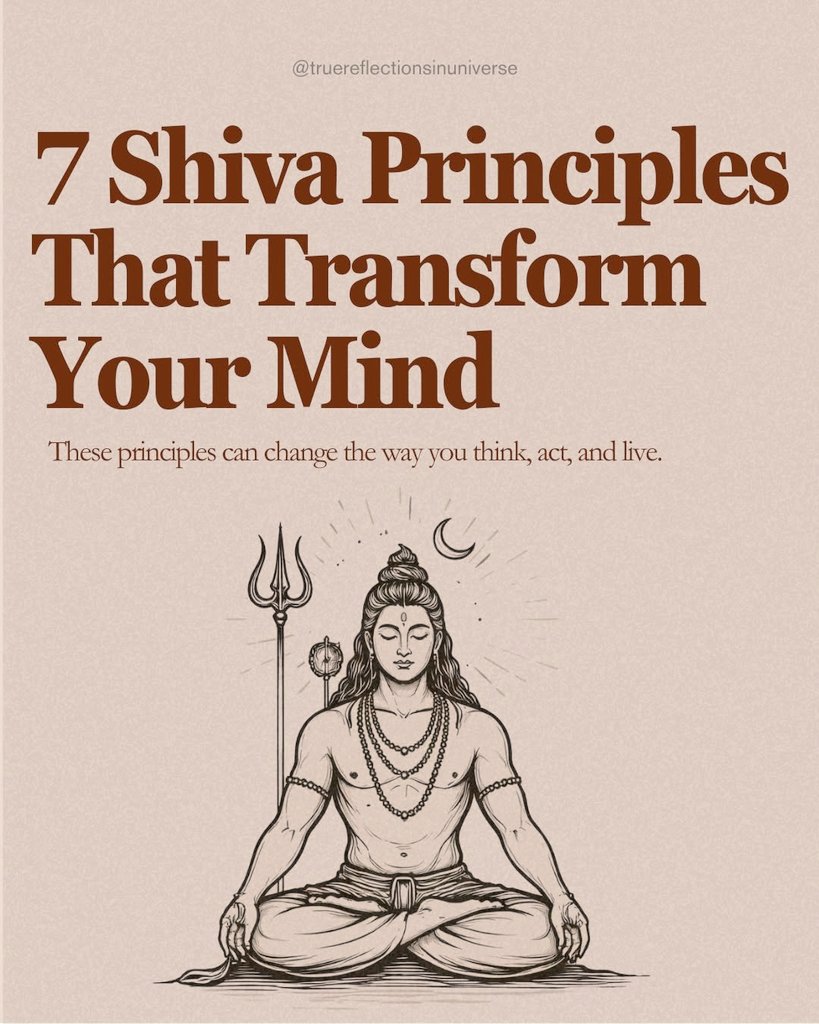
7 timeless principles of Shiva that can transform your mind Not motivation. Not trends. This is Sanatan wisdom. A thread 🧵👇
𝐊𝐫𝐢𝐬𝐡𝐧𝐚𝐩𝐫𝐞𝐞𝐭𝐢 tweet media
English
57
311
1.1K
66.4K
शल्यहर: 🕉️ ری ٹویٹ کیا
Ritesh Jain
Ritesh Jain@riteshmjn·
Every Empire Dies the Same Way They miss the next technology. Most civilizations do not disappear because they are weak. They disappear because the technology that once made them powerful becomes obsolete. History is filled with empires that looked permanent—until the rules of power changed. When those rules changed, their decline was often swift and irreversible. Egypt ruled the ancient world for nearly two thousand years. Long before Greece rose or Rome existed, Egypt possessed the most advanced state in the Mediterranean world. Its bureaucracy, agriculture, and armies were unmatched. During the Bronze Age, bronze weapons and chariots defined military power, and Egypt mastered both. But bronze had a hidden weakness. It required copper and tin—metals that had to be imported through fragile trade networks. Then came iron. Iron weapons were not just stronger; they were dramatically cheaper and far more abundant. But iron required extremely high temperatures to smelt, which meant vast quantities of charcoal. Charcoal meant forests. Forests meant geography. Egypt was a river civilization surrounded by desert. It simply did not have the forests needed to produce iron at scale. Assyria did. Situated near the wooded hills of Anatolia and the Levant, Assyria mastered iron metallurgy and equipped its armies accordingly. Within a few centuries Assyria dominated the Near East with iron-equipped forces. Egypt survived, but it never again returned to the center of global power. A civilization that had ruled for millennia missed the next technological age. The pattern would repeat across centuries. In medieval Europe the armored knight was the ultimate weapon of war. A knight was a walking fortress—encased in steel, mounted on a powerful warhorse, and supported by an entire feudal economy. Training one took decades. Equipping one cost enormous wealth. Society itself was organized around sustaining this elite warrior class. Then came a weapon made largely from wood. The English longbow could be wielded by commoners. A skilled archer could release ten arrows in the time it took a knight to cross the battlefield. At battles such as Agincourt in 1415, thousands of English archers faced a much larger French army filled with heavily armored nobles. The result was devastating. The economics of war had changed. A weapon that cost almost nothing could neutralize a system that required immense wealth to maintain. The knight did not vanish overnight, but its dominance ended. Technology had quietly rewritten the cost structure of power. The same dynamic unfolded in South Asia. For centuries Indian armies relied on war elephants as their ultimate battlefield weapon. Elephants towered over infantry formations, crushed cavalry charges, and carried commanders above the battlefield. They were symbols of royal authority and instruments of shock warfare. But elephants belonged to an older military age. In 1526 at the First Battle of Panipat, the Central Asian warlord Babur faced the much larger army of the Delhi Sultan Ibrahim Lodi. Lodi possessed tens of thousands of troops and hundreds of war elephants. Babur’s force was far smaller. But Babur brought gunpowder artillery. When the cannons fired, the explosions terrified the elephants. The animals turned and stampeded through their own ranks. Within hours the Delhi Sultanate collapsed and the Mughal Empire was born. A military system that had dominated the subcontinent for centuries was undone in a single afternoon. Numbers had not changed. Technology had. Even more dramatic was the rise of the Mongols. To the sophisticated civilizations of the thirteenth century, the Mongols appeared primitive. China had cities and advanced engineering. Persia had wealth and scholarship. Europe had castles and armored knights. The Mongols had horses. But their system of warfare was revolutionary. Each warrior rode multiple ponies, allowing Mongol armies to travel extraordinary distances without exhausting their mounts. Their composite bows could penetrate armor at long range, and their decentralized command structure allowed rapid maneuver warfare that stunned slower armies. Mobility became the decisive advantage. Within a few decades the Mongols built the largest contiguous empire in human history, stretching from Korea to Eastern Europe. Civilization had been defeated by adaptation. Modern history offers an even clearer example. At the beginning of the Second World War the most powerful warships ever built were battleships—massive floating fortresses armed with gigantic guns capable of firing shells across vast distances. Nations poured immense resources into these symbols of naval supremacy. Then aircraft carriers arrived. Aircraft launched from carriers could strike ships from hundreds of kilometers away—far beyond the range of battleship guns. In the Pacific War carriers destroyed battleships without ever entering their range. Within a few years the battleship became obsolete. Aircraft had replaced armor. Every military revolution follows the same pattern. A cheaper or more effective technology suddenly destroys the expensive system that once defined power. Iron replaced bronze. Longbows humbled knights. Cannons broke elephant armies. Aircraft replaced battleships. Each time the global balance of power shifted. Today we may be entering another such moment. For five centuries global dominance belonged to maritime powers that controlled the oceans. The Portuguese began the era of oceanic empires. The Spanish expanded it. The Dutch perfected global trade networks. Britain built a navy so powerful that at one point it exceeded the combined fleets of its rivals. In the twentieth century the United States inherited this system. Aircraft carriers became the ultimate instruments of global power projection. Control of the sea meant control of trade. Control of trade meant control of wealth. But the technologies shaping warfare are changing again. Drones, artificial intelligence, autonomous systems, and precision missiles are altering the economics of conflict. In modern battlefields inexpensive drones have destroyed tanks worth millions of dollars. A device costing a few hundred dollars can destroy equipment thousands of times more expensive. When such asymmetries scale, entire military doctrines become unstable. Even the aircraft carrier—the crown jewel of naval power—faces new vulnerabilities. A single carrier costs more than thirteen billion dollars, yet missiles capable of threatening such ships may cost a tiny fraction of that. But the deeper shift may not be destruction. It may be denial. In the twentieth century dominance meant the ability to project power anywhere in the world. In the twenty-first century victory may simply mean preventing your rival from reaching you. Access denial can be as powerful as conquest. Consider the Strait of Hormuz, through which roughly a fifth of the world’s oil supply flows. If even a regional power could credibly deny access to that narrow corridor using missiles, drones, mines, and autonomous systems, the consequences for global trade would be immense. To challenge a superpower no longer requires conquering its cities. It may only require making key strategic routes too dangerous to enter. If a navy cannot guarantee safe passage through critical chokepoints, its ability to operate near heavily defended regions becomes far more uncertain. And that raises an uncomfortable question. If access to a narrow waterway like Hormuz can be contested, what does that imply about operating near Taiwan—surrounded by dense missile networks and advanced defenses? The balance between offense and defense may be shifting again. Whenever that happens, the global hierarchy begins to move. China appears determined not to miss this moment. It is investing heavily in artificial intelligence, robotics, autonomous systems, and advanced manufacturing. It already produces a dominant share of the world’s industrial robots and graduates enormous numbers of engineers every year. The United States still possesses immense advantages—its universities, capital markets, and technological ecosystem remain powerful. Old powers rarely fade quietly. But technological transitions are rarely gentle. Which brings us to India. Every technological shift divides nations into two groups: those who build the future and those who live inside it. Egypt missed iron. Knights missed the longbow. Elephant armies missed gunpowder. Battleships missed aircraft. The twenty-first century will be defined by artificial intelligence, robotics, autonomous warfare, and advanced manufacturing. The question is simple: who will build it? India has the population, the talent, and the intellectual capacity to be one of the defining powers of this age. But technological leadership demands long-term focus—investment in science, engineering, industry, and strategic capability. Yet too often the national conversation revolves around something else entirely. Instead of debating how to dominate artificial intelligence or robotics, political energy is consumed by the next election cycle and the next round of handouts. Welfare schemes designed to win votes—cash transfers, subsidies, and programs such as “Ladli Behna”—may bring short-term political victories. But they do little to build the scientific, technological, and industrial foundations that determine long-term power. History offers a harsh lesson: civilizations that focus on distributing wealth before creating it eventually fall behind those that invest relentlessly in capability. Empires are not lost only on battlefields. Sometimes they are lost in budgets. A society obsessed with the next election rarely prepares for the next technological revolution. The countries that dominate the coming century will be those that build laboratories, factories, engineers, and machines—not just welfare rolls. India therefore faces a choice that will define its future. It can commit to the hard path of technological leadership—massive investment in research, robotics, AI, manufacturing, and military innovation. Or it can remain trapped in a narrow cycle of electoral politics and populist giveaways, slowly drifting toward the margins of global power. Egypt missed iron. Others missed gunpowder. Still others missed aircraft. The question of this century is simple. Will India seize the age of AI and robotics—or miss it? Because every empire that misses the next technology eventually learns the same lesson. It becomes a spectator in a world shaped by others. (Written by Vikas Sehgal. He is an investor with @PineTreeMacro )
English
78
300
1.2K
85K
शल्यहर: 🕉️ ری ٹویٹ کیا
Ge(r)ms of Bollywood बॉलीवुड के रत्न
1. This is an AI generated image. 2. They were not stars. They were actors of an industry where plagiarism was rule. 3. All four became famous because of singers Mohd Rafi and Kishore Kumar - the real makers of Bollywood. Proof is that none of there film is remembers when they talk of golden era. All they show even today are songs sung by Rafi and Kishore. 4. At least three of them had massive ego problems. One's career was destroyed due to ego and refusal to respect others. Indulged too much in alcohol, women and came late on sets as a rule. Would force directors to add a death scene for him. By the time he realized, he looked old and bloated. Other loved Pakistan and Urdu, mocked Marathi and Hindi. Started flopping because his overacting was praised by others in Urduwood, but public got fed up. One never worked with other actors and was always solo. Till end, produced most third-grade films including themes of incest. One was a nice humble person of four. But chose most third-class obscene roles till end. Famed for most disgusting cinema ever produced in 90s competing with one and only one Mithun Da. Kanti Shah favorite. 5. Third class plagiarized cinema and perversion it served destroyed India and only nurtured pedophilia and eve-teasing. Good that the industry is finally seeing its demise. No stars. No heart ruling. Pure marketing gimmick imposed on a nation that deserved better role models
English
34
252
818
48.2K
शल्यहर: 🕉️ ری ٹویٹ کیا
devashish sharma
devashish sharma@astrodev15·
19 Vedic Astrology Hacks Astrologers Rarely Share 1. Keep your footwear organized. Messy, scattered shoes invite negative Saturn (Shani) energy and create unnecessary delays. 2. Wear clean, ironed clothes daily. Even if you're staying home, looking neat instantly strengthens your Venus (Shukra), attracting prosperity. 3. Drink water from a silver or glass cup. Avoid plastic. It stabilizes a restless Moon (Chandra) and calms your emotions. 4. Declutter broken electronics immediately. Hoarding damaged clocks or gadgets attracts heavy Rahu energy, leading to anxiety and confusion. 5. Feed street dogs or birds. It balances Ketu and acts as a powerful remedy to remove unexpected hurdles in life. 6. Wake up before sunrise. Soaking in the early light aligns your aura with the Sun (Surya), building confidence vitality. 7. Apply a tiny dot of turmeric or sandalwood on your forehead. It awakens Jupiter (Guru), enhancing wisdom and focus throughout the day. 8. Add a pinch of sea salt to your mop water. It cleanses the house of negative vibrations and stagnant energy. 9. Respect your domestic help and workers. Saturn (Shani) rules the working class; treating them well automatically clears bad karma. 10. Keep a small green plant on your work desk. Mercury (Budh) thrives on greenery, which sharpens your intellect and communication. 11. Sleep with your head facing South or East. It aligns your body with the Earth's magnetic field, ensuring deeper, uninterrupted rest. 12. Eat a small piece of jaggery before leaving the house. Mars (Mangal) favors this, giving you a boost of protective, grounding energy. 13. Use a mild fragrance or perfume daily. Venus loves pleasant aromas and uses them to attract wealth and harmony. 14. Never disrespect food on your plate. Wasting meals weakens Jupiter and blocks financial growth. 15. Keep your main entrance well-lit and clean. The front door is the mouth of your home; keeping it bright invites positive cosmic energy inside. 16. Avoid cutting nails or hair after sunset.Traditionally, doing so in the dark disturbs your planetary alignments and invites negativity. 17. Don't make major decisions during eclipses (Grahans). The planetary energy is too chaotic; wait until the dust settles. 18. Avoid wearing torn or faded clothes, even for fashion. It slowly degrades your Venus, which governs luxury and comforts. 19. Spend 10 minutes in absolute silence daily. It strengthens your Moon, sharpens your intuition, and helps you hear your inner voice
English
4
254
1.4K
75.8K
शल्यहर: 🕉️ ری ٹویٹ کیا
VERYDARKMAN
VERYDARKMAN@vdmempire·
🚨3 Lessons ALL MEN Should Take from Pep Guardiola’s failed MARRIAGE⤵️ Guardiola is the manager of Manchester City who met his wife in 1994 1. He met her when he was 18 years old while playing for Barcelona. They started dating since 1994 and married in 2014, 20 year later. Some people are in relationships or marriage today and are still stucked in this idea that knowing or being with someone for a very long time means their love life would be happily ever after. 2. The ex wife was a fashionista who came from a well to do family. Marrying the most beautiful woman or a rich man will not spear you from eating breakfast When the Ex wife was quizzed after being spotted by a reporter. She said: “My parents have always advised me to find what I am passionate about” Now Guardiola is worth $60million, they have three kids, family and being together for 30 years. Still, it wasn’t enough, something was missing What was missing? A close friend of Guardiola when interviewed said the marriage ended because “He’s a total workaholic and it took a toll on his relationship” Some men are out there working so hard for the sake of their family but have ungrateful wives at home. For most women a perfect husband means, a man who is home to make dinner for his beloved wife, go to the movies together while holding hands and change dippers. And there’s nothing wrong with wanting all that but when choosing a wife make sure you know what she desires. Be on the same page. 3. Know what you want. Majority of people don’t know what is priority for them. Do you want a rich man who is a workaholic or an average guy who have all the time to spend with you but can’t provide a luxury lifestyle? Don’t marry a Guardiola then leave him after 30 years of marriage for not making enough time. This is applicable to both men and women! Don’t get it twisted, being rich is not enough but a quality to have on the side to strike the balance as required for the relationship to thrive Everyone was wondering the reason for Guardiola’s downfall in football, he started acting strangely, there was a time he scratched his own face with his nails after just a draw in a match. After games, he sits alone for a long time deep in thoughts and was even mocked he would be sack by fans. No one knew he was going through marital struggles He lost his largest mansion, half of his fortune, lost his children, his family and perhaps his club soon by 2027. Men absorbes so much struggles, it doesn’t matter what you feel, get up and get it done. Being a man is not about not feeling things, it about feeling things and still acting like a man. Sometimes people say I act like I don’t have feelings. I feel things, all the pains and emotions but it won’t stop me from getting things done. Welcome to the brotherhood!
VERYDARKMAN tweet media
English
169
535
2.6K
923.2K
शल्यहर: 🕉️ ری ٹویٹ کیا
Mahesh 🇮🇳
Mahesh 🇮🇳@Mahesh10816·
Some were giving gyan yesterday, time to ask some questions to these gyanis 1. @PMOIndia was not involved in taking the UGC call, it was @dpradhanbjp call . If that was the case , @PMOIndia should have dismissed Pradhan 2. @PMOIndia was not in favour of the contents of the bill. If so , the bill should have been withdrawn immediately 3. @BJP4India did not raise any objection in SC, stay was obtained only because of BJP. This is crazy, had BJP opposed SC would have humiliated BJP further for drafting such useless bill . The fact is by not opposing, it avoided further embarrassment 4. No this bill has been stayed , this notification is not in force, why worry. Arre ! This is hanging on the head of GCs like a domicile sword, any moment the decision could be revoked. Do you want to keep GC with a gun on their head ? 5. Entire UGC is being scrapped . We are least bothered with your carrots, we talk on what's on the table 6. Trust Modi. We have trusted Modi ji enough, this entire UGC episode is breach of trust by Modi ji
English
71
614
1.6K
28.7K
शल्यहर: 🕉️ ری ٹویٹ کیا
Path of Men
Path of Men@PathOfMen_·
Sigmund Freud believed a father must be a “threat,” not a friend, or the son never fully becomes a man. A boy is born into the world of the mother, warmth, forgiveness, safety. But maturity begins only when the father introduces limits, hierarchy, and resistance. Freud called this the “Law of the Father”. not violence, but authority that doesn’t collapse under emotion. When a father becomes a buddy too early, the boy never exits childhood. Historically, initiation meant separation from the mother, fear, discipline, even pain. The father was the guide into danger, responsibility, and competition. Today that role is diluted into reassurance and endless empathy. The result is visible everywhere: grown men addicted to comfort, terrified of criticism, avoiding risk, seeking approval. Friendship with father is possible, but only after strength is proven, not before. Until then, firmness is not cruelty. It is preparation. The world will not negotiate. A father existed to make sure his son could survive that fact.
Path of Men tweet media
English
594
2.7K
18.8K
1.4M
शल्यहर: 🕉️ ری ٹویٹ کیا
Sudhir Mishra
Sudhir Mishra@IAmSudhirMishra·
One of us has the guts . There is a film . You’ll see it soon . Also please stop lumping us all under one brand , called Bollywood. We belong to the Indian Film Industry and we are all different. By the way Dhurandhar is a well made film . Aditya Dhar is extremely skilled . The acting is terrific . The most difficult thing in film making is a Directors ability to make us , the audience “ smell the place “and Aditya Dhar with the help of his brilliant Cinematographer and Production Designer manage to do just that . The casting , including the minor parts is bang on . I am of course, a filmmaker, from another school.
Sanjay Jha@JhaSanjay

I saw a clip where Arnab Goswami on @republic @Republic_Bharat raises this same point I make in my tweet: Does Aditya Dhar and Vivek Agnihotri have the guts to make a film on #Unnao victim??? If India’s journalists start calling out the madness prevailing in our country, there is still some hope. We will survive this. Good going Arnab. That’s the man I knew once. I hope it lasts. Good luck!
English
75
243
2.6K
316.7K
शल्यहर: 🕉️ ری ٹویٹ کیا
Ram Gopal Varma
Ram Gopal Varma@RGVzoomin·
Whenever a path breaking and monstrous hit like #dhurandhar comes , the industry people will wish to ignore it because they will feel threatened by it due to their inability to match it’s standards ..So they will think of it as a nightmare, which will vanish when they wake up in their own films This is even more true of all the so called pan india biggies which are right now under various stages of production.. They were all written and mounted , modelled on the films made before #dhurandhar which is the exact opposite of what they all believed will work .. what’s even more worrisome is that #dhurandhar apart from being a omega hit also is the most discussed film since the last 50 years Everyone of us experienced an incident like we going to visit someone’s house and we see a large scary looking dog which keeps staring at us .. Inspite of the owner assuring it’s harmless and advises us to ignore it , the tension will remain and will keep growing and we can’t resist seeing it from the corner of our eyes .. #Durandhar will be like that monstrous dog which will be invisibly pacing around in every production office wherever the upcoming biggies are being made .. They will try their level best to even avoid uttering the dog’s name, but it will keep loitering in all their minds ..To that extent #dhurandhar will actually be like a HORROR film for all those makers who believed in the earlier template of VFX ridden , expensive sets , item song ridden and the Hero worship template ..And now in #dhurandhar with the film being worshipped instead of the star, they would be getting crucified in their own self created dungeon of masala films .. But no matter how much they wish the dog won’t go away .. it will be here to bite whenever their next film releases More than anything else @AdityaDharFilms is forcing the industry people to look at their own films in the mirror , in comparison to the beautiful looking #dhurandhar
English
420
2.4K
15.3K
1.1M
शल्यहर: 🕉️ ری ٹویٹ کیا
GemsOfINDOLOGY
GemsOfINDOLOGY@GemsOfINDOLOGY·
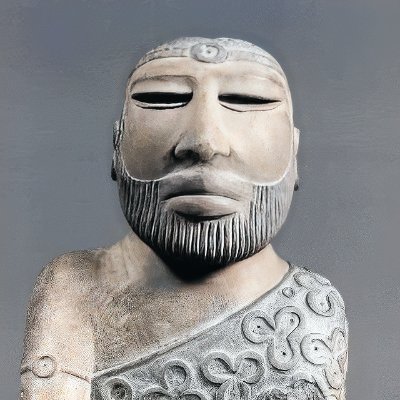
1/ Did you know that Mauryan achieved Marble finish on sandstone. Yes, Twelve-metre monoliths with mirror finishes, carved and polished in the 3rd century BCE—not in Rome, not in Greece, but in Mauryan India. Yet every world history syllabus starts with Mediterranean marble, while sandstone got written out and marble took the crown. Why? 🪨📜
GemsOfINDOLOGY tweet media
English
20
463
1.5K
42K
शल्यहर: 🕉️
@CISFAirport @ankitdewan @AirIndiaX Stop giving such lame excuses @CISFAirport . Q jumping has happened many times in past with me as well & ur personnels posted there always remained mute spectator. U need to improve ur services & ensure that commuters don't get troubled. Next time, I too will make video as proof
English
0
0
0
117
APS - CISF
APS - CISF@CISFAirport·
@ankitdewan @AirIndiaX Dear Pax, CCTV footage has been reviewed and confirms that CISF personnel intervened immediately. The other individual was promptly removed from the spot upon occurrence of physical assault. CISF officers reached without delay, and medical assistance was arranged promptly. (1/2)
English
67
5
100
88.1K
शल्यहर: 🕉️ ری ٹویٹ کیا
Ankit Dewan
Ankit Dewan@ankitdewan·
@AirIndiaX, today one of your pilots, Capt. Virender Sejwal, assaulted me physically at T1, Delhi Airport. Here are the facts of the matter,: 🔸 Me & my family were guided to use the security check that the staff uses (also the PRM check), because we had a 4 month old baby in a stroller. 🔸 The staff was cutting the queue ahead of me. On calling them out, Capt. Virender, who himself was doing the same thing, asked me if I was anpadh (uneducated), and couldn't read the signs that said this entry was for staff. 🔸 A verbal scuffle broke out. 🔸 Not able to excercise restraint, the AIX pilot proceeded to physically assault me, leaving me bloody. The blood in the photograph (first comment) on his shirt is also mine. Here are my issues with the whole thing: 🔹 My holiday is ruined. The first thing I have done here is see a doctor. 🔹 My 7 year old daughter, who saw her father get assaulted brutally, is still traumatized & scared. 🔹 I have no clue how @DGCAIndia & @AirIndiaX can allow such pilots to fly. If they can't keep their cool in a scuffle, can they be trusted with the lives of hundreds of people in the sky? 🔹 How can @DelhiAirport get away with such mismanagement, combining staff entry with passengers carrying infants, creating chaos at a sensitive security area? I thought Airports were safe places! 🔹 I was forced to write a letter stating that I will not pursue this matter further ... It was either write that letter, or miss my flight and throw the 1.2 lakhs holiday bookings down the drain. @DelhiPolice, why can't I file a complaint after coming back? Must I sacrifice my money too, to seek justice? Will the CCTV footage disappear in the 2 days till I make it back to Delhi? To my friends & well wishers, I am pretty shaken, but nothing permanent. Can't say the same about my daughter though. 😢
Ankit Dewan tweet media
English
1.4K
5.1K
12.4K
1.5M
शल्यहर: 🕉️
MCD gives ticket for parking and Traffic police sends challan for the same. Who is at fault ? Public or MCD or Traffic Police @narendramodi @pmo ? What should a common man do?
English
0
0
0
10
News Algebra
News Algebra@NewsAlgebraIND·
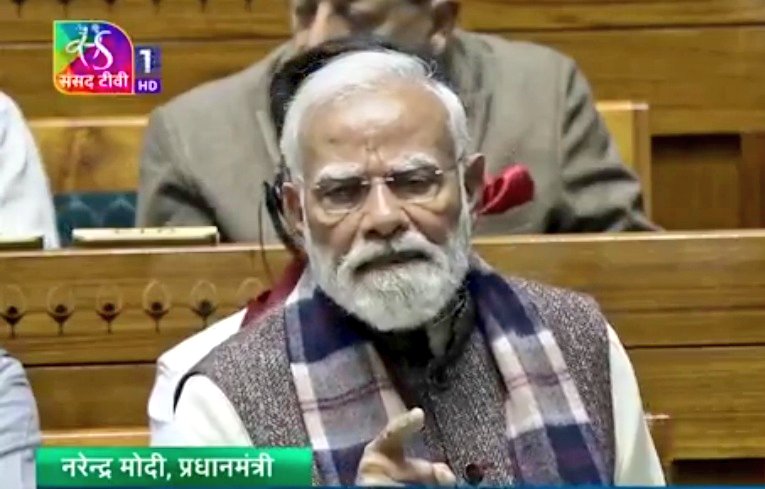
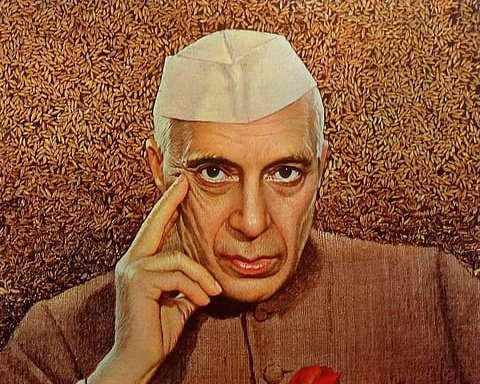
BREAKING NEWS 🚨 Amidst Opposition uproar, PM Modi questions Nehru on Vande Mataram. He said -- "Nehru wrote to Netaji Subhash Chandra Bose saying - I have studied the background of Vande Mataram and I feel it might upset Muslims" "Muslim League’s politics against Vande Mataram picked up in 1937, with Jinnah leading the protest" "Instead of rejecting Jinnah’s stand, Nehru began examining the song just five days later" - PM
News Algebra tweet mediaNews Algebra tweet media
English
122
757
3.6K
344.1K
शल्यहर: 🕉️
1. Bharat needs at least 6-7 Airlines companies on equal footing. None should hv more than 18% market share. 2. Each airport, at least 4 of these companies, MUST operate in equal number of flights. 3. The concept of last minute surge in cost MUST end. @PMOIndia @narendramodi
English
0
0
0
12
शल्यहर: 🕉️ ری ٹویٹ کیا
SUHEL SETH
SUHEL SETH@Suhelseth·
Just adding what I said both on @CNNnews18 and @republic yesterday: the Government must: A/. Revoke CEO ship of Peter E B/. Passengers are compensated (refund/hotel/conveyance / onward carrier charges) C/. Impose a penalty of Rs 4000 crores on @IndiGo6E D/. Sack the DGCA chief
English
557
1.6K
5.4K
280.9K
शल्यहर: 🕉️ ری ٹویٹ کیا
सावियो अरिहन रोड्रिग्स 🇮🇳
I will always stand by the @narendramodi government but it is my earnest appeal @AmitShah that @IndiGo6E and its owners be punished for this artificial crisis. More importantly all other airlines must be punished too for attempting to profit from an unprecedented crisis affecting the common people. Right now normalcy is of prime importance but Indigo cannot be allowed to blackmail the government. This will become our Achilles heal if we are not careful.
English
127
484
1.7K
22.9K