

Fourmine
87 posts

Still trying to figure out how republicans let this killswitch bullshit pass.
English

🚨 HOLY CRAP! Despite constantly hearing about how much cash Republicans have —
Democrats are set to pass their 10D-1R Virginia map by a narrow 3 points per NYT, but OUTSPENT Republicans by more than DOUBLE
🔵 Dem: $56M
🔴 Rep: $25M
Republicans ONLY spent $300K more than Dems in the past week.
A 3-4 point race...out-spent by double.
Why are we spending so much in USELESS places, or HOARDING donations, when we could've saved 4 SEATS in ONE STATE!
English
@McDonalds 1 hour for an order of McNugget meal in Louisburg KS. Total disaster of customer service. I suggest you contact that store… oh never mind they don’t answer the phone. Disgraceful….
English

Dawg: Ravens star RB Derrick Henry spends over $250K per year on body maintenance.
His diet is even crazier...
• No fried food
• No dairy
• No gluten
• No artificial sugars
• Doesn't eat until 4/5 PM during the season
We have never seen an athlete like Henry.
English


@ImMeme0 Seeing a 6'3" action star pummelling an older neighbor in front of his kids is a grim reality check. Whether it's self-defense or not, those boys shouldn't be learning that fists are the first response to a noise complaint.
x.com/danielj41413/s…
Daniel Jeong@DanielJ41413
[Reacher Star Alan Ritchson Under Investigation for Alleged Assault on Neighbor] Viral footage from TMZ shows actor Alan Ritchson punching and kicking his neighbor, Ronnie Taylor, in front of his two children during a dispute in Brentwood, Tennessee. Taylor claims he confronted Ritchson for "speeding and revving" his motorcycle through the quiet neighborhood, asking the actor to "slow it down" before things turned physical. Sources close to Ritchson factually counter that Taylor was the aggressor, allegedly pushing the actor off his bike twice and baiting him to fight before the recorded incident. The footage reveals Ritchson’s sons were present on mini-bikes; concerns have been raised regarding the lack of license plates and the legal age for the minors to operate them. Brentwood Police Department has confirmed that the case is active and Ritchson is cooperating, though no arrests have been made as of March 24, 2026.
English

🚨BREAKING: Side-by-side footage obtained by TMZ, along with Alan Ritchson’s own video, shows the moments leading up to his altercation with neighbor Ronnie Taylor.
In the footage, Taylor stops Ritchson to address concerns about reckless driving through the neighborhood with his sons. When Ritchson then revs his bike toward Taylor, the situation escalates, and Taylor can be seen pushing him. The two exchange words, after which the actor proceeds to assault Taylor while Ritchson’s sons watch just feet away. After the altercation, the actor and his sons drive away.
The footage also shows that neither Ritchson’s bike nor his sons’ bikes had license plates. According to reports, his sons are underage to obtain motorcycle licenses. Not only were they not supposed to ride these bikes according to the law, but they were also speeding through a residential neighborhood.
English


@SonOfATech It’s been a ghost town of madness and promoted dead shovel peddlers left unchecked without SOAT
English
I know I have not directly addressed this but... Life threw some curveballs - health, legal, financial. Back to my roots in IT/infrastructure engineering and actually enjoying it. Channel's paused indefinitely while I sort things out. Appreciate the patience and support from this community. Maybe we'll build again someday.
English
@DfinityToday Centralized does not count. Did you see the news today?
English

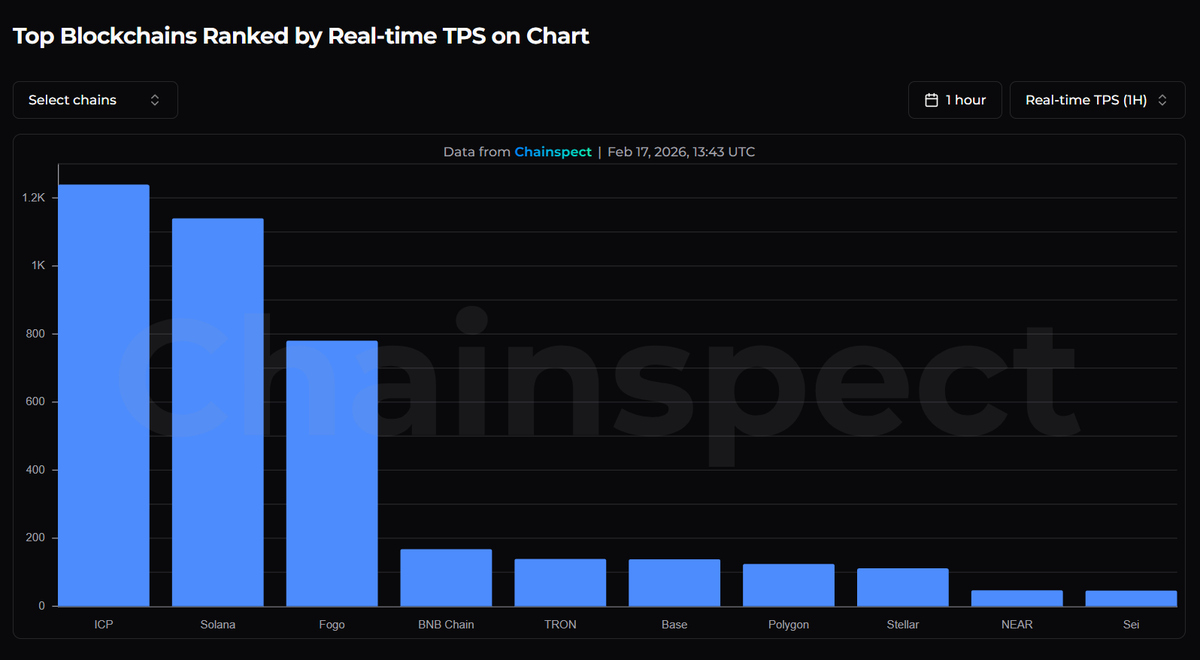
Top Blockchains Ranked by Real-time TPS (1H)
1. $ICP: 1,239 tx/s ⚡️
2. Solana: 1,140 tx/s
3. Fogo: 780.3 tx/s
4. BNB Chain: 167.7 tx/s
5. TRON: 139 tx/s
6. Base: 138 tx/s
7. Polygon: 124.2 tx/s
8. Stellar: 111.5 tx/s
9. NEAR: 46.83 tx/s
10. Sei: 45.97 tx/s
Source: @chainspect_app
English


Read this. @hashdag is literally saying Kaspa is speed + utility + SoV = sol + eth + BTC marketcaps.
Classic@Classicxbt
What started as a small weekend project for a few enthusiasts became a project that defies expectations and pushes the boundaries of what is possible. New article from @hashdag 👇 hashdag.medium.com/in-which-it-wa…
English

Every single person in Kaspa needs to STOP! and take the time to read this. And share it with every single person in the community.
hashdag.medium.com/in-which-it-wa…
English
@TheoryBuffalo @PoW_Odie Have you done your research on this chain? Emission schedule?
English

Mic drop in the truth bucket👏💪🦅
Well done @PoW_Odie
Odie@PoW_Odie
I made this because #Kaspa is more important than we currently realize. I love you all $KAS
English
@KaspaClass Learn the emission schedule, with no adoption = no miners = no execution
English


The Kaspa network is about to undergo its most significant transformation yet. With KIP-17 moving from Testnet 12 to Mainnet on May 5, 2026, we are entering the era of Covenants++. In this video, we break down why this isn't just a minor patch, but a revolutionary leap for Proof-of-Work programmability.
@kaspaunchained @KaspaTeacher @KaspaCom
@KasMI353 @kasplex @KaspaBrasa
youtube.com/watch?v=8qxKyR…

YouTube
English

The $KAS evolution is here. ⛓️✨
Covenants++ isn't just an upgrade; it’s a paradigm shift for $Kaspa.
Imagine smart contracts with:
• Zero global mutable state
• No admin keys needed
• Pure code-defined spending
The future of UTXO is deterministic, secure, and unstoppable. 🚀
What are you building on Covenants++? Let’s talk below! 👇
#Kaspa #KAS #CovenantsPlusPlus #UTXO #CryptoTech #Layer1
English
@sovereign_kas Ridiculously fast POW emission schedule with no adoption=no miners
English

not $KAS tho
because it’s fair launched and still has the Satoshi ethos of Proof of work, fair launch, and objective fixed supply
Erequendi@erequendi
Slow rug / scam / dead projects - Monad - Starknet - Zksync - Scroll - Taiko - Mantle - Algorand - Luna - Aleo - Mina - Linea - Boba network – Aptos – Cosmos – NEAR – Rootstock – Cardano – Stellar – Cronos – Axelar – Astar – Bittensor – Celo – Zircuit – EOS – Sonic – Injective – Kaia – Kava – Lisk – Metis – Tezos - Wormhole - Movement - Kinto - Celestia - Blast - PIN AI - Midas - Kinto - Metis - 0G - Polygon zkEVM - Berachain - Story They were all hyped at one point, but after a while they were abandoned by both the teams and the users. Some scammed right after launch, others slow rugged. So in the end, does crypto really need this many projects, or is crypto just a dumpster?
English