

Dmitry
2.2K posts
Dmitry
@kda275
Russian. Made in the USSR. Child of the three countries - Russia, Ukraine and Kazakhstan. Father. At work - lawyer, logistician, an expert on customs.
Московская область شامل ہوئے Mart 2015
596 فالونگ473 فالوورز







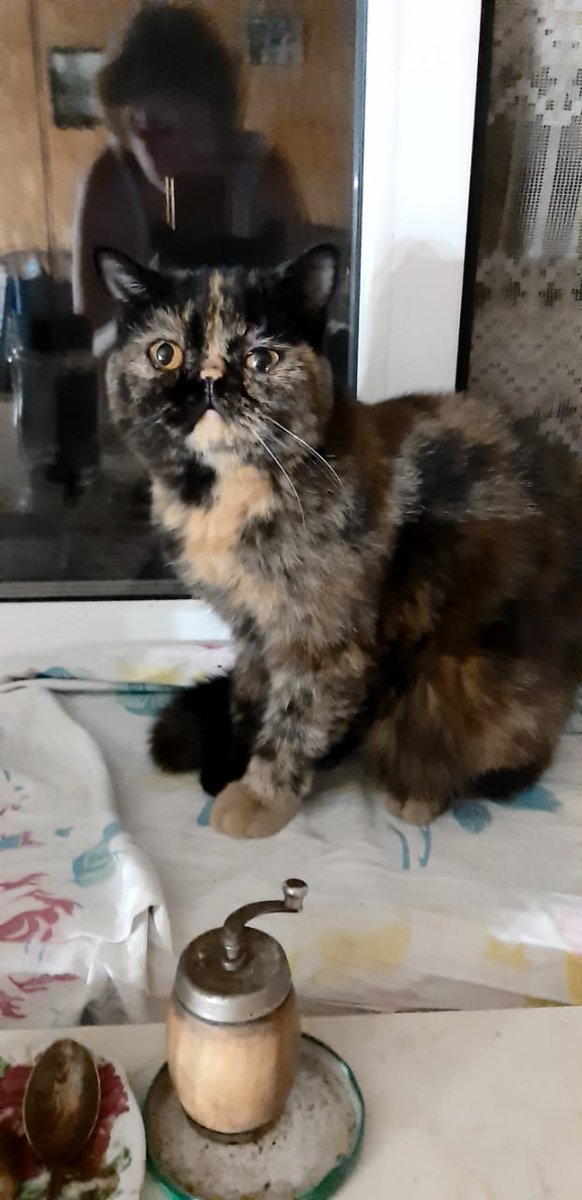
🇬🇧Show me your cat!
🇹🇷Kedini bana göster!
🇯🇵あなたの猫を見せてください!
🇰🇷네 고양이 보여줘!
🇵🇹 Mostre-me o seu gato!
🇪🇸 ¡¡¡Enséñame tu gato!
🇮🇩 Tunjukkan padaku kucingmu!
🇹🇭 โชว์แมวของคุณให้ฉันดูหน่อย!
🇸🇦 أرني قطتك!
🇮🇳 मुझे अपनी बिल्ली दिखाओ!
👇🏻👇🏻👇🏻👇🏻👇🏻👇🏻

日本語

Stalin once ripped all the feathers off a live chicken as a lesson to his followers.
He then set the chicken on the floor a short distance away.
The chicken was bloodied and suffering immensly, yet, when Stalin began to toss some bits of wheat toward the chicken it followed him around.
He said to his followers
"This is how easy it is to govern stupid people, they will follow you no matter how much pain you cause them, as long as you throw them a little worthless treat once in a while"
English







@donairene13 Булка - потому что приятная и мягкая/пушистая. Мою собаку зовут Альма. Но все зависит от ситуации. На видео она «Электровеник» - каждое возвращение с работы и как будто год не виделись.
Русский
Ainda não entendi por que os russos chamam os cachorros de pãezinhos 🤔
Português
@bestm8te @GodPlaysCards Одновременный залп всех машин не оставлял шансов выживания у тигров, так как даже непрямое попадание перед танком переворачивало его. СУ-150 дебютировали под Курском. Первым трофеем стал немецкий Элефант/Фердинанд.
Русский
@bestm8te @GodPlaysCards В ответ на появление «тигров» СССР начал разрабатывать самоходки. На шасси танка КВ была установлена 150 мм гаубица в бронированном корпусе. В войсках самоходка СУ-150 получила прозвище «Зверобой». Самоходки формировались в группы по 6-8 машин в каждой.
Русский

In the year 1942, a new fearsome weapon entered the battlefield, with armor so thick most Allied shells just bounced off.
88mm gun. 100mm of frontal armor. A weapon so dominant it made every Allied tank crew rethink how they fought.
Then, they found a way to tackle the beast.
🔸The Tiger I made its combat debut in September 1942 near Leningrad. German engineers had spent years designing a tank that could dominate any battlefield. They succeeded beyond anyone's expectations.
🔸The standard Allied tank at the time was the American M4 Sherman. Its 75mm gun could not penetrate the Tiger's frontal armor at any range whatsoever. To even scratch the side armor, a Sherman crew had to close to within 100 meters, close enough to see the German commander's face.
🔸The Tiger's 88mm gun was derived from a Flak 36 anti-aircraft cannon, whose extreme shell velocity made it devastatingly effective against ground targets. German engineers recognized this potential during the Spanish Civil War and developed a tank version. It became the most feared gun of the entire war.
🔸Allied tank crews were issued unofficial but very real advice: do not engage a Tiger from the front. Ever. The only chance of survival was to flank it, find its weaker side armor, and pray you got there before it spotted you.
🔸The psychological impact was as devastating as the weapon itself. Allied commanders reported soldiers refusing to advance when a Tiger was suspected in the area. A single Tiger could pin down an entire company just by existing.
🔸Germany's answer to Allied numerical superiority was technological superiority. One Tiger was expected to do the work of five Sherman tanks. On paper, the kill ratios proved them right, but in reality, it created a strategic problem Germany never solved.
🔸The Tiger weighed 57 tonnes. For comparison, the Sherman weighed around 30 tonnes. This meant the Tiger broke pontoon bridges, got stuck in soft ground, and could not be easily transported by rail without removing its wide battle tracks first.
🔸Maintenance was a nightmare. The Tiger required approximately 10 hours of maintenance for every hour of combat operation. Skilled mechanics were in short supply, spare parts were constantly delayed, and breakdowns were so common that more Tigers were lost to mechanical failure than to enemy fire.
🔸The Allies studied every captured Tiger obsessively. British engineers got their hands on an intact Tiger in North Africa in early 1943. They spent weeks tearing it apart, looking for weaknesses. What they found changed Allied tactics overnight.
🔸The top armor was only 25mm thick, the same as a tin can compared to its 102mm frontal plate. Allied tacticians built entire air attack strategies around this number. A Tiger that dominated every tank on the battlefield could be cracked open from above like an egg.
🔸The British responded by mounting the powerful 17-pounder gun on their tanks. The Sherman Firefly was born. Suddenly Allied tankers had a weapon that could penetrate Tiger armor at realistic combat distances. German crews learned to target Fireflies first.
🔸The Soviet Union took a different approach entirely. Rather than building a better tank, they built more tanks. The T-34 was faster, simpler, and could be produced in massive numbers. Soviet factories churned out thousands while German factories struggled to build hundreds.
🔸Allied air power became the Tiger's greatest enemy. The P-47 Thunderbolt ( on which I'm making a card next) and British Typhoon carried rockets and bombs that could crack a Tiger's thin top armor wide open. German tank commanders learned to fear clear skies more than enemy tanks.
🔸By 1944 the Tiger's dominance was fading. Better Allied guns, improved tactics, and overwhelming numbers were shifting the balance. The Tiger was still dangerous, but it was no longer unstoppable. Germany had built a masterpiece it couldn't afford to use at scale.
🔸Germany produced only 1,347 Tiger I tanks during the entire war. The Soviet Union produced over 57,000 T-34s. The United States built nearly 49,000 Shermans. The Tiger won almost every one-on-one engagement it fought. It just couldn't be everywhere at once.
🔸The Tiger's legacy influenced every major tank design that followed. The lesson it taught, that firepower and armor protection matter as much as speed and numbers, shaped how every army in the world thought about building tanks after 1945.
🔸In the end the Tiger didn't lose because it was outfought. It lost because Germany ran out of fuel, factories, and men to keep it running. A weapon is only as powerful as the industry behind it ( we can observe this lesson with the drones in Ukraine as wel). And by 1945, that nation was collapsing from every direction.
🔸The most fearsome tank of World War II was defeated not by a better tank, but by spreadsheets, factories, and logistics. The Allies out-produced, out-supplied, and out-lasted it. The Tiger was a masterpiece but the Allies built a machine for winning wars.
🔸The last Tigers fell silent in May 1945. A handful survive in museums today. I have never seen one in the flesh but I've heard that if you stand next one you immediately understand why men feared it.
As a final takeaway remember that 1,347 of them lost to 57,000 T-34s. That is the real lesson of the Tiger tank.
Quantity has a quality of its own.
Alright, that's a wrap. Thanks for sticking with me. Tomorrow I've got another fantastic story lined up for you.
Hope to see you there.

English
@Oksana11451495 У них симбиоз был. Когда обе были с потомством, одна гуляла, а другая с детьми сидела.


Русский




If u are unvaccinated, how many times did you get sick with COVID?
English




Post a picture YOU took. Just a pic. No description
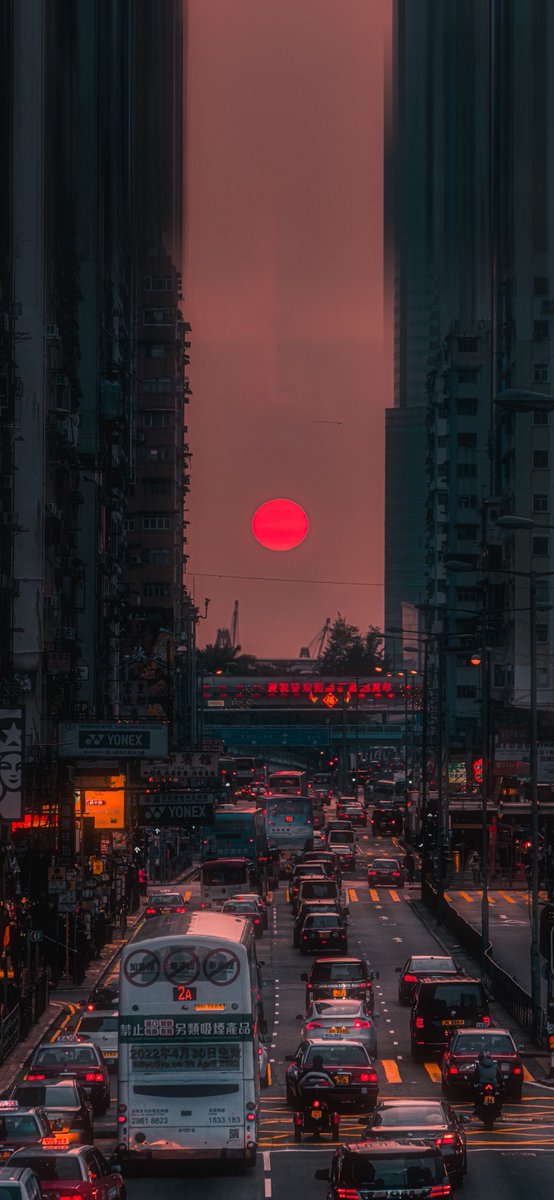
English
Enquanto isso, aqui faz 15ºC e minha cadela tá assim 🤭

Dmitry@kda275
@donairene13 У меня «Московская сторожевая».
Português
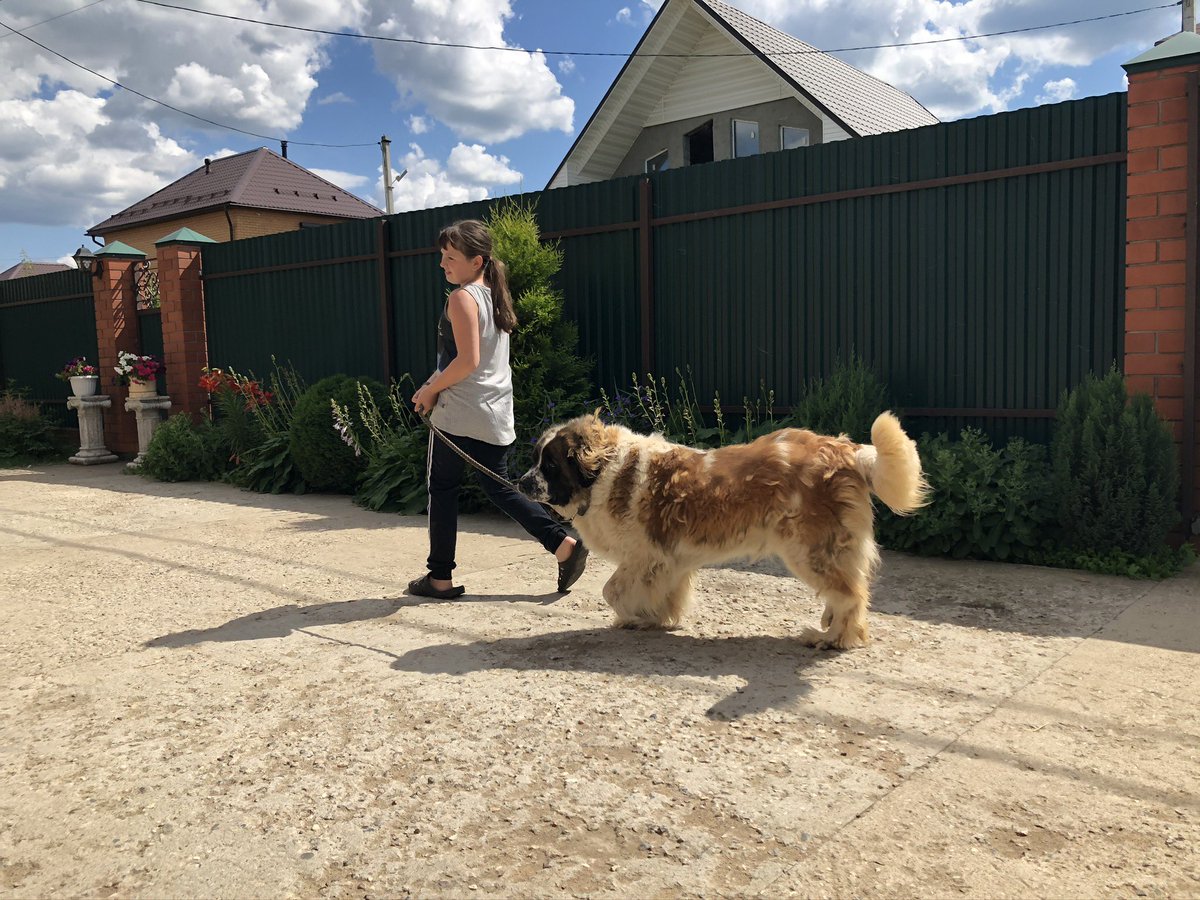

@kda275 @Eriwen3 @donairene13 Agora conheci a historia da raça, qual o nome dele, a minha se chama Layka.
Português
Pensei que todos os russos tinham um husky siberiano ou um borzoi em casa.
Estou decepcionada
Português