Vinay

590 posts

Vinay

Vinay

@kvikone

Hyderabad, India شامل ہوئے Eylül 2011
130 فالونگ151 فالوورز
Vinay
Vinay@kvikone·
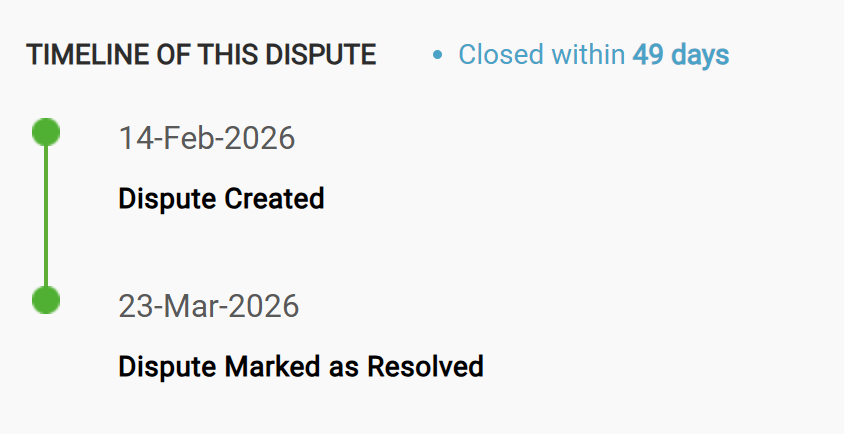
@TransUnion CIBIL India: This is how you determine the number of dates for closure. Several questions: 1. Who designs your systems? 2. When will you pay for delayed resolution? 3. You promised free access to my revised CIBIL Score. When do I get it?
Vinay tweet media
English
1
0
0
6
Vinay
Vinay@kvikone·
Without comment
English
0
0
0
4
Vinay
Vinay@kvikone·
@GabbbarSingh @UppyB People who have not lived in the Middle East comment like this.
English
0
0
2
535
Gabbar
Gabbar@GabbbarSingh·
@UppyB It seems you are back in India. Eid holidays begin next week.
English
14
1
241
18.3K
Gabbar
Gabbar@GabbbarSingh·
All the friends & family people in Dubai who used to reassure us on WhatsApp groups that, not to worry about them and don’t believe Indian media, are back in India.
English
257
841
9.5K
351.6K
Vinay
Vinay@kvikone·
@TVMohandasPai @PiyushGoyal It is very rare for me to comment on any posts but contracting to Big 4 has become a malaise. They in turn deploy the poorest quality of ‘professionals’. Essentially, it is all a big CYA project. We have suffered a lot.
English
0
0
0
35
Mohandas Pai
Mohandas Pai@TVMohandasPai·
Minister @PiyushGoyal Please intervene. The tender system has been gamed with high criteria of revenues. The big 4 are being favored by govt for various reasons. Govt pays very high rates. Smaller Indian firms are being discriminated against by govt, this has become a closed market. How can India grow its own large firms with such capture of govt. our PM @narendramodi vision of Indian firms is getting sabotaged. Needs action by @DPIITGoI @sanjeevsanyal @nsitharaman @amitabhk87 @NITIAayog
Abhivardhan@IndusThink

Full respect for Mohandas Pai for calling out the Big 4 firms and the ridiculous tender allocation criteria made by bureaucrats for policy projects. Sir, I respect your stand. I am being honest. Policy-making is too contrived and lacks realistic engagement. Big 4 should have been limited to some aspects. But it is what it is.

English
67
237
816
67.9K
Vinay
Vinay@kvikone·
Adding @borgebrende to the list. Waiting for some reaction from our Indian Minister
English
0
0
0
5
Bharti AXA Life
Bharti AXA Life@bhartiaxalife·
@kvikone Dear Vinay, Thank you for bringing this matter to our attention. We have forwarded the details to the relevant team for thorough review. Please allow us some time to investigate, and we will get back to you with an update. We appreciate your patience and understanding.
English
1
0
0
12
Vinay
Vinay@kvikone·
@AXALife @bhartiaxalife Your person called me today (Mob: 9911224708) insisting that I took your Life Insurance policy in 2018 and never paid further. He had my mobile number and home address correct; yet, I never recall interacting with your team. Is this a new form of fraud??
English
1
0
0
40
Vinay
Vinay@kvikone·
@deepigoyal I am glad you put out this post after your ‘last one on this topic’. Maths shows that, on average, a gig worker makes INR 38,000 per annum with you. You could have said that right in the beginning instead of beating around the bush!
English
0
0
0
18
Deepinder Goyal
Deepinder Goyal@deepigoyal·
Now tell me, is this unfair? Especially for an unskilled job, which is largely part time, and has zero barriers to entry.
English
338
664
7.8K
548K
Deepinder Goyal
Deepinder Goyal@deepigoyal·
Facts below (1/5): In 2025, average earnings per hour (EPH), excluding tips, for a delivery partner on Zomato were ₹102. In 2024, this number was ₹92. That’s a ~10.9% year-on-year increase. Over a longer horizon also, EPH has shown steady growth. Most delivery partners work for a few hours and only a few days in a month. But if someone were to work for 10 hours/day, 26 days/month, this translates to ~₹26,500/month in gross earnings. After accounting for fuel and maintenance (~20%), the net earnings for the partner are ~₹21,000/month. Note: Earnings per hour are calculated on total hours logged in, including the time when the partner might be waiting to receive an order. Earnings per “busy hour” will be higher but that’s not the right metric to look at. On top of this - delivery partners earn 100% of tips given by customers. The average tip per hour in 2025 on Zomato was INR 2.6 and in 2024 was INR 2.4 per hour. Tips are transferred instantly, with zero deductions. We absorb the payment gateway processing cost ourselves. About 5% of the orders get tipped on Zomato; 2.5% on Blinkit.
English
1.2K
3.1K
17.5K
3M
Vinay
Vinay@kvikone·
@deepigoyal @deepigoyal you have done a great job of making the gig workers ‘visible’ to consumers. Now do an equally great job of making their earnings ‘visible’ to consumers. Not difficult, eh?
English
0
0
0
6
Deepinder Goyal
Deepinder Goyal@deepigoyal·
Last one on this topic, and I have been holding this in myself for a while. For centuries, class divides kept the labor of the poor invisible to the rich. Factory workers toiled behind walls, farmers in distant fields, domestic help in backrooms. The wealthy consumed the fruits of that labor without ever seeing the faces or the fatigue behind it. No direct encounter, no personal guilt. The gig economy shattered that invisibility, at unprecedented scale. Suddenly, the poor aren't hidden away. They're at your doorstep: the delivery partner handing over your ₹1000+ biryani, late-night groceries, or quick-commerce essentials. You see them in the rain, heat, traffic, often on borrowed bikes, working 8–10 hours for earnings that give them sustenance. You see their exhaustion, their polite smile masking frustration with life in general. This is the first time in history at this scale that the working class and consuming class interact face-to-face, transaction after transaction. And that discomfort with our own selves is why we are uncomfortable about the gig economy. We want these people to look our part, so that the guilt we feel while taking orders from them feels less. We aren't just debating economics. We are confronting guilt. That ₹800 order might equal their entire day's earnings after fuel, bike rent, and app cuts. We tip awkwardly, or avoid eye contact, because the inequality is no longer abstract. It's personal. Pre-gig era, the rich could enjoy luxury without moral discomfort. Labor was out of sight. Now, every doorbell ring is a reminder of systemic inequality. That's why debates explode. It's not just policy. It's emotional reckoning. Some defend the system (“they choose it”), others demand change (“this isn't progress, its exploitation”). And here’s the uncomfortable twist: the unsaid ask of clumsy ‘solutions’ isn’t dignity. It is about returning to invisibility. Ban gig work and you don’t solve inequality. You remove livelihoods. These jobs don’t magically reappear as formal, protected employment the next day. They disappear, or they get pushed back into the informal economy where there are even fewer protections and even less accountability. Over-regulate it until the model breaks, and you achieve the same outcome through paperwork instead of slogans: the work evaporates, prices rise, demand collapses, and the people we claim to protect are the first to lose income. And then what happens? The rich get their old comfort back. Convenience returns without faces. Guilt dissolves. We go back to clean abstractions and moral posturing from a distance. The poor don’t become safer, they become invisible again: back in cash economies, back in backrooms, back in shadows where regulation rarely reaches and dignity isn’t even debated. The gig economy just exposed the reality of inequality to the people who previously had the luxury of not seeing it. The doorbell is not the problem. The question is what we do after opening the door. Visibility is the price of progress. We can either use this discomfort to build something better (which we keep doing continuously as delivery partners are our backbone), or we can ban and over-regulate our way back into ignorance. One of those choices improves lives. The other simply helps the consuming class feel virtuous in the dark.
English
2.1K
5.3K
25.7K
3.7M
Vinay ری ٹویٹ کیا
MRSI
MRSI@TheMRSI·
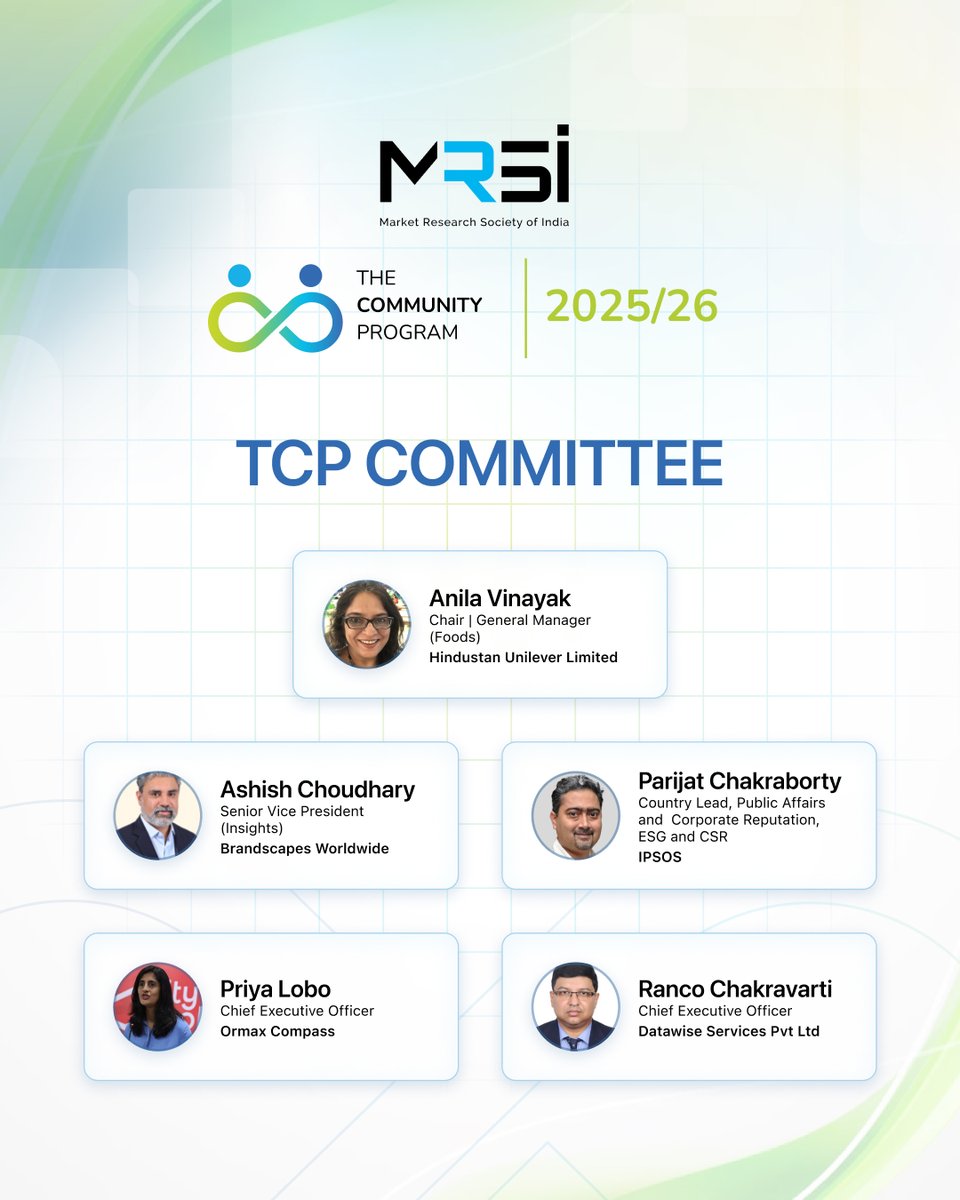
The Committee for The Community Program (TCP) 2025/26 will support the program through guidance, collaboration, and shared responsibility. We are pleased to share the committee members who bring their experience and perspective #TheCommunityProgram #TCP #CommitteeMembers
MRSI tweet media
English
0
1
1
50
Vinay
Vinay@kvikone·
@manamuntu @PMOIndia Airtel’s OneWeb approached GOI much before anyone else. The government did not move on that although it had its own satellites. Jio does not own any satellites.
English
0
0
6
1.3K
रुद्राक्ष📿 (Rudy)
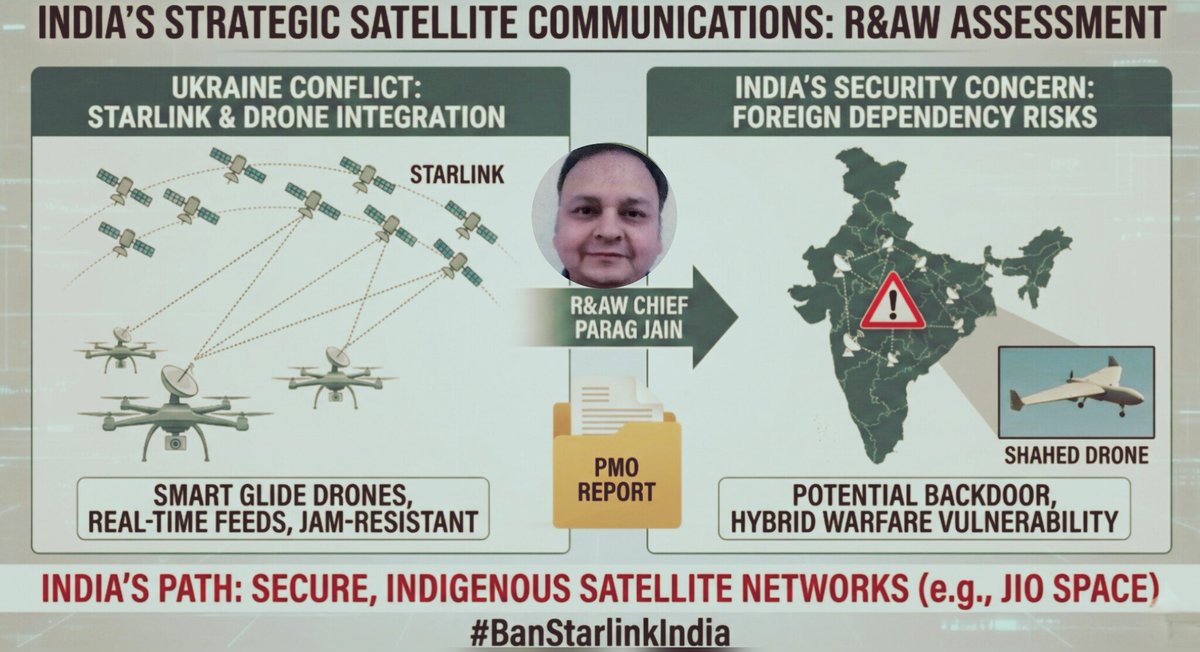
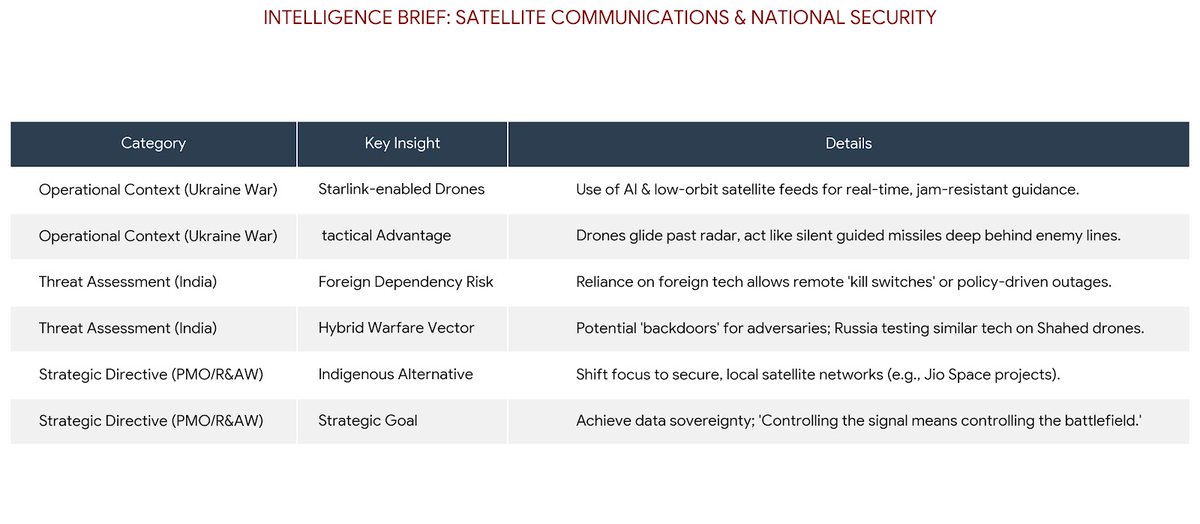
India was offered Starlink too and sadly some top politicians started getting way too excited about it. R&AW chief Parag Jain who is a technocrat himself had to step in and present a report to the Prime Minister’s Office @PMOIndia highlighting the repercussions and strategic paralysis Starlink could bring along with it. The report underlined how Ukraine’s drone strikes deep inside Russia have changed the way modern warfare works. Smart low-flying drones linked through Starlink can quietly glide past radar and hit deep inside enemy lines. These drones use simple glide technology and AI to fly low, stay hidden, and make last-second target corrections using real-time Starlink feeds. With thousands of satellites in low orbit, Starlink provides fast, jam-resistant connections that even advanced Russian systems struggle to block. The result is drones that act like guided missiles, silent, precise, and hard to intercept. But the same technology that gives Ukraine an edge can also be turned around. Russia has already tested Starlink-style systems on its own Shahed drones. That shows how relying on a foreign satellite network is risky because a single software lock or policy change can cut off entire defense operations overnight. For India, this is not paranoia, it is preparedness. If Starlink becomes the main satellite network here, it could also become a potential backdoor for hybrid warfare. India’s move to build its own secure satellite internet, like through Jio’s upcoming space projects, is the right step. Controlling the signal means controlling the battlefield. Banning Starlink in India is not fearmongering, it is common sense in an age where wars are fought through data, drones, and digital skies.
रुद्राक्ष📿 (Rudy) tweet mediaरुद्राक्ष📿 (Rudy) tweet media
The Directorate - Clandestine@Delta_SquadAnex

Starlink for Pakistan offered. Classic subcontinent strategy for U.S for having Geospatial intelligence upper hand against China.

English
57
724
3K
398.6K
Vinay
Vinay@kvikone·
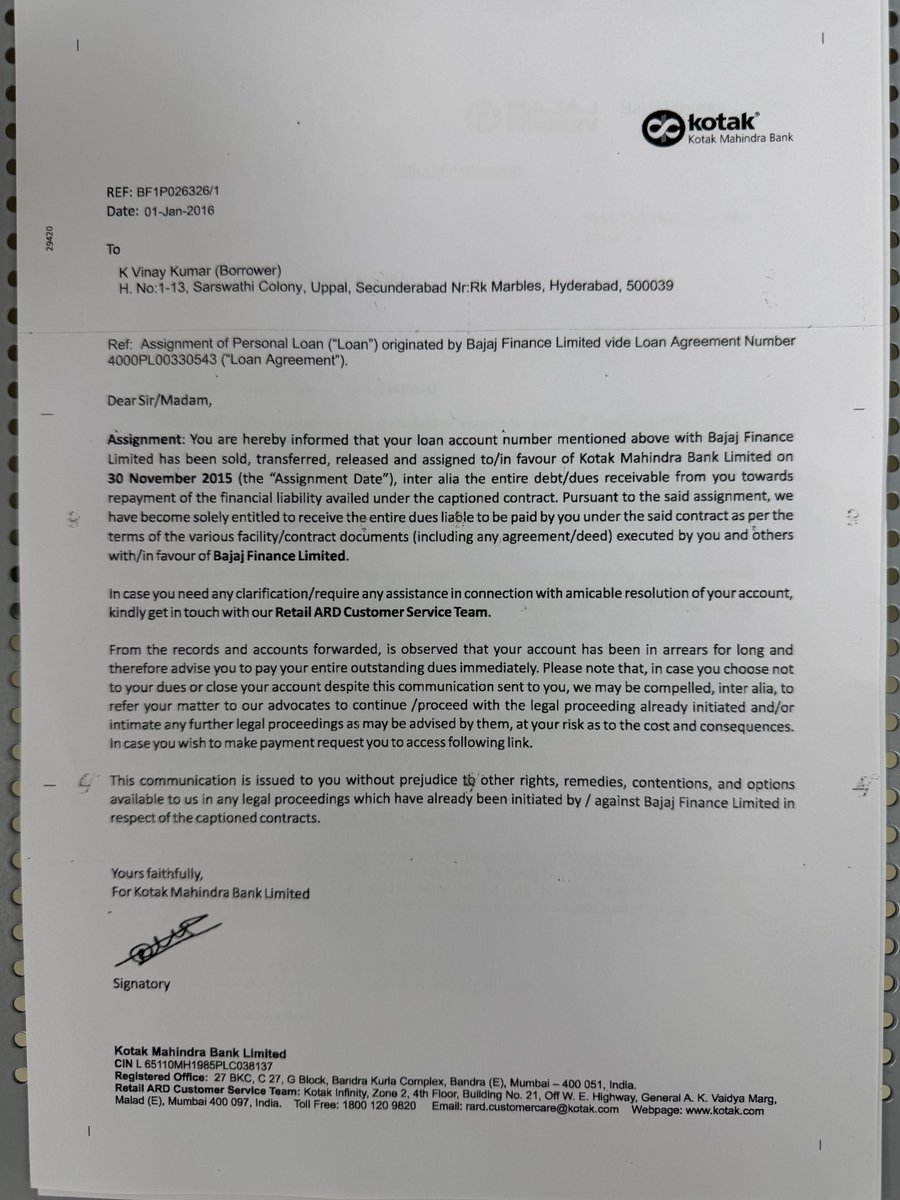
@udaykotak⁩ ⁦@KotakBankLtd⁩ I am constrained to make this public as this is the 2nd time I am at your office because you incorrectly linked my name to someone’s account. Wasted my time, impacted my CIBIL scores. What consequences? ⁦⁦⁦@RBIsays
Vinay tweet media
English
4
2
0
207
Vinay
Vinay@kvikone·
@CIBIL_Official For reference, Murali and Laxman from ARD department, Hyderabad.
English
0
0
0
18
Vinay
Vinay@kvikone·
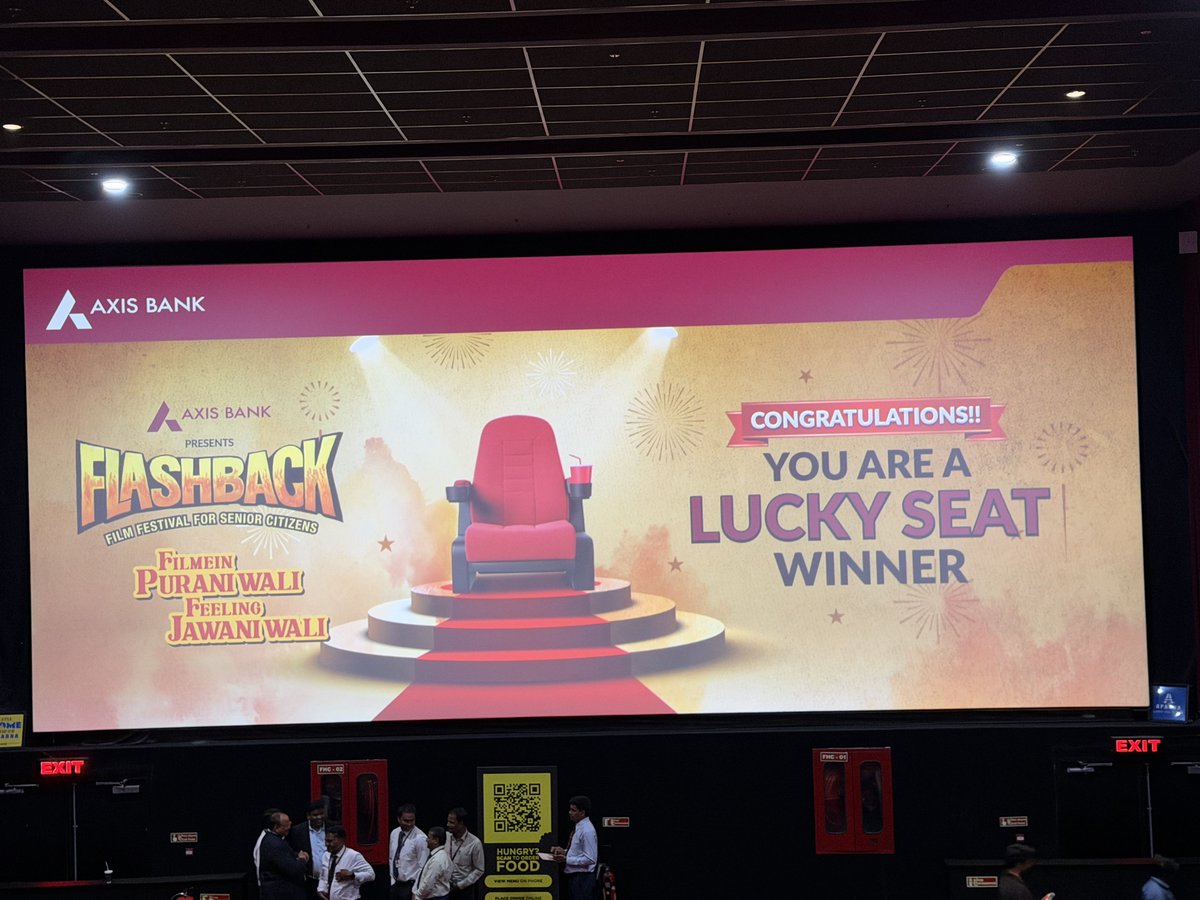
@AxisBank⁩ good that you restarted this initiative. Customer touch points differentiate you from other banks.
Vinay tweet media
English
0
0
0
21
Vinay
Vinay@kvikone·
@ICICIBank_Care @ICICIBank I received this email from you just now. The name is definitely not mine! And yet, it warns me of frauds. I do not know whether your email itself is a fraud! What should your customers make of it?
Vinay tweet mediaVinay tweet media
English
1
0
0
38
Vinay
Vinay@kvikone·
The woman on the right of the screen was born and raised in the same town that I was! What a moment of pride for Rourkela. ⁦@sailrsp1⁩ ⁦@RTO_14⁩ ⁦@nitrourkela
Vinay tweet media
English
0
0
0
51