
Moaurgat
48 posts


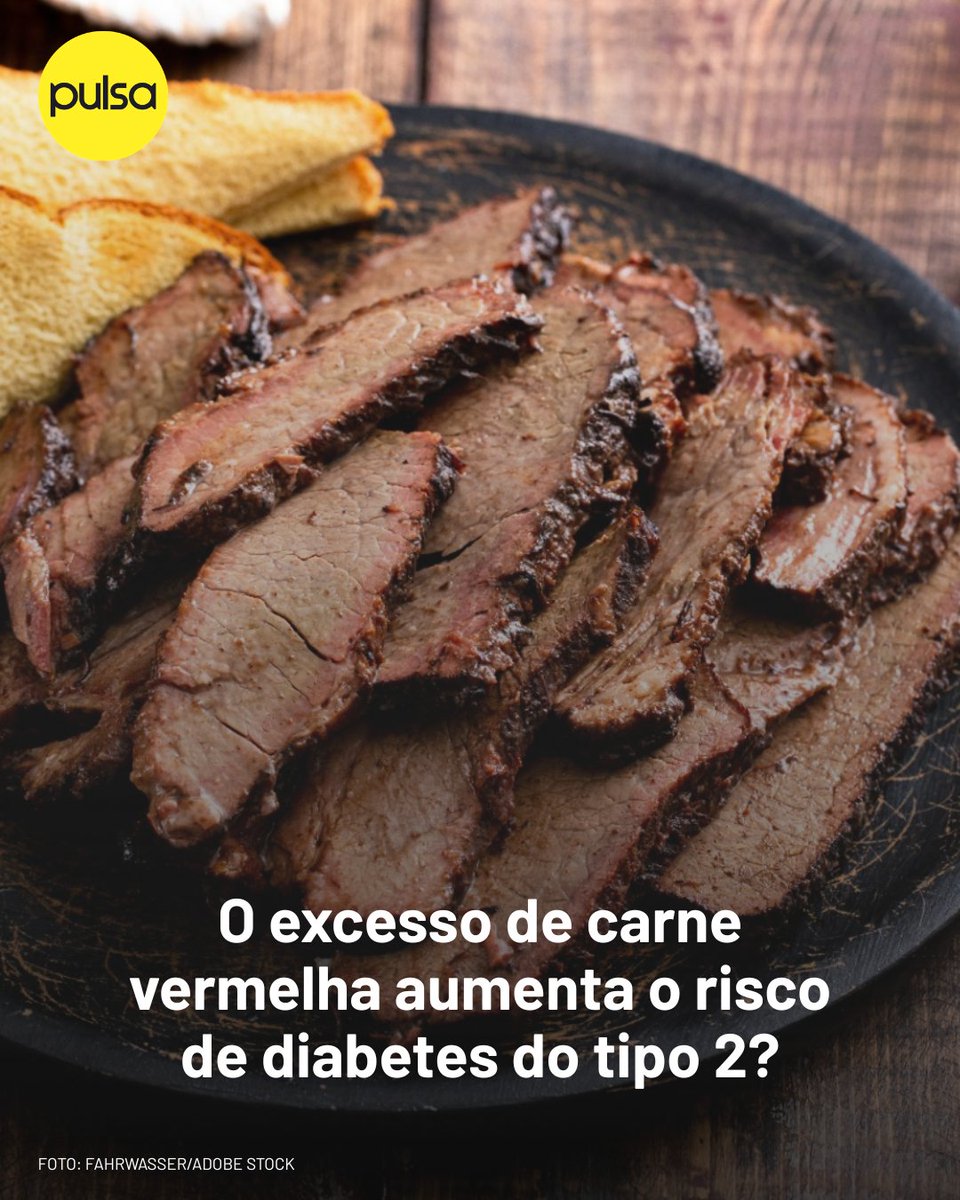
Na contramão de modismos como a “dieta carnívora”, que incentiva o consumo elevado de proteína animal, diversas pesquisas reforçam os impactos negativos do excesso de carne vermelha na saúde.
Já há evidências consistentes de associação do alimento com doenças cardiovasculares e, mais recentemente, a ciência tem apontado um elo com o aumento do risco de diabetes tipo 2.
📲 Entenda os possíveis mecanismos no Pulsa > x.gd/tqJyS
Português
@bismarkhen @Tom_Rowsell @lenjohnston0 This is precisely the point. S Korea is another example: from the 60s onward, it invested heavily in education & human capital; today it performs strongly on cognitive and academic assessments. The opportunistic use of IQ to glorify one’s own ancestry is intellectually infantile.
English

@moaurgat @Tom_Rowsell @lenjohnston0 Norway was a rural backwater before they started digging oil in the 50's, yet they still have a 99 iq
English
@Tom_Rowsell @lenjohnston0 It's ironic that this kind of factor is used to explain the reported Irish results, yet ignored when accounting for supposed results for some other countries.
English

@lenjohnston0 They only recently entered modern industrial civilisation as a colony so haven’t had as long to benefit from urbanism - brain drain to Britain also likely a factor
English
@Tom_Rowsell An aspect often underemphasized in public discussion, partly due to status incentives, reflecting very human - though often dysfunctional - psychological motivations...
English
@Tom_Rowsell This suggests that IQ differences across many populations are more strongly shaped by social and environmental conditions than IQ itself shapes those conditions, with factors such as nutrition, education, and living standards accounting heavily for the variation.
English
@Tom_Rowsell I recall some "Dinaric" people attributing their height mainly to Y-DNA, yet women there are also tall, an obvious (missed) point. Even parts of S. America saw substantial gains in average height within a single generation, largely due to improved nutrition and living conditions.
English
@Tom_Rowsell Regarding traits such as strength, while part of it may be attributed to genetics (sometimes drift rather than broad genetic differences), diet in some populations - often rich in dairy and meat - can also play a significant role.
English
@Tom_Rowsell Although perhaps doing so requires a degree of intellectual nuance that some people simply lack.
English
@Tom_Rowsell In the end, people who insist on purely biological explanations for complex social outcomes usually underestimate how much environment, culture, and historical circumstances shape human development. Anyone looking beyond surface-level statistics can see that.
English
@Tom_Rowsell I do wonder what the results would have been in earlier times, when Nordic peoples were still living in tribal communities and using runes - that is, thousands of years behind contemporary Mediterranean societies in terms of development.
English
@Ulrich1976c @SamAndrews1017 When it comes to Y-DNA, I see 18 results in two papers: five G2a, five R1-V88, four T1a, two E1b and two I2a. When it comes to mtDNA, 28 results: nine H, six K, five T, five U, two J and one X.
English

@SamAndrews1017 The Warna culture might be the WHG at this time en.wikipedia.org/wiki/Varna_cul…
English

Cardial was a Neolithic culture in the western Mediterranean between 6500 and 5000 BC. We have about 20 ancient DNA samples from this culture. Below is an infographic which describes some interesting facts their ancient DNA has taught us about their genetics.

English
@Ulrich1976c @SamAndrews1017 Varna was EEF-related, meaning it was predominantly ANF with a smaller WHG contribution. The so-called "Golden Man" reflects this ancestry profile through his Y T1 and mt U2, although this apparent split in uniparental markers doesn't imply a half-ANF/half-WHG autosomal ancestry.
English
@DanDavisWrites “You see a similar genetic-linguistic disconnect in Etruscans.”
Understood, but genetics cannot be reduced to uniparental markers; both Etruscans (& neighboring Latins) were predominantly EEF from their formation. Moreover, the first Etruscans show a significant presence of G.
English

Yes, Basques don't have especially high steppe ancestry but are overwhelmingly R1b Y-haplogroup.
You see a similar genetic-linguistic disconnect in Etruscans.
Language, ancestry, and material culture don't always align.
How did it happen in practice? We must speculate...
Lethe scholar@Lethescholar
Basques are not the Iberian people with the highest Yamnaya admixture, but yeah, it’s curious that they have Iberian-like levels of that admixture when they don’t even speak an IE language. But if you stop there, you’re missing the bigger picture (4 tweets thread)…🧵
English
@MichaelAArouet Ironically people of Italian descent in USA - most of whom trace their ancestry to Southern Italy - show higher average incomes than those of English ancestry. This highlights that GDP p.c. is highly context-dependent & influenced by factors like geography, demographics & so on.
English

Each time I travel to Italy, I wonder about the massive economic gap.
Why is the North one of the wealthiest areas in Europe, while the South remains so extremely poor?
Isn’t it the same country, with the same language, culture, taxes, and laws? Can someone please explain?

English
@CarlWhi99454847 @MichaelAArouet 3) These differences reflect historical development trajectories rather than innate cognitive differences.
English
@CarlWhi99454847 @MichaelAArouet Reliance on Lynn's work is often associated with pseudoscientific interpretations that underemphasize environmental background conditions. These factors are crucial for explaining differences between ethnically close countries and shifts over time.
English
@CarlWhi99454847 @MichaelAArouet 2) For example, centuries ago, Scandinavia was less urbanized, consisting of small rural settlements centered around longhouses with lower literacy rates, although very rudimentary writing systems such as runes did exist.
English