Ryan Mahon

3K posts

Ryan Mahon banner
Ryan Mahon

Ryan Mahon

@ryanpmahon

Nature is the perfect design. Simplify

Denver, CO شامل ہوئے Nisan 2015
297 فالونگ679 فالوورز
Chris McGuire
Chris McGuire@ChrisRMcGuire·
The fact that Beijing is planning to supply Iran with strategic weapons systems to kill U.S. troops in Iran surprises even me. China was much more careful about how it supported Russia in Ukraine; it supplied many drones and parts but was more careful about sending full weapons systems—and American troops weren’t even involved in that conflict. @POTUS is right to say that this is unacceptable and cannot happen. But it also shows how dominant Beijing believes its position is right now.
Bloomberg@business

US intelligence indicates that China is preparing to provide Iran with air defense systems in a matter of weeks, CNN reported. Beijing is expected to ship shoulder-fired, surface-to-air missiles known as Man-Portable Air Defense Systems. bloomberg.com/news/articles/…

English
1.1K
223
1.8K
461.9K
Just Another Pod Guy
Just Another Pod Guy@TMTLongShort·
Gloves on or gloves off. The more Xi feels encircled the more his risk tolerance increases. However the more encircled he is the higher the cost of direct conflict via TW. It’s a catch-22. Consensus is underpricing TW invasion risk even as that risk has actually decreased over the last year since Liberation Day. Historians are going to be studying the last twelve months for centuries. I chuckle imagining demented Truth Social posts being analyzed by our great grandchildren.
Chris McGuire@ChrisRMcGuire

The fact that Beijing is planning to supply Iran with strategic weapons systems to kill U.S. troops in Iran surprises even me. China was much more careful about how it supported Russia in Ukraine; it supplied many drones and parts but was more careful about sending full weapons systems—and American troops weren’t even involved in that conflict. @POTUS is right to say that this is unacceptable and cannot happen. But it also shows how dominant Beijing believes its position is right now.

English
13
15
373
35K
Just Another Pod Guy
Just Another Pod Guy@TMTLongShort·
Step 1: manufacture a war Step 2: tie China directly to war Step 3: raise tariffs on China with full war-time authorization Step 4: publish study showing transhipment of Chinese supply through other countries Step 5: regain ability to tariff these other countries as a matter of national security Step 6: decouple Obviously war has not yet been declared. Just one of many ways this can all play out 😉
*Walter Bloomberg@DeItaone

*TRUMP: IF I CATCH CHINA GIVING IRAN ARMS, IT'D GET 50% TARIFF

English
23
24
452
30.3K
Ryan Mahon
Ryan Mahon@ryanpmahon·
@BenKizemchuk Yes Classic ‘it’s contained’
AquaVis@AquaVisX

Generalization, but private equity + private credit scheme is running on fumes. The re-brand from LBO to PE gave it life from the 80s into the 90s. Perpetually lower rates to refi at gave it life into the 2000s+ Today asset growth has stalled - no more fund #10 to buy fund #9 assets to keep the plates spinning. [chart source: Jefferies] Be careful of recent 401K changes. Do not be the exit liquidity.

English
0
0
1
42
Ben Kizemchuk
Ben Kizemchuk@BenKizemchuk·
Contagion spreading.
Ben Kizemchuk tweet media
English
3
1
14
2.1K
Ben Kizemchuk
Ben Kizemchuk@BenKizemchuk·
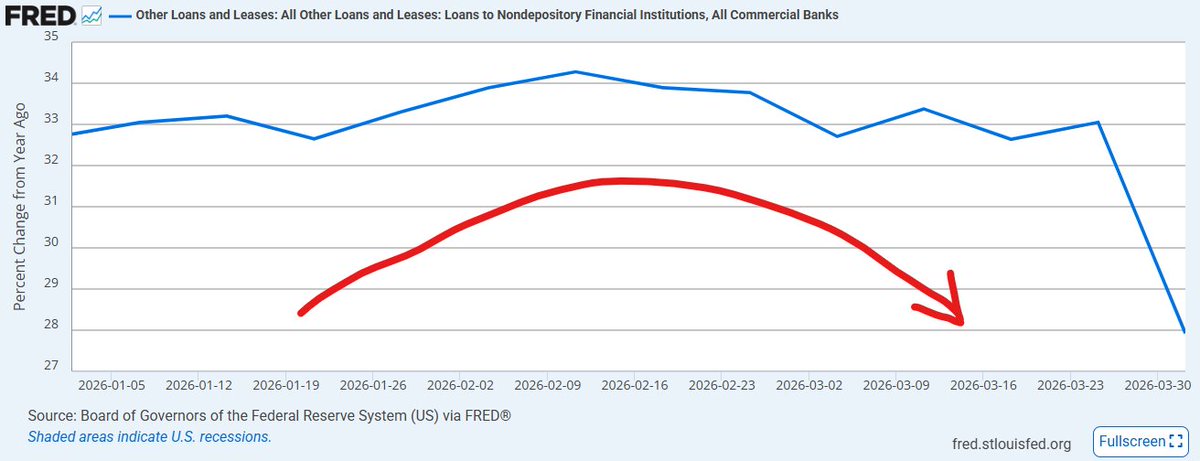
Big decline in rate of change for NDFI lending in today's report
Ben Kizemchuk tweet media
Ben Kizemchuk@BenKizemchuk

Financial markets are losing flow support: The rate of change in bank loans and leases is flattening near recent highs, indicating that private sector balance‑sheet expansion is beginning to lose momentum. Lending to non‑depository financial institutions (NDFIs), which accounted for a disproportionate share of marginal loan growth over the past cycle, also appears to be leveling off from peak rates of growth. This coincides with a continued negative year‑over‑year change in federal deficit spending. As a result, the flow of net financial assets being supplied to private‑sector households and corporations is smaller than it was a year ago, reducing the incremental addition to incomes and balance sheet capacity. Although this shift began in late 2025, its effects manifest gradually rather than immediately. When the growth of net financial assets slows relative to the stock of existing obligations, pressure builds over time. Income growth decelerates, internal liquidity cushions stop accumulating, and the private sector becomes increasingly reliant on credit expansion to sustain nominal activity. In the early stages of this process, nominal spending can remain firm even as real momentum weakens, because a greater share of demand is financed through credit rather than through rising net incomes. To the extent that productive capacity and supply fail to keep pace, this dynamic can show up as higher prices rather than higher real output, not because demand is accelerating, but because financial claims are growing faster than the economy’s ability to absorb them through increased production. This is likely what we’ve been seeing across various measures over the last six months. As the fiscal slowdown persists, however, the system begins to tighten rather than reflate. The reduced net inflow of financial assets erodes the foundation that previously supported expanding leverage, and credit growth loses acceleration. Borrowers become more sensitive to rates and terms, while lenders respond to weaker cash‑flow trends by tightening standards. The result is an inflection lower in lending growth, just now visible across bank credit aggregates. At the same time, growth in retail money market fund (MMF) balances has begun to flatten as well. While MMFs do not generate new net financial assets, they play a central role in distributing existing cash into short‑term funding markets, particularly through overnight repo. When MMF balances are expanding, the system benefits from a growing supply of readily available cash that helps absorb collateral issuance and stabilize funding conditions. When that growth slows, the margin of safety in short‑term funding markets narrows, even if outright stress does not materialize immediately. In parallel, credit spreads have begun to widen, reflecting increased caution around repayment capacity and refinancing risk. This widening carries outsized macro significance in the current financial structure, where a large share of incremental lending is intermediated through NDFIs rather than funded through traditional banking channels. NDFIs, particularly private credit vehicles and fund‑finance structures, have been central to financing some of the most capital‑intensive areas of recent growth, including data centers and AI‑related infrastructure. These entities typically rely on layered funding arrangements: bank credit lines, warehouse facilities, and market‑based leverage. Their lending capacity is therefore highly sensitive to both spread volatility and funding conditions. In such a system, rising spreads do not remain confined to end borrowers. Funding costs reprice at multiple layers simultaneously: for operating companies, for private lenders, and for the banks providing backstop financing. As these pressures feed back through the system, credit availability tightens more abruptly than aggregate loan data alone might suggest. This is where slower credit formation begins to translate directly into slower income growth at the macro level. Because new lending generates new financial claims and spending power, a deceleration in credit creation reduces the flow of income through firms and households. At this stage of the cycle, when fiscal inflows are also contracting, households and corporations tend to respond by scaling back discretionary activity, deferring investment decisions, and placing greater emphasis on liquidity preservation. Taken together, slowing net fiscal inflows and tightening financial conditions are now poised to start reinforcing one another, constraining both the creation of new financial assets and the spending they support. The result is a potential broad deceleration in economic growth driven by the cumulative effects of weaker flows through the financial system. In this context, equity markets become more vulnerable to sustained drawdowns. With weaker flow support underpinning incomes and balance sheet expansion, valuations rely increasingly on sentiment and positioning rather than improving fundamentals. That raises the likelihood that market weakness persists or re‑emerges after rallies, and that downside risks remain elevated unless either fiscal flows or credit growth can re‑accelerate meaningfully. Under those conditions, a failure to stabilize could open the door to a much larger adjustment over time, including the possibility of an extended bear market decline on the order of a 50% retracement from the January peak, should macro flows continue to deteriorate.


English
8
5
65
9.7K
Darius Dale
Darius Dale@DariusDale42·
As someone from the bottom-0.001% of the K-shaped U.S. society, it didn't sit well with me when I used to spend my career only making rich people richer. We built @42Macro to help make everyone richer. 💜
Darius Dale tweet mediaDarius Dale tweet mediaDarius Dale tweet mediaDarius Dale tweet media
English
3
1
34
4.5K
Darius Dale
Darius Dale@DariusDale42·
A: Because THEY want us to be poor. THEY can’t maintain THEIR wealthy oligarch image and self-worth if WE are too joyful and harmonious to fight each other to be more like THEM. THEY paid for THEIR politicians to rig the tax code in THEIR favor for so long and by so much that it eradicated the middle class. This was NOT any accident. People don’t donate hundreds of millions of dollars to campaign finance for no reason. THEY did it to rig the game in their favor. Duh. Wake up! P.S. This is why THEY paid for their politicians to get elected to protect AI from thoughtful regulation. This is why THEY are fabricating a BS “race” against China to justify foisting the technology upon our society as quickly as possible. “Move fast and break things” works in Silicon Valley, but it doesn’t work well with society. But of course THEY don’t care. THEY know THEY will permanently win the Monopoly™️ game when WE are all on UBI. Income and wealth inequality will explode once we reach singularity. The oligarchs currently in charge of AI and THEIR families will be in charge forever at that point. Imagine the societal ramifications of such a concentration of power? 🤔
Buns&Coffee@schang76

@DariusDale42 @42Macro Rich people getting richer is also good, as long as the ENTIRE society, gets richer and more prosperous. Helping the financially undereducated get a firm foundation to invest wisely, should be a parental and school responsibility. Why do they not teach this as required subjects?

English
11
9
75
7.2K
Ben Kizemchuk
Ben Kizemchuk@BenKizemchuk·
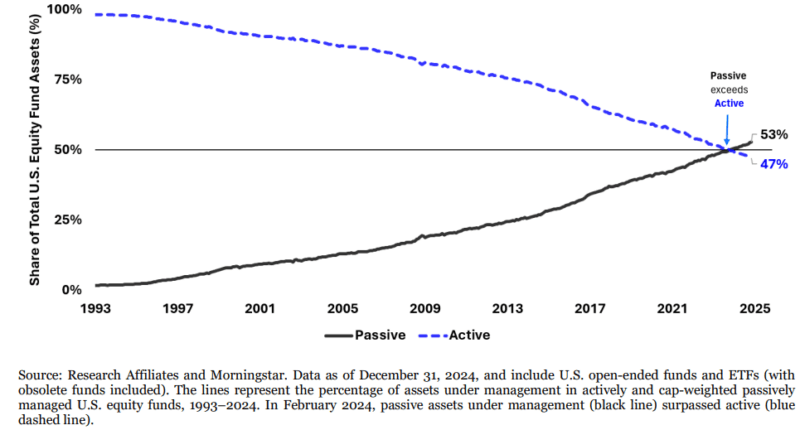
Late‑cycle sector rotation becomes increasingly risky as the passive share of the market grows. Today, +50% of market activity comes from passive investment vehicles. These vehicles dominate marginal flows, and those flows are distributed mechanically to index leaders, rather than directed by valuation or macro judgments. When growth slows or volatility rises, passive flows do not “rotate” into new sectors. They cannot, because they are mechanical. Instead, they simply contract. That leaves active managers, who control a shrinking share of total capital, attempting to reposition markets that are now far more flow‑driven than fundamentals‑driven. Since passive leaders (mag7) are dominated by passive flows, and passive flows are the majority of market activity, then when the passive leaders begin falling, it is a signal that net flow into equities is shrinking. Those stocks sit at the top of an institutional ownership hierarchy. They are the first place capital concentrates on the way in, and the first place selling pressure appears on the way out. So, once they are declining, it tells you that the aggregate pool of risk capital is being reduced, not redeployed. Any apparent strength elsewhere is therefore unlikely to be fueled by fresh inflows. In that environment, sectors that temporarily rally are often responding to second order effects such as short covering or factor rebalancing, but not sustained demand growth. Because these sectors tend to trade with even thinner liquidity than the market leaders they appear to replace, they require far less capital to move. That makes them look strong initially, but also makes them vulnerable. As liquidity continues to contract, the same absence of marginal buyers that hit market leaders eventually reaches the “rotating” sector. The result is that late cycle sector rotation increasingly resembles a liquidity trap. A speeding game of hot potato. Capital looks like its shifting as prices rise and narratives get shared. However the underlying flow is deteriorating. Once the shrinking flow reaches the newly favored sector, there is no passive bid to absorb supply and no active capital large enough to stabilize prices. So what looked like rotation resolves into the exhaustion of liquidity.
Ben Kizemchuk tweet mediaBen Kizemchuk tweet media
English
9
6
62
4.6K
Space Investor
Space Investor@SpaceInvestor_D·
While everyone is sharing the Chamath clip, Friedberg’s opening point is the real gem. "The Moon could end up being the next Industrial frontier for humanity. We could run continuous mining and manufacturing processes on the Moon at a fraction of the cost of what it would take to do it here on Earth." One day, there may be more reentries than launches.
English
23
22
208
31.1K
Ben Kizemchuk
Ben Kizemchuk@BenKizemchuk·
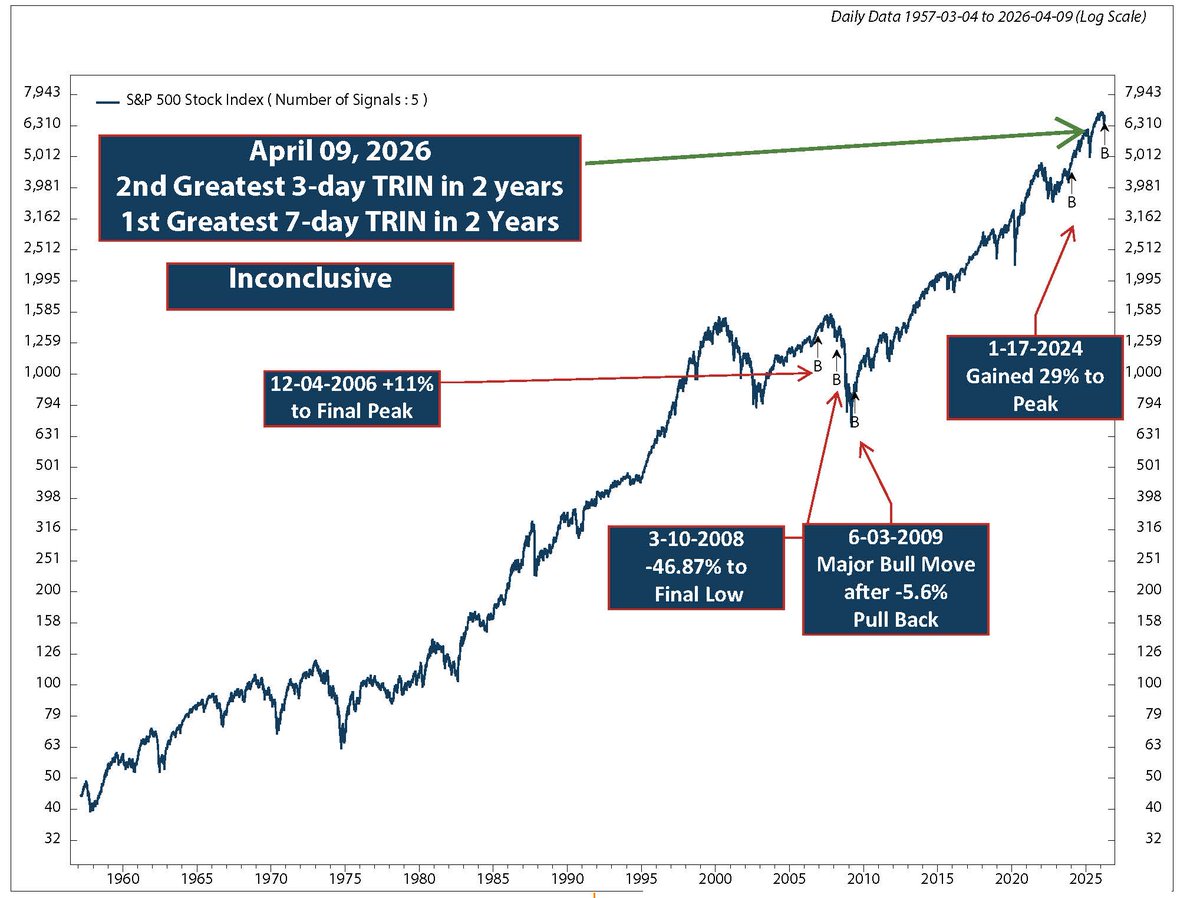
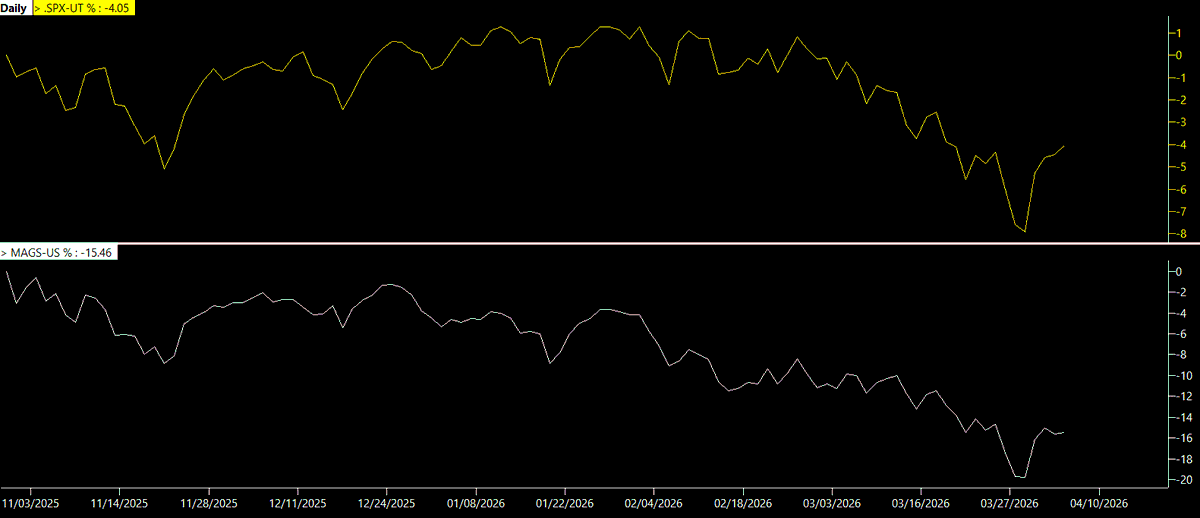
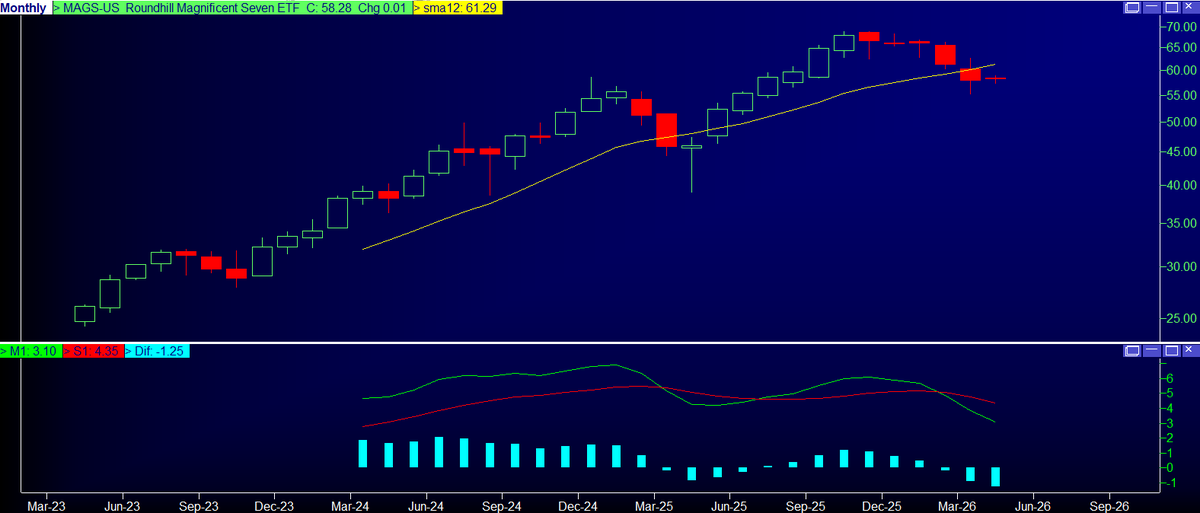
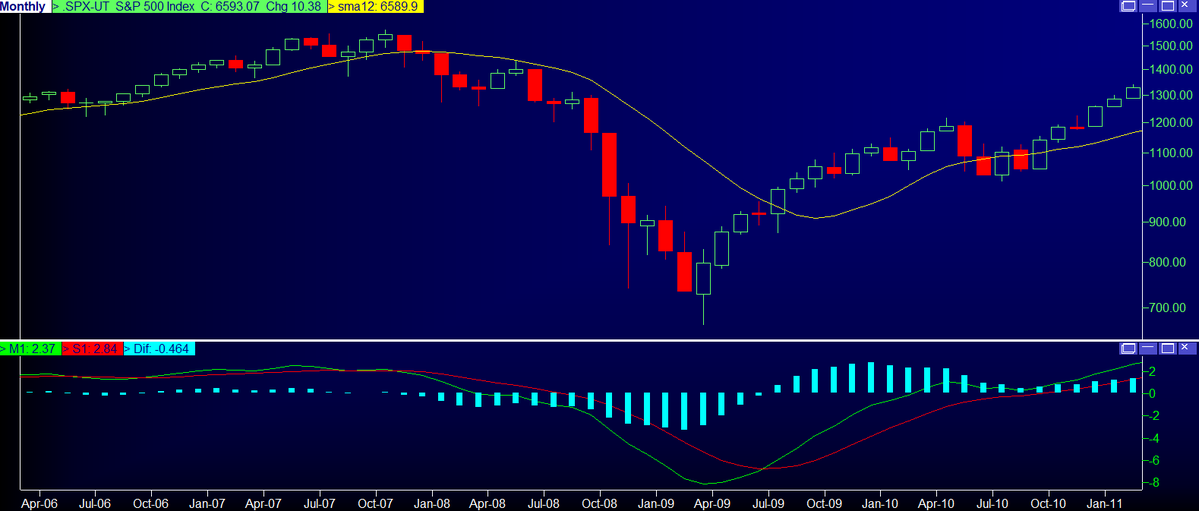
@__The_Grid__ 2026: MAGS -15.6% from Nov/26 peak over 6 months. 2007: SPX -14.63% from Oct/07 peak over 6 months. The issue today is more about index concentration and mechanical plumbing and flow. My view is that eventually SPX will catch down to flow leaders into a broad decline.
Ben Kizemchuk tweet mediaBen Kizemchuk tweet media
English
4
1
42
3.8K
Ben Kizemchuk
Ben Kizemchuk@BenKizemchuk·
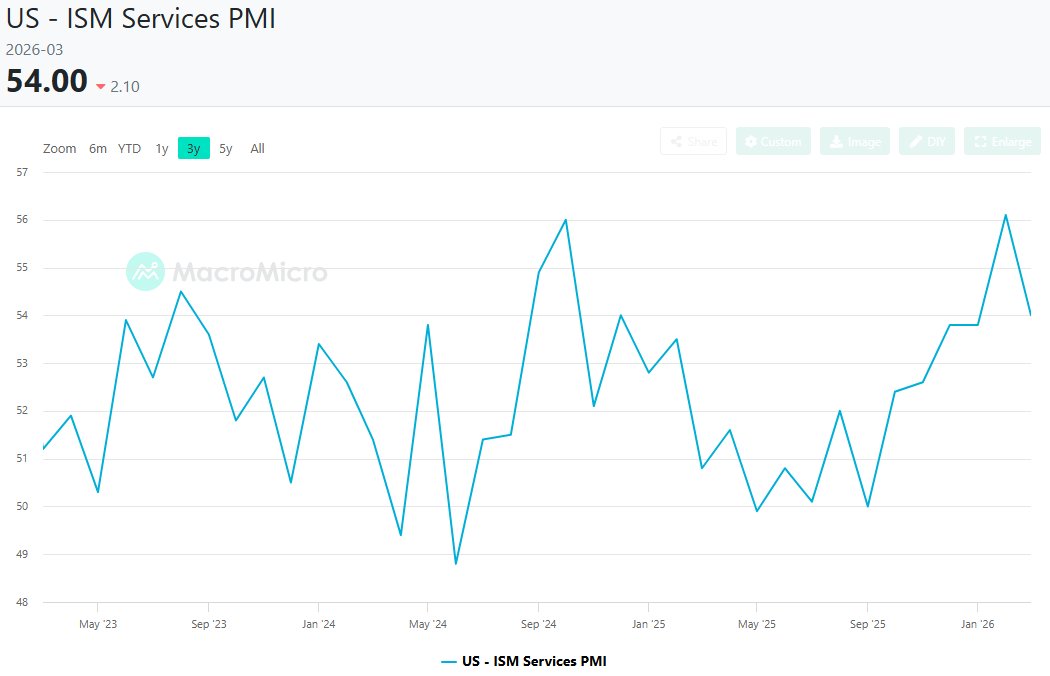
March ISM Services PMI reveals a slowing economy. The March ISM Services PMI reinforces the view I laid out in last month’s analysis: the economy is losing momentum. This is not an acceleration phase. At first glance, the report looks contradictory. New Orders Index surged to 60.6, its strongest reading in more than three years, even as the headline PMI and the Business Activity Index both declined. This divergence is the exact signal of a late-stage cycle. The economy is still generating demand, yet it is processing that demand more slowly, as it did last month. Business Activity fell sharply to 53.9 (lowest level since Sept 2025), indicating that output is no longer keeping pace with order inflows. This widening gap between orders and activity suggests congestion and caution. The backlog and supplier delivery data reinforce this view. Backlogs remained in expansion territory for a second consecutive month, while Supplier Deliveries slowed further, rising to 56.2. Orders are continuing to accumulate faster than they are being fulfilled. This does not reflect booming demand. Throughput is being constrained. Firms are choosing to stretch delivery times and manage workflows instead of expanding capacity. The most telling confirmation comes from the labor data. The Employment Index fell into contraction at 45.2. This is the largest drop in months and lowest reading since late 2023. In an accelerating economy, rising orders are typically accompanied by hiring. But now, the opposite is happening. Firms are accepting work but cutting or holding back on staffing. This is classic late cycle behaviour in response to uncertainty, margin pressures, and rising costs. Looking at the sectors we see the same behaviour as last month. Growth in activity and new orders remains concentrated in asset light, financially oriented, and contract‑driven industries: finance and insurance, real estate, professional and technical services, information, and management services. These sectors tend to remain resilient late in the cycle because they are tied to existing capital flows, longer dated projects, and administrative demand rather than real time consumer spending. By contrast, more cyclical and demand‑sensitive industries continue to show stress. Retail trade remains the only sector reporting declining new orders and is contracting across activity and employment. Transportation and warehousing, which often weaken early when growth cools, again reported falling employment despite still‑positive activity and orders. That divergence does not signal confidence or acceleration. Supplier delivery delays are also concentrated in service‑heavy and administrative sectors rather than goods‑producing supply chains. In areas such as professional services, finance, real estate, and information, slower deliveries tend to reflect processing capacity constraints and staffing reductions rather than shortages of physical inputs. Once again, the survey is capturing a system under strain from limited throughput, not overheating demand. Inventory behavior adds another layer. Inventories continued to rise but at a slowing pace, and respondent commentary makes clear that stockpiling is largely precautionary. Firms report building buffers to guard against geopolitical disruptions, energy price volatility, and supply uncertainty not because they are anticipating a surge in demand. In service industries, inventories often represent project pipelines or work‑in‑progress, so rising inventories with contracting employment is consistent with slower processing rather than expansion. In continuity with last month’s report, the message is clear. Economic momentum is fading. Orders remain strong on paper, but activity is slowing, employment is contracting, and backlogs persist because firms are choosing restraint over growth. This configuration has appeared repeatedly in the later stages of business cycles. In early 2008, service sector surveys showed a similar pattern: new orders and reported activity held up even as employment softened and capacity expansion stalled, reflecting an economy still processing existing demand while underlying conditions were already deteriorating. Then as now, the system is working through prior demand as momentum rolls over. This is not the mark of economic reacceleration.
Ben Kizemchuk tweet media
English
15
10
63
7.6K
Ben Kizemchuk
Ben Kizemchuk@BenKizemchuk·
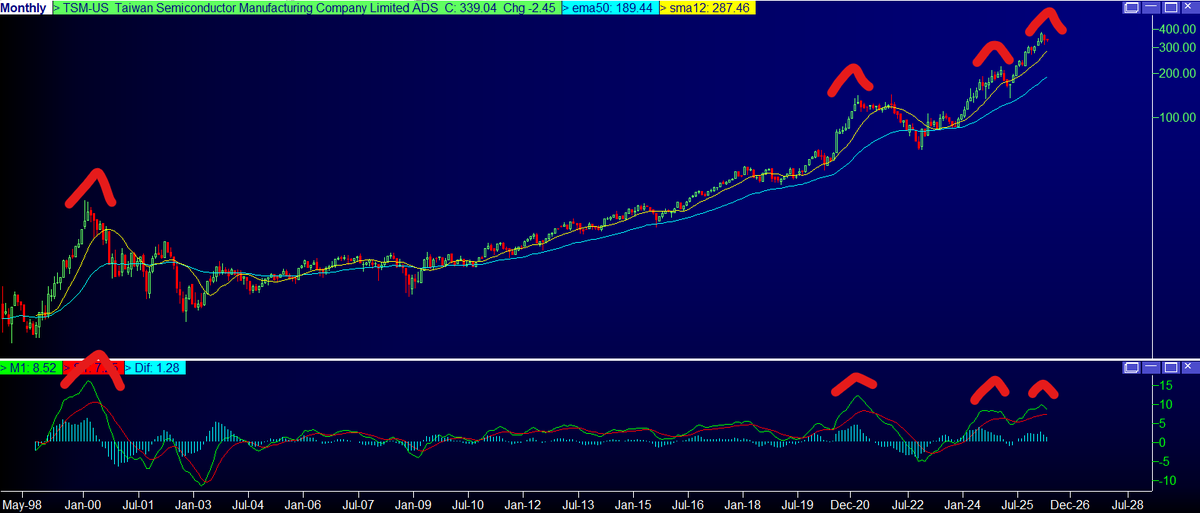
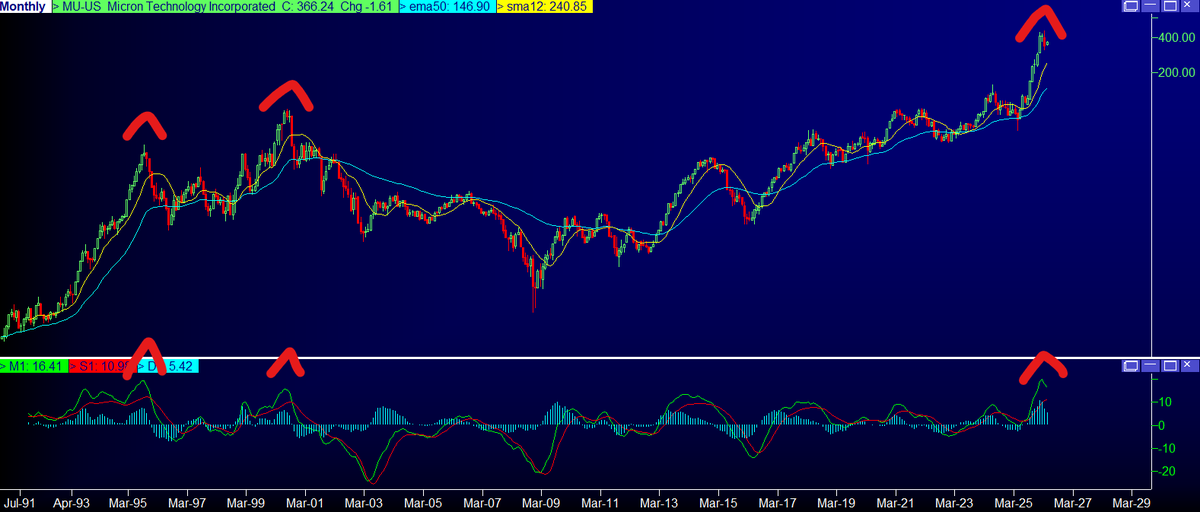
AI capex meme burst: Taiwan Semi and Micron $tsm $mu
Ben Kizemchuk tweet mediaBen Kizemchuk tweet media
Indonesia
11
1
50
7.6K