FireHacker

7.8K posts

FireHacker banner
FireHacker

FireHacker

@thefirehacker

Founder-AI Researcher. Building BubblSpace & Timecapsule

Mumbai شامل ہوئے Nisan 2011
401 فالونگ501 فالوورز
پن کیا گیا ٹویٹ
FireHacker
FireHacker@thefirehacker·
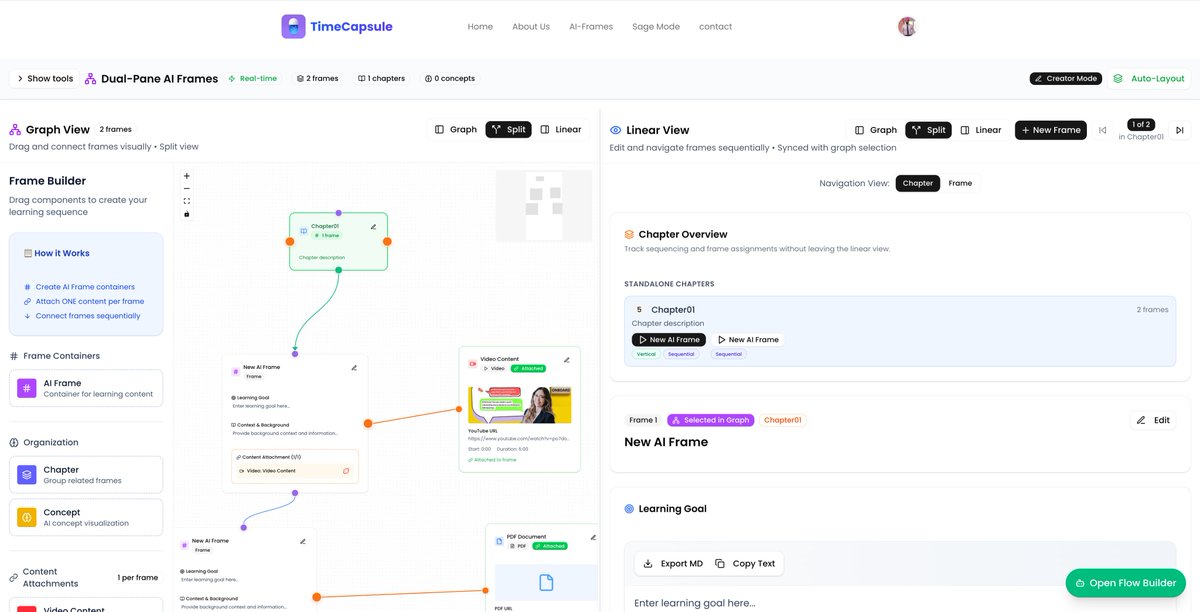
The community's response towards Cowork gives us a strong positive signal towards what we have been building timecapsule.bubblspace.com Our product works in your browser & solves a different problem. The Problem: How do you manage a knowledge base, user or team expertise, documents, and context across AI sessions? Users need a platform that allows them to build and deploy workflows with ease. The platform should enable workflow management based on functions, topics, teams, or open search. The Solution: TimeCapsule TimeCapsule has two simple parts: AI-Frames- Helps build knowledge bases and workflows. Sage Mode- Real-time voice-to-voice AI persona. 1. AI-Frames: Upload documents to create a knowledge base directly in your browser. Use the Flow Builder to perform deep research and build workflows or AI Frames. These workflows can be explored in graph or linear mode (chapters and AI Frames). 2. Sage Mode: Start a real-time voice-to-voice session with an AI persona. TimeCapsule automatically detects the relevant AI Frames, searches through your knowledge base documents, and responds in real time. 3. Collaboration: Share TimeCapsule with your team. Sage sessions automatically pick up new knowledge (TimeCapsules) as workflows evolve. @bubblspace @AIEdXLearn
FireHacker tweet mediaFireHacker tweet mediaFireHacker tweet media
Claude@claudeai

Introducing Cowork: Claude Code for the rest of your work. Cowork lets you complete non-technical tasks much like how developers use Claude Code.

English
1
5
8
876
FireHacker ری ٹویٹ کیا
Narendra Modi
Narendra Modi@narendramodi·
Today, India takes a defining step in its civil nuclear journey, advancing the second stage of its nuclear programme. The indigenously designed and built Prototype Fast Breeder Reactor at Kalpakkam has attained criticality. This advanced reactor, capable of producing more fuel than it consumes, reflects the depth of our scientific capability and the strength of our engineering enterprise. It is a decisive step towards harnessing our vast thorium reserves in the third stage of the programme. A proud moment for India. Congratulations to our scientists and engineers.
English
4.6K
29.5K
173.7K
40.2M
FireHacker ری ٹویٹ کیا
Nathan Lambert
Nathan Lambert@natolambert·
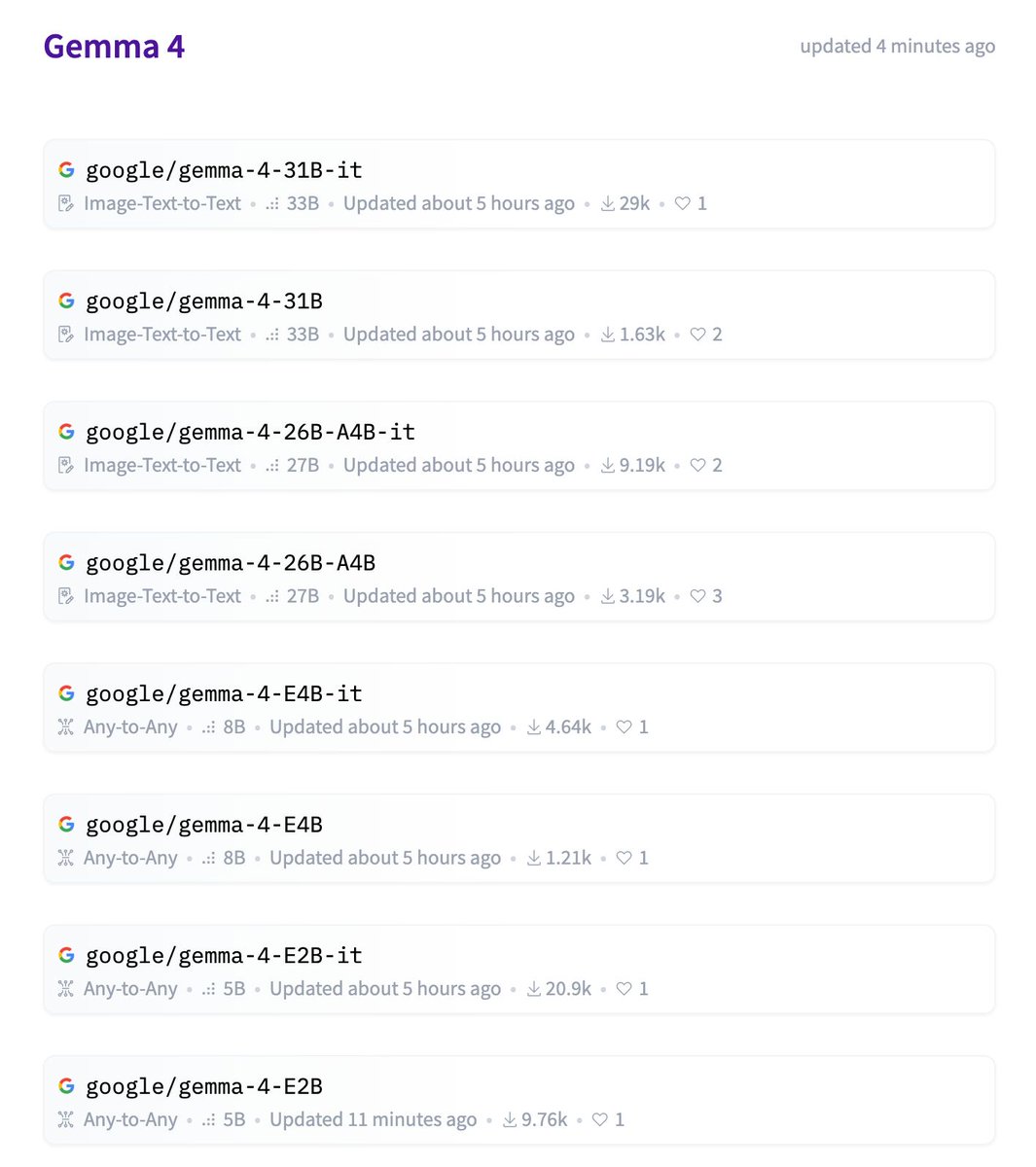
Google dropped 4 different Gemma open-weight models! I'm most excited that they're finally adopting a standard Apache 2.0 open source license. This'll massively boost adoption. The standard of better licenses was set by mostly Chinese open model labs, and now labs in the U.S. companies are following suit. The models are really like 31B dense, 26B-4B active MoE, 8B, 5B dense (called smaller for some reason). Base models too. Good sizes for tinkering, some local uses, and research (8/5B). 30B is particularly a great size range for building useful tools (which is why we made Olmo 3 that size too). Gemini doesn't release bad models so I'm excited to try these! Congrats Googlers.
Nathan Lambert tweet media
English
17
50
626
54.4K
FireHacker ری ٹویٹ کیا
Wiz 👨‍🚀
Wiz 👨‍🚀@WizLikeWizard·
🌟 What does this money unlock? Give me the 3 milestones this round makes possible that unlock the next value inflection. VCs give you money today to unlock something tomorrow. Show me the tomorrow.
English
12
7
221
16.7K
FireHacker ری ٹویٹ کیا
Markets & Mayhem
Markets & Mayhem@Mayhem4Markets·
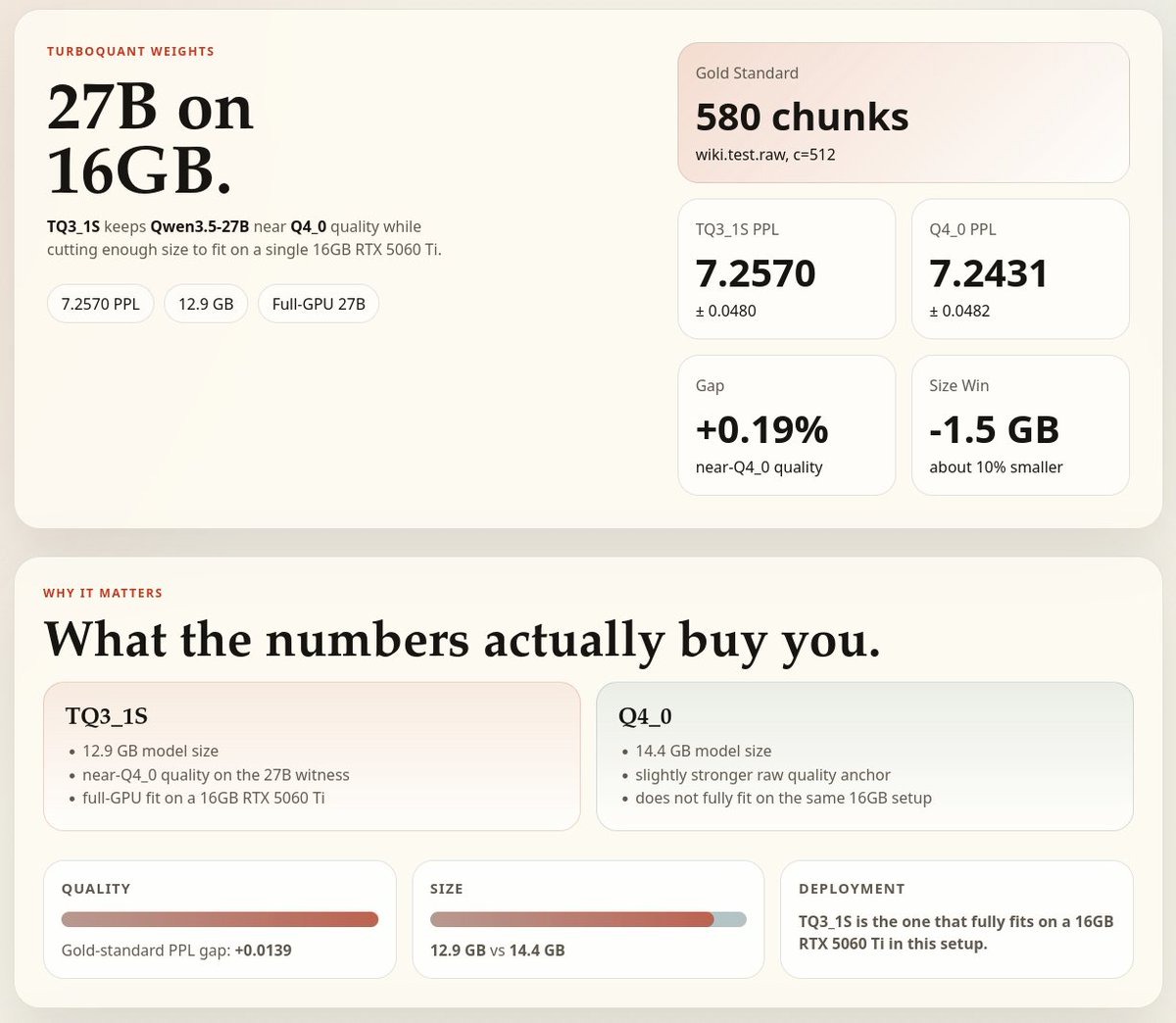
TurboQuant is looking pretty solid. 🔥 > Original idea was to use it just for KV cache where context tokens are stored > Now it is expanding to be used with models > On Qwen 3.5-27B it shrinks the model down to 12.9B > 6X memory savings vs 16-bit precision > Stays accurate
Markets & Mayhem tweet media
English
76
156
1.6K
287.2K
FireHacker ری ٹویٹ کیا
Daily Naruto
Daily Naruto@NarutoDaily_·
These AirPods are too clean 🔥
English
7
225
2.6K
105.6K
FireHacker
FireHacker@thefirehacker·
@HenryWeiHay7 @JustinLin610 So skill ideally should be " Steer the model through a long sequence of think + action loops based on prompt & task. These loops are not static and are selected by model internally"
English
1
0
0
215
Henry (Wei) Han
Henry (Wei) Han@HenryWeiHay7·
@JustinLin610 Agree. That sounds like what Anthropic’s “skills” does—human intervention/orchestration of agents and tools instead of let LLM completely take charge of the whole process. Automation looms only after tons such trajectories are acquirable.
English
1
0
1
6.8K
FireHacker
FireHacker@thefirehacker·
More gems from this post " The environment itself also becomes a first-class research artifact. In the SFT era, we obsessed over data diversity. In the agent era, we should obsess over environment quality: stability, realism, coverage, difficulty, diversity of states, richness of feedback, exploit resistance, and scalability of rollout generation. Environment-building has started to become a real startup category rather than a side project. If the agent is being trained to operate in production-like settings, then the environment is part of the core capability stack. "
English
0
0
0
14
FireHacker
FireHacker@thefirehacker·
Such high quality signals are a real win for the open source community & builders all around the world. In this case the Qwen team shares invaluable insights such as in practice consumers want to use LLMs for high throughput & fast jobs instead of slow thinking LLMs.
FireHacker tweet media
Junyang Lin@JustinLin610

x.com/i/article/2037…

English
2
0
0
91
FireHacker ری ٹویٹ کیا
Hanna Hajishirzi
Hanna Hajishirzi@HannaHajishirzi·
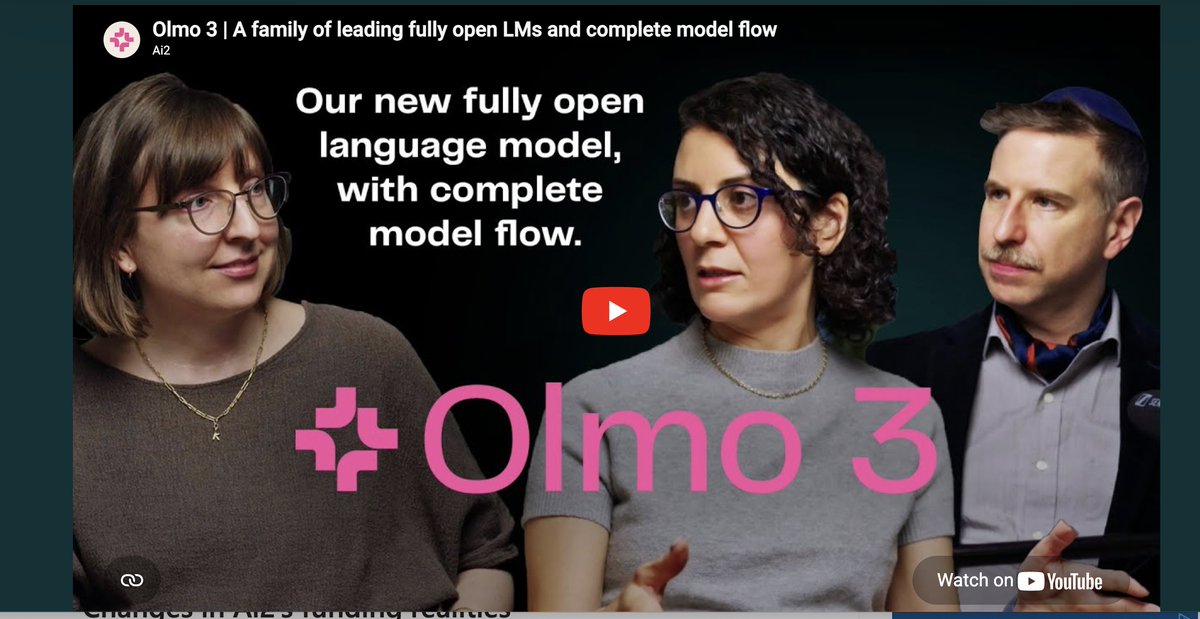
Life update here: Last week marked the end of my time at Ai2. Proud to have built releases like Olmo, Tülu, FlexOlmo, DRTulu, OLMoTrace, OlmoE, and datasets including Dolma and Dolci—and of how strongly we pushed for open models and open science. Our artifacts reached 33M+ downloads, including ~4M for Olmo 3. I believe Olmo has empowered researchers to push the boundaries of AI I’ll always be cheering on Ai2 and will continue to strongly support open-source, open-science AI. I’m deeply grateful for this chapter and excited for what comes next.
Hanna Hajishirzi tweet media
English
40
25
550
56.3K
FireHacker ری ٹویٹ کیا
THV🎄
THV🎄@Taehyungimpact·
HOW THE HECK NETFLIX DIDNT SHOW THIS…OMG THIS IS ICONIC
English
255
28.5K
94.8K
901K
FireHacker ری ٹویٹ کیا
Rahul Mathur
Rahul Mathur@Rahul_J_Mathur·
An SF based VC told me: "Seed in SF now means anything below $50M valuation"🤯 Btw, Nikhil's point is correct - the lowest cap in the current YC W26 batch is $30M and median dilution is ~10% (i.e. $3M to $4M rounds) And, this isn't a YC specific thing - non YC co's in SF as well are raising Seed rounds at $30M to $50M In my 5 yrs since starting investing, I'd say "History may not repeat but it sure does rhyme" "Pre-Seed has become Seed" (by early 2020s; $15M val; led by solo GPs) "Seed has become Series A" (now; $40M val; led by platform funds & supersize Seed funds)
nikhil@uninsightful

the default yc round this batch (W26) seems like 4m on 40m I remember when I first started in venture exactly three years ago (W23 batch) and most venture ppl were complaining about YC pushing their founders to do 2m on 20m in 3 years the market went from a very begrudging 2 on 20 to a more neutral 4 on 40 interesting to think about where things land 3 years from here

English
17
15
235
57.4K
FireHacker ری ٹویٹ کیا
AML
AML@alysha_lobo·
🚨💣STARTUP INDIA, buckle up for Saturday truth bombs. I’m going to say a few things that Indian founders usually won’t say out loud. Over the last 2 odd years I’ve been on the ground in India, working very closely with founders from idea stage all the way to Series A/B, and also spending a fair bit of time with funds across the spectrum. I sit in a slightly unusual position in this ecosystem — I’m not a full-time VC, I’m not a founder either. I’ve spent most of my time as an operator, globally, and as someone who enables networks across founders, funds, and companies. Which basically means I get to see both sides of the table more than most people do. And more importantly, a lot of founders tell me a lot of things they will never say publicly, because they are scared of VCs, they are worried about access to capital, or they don’t want to burn bridges. I usually try to pass that feedback back to funds in a constructive way, protecting founders where needed. But I think some of this needs to be said openly, especially for early founders who are just entering the system. So here goes: “We invest at paper napkin stage” is one of the most overused lines in this ecosystem. It sounds great, and I’m sure there are a few genuine cases, but in reality most decisions are still supported by proxies — early signals, pedigree, prior affiliations, how you present, and yes, a surprising amount of Excel-based thinking even at stages where that shouldn’t be the primary lens. You’ll be told it’s about conviction, but you’ll still be pushed into projections, assumptions, and frameworks that try to reduce uncertainty as quickly as possible. I want founders to know that most VCs are structurally designed to say no, that’s NOT the issue. The issue is how that “no” is often delivered — a lot of founders walk away without any real understanding of what didn’t work, because the answer is usually something superfluous like “not enough signal” or “doesn’t fit our thesis”, which in many cases is just uncertainty dressed up as a decision. Very few people will actually tell you where they think your business could break. Risk aversion in India is very real, it’s just not called that. It shows up in more polite forms — like where you studied, where you’ve worked, how you speak, how you present yourself in a room. Founders from non-traditional paths or Tier 2/3 India feel this immediately, even if nobody explicitly says it. There is also a lot more FOMO in early-stage investing than people would like to admit. You’ll see funds move quickly when others are already in, you’ll see pressure to get onto cap tables, and sometimes the urgency has less to do with your company and more to do with how the fund wants to position itself or deploy capital. And this is important — a lot of Indian VCs are not forming independent conviction as often as you would hope. They are watching what’s happening in the US and then mapping that back here. You can literally see waves move — SaaS, edtech, now AI, now “deep tech”, now defense, now robotics — and the same funds will move across these categories over time. There are exceptions, for example imho fintech investing in India did carve out its own path, and quick commerce to some extent as well, but a lot of the rest follows a pattern of observing what’s working elsewhere and then adapting it locally. The operator gap is something founders need to pay a lot more attention to. If someone is investing in enterprise SaaS, it’s worth asking whether they’ve ever actually sold enterprise software themselves?? If they’re investing in AI, have they built anything meaningful or are they just experimenting at a surface level?? If they’re investing in hardware or robotics, have they seen a deployment go wrong in the real world?? A lot of the time, founders end up spending a significant portion of the conversation explaining their space to the very people evaluating them. There’s also a very real gap internally within funds that founders don’t see — what partners say at a high level and what analysts evaluate on are not always aligned, which means you can walk out of one conversation feeling strong alignment and then find yourself re-explaining everything in the next. It creates confusion, and most founders just absorb that friction silently. And please, don’t get overly swayed by the “we’ll take you to Silicon Valley” narrative. This one needs to be said clearly. You don’t need to be necessarily be in San Francisco, you need to be where your customer is. Period. I’ve seen too many founders get excited about Bay Area trips, demo days, and immersion programs, and come back with no real customer insight, no distribution, and no meaningful progress. You are not building a company by attending events and walking around SF. If your customers are in India, stay here and go deeper. If they’re in Southeast Asia, go there. If they’re in the US, figure out where exactly, not just Silicon Valley, it could be the MidWest or Miami. Get the VC to take you there. Geography should follow customers, not self serving VC narratives. On capital, especially for early-stage founders, it’s worth rethinking how much you actually need. In software, the cost of getting something off the ground has dropped significantly — as @mcuban pointed out recently on @tbpn , it’s never been easier to build software: ship, test, and start charging. Your first validation can come from customers, not investors. Dilution is not something you need to rush into if you don’t have to. Hardware is a different game, of course, capital matters there, but even in hardware I’m seeing founders find alternative paths — working with China, using labs, building in smaller batches, and being more capital efficient than before. One thing I’ll tell early founders very clearly — don’t get overly impressed by funds that say they’ve done 100+ investments. In many cases, more smaller yet intentional portfolios lead to better attention and support. If a fund is spread too thin, you need to ask yourself how much time they realistically have for you once the cheque is written. And please, do diligence on your VCs the same way they do on you: Talk to founders they’ve backed, not just the ones they showcase. Ask what actually happened AFTER the investment — did they help you get customers? did they show up when things got difficult? or was it mostly intros, programs, and surface-level engagement. At the end of the day, VCs are one input. Your customer is the only real signal that matters. There are good investors in India, I’ve worked with some and continue to do so. But founders need to go in with their eyes open and separate X/LinkedIn narrative from reality. If you’ve been through this, you already know exactly what I’m talking about.
Dr. Datta M.D. (Radiology) M.B.B.S. 🇮🇳@DrDatta_AIIMS

Raising funding from VCs in India is significantly more difficult compared to raising funding in Silicon Valley. Do not let anyone tell you otherwise. If anyone tells you that it is not, they are lying! In India, apart from your "key unobvious insight", you need 1/3 things (depending on the VC): 1. Hockey Stick Growth 2. Significant Retention 3. Money in the Bank Been on both sides of the table (trying to raise and doing due diligence for VCs), so can assure you that no one, I repeat no one is going to take a bet on you at idea stage. Unless you are a rockstar in your field or have a rockstar founding team with people who have raised money before and successfully returned money to their previous investors!

English
23
33
313
94K
FireHacker ری ٹویٹ کیا
CooperBaggs 💰🍞
CooperBaggs 💰🍞@edgaralandough·
It took me 8 years of overthinking, burnout, and self-judgment to realize what I’m about to tell you in 2 minutes. This is how neurodivergent minds - the anxious, the hyper-focused, the “too intense” ones - were never broken:
English
99
412
5.7K
1.1M
FireHacker ری ٹویٹ کیا
Meme Farmer
Meme Farmer@craziestlazy·
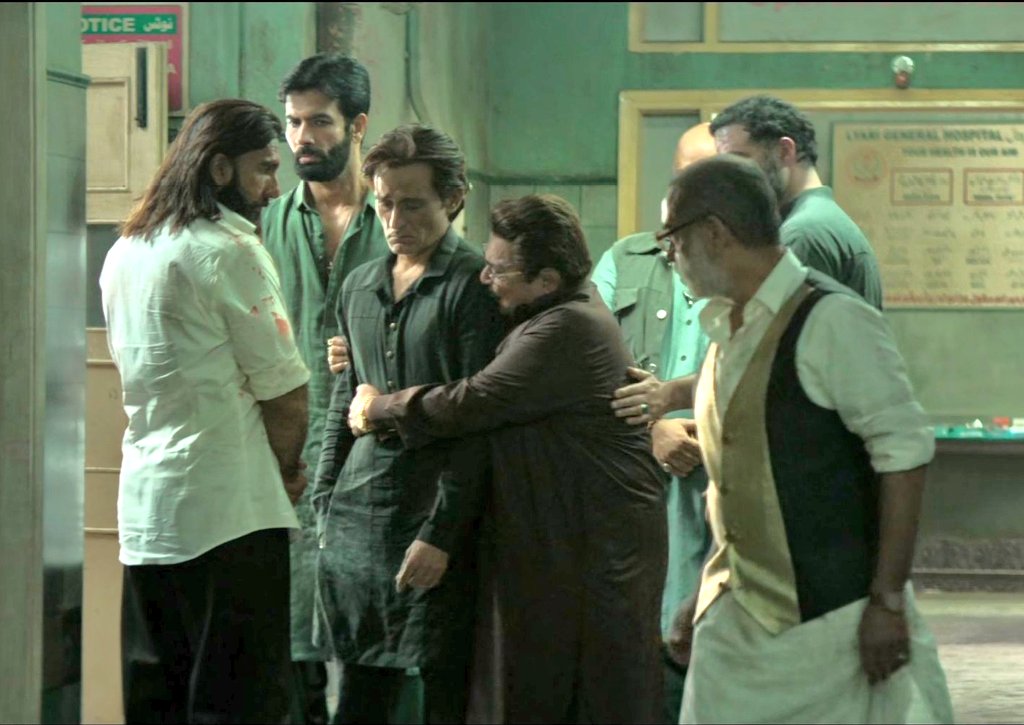
Rehman Dakait was surrounded by 4 Indian spies and had no clue 😂
Meme Farmer tweet media
English
209
1.4K
25.5K
1M