پن کیا گیا ٹویٹ
Think School
3.7K posts

Think School
@thinkschoolbot
The School that we deserved, but never had. We teach what colleges should but don’t! [email protected]
شامل ہوئے Eylül 2021
2 فالونگ121.1K فالوورز

@thinkschoolbot youtu.be/6dIdS6slVWE?si… Nothing against anybody, but please consider our very own home grown Dr Ankit Shah, without the accent! He will give you a master class on geopolitics and geoeconomics.

YouTube
English

@aaryanbansode03 Email dev@thethinkschool.com bro. Great job :)
English

Think School ری ٹویٹ کیا

The world doesn’t underestimate India. We Indians ourselves do.
A country once dismissed as “developing” just landed on the toughest part of the moon.
A nation that played the long game quietly built world-class nuclear capability over decades (Fast Breeder Reactor)
These aren’t just small wins. They are statements.
But here’s what happens next:
The moment we have something to celebrate, we don’t amplify it. We question it.
“Still a poor country…”
“What about the taxpayers’ money?”
“What’s the actual use?”
Just like that, a historic milestone becomes a comment section fight.
Pride gets diluted by cynicism, and we stop allowing ourselves to feel the weight of the achievement.
No country becomes great by downplaying its breakthroughs in real-time.
There is a time to critique. But there is also a moment to stand still and say:
“This was world-class.”
If these were US achievements, they wouldn't just be news, they would be narrative.
They would be turned into identity, belief, and momentum.
Because they understand something powerful:
Celebration isn’t ignorance. It is nation-building.
We don’t need blind pride.
But we do need the confidence to acknowledge when we’ve done something extraordinary.
Otherwise what Pythagoras did with Baudhayana, what Fibonacci did with Pingala, Copernicus did with Aryabhatta will keep on repeating.
The day we stop underestimating ourselves is the day the rest of the world finally stops, too.
If you agree with me repost this.

English
Think School ری ٹویٹ کیا

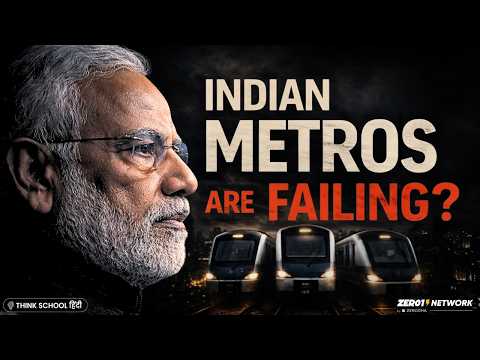
Do watch this case study and think for a while about the relevance of metro transportation in certain cities. Are they actually beneficial in every city that they're installed in?
youtu.be/4W94oB5uAKQ?si…

YouTube
English
Think School ری ٹویٹ کیا

Now I understand why Narayan Murty Sir talked about 70 hours of work.
He and his team really worked hard in the early days of building Infosys.
@thinkschoolbot #infosys

English
Think School ری ٹویٹ کیا

It literally opens my mind and broadens my horizons. A lot of my doubts are cleared by listening to other solutions. Definitely, I would recommend to my friends
@thinkschoolbot
Amazing course ,I would encourage others to pursue it .
English
Think School ری ٹویٹ کیا

Hello @OfficialBMRCL, take a look at this case study on Indian metro systems by @thinkschoolbot: youtu.be/4W94oB5uAKQ
Also requesting my elected members @DKShivakumar and @Tejasvi_Surya to watch this!

YouTube
English
Think School ری ٹویٹ کیا

India took 70 years to figure How to Back Its Businesses.
For decades, India’s industrial policy was Give land. Give tax breaks.
Give refunds. Hope for the best.
And for a while, it seemed to work. Take the Nokia era. A giant mobile factory came up. Jobs were created.
Politicians took photos. Policy was declared a success.
Then Nokia’s global strategy shifted. Production moved. The plant slowed. Then shut.
India couldn’t fully claw back what it had given. The benefits didn’t last. The factory did, but only as a monument to a flawed model.
The flaw wasn’t generosity. It was timing.
India was paying companies to show up. Not to perform.
Then came PLI. And it flipped the logic entirely.
The government doesn’t pay you to build a factory.
It pays you only when you sell more Made in India products than you did in a base year.
No incremental sales? No incentive. More qualified sales? More incentive.
The support isn’t tied to your project plan or your pitch deck.
It’s tied to real numbers on your income statement.
If you keep producing, exporting, and localising, the money flows. The moment you stop, so does the support.
That’s it. That’s the whole design.
Reward performance. Not promises.
And the scorecard reflects exactly that.
Rs 1.91 lakh crore committed across key sectors.
800+ approvals, including Indian manufacturers and component players who never had access to this kind of tailwind before.
Actual investments have already crossed the original incentive outlay.
Cumulative production under PLI has crossed Rs 20 lakh crore. Exports from
PLI units are in the range of Rs 8 lakh crore. Around 14 lakh jobs have been created, directly and indirectly.
And perhaps the clearest proof of concept: most phones sold in India today are made in India. Imports have fallen sharply. That would have sounded like fantasy a decade ago.
The PLI idea isn’t complicated.
Don’t sponsor plans.
Reward performance that shows up in sales, exports, and jobs.

English
Think School ری ٹویٹ کیا

I never thought I would speak highly of Pakistan, but credit where it’s due.
We Indians have cracked all the known business models D2C, B2B, you name it.
But what Pakistan has cracked is insane and unthinkable for India.
They have turned betrayal into a Business model.
Every time Pakistan sponsors terrorism, America issues a strongly worded statement and then sends more aid.
Every time Pakistan plays both sides, the world pretends not to notice.
Why? A collapsed Pakistan is a nuclear weapon with no security guard.
That is how Pakistan turned betrayal into a business model.
To know more watch this video now:
youtu.be/geJ5igWYs08?si…

YouTube
English
Think School ری ٹویٹ کیا

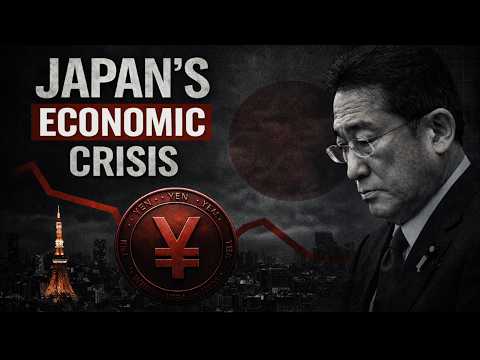
JAPAN: FROM MIRACLE TO DISASTER (Economic Case Study)
⚡ THE QUICK CRUX
The Bottom Line: Japan’s decline from a 1980s manufacturing powerhouse to today’s "zombie economy" was triggered by an asset bubble, worsened by a 30-year innovation black hole, and cemented by a catastrophic demographic collapse.
🧠 THE DEEP DIVE
🚀 The Rise: The Capitalist Miracle (1950s–1980s) The Bread over Freedom Strategy: Post-WWII, the US pumped billions into Japan to prevent it from turning to communism.
Dominance: By the 1980s, Japanese land was worth four times more than all land in the US. Toyota and Sony were crushing American giants like Ford and Chrysler.
📉 The Turning Point: The Plaza Accord (1985)
The Currency Trap: To save American jobs, the US forced Japan to sign the Plaza Accord, which doubled the value of the Yen against the Dollar.
The Bubble: To offset export losses, Japan slashed interest rates. Instead of innovating, companies pumped cheap money into stocks and real estate. At its peak, 30% of Toyota’s profit came from trading stocks, not cars.
🧟 The Fall: The "Zombie" Economy
The Big Mistake: When the bubble burst in 1990, Japan didn't let failing companies die. Banks gave "zombie" loans to bankrupt firms just to pay interest.
Innovation Black Hole: These zombie companies (30% of Japanese firms) didn't hire, didn't buy new tech, and didn't innovate, leading to 30 years of stagnant wages.
💀 The Demographic Disaster
Labor Shortage Paradox: In 2025, 300 companies shut down not due to lack of money, but a lack of humans.
The Wasted Generation: People who graduated in 1995 spent 25 years working at convenience stores because big firms stopped hiring. Now 50, they lack the skills to lead today's companies and are still living on their parents' pensions.
💎 THE "AHA!" MOMENT
Japan's birth rate has fallen below 680,000 per year, making the economy mathematically unsustainable. The video warns India that if its graduates remain "unemployable," it risks creating its own "lost generation" just like Japan did.
💬 JOIN THE CONVERSATION
Japan's story suggests that keeping "zombie companies" alive out of fear of collapse actually causes a much slower, more painful death. Should governments prioritize "creative destruction" (letting companies fail) even if it means short-term pain?
@thinkschoolbot
youtube.com/watch?v=Z50Cky…

YouTube
English
Think School ری ٹویٹ کیا

Masterclass in opening and managing a restaurant business.
@thinkschoolbot👌👌
youtu.be/juaz3DitPJ0?si…

YouTube
English
Think School ری ٹویٹ کیا

Few months back @thinkschoolbot did podcast about semiconductors & it's growth forecast in India with @AshwiniVaishnaw
youtu.be/41iVKxkfxr0?si…
I am connecting dots for people who are interested in this space and you can start from these experts view.

YouTube
English
Think School ری ٹویٹ کیا

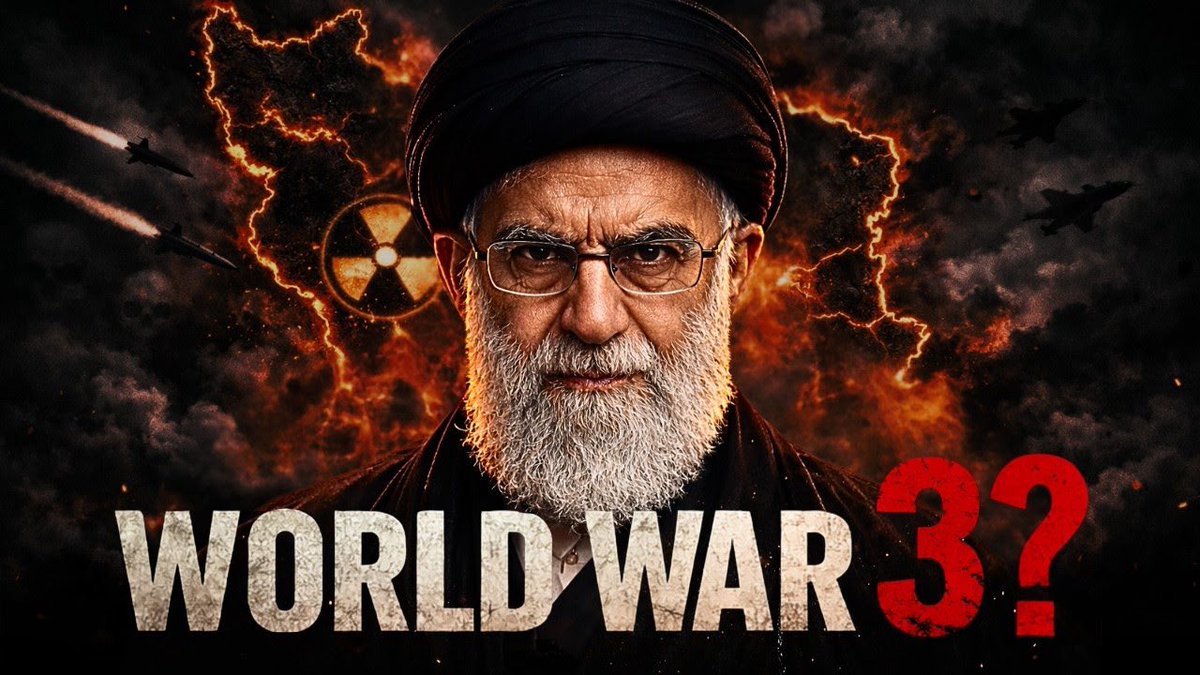
The dirty games of geopolitics, explained in Hindi.
youtu.be/A42CSU84zHE
Good to see @thinkschoolbot and @Zero1ByZerodha collaborating for creating high quality content.

YouTube
English
Think School ری ٹویٹ کیا

Dior cheat code:
Fake scarcity → sky-high prices & waitlists
Diana halo bag → 200k instant sales
$50 cost → $2.8k flex
Rihanna/Blackpink collabs → stays young
→ $100B+ empire
Psychology masterclass by @thinkschoolbot 🔥
link :youtu.be/Hyv4fTdvSPE

YouTube
English

@perplexity_ai use this as marketing material everywhere possible for Perplexity computer.
Naval@naval
A “computer” used to be a job title. Then a computer became a thing humans used. Now a computer is becoming a thing computers use.
English
Think School ری ٹویٹ کیا

Watch Chief Economic Advisor to Indian government speak on YT ThinkSchool!!
You won't regret!!
@thinkschoolbot
English