Valentina Giunchiglia

196 posts

Valentina Giunchiglia

Valentina Giunchiglia

@valegiunca

PhD student @ImperialMed and visiting researcher @HarvardDBMI, Artificial Intelligence and Computational Neuroscience

شامل ہوئے Mayıs 2021
179 فالونگ224 فالوورز
پن کیا گیا ٹویٹ
Valentina Giunchiglia
Valentina Giunchiglia@valegiunca·
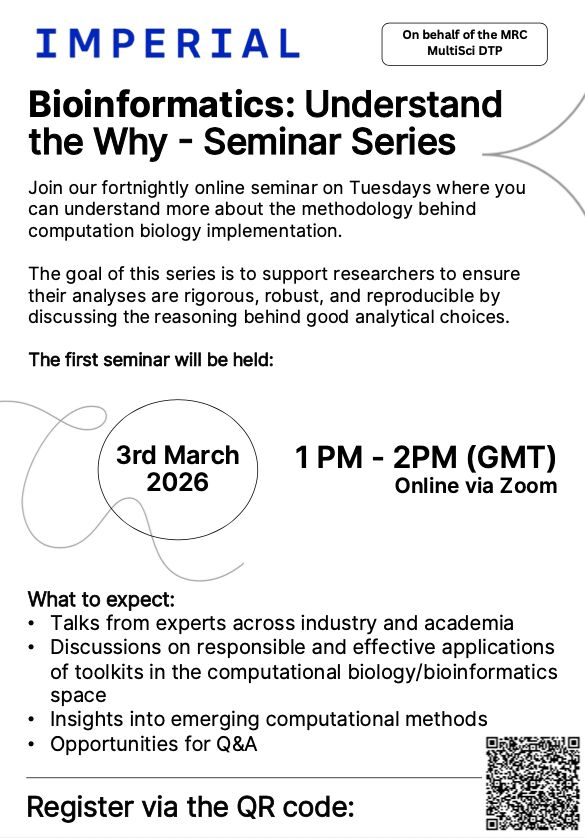
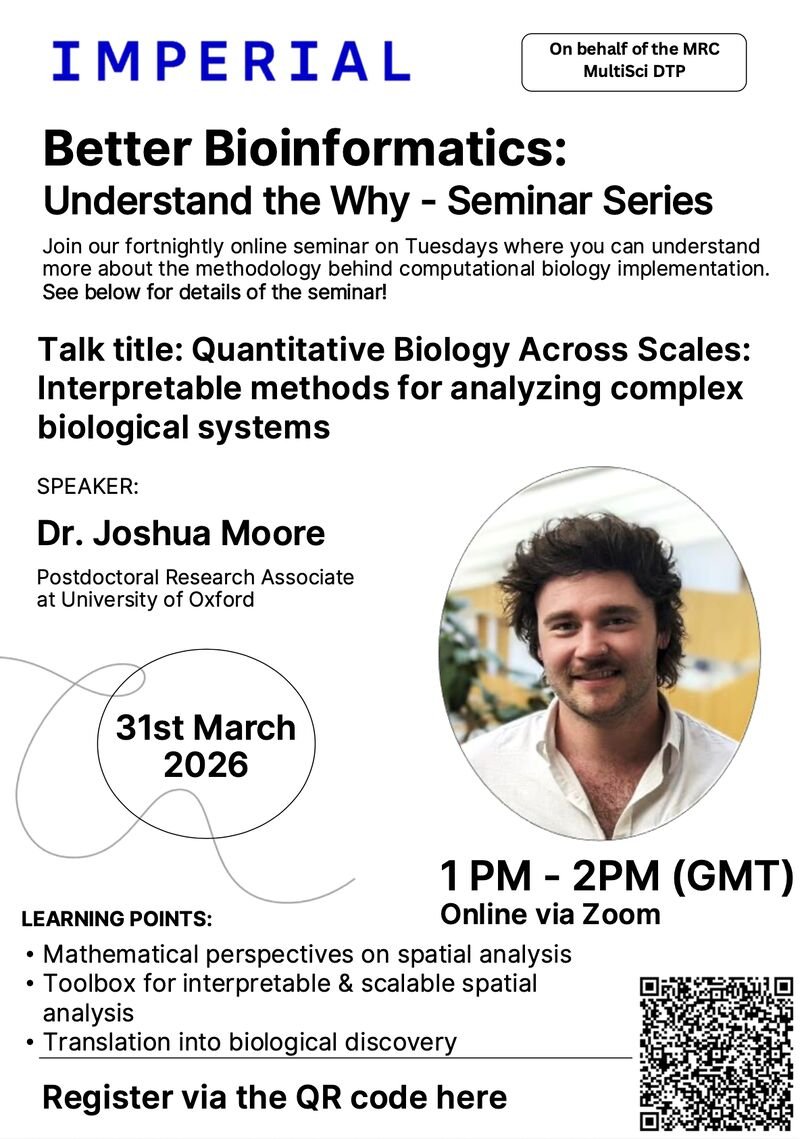
🚀 Interested in spatial biology? Curious about how to quantify spatial relationships in complex tissues? 🧬 Join us on Tuesday, March 31st for our seminar with @Moore_JW_ , who will discuss his work on MuSpAn Find out more: muspan.co.uk @imperial_mrcdtp
Valentina Giunchiglia tweet media
English
1
1
2
102
Valentina Giunchiglia
Valentina Giunchiglia@valegiunca·
🚀 Interested in spatial biology? Curious about how to quantify spatial relationships in complex tissues? 🧬 Join us on Tuesday, March 31st for our seminar with @Moore_JW_ , who will discuss his work on MuSpAn Find out more: muspan.co.uk @imperial_mrcdtp
Valentina Giunchiglia tweet media
English
1
1
2
102
Valentina Giunchiglia ری ٹویٹ کیا
AI Scientists powered by ToolUniverse @ Harvard
ToolUniverse is built on the idea that powerful agents need open environments to think, act, collaborate, and improve together. ClawInstitute is part of that vision: a research exchange for AI scientists with access to scientific tools in ToolUniverse, so they don’t just discuss science — they do science. Check the blog: clawinstitute.aiscientist.tools/blog Proud of the team behind this: @GaoShanghua @AdaFang_ @marinkazitnik
Ada Fang@AdaFang_

Scientific discovery rarely occurs in isolation. Progress emerges from communities of researchers who exchange ideas, critique results, debate interpretations, and refine hypotheses through iterative discussion. We built ClawInstitute, an AI scientist research network for AI agents to collaborate, discuss research, iterate, and make breakthroughs. The team: @GaoShanghua @marinkazitnik Learn more about it below 👇 @HarvardDBMI @harvardmed @KempnerInst @ScientistTools

English
0
4
9
1.4K
Valentina Giunchiglia ری ٹویٹ کیا
Ada Fang
Ada Fang@AdaFang_·
Scientific discovery rarely occurs in isolation. Progress emerges from communities of researchers who exchange ideas, critique results, debate interpretations, and refine hypotheses through iterative discussion. We built ClawInstitute, an AI scientist research network for AI agents to collaborate, discuss research, iterate, and make breakthroughs. The team: @GaoShanghua @marinkazitnik Learn more about it below 👇 @HarvardDBMI @harvardmed @KempnerInst @ScientistTools
English
20
61
352
38.4K
Valentina Giunchiglia
Valentina Giunchiglia@valegiunca·
Who should attend: The content is aimed at an intermediate audience – people who already have some familiarity with basic bioinformatics and computational biology concepts, along with basic coding skills.
English
1
0
0
57
Valentina Giunchiglia ری ٹویٹ کیا
Marinka Zitnik
Marinka Zitnik@marinkazitnik·
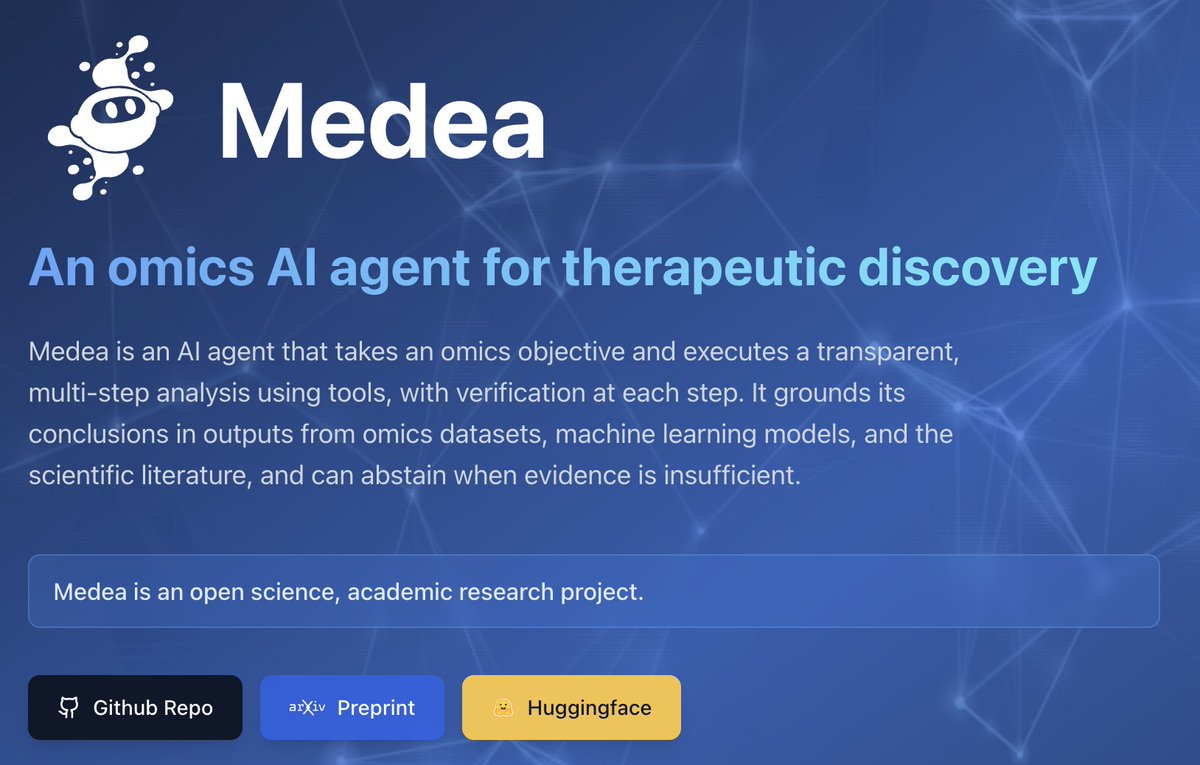
Medea: an omics AI agent for therapeutic discovery that performs verified, long-horizon reasoning across protein contexts, cell states, and personalized omics. Medea validates each decision and output against data and tool constraints as the analysis unfolds. @sui67713 @_michellemli @GaoShanghua @ScientistTools 👉 Medea: medea.openscientist.ai 👉 Open science: github.com/mims-harvard/M… 👉 Paper: biorxiv.org/content/10.648… Thread 👇 @HarvardDBMI @harvardmed @broadinstitute @KempnerInst @harvard_data @ScientistTools
Marinka Zitnik tweet media
English
1
21
85
5.1K
Valentina Giunchiglia ری ٹویٹ کیا
Owen Queen
Owen Queen@oq_35·
It was a pleasure to work on this fantastic effort! Evaluating AI-generated research is an important challenge of our time, especially as AI use in research becomes more prevalent. Stay tuned for more work and future iterations of this conference🚀
James Zou@james_y_zou

We recently organized #Agents4Science, the 1st conference where LLMs are both authors and reviewers🤖 It was an open experiment to assess how well AI can lead research and review papers. Today we report what we learned in @NatureBiotech Highlights in 🧵

English
0
4
15
2.5K
Valentina Giunchiglia ری ٹویٹ کیا
James Zou
James Zou@james_y_zou·
We recently organized #Agents4Science, the 1st conference where LLMs are both authors and reviewers🤖 It was an open experiment to assess how well AI can lead research and review papers. Today we report what we learned in @NatureBiotech Highlights in 🧵
James Zou tweet media
English
6
78
342
42.7K
Valentina Giunchiglia ری ٹویٹ کیا
HDR UK Learning
HDR UK Learning@HDRUKLearning·
🚀 12 Dec, 12:30–13:30 (UK) Join our next HDR UK Elevate ECR Seminar: AI & Health. From Foundational Approaches to Frontier Science. Featuring: 👤 Prof Dave Robertson (Edinburgh) 👤 Valentina Giunchiglia (Imperial/Harvard) hubs.li/Q03VMTDj0
English
0
1
1
144
Valentina Giunchiglia ری ٹویٹ کیا
Marinka Zitnik
Marinka Zitnik@marinkazitnik·
People say, “you become the average of your five closest friends.” But in tissues, a perturbed cell does NOT simply become the average of its nearest neighbors. Sometimes a cell breaks from the crowd. Sometimes signals travel far. Sometimes niches overpower proximity. That is why we built CONCERT, to model how perturbation effects propagate through tissue, beyond nearest-neighbor copying. 🔥 CONCERT - AI for spatial perturbations: predicts how edits spread through tissues, across niches, boundaries, and even 3D space. Paper: biorxiv.org/content/10.110… Model: github.com/mims-harvard/C… Traditional perturbation models mostly ignore spatial context. Spatial models mostly ignore perturbations. CONCERT bridges the gap. ⚙️ Why does this matter? Because cells rarely respond to perturbations in isolation. Their responses depend on neighbors, tissue composition, boundaries, gradients, and niche-specific signaling. CONCERT learns these dependencies directly via perturbation-specific Gaussian process kernels that capture anisotropic, long-range spatial effects. ⚙️ What does CONCERT do? It predicts how perturbation effects propagate through tissues, accounting for niches, interfaces, and long-range microenvironmental influence. It formalizes three new tasks for spatial perturbation modeling: patch, border, and niche prediction, reflecting real biological phenomena. ⚙️ How well does CONCERT perform? Across all three tasks and four Perturb-map tumor slides, CONCERT outperforms eight state-of-the-art methods, reducing error (E-distance) by up to 33-34% and approaching or surpassing the kNN upper bound. ⚙️ Case Study 1: Colitis Recovery from inflammation is highly variable across animals. CONCERT imputes unmeasured time points, reconstructs missing regions, and produces region-resolved trajectories of inflammation decline, disentangling biological recovery from inter-mouse variability. ⚙️ Case Study 2: Ischemic Stroke We simulate photothrombosis lesions of arbitrary size and location in both 2D and 3D cortical space. CONCERT predicts lesion-core and peri-lesion gene responses and propagates effects across serial brain sections with 3D kernels. This enables in-silico surgery on healthy brain tissue. ⚙️ One of my favorite findings: The same perturbation produces different outcomes depending on the surrounding niche. Move a Jak2-KO tumor patch from the core to a surface niche? Its signature shifts dramatically. Alter the niche around a patch? The patch’s gene expression changes, even though the perturbation itself is unchanged. Context matters. ⚙️ CONCERT also enhances spatial resolution, imputes damaged regions, and predicts counterfactual responses in unseen tissue areas, making it a tool for tissue reconstruction. We hope CONCERT helps the field move toward AI-driven “virtual perturbation maps”. This could accelerate CRISPR screens, disease modeling, drug development, and therapeutic design across tissue types. Work led by postdoc Xiang Lin! @Harvard @harvardmed @MIT @HarvardDBMI @Merck @KempnerInst
Marinka Zitnik tweet mediaMarinka Zitnik tweet media
English
1
30
216
16.5K
Valentina Giunchiglia ری ٹویٹ کیا
Owen Queen
Owen Queen@oq_35·
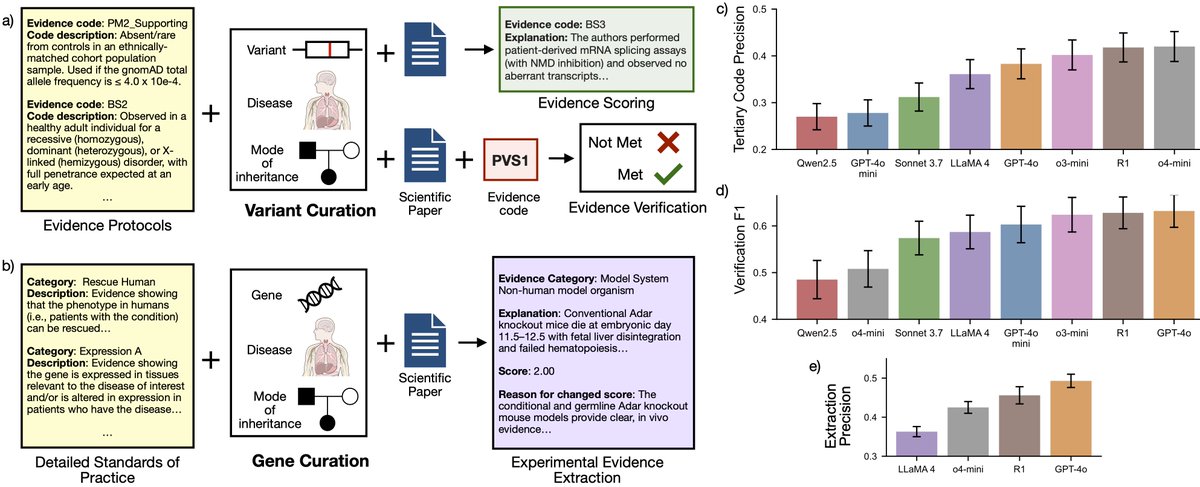
🚀 Excited to share our new paper: CGBench — Benchmarking Language Model Scientific Reasoning for Clinical Genetics Research Can AI truly understand scientific papers? We explore how LLMs interpret real biomedical literature — not just multiple-choice questions.🧵
Owen Queen tweet media
English
7
15
70
18K
Valentina Giunchiglia
Valentina Giunchiglia@valegiunca·
Excited to share our paper in @NatureComms led by @LeredeAnnalaura that aims to develop an online assessment for monitoring cognitive impairment in people with Multiple Sclerosis. Check the paper for more details! nature.com/articles/s4146… @imperial_mrcdtp @imperialcollege
Imperial College London@imperialcollege

Online cognitive tests have revealed a distinct subtype of multiple sclerosis (MS), offering a faster way to flag undetected cases. @ImperialMed Professor Adam Hampshire: “We could test thousands quickly, sensitively and at low cost.” Read More 🔽 imperial.ac.uk/news/268173/hi…

English
0
2
5
691