

@ZelenskyyUa Thank you, Mr. President. You are a great man and Ukrainians are a great People. #SlavaUkraïni
English
Dogs_Historian - Giovanni Padrone 🇺🇦
19.3K posts

@DogsHistorian
#doghistory, #science, and AI to read the present through the past. #storiadelcane, scienza e IA per leggere il presente attraverso il passato. #SlavaUkraini











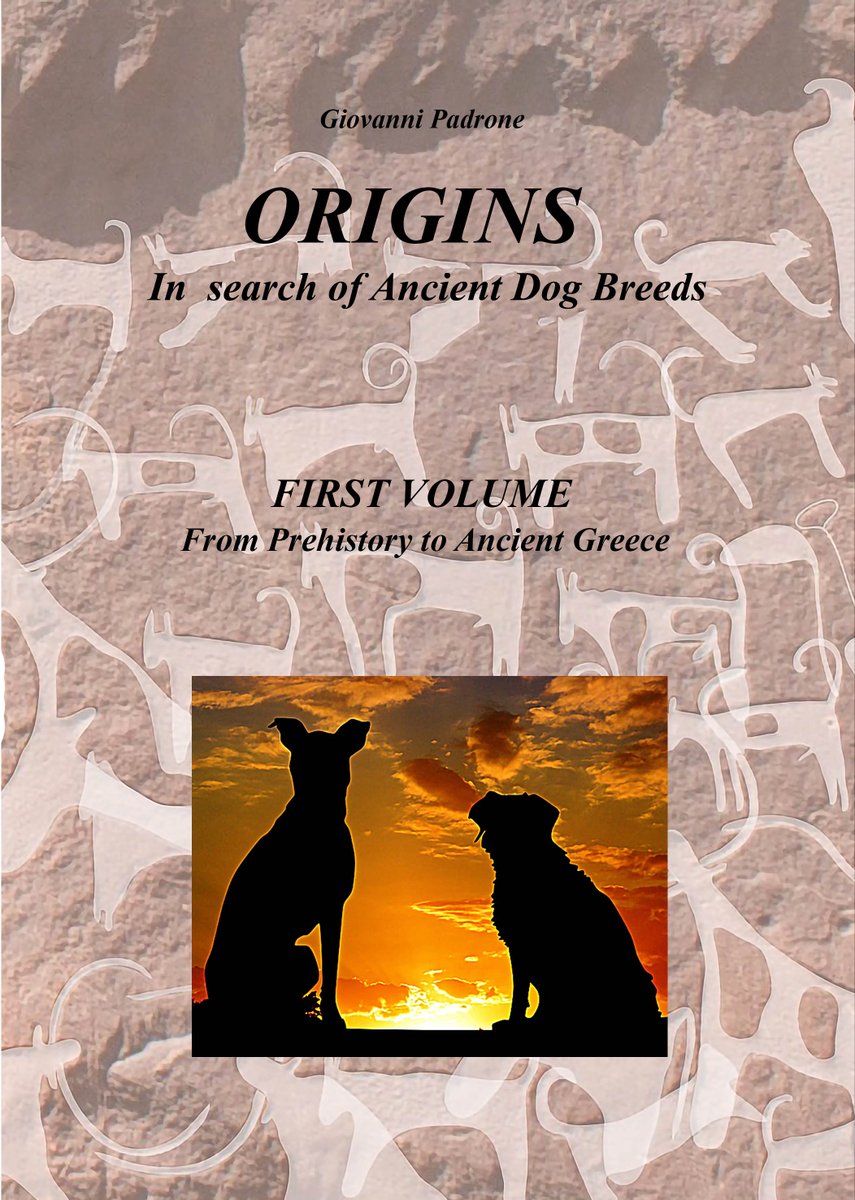
Melitaion kunidion: not "Maltese dog," but a small furry #dog For centuries, it has been repeated that the Canis melitaeus was the "dog of Malta." However, this reading is too simple, and perhaps even wrong. In Greek, kunidion means "small dog" (in Latin, Catulus). The real issue lies with Melitaion: this is where the confusion arises. It is by no means mandatory to read it as a geographical name. More likely, it indicated a small, long-haired dog—a "furry" type, very close to the modern Kokoni. Key Points • Kunidion = small dog. • Melitaion can be a descriptive term, not necessarily geographical. • The transformation into "Maltese dog" is a later simplification. • The #Kokoni (still called Μελιταίων Κυνίδιον by Greeks today) fits well into this framework as a possible heir to ancient Greek small dogs. A Note on #Genetics We must be rigorous here: on a genetic level, we do not yet have definitive proof that allows us to say with absolute certainty that the modern Kokoni descends in a direct, uncontaminated line from those small dogs of ancient Greece. Historical and iconographic sources suggest a continuity of type and function, but available genetic data alone are not enough to settle the discussion on origins. In other words, the picture is very consistent, but not yet fully resolved. The Central Point The problem, therefore, is not just the name. It is the way an ancient, perhaps descriptive term has been transformed over time into a geographical label. When this happens, we risk erasing the original meaning: not "dog of Malta," but likely a "small furry dog." In Summary The Kokoni likely represents an ancient canine tradition of the Greek world, but the precise origins remain open. For this reason, it is more correct to speak of a very solid historical hypothesis rather than absolute genetic certainty. Ultimately, this is exactly where research becomes interesting: between what sources suggest, what morphology confirms, and what genetics has yet to clarify. I wrote about the Kokoni in my #book 'Origins,' along with the other breeds recognized today in Greece. Er... no, the Laconians have been extinct for a few centuries. #history #pets #evolution #ancientgreece
Melitaion kunidion: not "Maltese dog," but a small furry #dog For centuries, it has been repeated that the Canis melitaeus was the "dog of Malta." However, this reading is too simple, and perhaps even wrong. In Greek, kunidion means "small dog" (in Latin, Catulus). The real issue lies with Melitaion: this is where the confusion arises. It is by no means mandatory to read it as a geographical name. More likely, it indicated a small, long-haired dog—a "furry" type, very close to the modern Kokoni. Key Points • Kunidion = small dog. • Melitaion can be a descriptive term, not necessarily geographical. • The transformation into "Maltese dog" is a later simplification. • The #Kokoni (still called Μελιταίων Κυνίδιον by Greeks today) fits well into this framework as a possible heir to ancient Greek small dogs. A Note on #Genetics We must be rigorous here: on a genetic level, we do not yet have definitive proof that allows us to say with absolute certainty that the modern Kokoni descends in a direct, uncontaminated line from those small dogs of ancient Greece. Historical and iconographic sources suggest a continuity of type and function, but available genetic data alone are not enough to settle the discussion on origins. In other words, the picture is very consistent, but not yet fully resolved. The Central Point The problem, therefore, is not just the name. It is the way an ancient, perhaps descriptive term has been transformed over time into a geographical label. When this happens, we risk erasing the original meaning: not "dog of Malta," but likely a "small furry dog." In Summary The Kokoni likely represents an ancient canine tradition of the Greek world, but the precise origins remain open. For this reason, it is more correct to speak of a very solid historical hypothesis rather than absolute genetic certainty. Ultimately, this is exactly where research becomes interesting: between what sources suggest, what morphology confirms, and what genetics has yet to clarify. I wrote about the Kokoni in my #book 'Origins,' along with the other breeds recognized today in Greece. Er... no, the Laconians have been extinct for a few centuries. #history #pets #evolution #ancientgreece

Melitaion kunidion: not "Maltese dog," but a small furry #dog For centuries, it has been repeated that the Canis melitaeus was the "dog of Malta." However, this reading is too simple, and perhaps even wrong. In Greek, kunidion means "small dog" (in Latin, Catulus). The real issue lies with Melitaion: this is where the confusion arises. It is by no means mandatory to read it as a geographical name. More likely, it indicated a small, long-haired dog—a "furry" type, very close to the modern Kokoni. Key Points • Kunidion = small dog. • Melitaion can be a descriptive term, not necessarily geographical. • The transformation into "Maltese dog" is a later simplification. • The #Kokoni (still called Μελιταίων Κυνίδιον by Greeks today) fits well into this framework as a possible heir to ancient Greek small dogs. A Note on #Genetics We must be rigorous here: on a genetic level, we do not yet have definitive proof that allows us to say with absolute certainty that the modern Kokoni descends in a direct, uncontaminated line from those small dogs of ancient Greece. Historical and iconographic sources suggest a continuity of type and function, but available genetic data alone are not enough to settle the discussion on origins. In other words, the picture is very consistent, but not yet fully resolved. The Central Point The problem, therefore, is not just the name. It is the way an ancient, perhaps descriptive term has been transformed over time into a geographical label. When this happens, we risk erasing the original meaning: not "dog of Malta," but likely a "small furry dog." In Summary The Kokoni likely represents an ancient canine tradition of the Greek world, but the precise origins remain open. For this reason, it is more correct to speak of a very solid historical hypothesis rather than absolute genetic certainty. Ultimately, this is exactly where research becomes interesting: between what sources suggest, what morphology confirms, and what genetics has yet to clarify. I wrote about the Kokoni in my #book 'Origins,' along with the other breeds recognized today in Greece. Er... no, the Laconians have been extinct for a few centuries. #history #pets #evolution #ancientgreece

Melitaion kunidion: not "Maltese dog," but a small furry #dog For centuries, it has been repeated that the Canis melitaeus was the "dog of Malta." However, this reading is too simple, and perhaps even wrong. In Greek, kunidion means "small dog" (in Latin, Catulus). The real issue lies with Melitaion: this is where the confusion arises. It is by no means mandatory to read it as a geographical name. More likely, it indicated a small, long-haired dog—a "furry" type, very close to the modern Kokoni. Key Points • Kunidion = small dog. • Melitaion can be a descriptive term, not necessarily geographical. • The transformation into "Maltese dog" is a later simplification. • The #Kokoni (still called Μελιταίων Κυνίδιον by Greeks today) fits well into this framework as a possible heir to ancient Greek small dogs. A Note on #Genetics We must be rigorous here: on a genetic level, we do not yet have definitive proof that allows us to say with absolute certainty that the modern Kokoni descends in a direct, uncontaminated line from those small dogs of ancient Greece. Historical and iconographic sources suggest a continuity of type and function, but available genetic data alone are not enough to settle the discussion on origins. In other words, the picture is very consistent, but not yet fully resolved. The Central Point The problem, therefore, is not just the name. It is the way an ancient, perhaps descriptive term has been transformed over time into a geographical label. When this happens, we risk erasing the original meaning: not "dog of Malta," but likely a "small furry dog." In Summary The Kokoni likely represents an ancient canine tradition of the Greek world, but the precise origins remain open. For this reason, it is more correct to speak of a very solid historical hypothesis rather than absolute genetic certainty. Ultimately, this is exactly where research becomes interesting: between what sources suggest, what morphology confirms, and what genetics has yet to clarify. I wrote about the Kokoni in my #book 'Origins,' along with the other breeds recognized today in Greece. Er... no, the Laconians have been extinct for a few centuries. #history #pets #evolution #ancientgreece

Melitaion kunidion: not "Maltese dog," but a small furry #dog For centuries, it has been repeated that the Canis melitaeus was the "dog of Malta." However, this reading is too simple, and perhaps even wrong. In Greek, kunidion means "small dog" (in Latin, Catulus). The real issue lies with Melitaion: this is where the confusion arises. It is by no means mandatory to read it as a geographical name. More likely, it indicated a small, long-haired dog—a "furry" type, very close to the modern Kokoni. Key Points • Kunidion = small dog. • Melitaion can be a descriptive term, not necessarily geographical. • The transformation into "Maltese dog" is a later simplification. • The #Kokoni (still called Μελιταίων Κυνίδιον by Greeks today) fits well into this framework as a possible heir to ancient Greek small dogs. A Note on #Genetics We must be rigorous here: on a genetic level, we do not yet have definitive proof that allows us to say with absolute certainty that the modern Kokoni descends in a direct, uncontaminated line from those small dogs of ancient Greece. Historical and iconographic sources suggest a continuity of type and function, but available genetic data alone are not enough to settle the discussion on origins. In other words, the picture is very consistent, but not yet fully resolved. The Central Point The problem, therefore, is not just the name. It is the way an ancient, perhaps descriptive term has been transformed over time into a geographical label. When this happens, we risk erasing the original meaning: not "dog of Malta," but likely a "small furry dog." In Summary The Kokoni likely represents an ancient canine tradition of the Greek world, but the precise origins remain open. For this reason, it is more correct to speak of a very solid historical hypothesis rather than absolute genetic certainty. Ultimately, this is exactly where research becomes interesting: between what sources suggest, what morphology confirms, and what genetics has yet to clarify. I wrote about the Kokoni in my #book 'Origins,' along with the other breeds recognized today in Greece. Er... no, the Laconians have been extinct for a few centuries. #history #pets #evolution #ancientgreece

Melitaion kunidion: not "Maltese dog," but a small furry #dog For centuries, it has been repeated that the Canis melitaeus was the "dog of Malta." However, this reading is too simple, and perhaps even wrong. In Greek, kunidion means "small dog" (in Latin, Catulus). The real issue lies with Melitaion: this is where the confusion arises. It is by no means mandatory to read it as a geographical name. More likely, it indicated a small, long-haired dog—a "furry" type, very close to the modern Kokoni. Key Points • Kunidion = small dog. • Melitaion can be a descriptive term, not necessarily geographical. • The transformation into "Maltese dog" is a later simplification. • The #Kokoni (still called Μελιταίων Κυνίδιον by Greeks today) fits well into this framework as a possible heir to ancient Greek small dogs. A Note on #Genetics We must be rigorous here: on a genetic level, we do not yet have definitive proof that allows us to say with absolute certainty that the modern Kokoni descends in a direct, uncontaminated line from those small dogs of ancient Greece. Historical and iconographic sources suggest a continuity of type and function, but available genetic data alone are not enough to settle the discussion on origins. In other words, the picture is very consistent, but not yet fully resolved. The Central Point The problem, therefore, is not just the name. It is the way an ancient, perhaps descriptive term has been transformed over time into a geographical label. When this happens, we risk erasing the original meaning: not "dog of Malta," but likely a "small furry dog." In Summary The Kokoni likely represents an ancient canine tradition of the Greek world, but the precise origins remain open. For this reason, it is more correct to speak of a very solid historical hypothesis rather than absolute genetic certainty. Ultimately, this is exactly where research becomes interesting: between what sources suggest, what morphology confirms, and what genetics has yet to clarify. I wrote about the Kokoni in my #book 'Origins,' along with the other breeds recognized today in Greece. Er... no, the Laconians have been extinct for a few centuries. #history #pets #evolution #ancientgreece









JD Vance: Stopping funding for Ukraine is one of the things I’m proudest we’ve done in this administration.
