Extremum Adventura

35K posts

Extremum Adventura banner
Extremum Adventura

Extremum Adventura

@ExtremumAdv

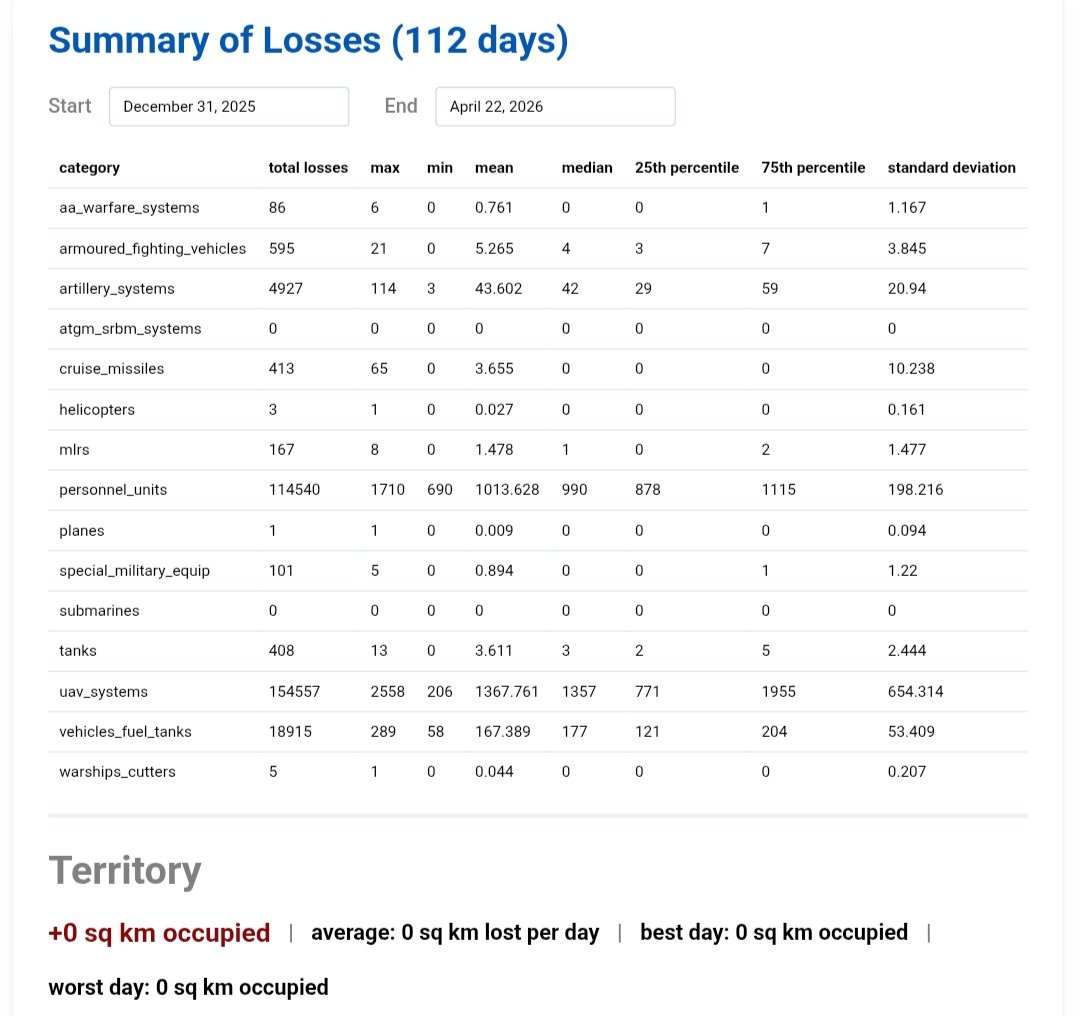
RU War Cost alone $2.3 Trillion. The Truth is Out There | Cognitive Dissonance With Mass & Energy | Epitaph https://t.co/KmrdnknVQe

Tham gia Ekim 2023
42 Đang theo dõi74 Người theo dõi
AMK Mapping 🇳🇿
AMK Mapping 🇳🇿@AMK_Mapping_·
@BoggisCat Attacks to the south will be designed at storming Kostyantynivka from the flanks and developing an offensive towards Druzhkivka from the tactical heights. Only then will they turn north to support the offensive near Mykolaivka and east of Slovyansk.
English
1
0
19
1.2K
AMK Mapping 🇳🇿
AMK Mapping 🇳🇿@AMK_Mapping_·
The battle of Rai-Oleksandrivka has begun. This will be one of the most important battles for Spring 2026 as it paves the way for a further Russian advance to the outskirts of Slovyansk. Currently, the first Russian soldiers have managed to enter the eastern-most houses of Rai-Oleksandrivka. However, the most important areas right now are on the flanks, where Russian progress has largely stalled. Ukrainian forces are actively counterattacking on the southern (left) flank to the town, attempting to clear the villages of Lypivka, Nykyforivka, and Fedorivka Druha. Russia is trying to develop their offensive in the surrounding forested areas, and is utilising small groups of infiltrators along the Bakhmut - Slovyansk Highway up to the Siverskyi-Donets Canal. On the northern (right) flank to the town, Russia firmly maintains the initiative, however is struggling to consolidate in the fields and forested areas south of Kryva Luka. Capturing Kryva Luka and the nearby tactical heights is crucial to supporting the assault on Rai-Oleksandrivka, as any stable Ukrainian positions being left along the southern bank of the Siverskyi Donets River, especially on the hills there, would threaten the entire Russian operation. However, due to recent successes in and around Kalenyky and Riznykivka, clearing operations in the fields surrounding Kryva Luka will now be less complicated. Once Rai-Oleksandrivka falls, the path to the neighbouring city of Mykolaivka will be open. I expect we will see an intensification of attacks from the southern flank, utilising the tactical height ridgeline which the Siverskyi Donets Canal runs along all the way to Mykolaivka. Mykolaivka is effectively the "gateway" to Slovyansk itself. Meanwhile, the neighbouring Lyman direction is also affecting this sector. Russian advances along the northern bank of the Siverskyi Donets River allows them to threaten fortified Ukrainian positions on the southern bank of the river that protect the northern (right) flank of Rai-Oleksandrivka. Ukraine is actively attempting to disrupt this by counterattacking east of Lyman and in and around Yampil-Ozerne.
AMK Mapping 🇳🇿 tweet media
English
19
73
563
32.9K
AMK Mapping 🇳🇿
AMK Mapping 🇳🇿@AMK_Mapping_·
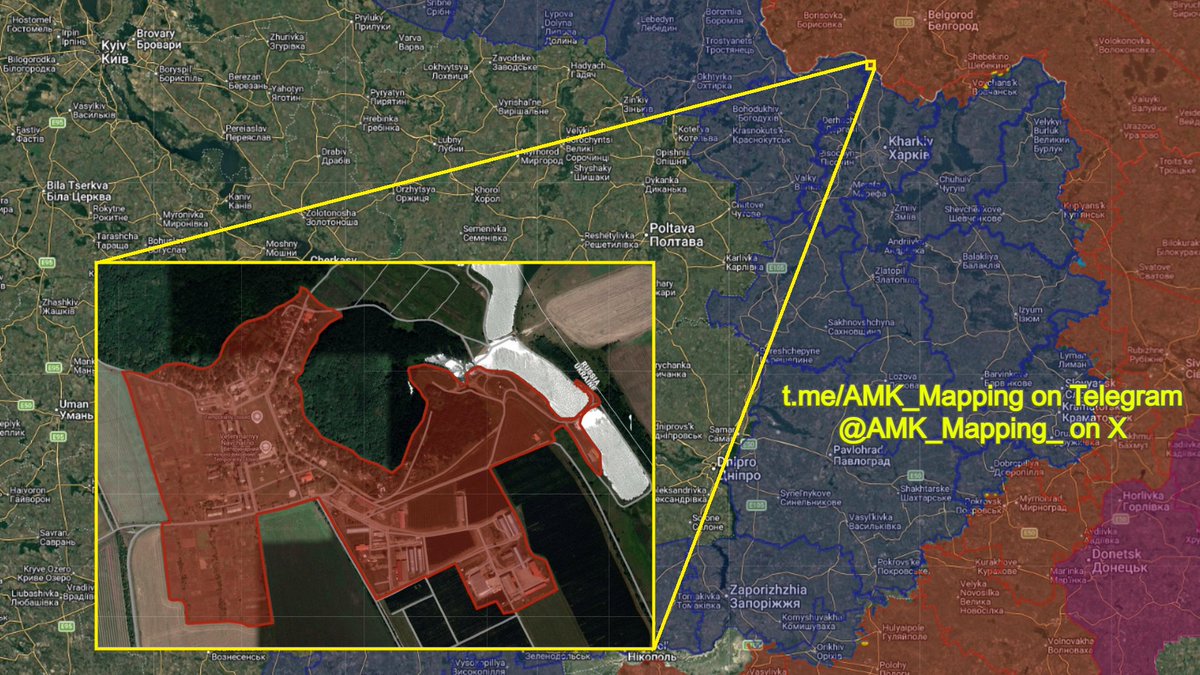
Russian forces have captured the village of Veterynarne, Derhachi direction, Kharkiv Oblast (Kharkiv District). Pre-war population: ~589. Total land area: ~0.80 km² . The fighting for Veterynarne lasted approximately 2 months.
AMK Mapping 🇳🇿 tweet media
English
7
5
103
5.7K
M stands with UKRAINE 🇺🇦
@battleforeurope Channelling your inner misogyny? "The 'hysterical woman' trope is a deeply rooted misogynistic stereotype used to dismiss women's emotions, rational arguments, or pain as irrational, dramatic, or crazy." Not surprising from a sympathiser of Putin's regime.
English
2
0
1
223
Thomas Fazi
Thomas Fazi@battleforeurope·
Over the past decade, Brussels has led the global charge on climate and Net Zero. Indeed, the EU has expanded its renewable energy share: from 17% of gross final energy consumption in 2014 to around 25% today. But because this was driven by climate idealism rather than a coherent push for energy sovereignty, it proceeded alongside growing external fossil fuel dependency. North Sea production declined; nuclear capacity was phased out, most dramatically in Germany; natural gas was treated as the indispensable “bridging” fuel for an intermittent-renewables grid. The paradoxical result was that the EU’s overall energy import dependency actually increased — from around 54% of gross available energy in 2014 to 58% today, with a peak of 63% in 2022 following Russia’s invasion of Ukraine. All that despite a sharp drop in energy consumption, largely driven by stagnating economic conditions. Until 2022, however, Europe could at least rely on relatively cheap, and reliable, Russian gas. Since then, it has substituted it with far more expensive and volatile American LNG, on which it is now heavily dependent. The Iran conflict has exposed what this means in practice: Europe remains among the regions most exposed to energy-price spikes and supply-chain disruptions. The energy transition has now largely disappeared from Europe’s political agenda: but not because climate idealism has been replaced by clear-eyed geopolitical thinking. Rather, it is because a policy so thoroughly divorced from Europe’s strategic interests has left the continent without the institutional capacity to think strategically at all — about energy or geopolitics. A return to genuine geopolitical realism would be welcome; indeed, it is the only context in which a rational energy transition could be pursued. To understand what that would look like, it’s instructive to examine the country that has taken the most coherent alternative approach: China. In recent years, the People’s Republic’s investment in renewable energy has dwarfed that of every other country. In 2024, it spent over $800 billion on its energy transition, more than double any other economy and equivalent to 31% of the world’s total clean energy investment. Just that year, more wind turbines and solar panels were installed in China than in the rest of the world combined. It did so quietly, without grand proclamations and without tiresome moralising. Crucially, it did all this not to “save the planet” but for reasons of hard national interest. Read the article here: unherd.com/2026/04/the-pa…
Thomas Fazi@battleforeurope

On the 10th anniversary of the Paris Agreement, at a time when climate action and the energy transition seem to have faded into the background, I argue in my latest piece that both sides of the debate — climate activists and climate sceptics — were wrong all along. Climate activists, for their part, were (are) wrong to maintain that civilisation-ending consequences are locked in unless emissions reach net zero by some unmovable date in the near future — a claim that’s both scientifically false and politically counterproductive. But the sceptics were (are) wrong to dismiss the energy transition altogether. For countries that lack abundant domestic fossil fuel reserves, reducing dependence on imported hydrocarbons is not an act of idealism — it’s a matter of hard-nosed national interest. However the reason the climate agenda failed — on its own terms, as well as in terms of spurring more sovereignty-based approaches — lies in how the entire debate was framed from the outset. Since its origins at the 1992 Rio Earth Summit, the UN Conference of the Parties (COP) process has been defined by two inseparable characteristics: catastrophism and globalism. Not only did apocalyptic narratives generate fatalism instead of action, but more importantly, by framing climate change as a planetary problem necessarily requiring global governance and coordination, COP foreclosed more practical, interest-based approaches to decarbonisation rooted in energy sovereignty. Any action taken by a single country was implicitly framed as futile; only coordinated global action counted. Moreover, the kind of state-directed industrial policies needed to actually build the infrastructure of decarbonisation ran counter to the market-oriented neoliberal zeitgeist. This logic delegitimised countries such as China, which were actually investing in decarbonisation through five-year plans, massive subsidies and deliberate manufacturing scale-up rather than multilateral consensus. This framing, however, was not simply a strategic error; it was, in part, deliberate. COP took shape precisely as globalisation was being institutionally embedded: the first Rio conference in 1992 coincided with the signing of the Maastricht Treaty, which marked the birth of the European Union. Arguing that democratic decision-making had to give way to technocratic governance in the name of planetary salvation served to reinforce this broader supranational project. This globalist orientation was compounded by the ideological makeup of the climate movement itself. Stemming predominantly from liberal internationalist and pseudo-Marxist traditions, most environmental activists and writers share those traditions’ hostility to the nation-state. In their view, national sovereignty is an obstacle to be overcome by international governance. The result was predictable: more conservative and nationally oriented people and politicians came to associate any energy transition policy with globalism and its discontents, ensuring that the issue became entangled in the Western culture wars and depriving it of any positive, sovereignty-affirming interpretation. But it’s not too late. As I argue in the article, for any country that is serious about sovereignty, security and long-term economic resilience, the case for reducing fossil fuel import dependence remains a strong and entirely self-interested one. Read more here: unherd.com/2026/04/the-pa…

English
7
29
78
4.7K
Churchill 🇺🇦🇨🇦🇬🇧🇪🇺🇺🇸
Trend on sobbing Russian Matryoshkas continues. This one says the situation in Russia worsens, the Iron Curtain 2.0 is near, but... she is not interested in politics. What we suggest her to do?
English
16
7
54
1.1K
Tymofiy Mylovanov
Tymofiy Mylovanov@Mylovanov·
Russian official: Victory will be ours. No one doubts it, not even the enemy. Putin: Yes, they are just thinking how to formalize it. We know how this will end. [Meanwhile, Russia is losing 30,000 soldiers, killed and wounded, per month.]
English
141
230
2.1K
85.4K
Institute for the Study of War
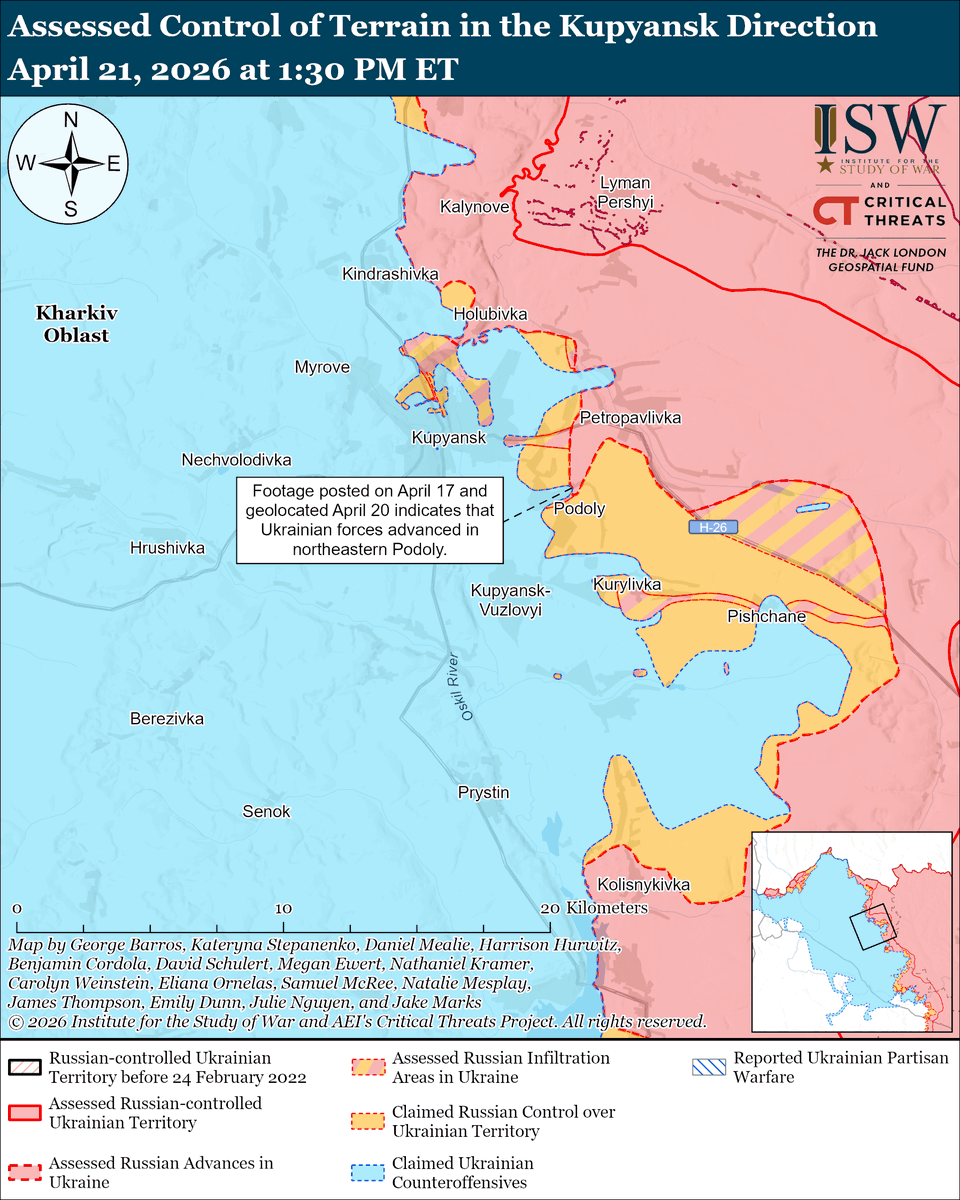
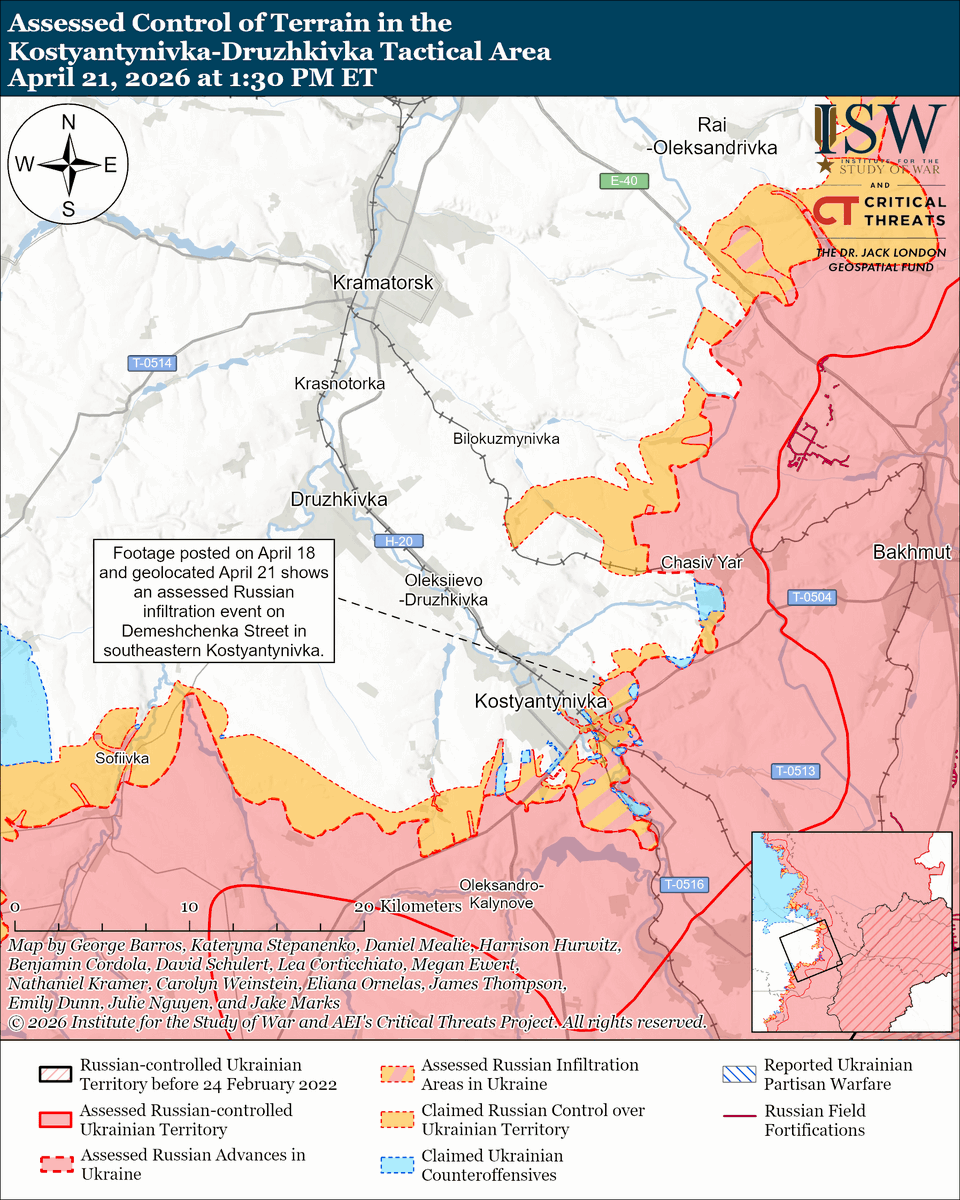
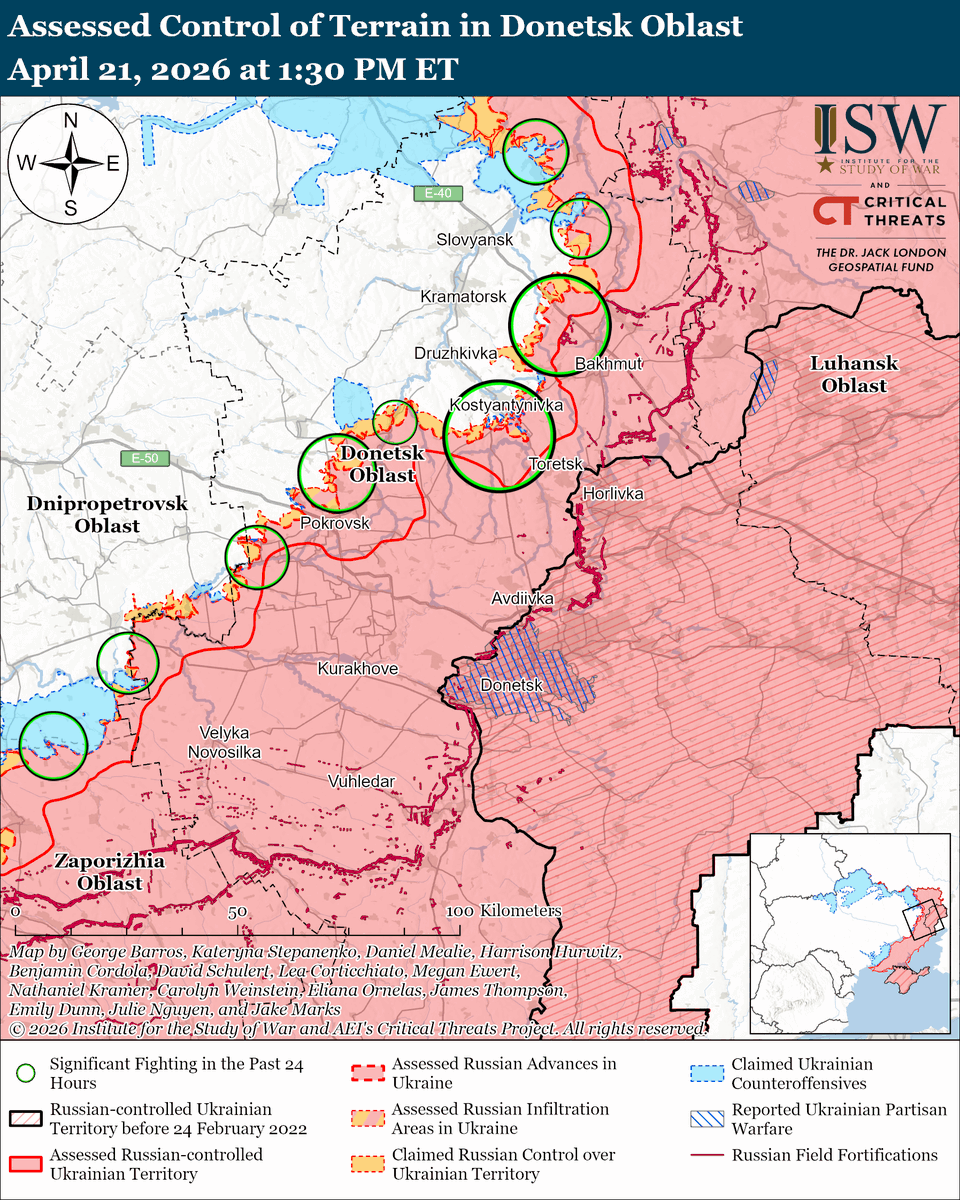
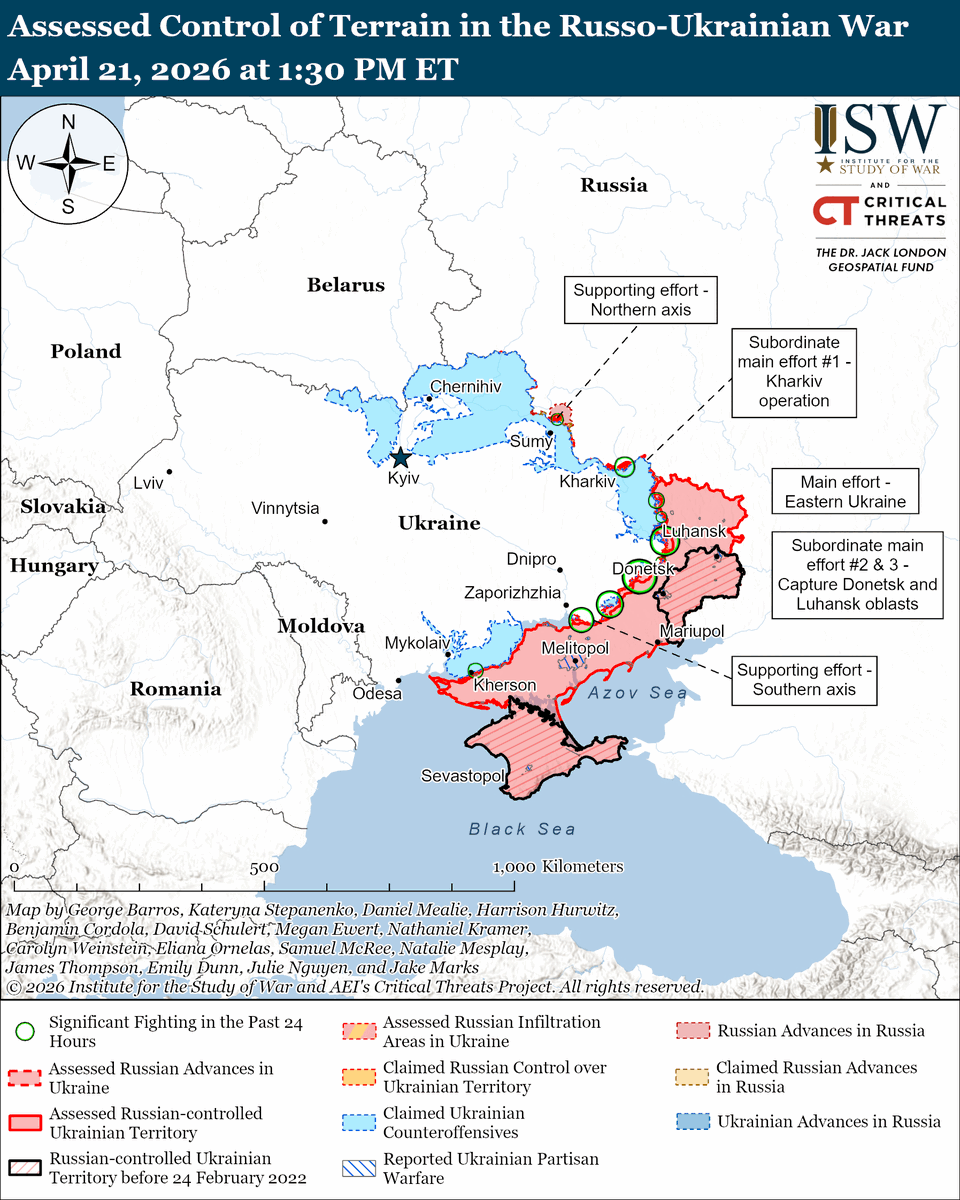
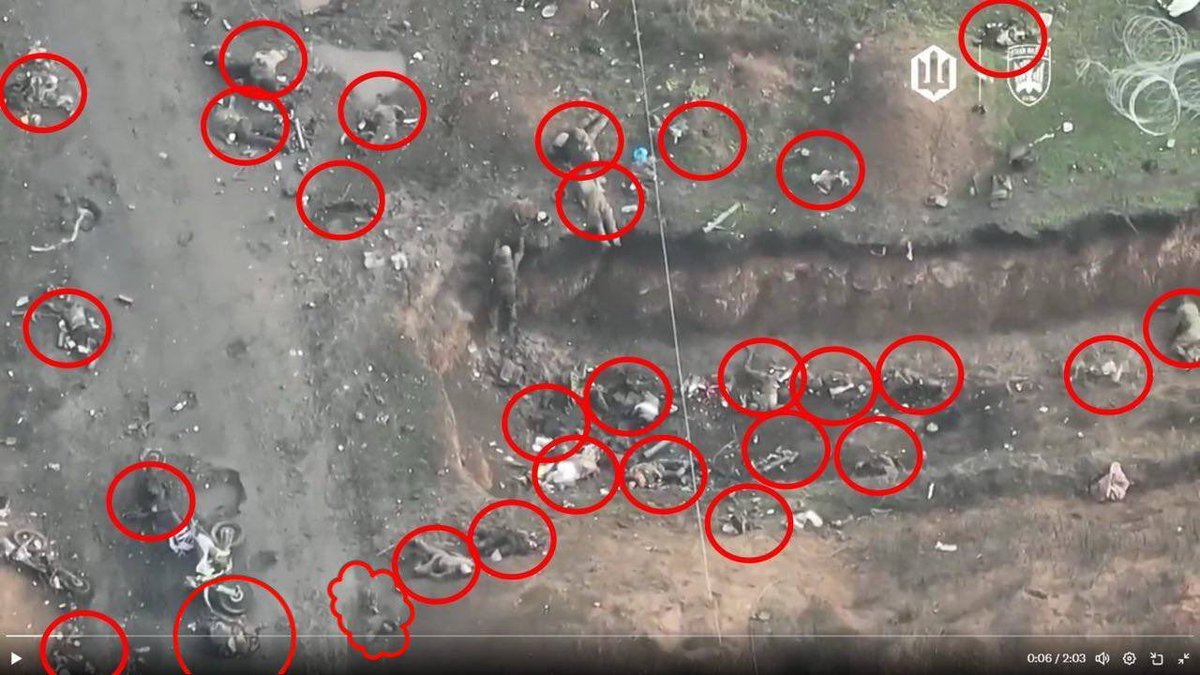
NEW: Russian Chief of the General Staff Army General Valery Gerasimov continues to make greatly exaggerated claims of Russian advances amidst Russian forces’ poor performance in their ongoing Spring-Summer 2026 offensive. Other Key Takeaways: Even the most generous interpretations of other Russian sources do not support Gerasimov’s claims. Gerasimov is likely attempting to obscure Russia’s disappointing lack of progress in its Spring-Summer 2026 offensive. The Kremlin continues its efforts to militarize Russian society and appoint loyal veterans to positions of authority ahead of Russia’s State Duma elections in September 2026. Ukrainian long-range drone strikes continue to have significant impacts on Russian oil production. Ukrainian forces recently advanced in the Kupyansk direction and the Kostyantynivka-Druzhkivka tactical area. Ukrainian forces continued their long-range strike campaign against Russian oil infrastructure and military assets. Russia launched two Iskander-M ballistic missiles and 143 drones against Ukraine overnight.
Institute for the Study of War tweet mediaInstitute for the Study of War tweet mediaInstitute for the Study of War tweet mediaInstitute for the Study of War tweet media
English
10
162
555
88.1K
Taposirusmagna
Taposirusmagna@taposirusmagna·
@Urgent_Russia24 USA AND RUSSIA LAND ON THE MOON ! USA AND RUSSIAN SPACE STATION ON MARS. CAR TRAIN TUNNEL ALASKA TO RUSSIA VICE VERSA? WE CAN'T DO THESE THINGS> BECAUSE ZELENSKY NATO EU PU>IS IN THE WAY OF PROGRESS!!!!!!!!!!!!! ZELENSKY HAS BEEN SKIMMING MONEY OFF THE TOP FOR YEARS!!!
Taposirusmagna tweet mediaTaposirusmagna tweet media
English
2
0
2
205
Russia 24
Russia 24@Urgent_Russia24·
🇷🇺 Putin recalled how during the harshest and coldest months of WWII, children and women in Russia knitted socks and sent them to the front lines. "So why didn't they do that in Germany? Their soldiers froze to death near Moscow — yet no socks ever came from Germany."
English
44
165
1.2K
33.3K
Felipe
Felipe@TRIIIGO·
@Urgent_Russia24 The children and women of Russia need to make caskets for their soldiers instead of socks.
Felipe tweet media
English
1
0
2
45
Extremum Adventura
Extremum Adventura@ExtremumAdv·
@Urgent_Russia24 They would of had 1.2 trillion for socks if the fucking idiots spent it on russians instead of killing Ukrainians the 11 years.
English
0
0
0
56
Tziporah HaLevi
Tziporah HaLevi@Tziporah_Halevi·
@GrandpaRoy2 Today, Adam, who sides with China, would not judge Russia to be as vulnerable as Germany.
English
1
0
3
1.1K
Roy🇨🇦
Roy🇨🇦@GrandpaRoy2·
I just reread Adam Tooze's magisterial The Wages of Destruction: The Making and Breaking of the Nazi Economy, and the parallels with Russia's deteriorating wartime economy are striking. By the late 1930s, Hitler's massive rearmament program consumed 20% of national income. 1/
English
18
70
433
35.3K
Extremum Adventura
Extremum Adventura@ExtremumAdv·
@Westchester_Res @AMK_Mapping_ Their ilk has this mad mass delusion of providing info on the failed russian scrotched earth, being some kind of win for the war mongers not realizing ground occupiers will all be destroyed one day while rus economy gets driven into the ground as well.
English
0
0
0
43
Westchester Resident
Westchester Resident@Westchester_Res·
@AMK_Mapping_ Dude, give it up, its been well over 4 years which means Russia's already lost and in a big way. Why aren't you putting on your Firemen's gear and helping at the refineries?
English
2
0
1
275