Shocking discovery of secret China-linked biolabs housing vials of COVID, HIV and Ebola… amid fears America is a 'sitting duck' for bioterrorism
dailymail.co.uk/news/article-1…
English
Martin
3.7K posts

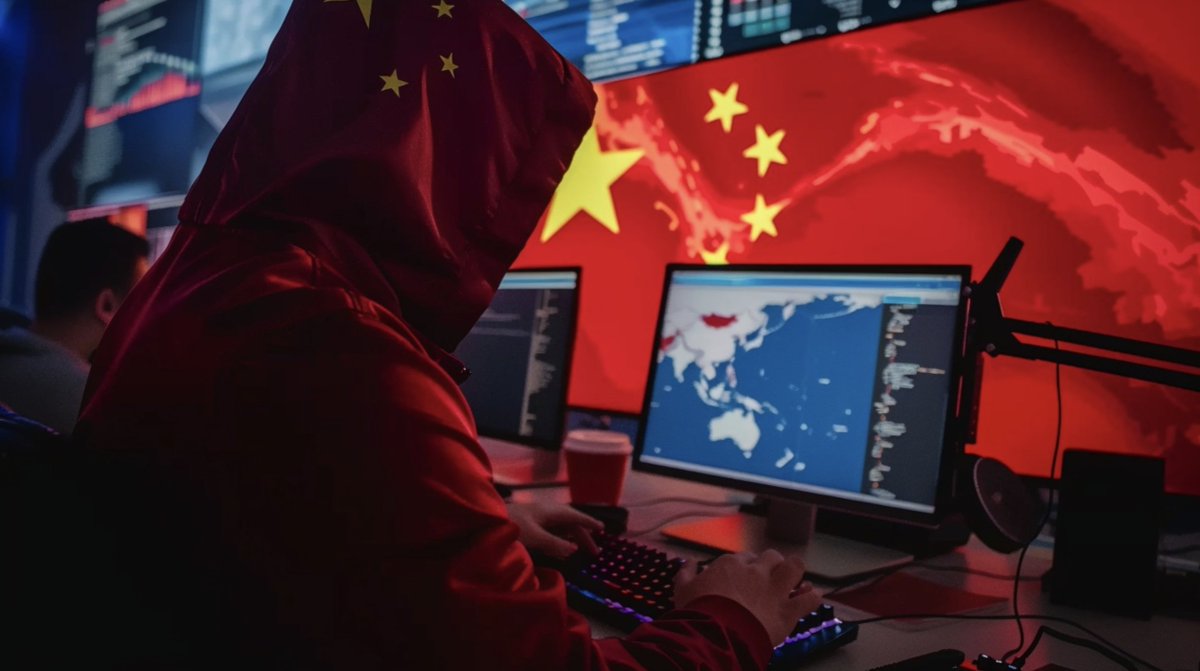
📰台湾の政府ネットワークにハッキング 3カ月で1億回超 中国が選挙介入準備の可能性 japan.focustaiwan.tw/cross-strait/2… 情報機関の国家安全局は6日、今年1月から3月までに政府サービスネットワーク(GSN)に対して1億7千万回を超えるハッキングが確認されたと明らかにした。11月に行われる統一地方選に向け、中国が介入に向けた準備などを行った可能性も排除しないとしている。

Hong Kong will host the world's top law enforcement officials later this year at Interpol's annual general assembly, amid warnings from lawyers, rights activists and former police officers that meeting in China could embolden authoritarian regimes and inhibit participation by reporters and NGOs. Interpol's Red Notices are a global alert system used by Interpol member states to locate and detain alleged fugitives from justice. The system is vital, but is also abused by governments to target political or religious dissidents, and others. With the China venue, “You've got one of the most repressive regimes and one of the world's worst abusers of Red Notices holding the general assembly.” Police officers from 196 member states will converge on Hong Kong from Nov 17-20 for Interpol’s 94th General Assembly. Interpol has met in China before, most recently in 2017, in Beijing. The Hong Kong meeting comes amid growing efforts by China to expand the work of its Ministry of Public Security around the world as part of its Global Security Initiative, which Beijing envisages as a new international security order. The Ministry of Public Security is a police service, but also a domestic and foreign intelligence agency that tracks dissidents at home and abroad.  Holding the meeting in Hong Kong was also risky for reporters and NGOs. The Hong Kong authorities have prosecuted thousands of people, including many journalists and civil society participants, under a tough state security law that took effect after the crushing of massive pro-democracy demonstrations in the city in 2019. Most recently, 78-year-old Jimmy Lai was sentenced to 20 years in prison for "collusion with foreign forces." More than 10,200 people were arrested and nearly 2,400 were prosecuted in connection with the protests under the National Security Law that took effect in 2020. The law had a conviction rate of 80%. A planned update to the law announced in March will criminalize refusing to give police the passwords to personal electronic devices or not decrypting communications for them, prompting a security alert for US citizens by 🇺🇸 State Department. Media and other non-law enforcement persons are permitted to attend the general assembly's opening and closing events, Interpol says. For NGO members or reporters, “the fact that you can't go to a meeting of Interpol because you might be arrested and detained is mad.” In January, Hong Kong's Commissioner of Police, Joe Chow Yat-ming, said that the event was an opportunity to "showcase positive stories about China, Hong Kong, and the HKPF." China has sought to expand its influence over Interpol and is among the top five abusers of its global "wanted" alert system of Red Notices and Diffusions, alongside Russia. Interpol does not release figures for which country requests how many alerts each year but says that the volume of Red Notices is continually rising and that hundreds are rejected by the organization annually on the grounds that they violate human rights, or are unserious. In 2024, Interpol published 15,548 Red Notices and Diffusions — a 27% increase over 2023. A total of 2,462 alerts were rejected. Of these, 305 were rejected because they violated Interpol's Constitution which requires respecting the UN's Universal Declaration of Human Rights and refusing requests that are of a political, military, religious or racial character. The rest did not meet the criteria of being "serious ordinary law crimes." In 2025 the total number of rejections had risen to 2,550, though it was unclear how many alerts were issued. Of the rejected ones, 558 were over human rights concerns, sharply up. Under growing pressure to react to abuse of the system, Interpol has strengthened its own monitoring of requests. “We don't know how many notices are requested by China or how many are refused. But there is no way they are not in the top five.” 1/n newsweek.com/interpol-how-s…


The "liberation" of Tibet in 1950 is a masterclass in how the CCP uses semantics to rebrand an invasion. While Beijing claims Tibet has "always" been part of China, the historical reality is that between 1912 and 1950, Tibet functioned as a de facto independent state with its own government, currency, and postal system. The 1951 "Seventeen Point Agreement"—which supposedly legalized Chinese rule—was signed by Tibetan negotiators under the direct threat of military force while 40,000 PLA troops were already occupying the country. The human cost has been staggering. Since the 1959 uprising and the flight of the Dalai Lama (the 14th and current religious leader), estimates suggest over 1 million Tibetans have died due to famine, labor camps, and political crackdowns. Thousands of monasteries were leveled during the Cultural Revolution, and today, even possessing a photo of the Dalai Lama can lead to imprisonment. When the CCP replaces a local culture and language with Han-centric education and mass migration, is that "development," or is it a calculated attempt to erase an entire civilization from the map? #Tibet #FreeTibet #CCP #HumanRights #Geopolitics #HistoryRewritten