@atmoio On the other hand, it sort of clarifies what design and architecture are: the things AI can’t do.
English
Midlife Crisis Retail
345 posts

@MidlifeCap
Here to make some good decisions. Let's party.

Introducing Critique, a new multi-model deep research system in M365 Copilot. You can use multiple models together to generate optimal responses and reports.




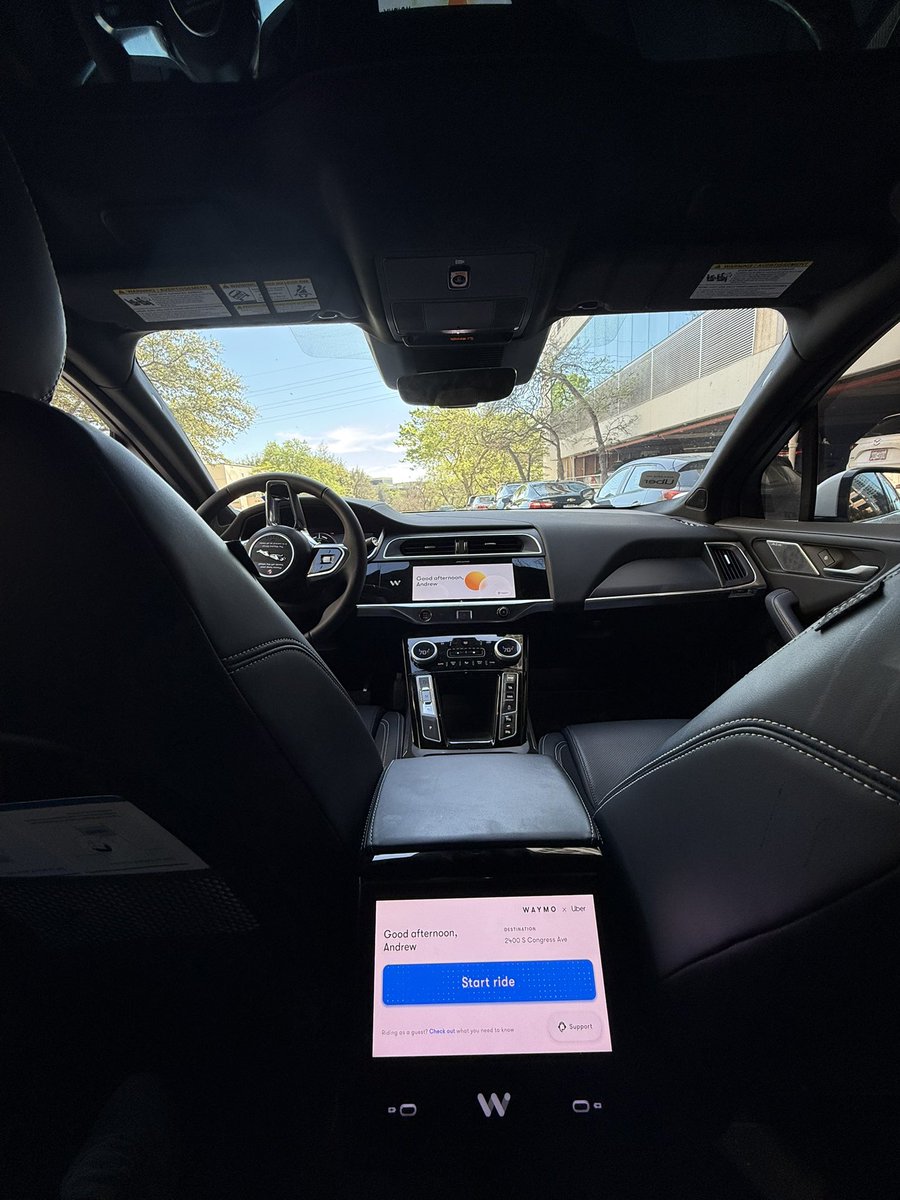
Waymo CEO Dmitri Dolgov explains the benefits of lidar, radar, and cameras for self driving: "They're very complementary." "The frequencies are very different. Laser gives you very high resolution. Think of it as a laser beam that goes out, spins around, and shoots out millions of these laser pulses per second. Then each one comes back and you can sample the 3D structure of the world with very high resolution." "Radar has much lower resolution, but because of the physics of it, it degrades much better in adverse weather conditions. So—fog, snow, heavy rain." "If it's a nice, bright, sunny day, cameras are very valuable. If it's pitch dark, or you have the sun in your face, or you're blinded by the headlights from an oncoming car, then the camera will degrade." "It's a combination of the sensors. Each one is noisy. How the noise characteristics show up in different environments is different, but it's not like we switch from one to another." "They all go into the system that gives you, jointly, the best view of what's happening in the world." @dmitri_dolgov with @collision




June 1983. A 28-year-old Steve Jobs walks into a design conference in Aspen, Colorado. He asks the room who owns a personal computer. Nobody raises their hand. He says “Uh-oh.” Then he spends the next 55 minutes describing the next four decades of technology. Jobs told the audience Apple’s strategy was to “put an incredibly great computer in a book that you can carry around with you, that you can learn how to use in 20 minutes… with a radio link in it so you don’t have to hook up to anything.” That’s an iPhone. In 1983. The Mac hadn’t even shipped yet. He described an MIT project that sent a camera truck down every street in Aspen, photographed every intersection, and built a virtual walkthrough on a computer screen. Google Street View launched 24 years later. He said office networking was about 5 years away and home networking 10 to 15 years out. The web went mainstream in the mid-90s, about 12 years later. Dead on. He described software being sent electronically over phone lines, with free previews and credit card payment. That’s the App Store, 25 years before it launched. He even compared it to the music industry and said software needed “the equivalent of a radio station” for free sampling. Apple built the iTunes Music Store 20 years later. The AI prediction is the one that hits different now. Near the end, Jobs talked about machines that could capture a person’s “underlying spirit” or “way of looking at the world,” so that after they died, you could ask the machine questions and maybe get answers. He said 50 to 100 years. ChatGPT arrived in about 40. The weird part is this speech was lost for nearly 30 years. The full hour-long recording only surfaced in 2012 when a blogger got a cassette tape from someone who attended the original conference. The Steve Jobs Archive didn’t release actual video footage until July 2024. His timelines were consistently too fast. He wanted the “computer in a book” within the 1980s. Apple’s first attempt was the Macintosh Portable in 1989, which weighed 16 pounds and cost $6,500. The iPad arrived in 2010, 27 years late. He guessed voice recognition was about a decade away. Siri launched in 2011, nearly 30 years later. The vision was right every time. The clock was wrong every time. Apple was doing about $1 billion a year in revenue when Jobs gave this talk, with under 5,000 employees. Today it’s worth $3.7 trillion.