
John Collison retweetledi
John Collison
9.5K posts

John Collison
@collision
Co-founder of @stripe.
California / Ireland Katılım Nisan 2007
1.4K Takip Edilen237.4K Takipçiler


It’s really good — feels like the moment where the voice modality for AI apps will finally take off. Upgrade to the latest version of the ChatGPT App to get it. (Also great launch video.)
OpenAI@OpenAI
Introducing GPT-Live, a new generation of voice models for natural human-AI interaction. Rolling out in ChatGPT starting today. You’ll want to turn the sound on for this one.
English
John Collison retweetledi

Our intern just built the first zero-person company.
Listen's agent ran a loop:
- Interview users
- Build
- Test with real people
- Fix issues
- Repeat
2,000 interviews and 100 concepts later: an app with 100s of paying customers.
Here’s how it works:

English
John Collison retweetledi

I've been enjoying Victoria Whitworth's new work, The Book of Kells: Unlocking the Enigma.
I've actually never seen the Book of Kells in person, somewhat to my embarrassment. I've been doing some reading about the origins of Christianity this year, however, and I figured I should know something about the most famous Irish manuscript. (Perhaps the most famous manuscript, full stop.)
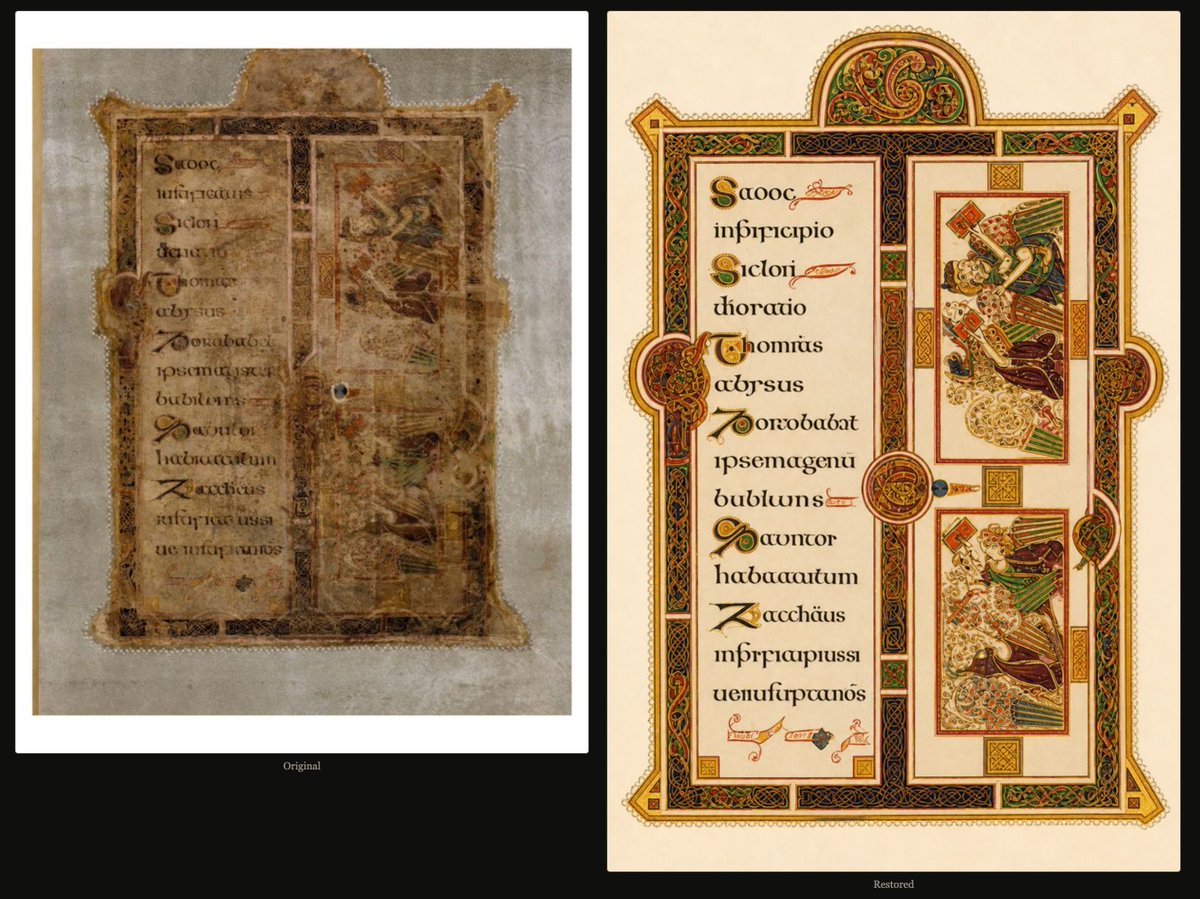
Reading the book, I was struck by how much the contents have suffered over the past ~1200 years (enduring everything from water damage to reckless malfeasance in attempted nineteenth century restoration), and I wondered whether AI could help give a sense for how the work might originally have appeared.
I downloaded the Internet Archive's PDF and asked my friendly neighborhood agent to use gpt-image-2 to render each page the way it imagines it might have originally appeared. Remarkably, this all worked with a single prompt, with the agent spinning up 48 workers, since each page took a minute or two. (I'm sure that someone wiser than me could prompt the model better, ensuring somewhat more historical accuracy in color restoration and so forth. There is no gold leaf in the Book of Kells!) This part of the project went from conception to completion before I'd finished my morning coffee.
I then wanted some easy way to view the results online, so I asked Stripe Projects (projects.dev) to host the result on Vercel. That also worked in basically a single prompt: bookofkells.vercel.app.
I also figured that people might want an easy way to download the full PDF of updated images, but it's a large (~200MB) file, so I decided that I should charge $0.10 to cover bandwidth costs using @MPP. I asked my agent to set this up, and it basically worked smoothly, though I had to tell it what MPP is (I guess it's not yet in the pretrain) and also manually set up the Cloudflare account that actually hosts the PDF and configure the API key. (Vercel seemingly has a 100MB limit.) The purchases now show up in my Stripe account alongside all other activity.
The site now has a ready-made agent prompt for anyone who wants to download the whole thing. I'm guessing that we'll see a lot more UIs like this in the future.
I remain pretty intrigued by the intersection of agents, micropayments, and stablecoins. I don't know much about managing crypto wallets from the CLI, but now AI can do that for me, while Stripe seamlessly handles turning it all back into fiat.
So what is the moral of the story?
• Whitworth's book is very good, and you should buy it.
• The Internet Archive continues to be wonderful and a civilizational treasure.
• While there are rough edges, setting up third-party services via the CLI now basically works. I'm pretty sure I wouldn't have bothered with any of this if I couldn't have outsourced almost all of the work to AI.
• The image models have gotten very good.
• There will probably continue to be all kinds of interesting applications of AI to history. (The Vesuvius Challenge of course being a shining pioneer.)
• These days, I often find myself building single-use sites for things I'm learning or for books I'm reading. I think this is a cool new category of software.

English
John Collison retweetledi
Delighted to partner with Visa, Mastercard, Coinbase, Cloudflare, Google, and many others, to introduce Open Standard, a new stablecoin designed for scale: joinopenstandard.com.
English
RT @stripe: There are many important products (public goods!) that would improve the world but don’t exist because the commercial motivatio…
English
The launch blogpost is worth reading: interceptfund.substack.com/p/ending-respi…
English
We're launching Intercept, a new philanthropic initiative to fight respiratory viruses like colds and flus. interceptfund.com
English
John Collison retweetledi
Delighted for @eileenomara to become Stripe’s Vice Chair and @tybryson our Chief Revenue Officer.
The internet economy is entering a period of significant change. Eileen will work with policymakers, officials, and leaders at Stripe’s customers and partners to advance entrepreneurship and increase economic dynamism globally.
Eileen O'Mara@eileenomara
After seven extraordinary years building Stripe's go-to-market engine, I'm stepping into a new role: Vice Chair of @stripe. As Vice Chair, I'll represent the company with business, government, and policy leaders around the world, alongside @patrickc and @collision. The internet economy is at an inflection point. Governments, regulators, and multilateral bodies are making once-in-a-generation decisions about how digital commerce is regulated and enabled—decisions that will set the operating conditions for entrepreneurs for decades. Stripe serves millions of businesses in nearly every country on earth. We have both the standing and the responsibility to shape those decisions. That's what I'll be doing: engaging heads of government, trade bodies, and global business leaders to advocate for decisions that advance entrepreneurship and increase the economic dynamism that too many parts of the world have been starved of. I've spent the last 25 years of my career building things, teams, markets, relationships. This next chapter is about using all of that on behalf of the businesses that trust Stripe to power their growth. As I start this new role, I'm delighted to have @tybryson take over as Stripe's Chief Revenue Officer. Tyler brings two decades of experience building, scaling, and leading revenue-generating teams and has had a tremendous impact leading our Americas business. He knows our customers, understands what they need and we’re all very excited for his leadership as Stripe’s CRO. stripe.com/newsroom/news/…
English
Ireland has ended up a vetocracy.
Adrian Weckler@adrianweckler
Breaking: Manna to cease drone delivery flights in Ireland, blaming planners and regulatory haze. Will focus abroad (incl US, UK, Europe) instead, it says. Jobs likely lost but R&D centre will stay in Dublin independent.ie/business/manna…
English

Welcoming Jeanne DeWitt Grosser to @Shopify's board of directors.
Jeanne’s spent two decades at the infrastructure layer of commerce and knows how the machinery works. Excited to have her on the team.
English
John Collison retweetledi

First day on the job and the CEO already trusts me to go get apple gift cards for him
English
Congrats @destraynor, @eoghan and the entire Fin / Intercom team! Very well deserved for impressive execution.
Eoghan McCabe@eoghan
We’re excited to share that we just signed an agreement for @salesforce to acquire @fin_ai for ~$3.6B. The transaction is expected to close in the fourth quarter of Salesforce’s fiscal year 2027. Fin started as Intercom 15 years ago. We changed our name to cap our transformation just weeks ago. We were a darling of the SaaS era and invented so many of the patterns you see in software today. Nearly four years ago, in need of a reboot, we jumped on weeks-old modern LLMs to create and define the category we know as Customer Agents today. Salesforce invented modern software and SaaS. And @benioff is like the final boss of tech founder CEOs. In seat for 27 years, he’s one of the last of his era. Still pushing, pivoting, placing big bets. It’s a privilege for @destraynor and I to get to partner with him and join forces with Salesforce upon close at this most fascinating time. And will be very fun to get their help bringing Fin to magnitudes more consumers. To our customers: Over the past few years we’ve been shipping intensely. Including recently our groundbreaking model, Apex, and our paradigm-defining internal agent, Operator. With the resources of Salesforce this will only accelerate. And yet little will practically change. I’ll still be CEO, Des will still be running R&D, we’ll both still be committed to continuing to lead this category. Thank you very sincerely and deeply for your belief in us. To all of our friends, our families, and our employees, past and present: While this is not the end, it is a major, pivotal, special, and emotional moment for us. From the bottom of our hearts, thank you. For everything. To my cofounders, my exec team: Look what we built. Four young lads with a dream and nothing to lose. And a home grown exec team who pulled off the greatest and arguably only late stage software company pivot to AI, and invented one of the most important categories in AI. Thank you for sticking through all of this with me. And now, time to get back to work. See you at our next product launch in a couple weeks. (:
English
Helicopters can actually fly even after losing the tail rotor so long as they have some forward airspeed -- the aerodynamics make it want to weathervane into the wind. Losing the tail rotor in cruise flight is a solvable problem. Losing the tail rotor in the hover is more dramatic, though people also walk away from many of those videos you see on YouTube.
English

Helicopters are a fundamentally flawed design
The moment you even slightly hit or lose the tail rotor the whole thing spins out of control and it's a flying coffin
You're at least 200x more likely to die in a helicopter than a commercial jet
I don't go in them and I think they should be replaced by multirotor drone type vehicles which are much much safer

Mike Majlak@mikemajlak
i will ever get in a fucking helicopter ever again for the rest of my fucking life i don’t care why or where or how much time it saves.
English
John Collison retweetledi

seems like an overreaction. it’s just an $85B offering and they do need to ramp capex to remain competitive. the dilution is minimal
Matt Brown@maattttbrown
Stanford grads walk out as Google CEO Sundar Pichai takes the stage as commencement speaker. No mention of AI, unlike other uni speakers getting booed down this year. Story for @sfgate shortly
English
John Collison retweetledi


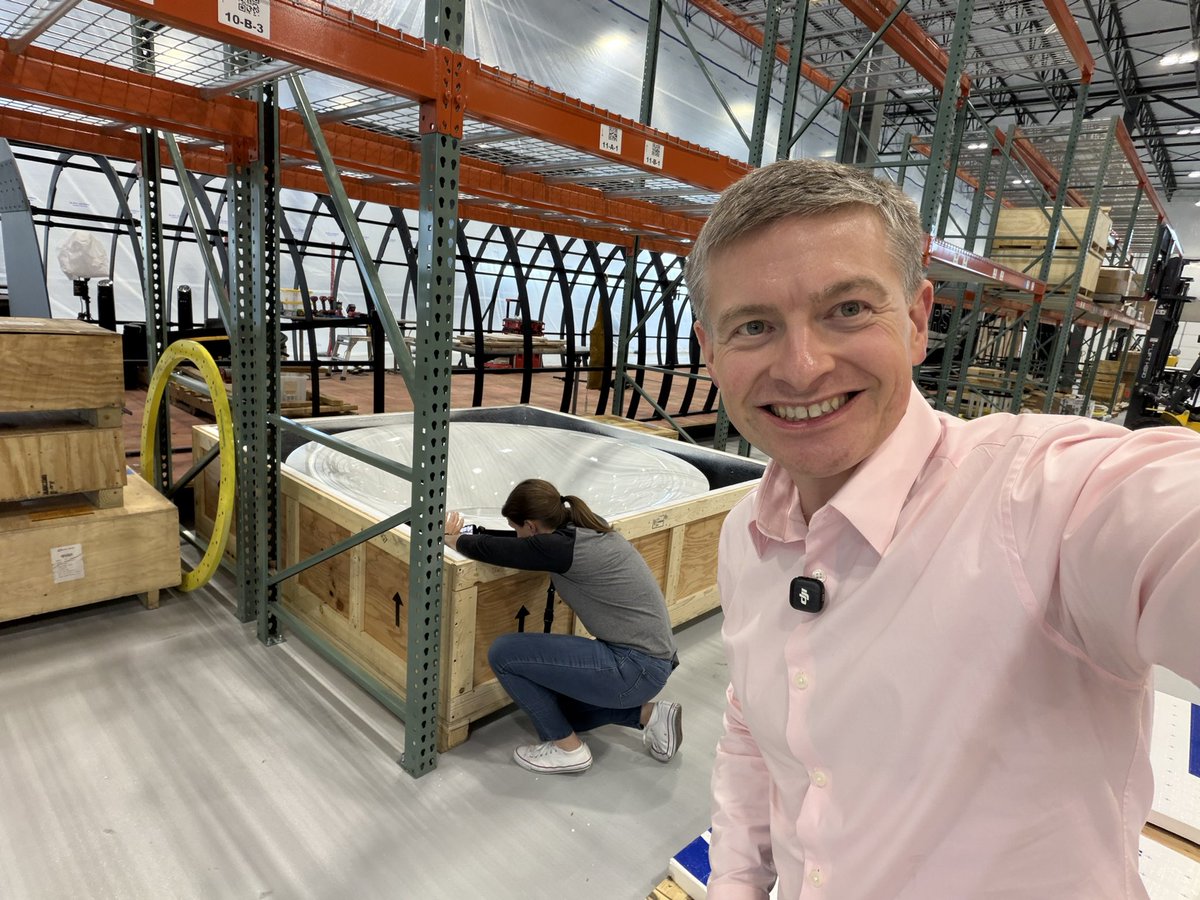
Filming the inaugural episode of Boom Turbine Tuesdays.
Trivia question: what’s that part behind us?
English
John Collison retweetledi

.@Collision is bullish on two types of people: high-agency individuals and double majors.
"There are two categories of people I would be super bullish on right now and I think will do incredibly well over the next 10-20 years. First, high-agency people. The people at Stripe who have been talking to customers and know exactly what we should do. It's the people who have that pep in their step and want to go make Stripe better. They are so much more empowered thanks to AI."
"The second is double majors. I think if you understand software and understand finance, or if you understand software and understand marketing, you now can go massively improve the entire marketing funnel for your company. Now, one person can do what would have taken 20 people dredging through all these systems."
"Charlie Munger talked about the importance of being multidisciplinary and multidisciplinary thinking. He thinks getting a functional understanding of many disciplines is not that hard. You can just go read the books now or you can talk to your AI about it. I think multidisciplinary thinkers are going to do incredibly well."
English