Mith

9.5K posts

Mith banner
Mith

Mith

@Mith_

Lithium-focused researcher decoding critical mineral extraction, battery production, storage, and recycling, while occasionally exploring EV op-eds.

United States Tham gia Eylül 2008
325 Đang theo dõi2.1K Người theo dõi
Tweet ghim
Mith
Mith@Mith_·
A Malaysian recycler covered by the press is said to be positioning itself as a midstream processor for European black mass headed to China. That is a problem, because European black mass cannot legally reach China directly or through a Malaysian intermediary. My latest write-up covers the regulatory picture across the EU, Canada, and the US for this lithium-ion recycling intermediate, why the Malaysian routing argument does not hold up, the product loophole quietly draining critical minerals out of all three markets, and what the Trump administration can and cannot do about it.
English
1
0
4
852
Mith đã retweet
Chinu, Ph.D.
Chinu, Ph.D.@chinuasfa21·
Interesting: 1. MIT just flipped 50 years of battery wisdom: dendrites don’t muscle through solid electrolytes — they chemically rot them from the inside. Faster growth = weaker material, not stronger force. 2. Your ceramic electrolyte is tough as a tooth on the bench. Under current? Brittle as a lollipop. That’s a 75% toughness drop nobody designed for. 3. Stop making stronger electrolytes. Start making ones that don’t decompose when lithium touches them. The dendrite problem was never mechanical — it’s chemical.​​​​​​​​​​​​​​​​ dmse.mit.edu/news/why-solid…
English
0
2
7
113
초소형 새장수 꺽두리
진짜 뉴스 좀 달라 ㅜㅜ $abat 정보공개를 활발히 하지 못하는 이유가 있을거 같기는 하지만 ㅜ 미사일이 꼭 중동에만 터지는 건 아니라거요 신생기업이고, 하고있는 프로젝트가 있는건 알겠는 데 26년에는 소식이 너무 없는거 아닙니까
초소형 새장수 꺽두리 tweet media
한국어
2
0
4
334
Mith
Mith@Mith_·
. @DataM_Research can I give you a word of advice? When you are promoting your AI-generated report on lithium-ion recycling, maybe you should remove defunct companies like Li-Cycle from your propaganda. Just a suggestion.
English
0
0
4
227
Mith
Mith@Mith_·
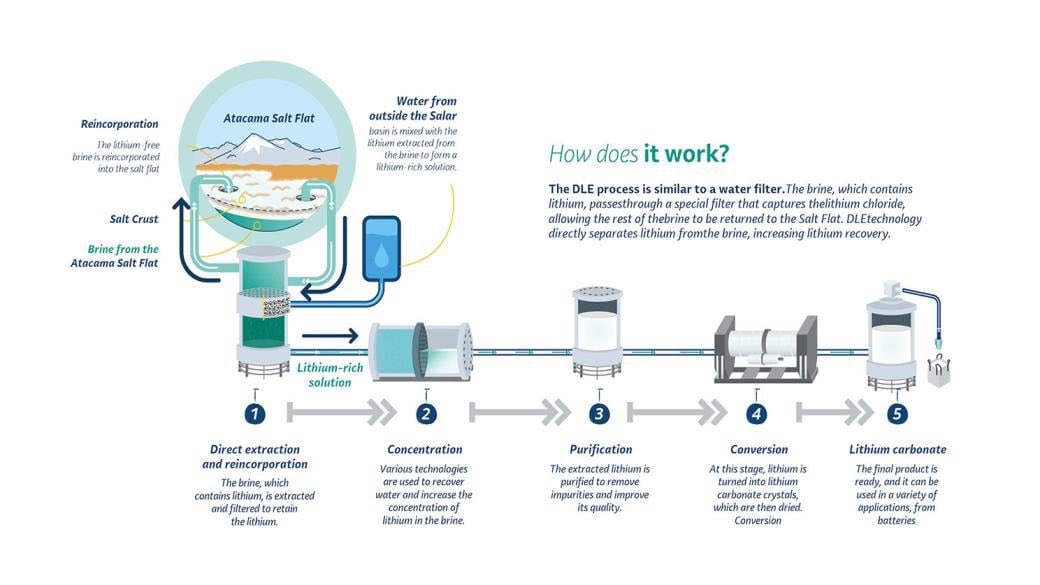
Salar de Atacama in Chile is home to two of the largest lithium brine operations in the world. If you have ever seen that meme about lithium leach fields, then you have seen a photo of them. They are not leach fields but rather evaporation ponds, where the brine is pumped up and, over a year or more, the brine evaporates, concentrating the lithium. Eventually it will reach a concentration that is high enough that it can be collected and sent off for refinement into lithium carbonate. Albemarle is one of the companies that operates a brine project there and has announced that they are starting the environmental review of a DLE process to basically eliminate the need for those acres of evaporation ponds. The high usage of the brine has been a point of contention for decades, with it being the source of much misinformation. Quite a few studies have shown the mines have very little effect on the local freshwater due to the location of the actual projects, which are located at the heart of these brine aquifers, but due to the density of the brine, mixing of fresh and brine aquifers is not common and only happens in areas where it has already naturally occurred. There is, however, a genuine concern with freshwater usage and DLE. This is where it will be interesting to see what is actual usage and what is consumption, which are two different things. I also have a feeling that the main source of water consumption will be make-up water added to the brine before it is pumped back underground to reduce corrosion of the well equipment and maintain aquifer levels. Eramet’s Centenario-Ratones Lithium Project in Argentina uses DLE with brackish water drawn from the salar and recycles a high percentage of that water in the process. Rio Tinto’s Fénix lithium operation on the Salar del Hombre Muerto in Argentina uses a hybrid DLE system and artificial lagoons to allow the brine to return to the aquifers. That hybrid system has led to reports of high freshwater usage due to the way the lithium-depleted brine and freshwater are both pumped into these lagoons. I looked over the data on the DLE that Albemarle has on their website some time ago; there is not much detail, but it appears to be a combination of ion-exchange with electrochemical concentration. I may dig deeper now.
Mith tweet media
English
0
0
3
255
Mith
Mith@Mith_·
Benchmark last year estimated that U.S. produced LFP cells would be around 40% more expensive than Chinese sourced cells well into 2030. One of the most obvious reasons is China has lower costs and a well established manufacturing base. But on top of that, the U.S. is dependent on imports for the manufacturing of those cells. Last year the prices were much higher due to reciprocal tariffs that were struck down this year by the Supreme Court, but that did not affect the base 301 tariffs that were already active for years, placing duties on lithium-ion cells and the components and materials needed for their production from China. But it was those Section 301 tariffs that helped drive the shift of the upstream supply chain of engineered components out of China, where we are now looking at South Korea and Japan producing 25% of the global supply of cathode active material (CAM). This has helped with LFP manufacturing in the U.S., but once again the U.S. is dependent on foreign countries, and with the announcement that to replace the reciprocal tariffs the Trump Administration is looking at more Section 301 tariffs, it may not be long before the price of that CAM rises. And while many of the tax credits that were put in place by the Biden Administration were repealed or curtailed, the 45X tax credit, which lithium-ion manufacturers can tap into, is still viable. But with increased restrictions on material from foreign entities of concern, many of these U.S. LFP manufacturers may not be able to even use that tax credit. So we now have a scenario of yet another U.S. manufacturing industry dependent on foreign imports, and while there are currently lower cost materials from countries that the U.S. has trade agreements with, and even some that they do not, those lower costs may not be around in a year or less. Add that to the simple fact that the U.S. lithium-ion industry is dependent on imports, and it is a clear definition of unsustainable. Short term, Washington needs to get legislation like the SECURE Minerals Act passed to start building the domestic markets that miners and recyclers will need to be profitable without added subsidies that will always end up being a financial burden on the taxpayers. On the development side the country needs legislation like the FREEDOM Act, which will put in place permit certainty to help attract developers for large scale projects like the mines needed to produce the raw materials and subsequently give investors of those projects confidence that during an administration change their investment will not get rug pulled. Recycling and the reprocessing of decades of mine waste needs to be a subject that every committee member in the Senate and House that has anything remotely to do with the lithium-ion industry should be hearing. There needs to be a push to get the domestic resources we have now into the hands of the companies that can turn them into the base materials and engineered components that the LFP manufacturers need. The U.S. lithium-ion industry needs to be an end-to-end setup, everything from mining the materials, through refining and processing those materials into battery grade inputs, producing the active materials (CAM, AAM), manufacturing the cells, assembling the packs, and delivering a finished product. If any one of those steps relies on imports, it is not truly sustainable in the geopolitical arena we have now.
Canary Media@CanaryMediaInc

Big news for grid batteries: The U.S. has enough battery-making capacity to meet all of its growing demand this year. canarymedia.com/articles/clean…

English
0
0
8
682
Mith đã retweet
Mith
Mith@Mith_·
@phet69595748 This is how they normally operate, for years if it wasn't for a dllweed with a dog and a drone no one would even had known they were around.
English
1
0
2
47
phet
phet@phet69595748·
@Mith_ I feel like this year might just crash and then go quiet, since the company hasn’t presented anything at all 🫤
English
1
0
0
56
Mith
Mith@Mith_·
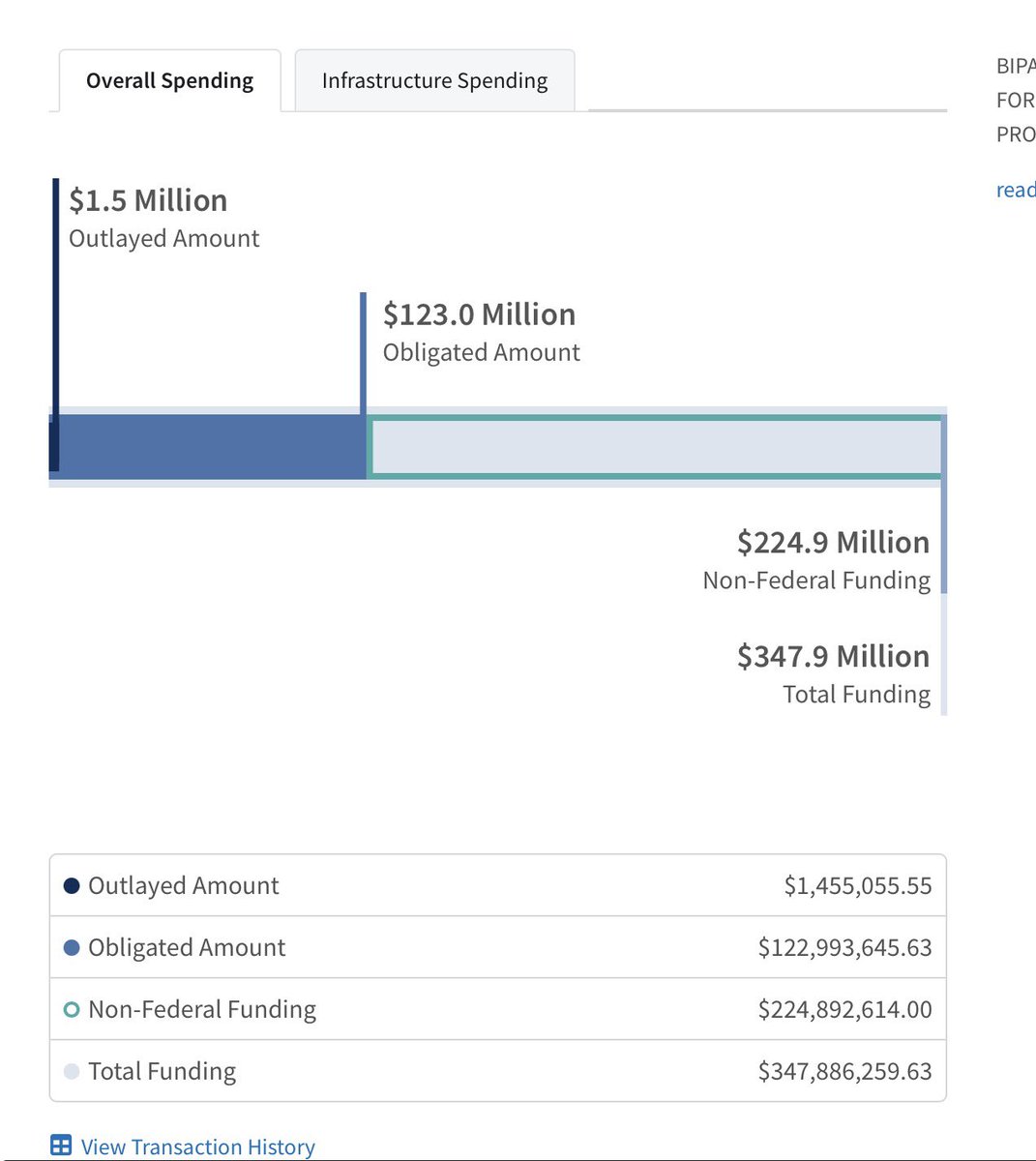
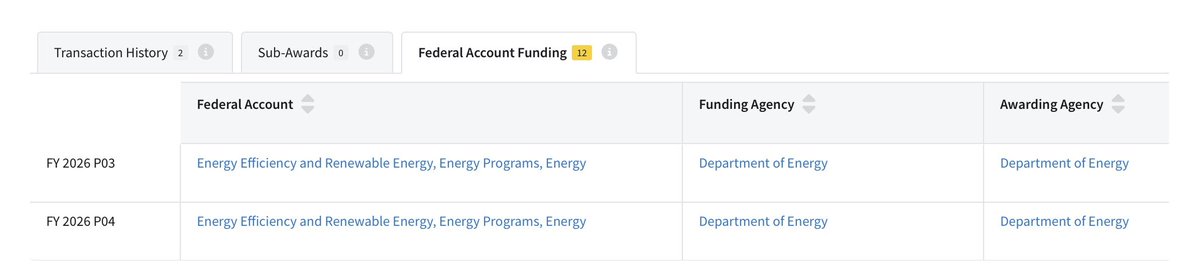
One last post about $ABAT. The stuff about the centrifuge brought up: what about South Carolina? Going off the USASpending site the grant is still active and they have been reimbursed for $1.45 million. But what they are doing is a question. Also in the last earnings I noticed they started to use a new term when talking about the second facility: “As far as our recycling operations, we have announced that in addition to our first recycling plant near Reno, we are moving forward with the design and construction of a second battery recycling facility in the Southeast US.” Southeast US. I know South Carolina has gotten quite crowded, with @abt_company that makes at least 4 lithium-ion recyclers setting up shop in that state. So who knows, maybe they moved over to Georgia or Tennessee. May be time for the company to lay off the Secret Squirrel stuff and give an answer on this one because $1.45 million is a lot of visits to the Waffle House.
Mith tweet mediaMith tweet media
English
2
0
26
1K
Mith đã retweet
Arnab Datta
Arnab Datta@ArnabDatta321·
I would add here that “intervening in futures markets” could mean a lot of things, and some would be crazy and some might not be. Shorting spot would be crazy. Acquiring via futures down the curve? Less so.
Rory Johnston@Rory_Johnston

I’m asked frequently about whether governments are intervening in futures markets already, and I have no idea nor have I seen any evidence. But, if they are and if Hormuz remains shut, it’ll only work for a bit longer before physical markets rip your face off

English
1
2
9
3.9K
Mith
Mith@Mith_·
@j6trader @anonimook555 @StreislandFX They could survive on just black mass, but the recycling vertical would just be a dead end with really no prospects, i.e., clients for expansion, without battery grade.
English
1
0
3
103
Mith
Mith@Mith_·
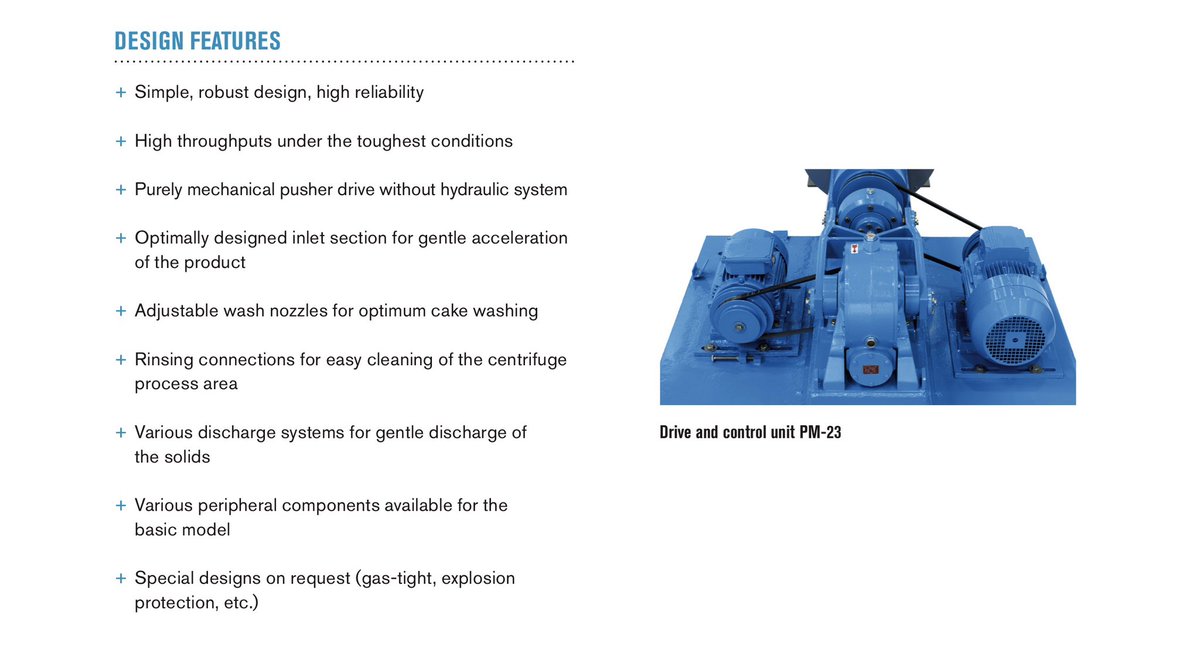
This is interesting and also very speculative, so take it with a grain of salt. A resident of the Tinfoil Hat and Mayonnaise Society keeps an eye on shipments from overseas for $ABAT this is the same investor that caught the shipment that had membrane equipment last year. This time he found one from a few months back from a company called Ferrum Poland, and listed was a pusher centrifuge along with what look like tools for its maintenance. What is that? A pusher centrifuge continuously separates solids from liquids, spinning the mixture at high speed to force the liquid through a sieve while mechanically pushing the dewatered solid cake out the other end. They are standard equipment in fertilizer, salt, and chemical production, anywhere you need to continuously dewater crystallized solids at high throughput with consistent residual moisture in the product. In lithium-ion battery recycling they are used in the final stages of battery grade production to dewater crystallized sulfates and hydroxides before drying. The shipment lists the weight at 1,220kg, consistent with a single PM-23 at 800kg plus maintenance tools and ancillary components. However, the listing also describes 3 packages as LAC, loose articles on pallets, which is standard freight terminology for items shipped unsecured directly on pallets rather than boxed or crated. This could mean that they shipped 3 centrifuges and not one. We do not know for certain. Either way, $ABAT has at least one piece of equipment that belongs at the end of Phase 2, specifically the stage needed to produce battery grade metal sulfates or lithium hydroxide monohydrate. Also for those wondering, this unit seems small but the facility is rated at 20,000 TPA of feedstock. Only about 40% of that is actually converted into black mass, the rest is low value materials like foils and steel casings which are separated in Phase 1. The PM-23 is sized about right for the flow they would need for any of the battery grade components.
Mith tweet mediaMith tweet mediaMith tweet media
English
3
3
39
1.4K
Mith
Mith@Mith_·
In order to answer that we have to look at why Li-Cycle went under. They tried to establish a first mover position in an industry that was really not even an industry outside of China. The companies that are around now, like $ABAT, pulled back and pivoted away from building for future feedstock supply and focused on current supply. Li-Cycle’s mistake can be seen in them spending capital on black mass production sites instead of moving forward with what is truly needed: battery grade. And this is where companies like $ABAT still have the Sword of Damocles hanging over their head. Black mass production, while vital, is currently in overcapacity globally. There is an addendum to that however: high quality black mass is in a deficit, which is why companies in Asia are looking at getting their hands on all the black mass they can, purifying it, and then exporting to China, who just recently changed their import regulations to allow the import of black mass. $ABAT has a process to produce high quality low impurity black mass, but if they do not get to the point where they can then convert that to battery grade, and I have said this a couple times, if they are not at least commissioning systems for battery grade by the end of the year things are going to look dire for them.
English
1
0
4
371
crazyROM
crazyROM@anonimook555·
@Mith_ @StreislandFX What do you think about the recycling segment of $ABAT? Viable or it will be another Li-Cycle 2.0?
English
1
0
0
281
Mith
Mith@Mith_·
@The_Bob_Gnarly don’t worry Matty my social media presence is doing just fine.
English
1
0
2
283
Mith
Mith@Mith_·
@JGolfington7 I saw that one, odd comments from a person who works for the Mine Safety and Health Administration.
Mith tweet media
English
0
0
4
80
JG7
JG7@JGolfington7·
@Mith_ This is really cool Mith. Appreciate your insight! Comment 75 made me laugh....how big is the market...like huge bro
English
1
0
1
112
Mith
Mith@Mith_·
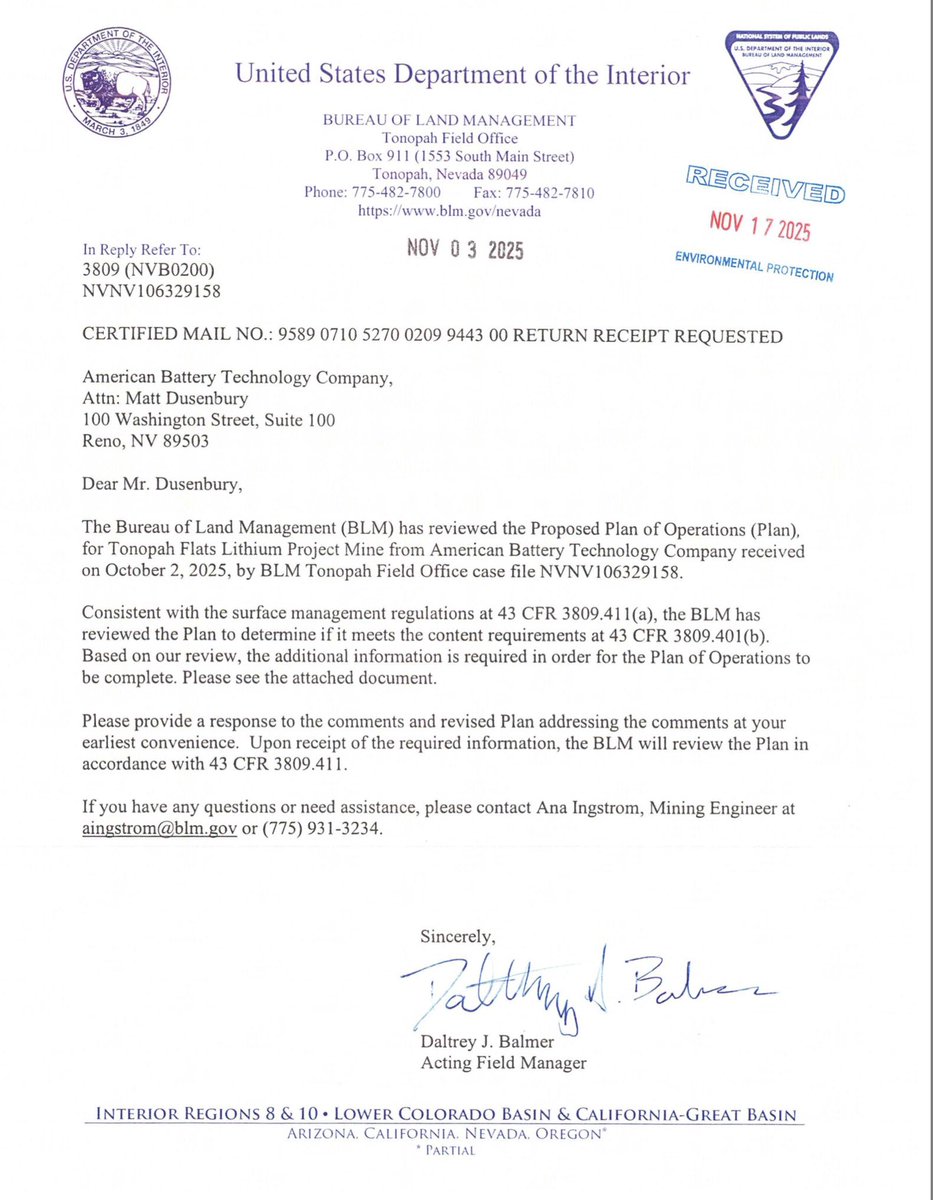
Most know about the Nevada Department of Environmental Protection; that is who issues the permits to $ABAT A correspondence for Tonopah has shown up, and it is what you can call a worksheet for the Plan of Operations for the mine. Remember, this is correspondence between all the agencies involved and is a way for them to work out the plan before it gets submitted to the BLM to kick off the NEPA review. It looks like they submitted the first draft in November of last year. Always good to see them doing their homework. It does look like they will be using an ESS and solar for the site, most likely a hybrid since they are so close to the highway and local utilities. To find the document, head over to the website and fill out the form as shown in the screenshot. Once again, and not to sound like a broken record, this is just a worksheet at best and is meant to help the company get the plan done, so you will find a lot of stuff they need to fix or explain. This kind of operation is new, and the only true reference is Thacker Pass. ndep-onbase.nv.gov
Mith tweet mediaMith tweet media
English
1
0
23
1.5K
Mith
Mith@Mith_·
Seeing quite a few lithium claystone projects in Nevada announcing that they are resuming exploration, with a few taking the steps to upgrade their technical studies and move into 2P measurements. This is mostly due to two things. The big one of course is the correction on the price of lithium, which could stay in this range as long as the Q2 financials from China are not too abysmal, but guidance could help with that but I expect some retracing. The second of course is the demand for ESS offsetting the loss from EVs, and many, and I am one of them, believe that the drop in demand for EVs is short-lived as the renewed interest people are now having because of higher gas prices, is demonstrating. I think by the end of the year we could see a handful of the projects announcing the initial steps to start NEPA reviews. Brines have overtaken the optics when it comes to lithium production in the US, but claystone projects while more expensive will have the ability to produce 2 to 3 times the lithium of a brine project and will be needed if the US ever expects to meet its own lithium demand.
English
0
0
12
540
Mith
Mith@Mith_·
They most likely paid for it last year and the shipping date was in February; they even said something along the lines that most of the purchasing was done. However like with most things right now, there is a pretty substantial lead time. I bet they are still waiting on stuff ordered at least a year ago. Tonopah is going to be interesting, and I bet once the NOI is issued by the BLM they will start to pre-order a lot of the processing equipment, which unless it is from overseas we will not know about until it shows up in a permit application.
English
1
0
2
122
Shirky
Shirky@StreislandFX·
@Mith_ Any comment on the timing for this purchase? I expected this kind of equipment would've been on site already. Doesn't seem like massive CAPEX to pay upfront. They were cash tight last year but it's probably more of a delay issue regarding "phase 2" or whatever it's called now?
English
1
0
0
124
Mith
Mith@Mith_·
After the graphite and stray impurities like copper and such have been removed, based on their grants and the systems they have now, the solution that moves forward would just contain the cathode metals and the acid. That is why a small unit like the PM-23 could work here. They will, based on NDEP filings from ages ago, use solvent extraction to extract and then precipitate out the nickel, cobalt, and manganese. These sulfates will need to go through a crystallization process just like the lithium does, hence they need a centrifuge for that. The second and third centrifuges (if they have three) will most likely be on the lithium hydroxide monohydrate line, one as primary and one for redundancy. That line will most likely be in continuous operation, while the metal sulfates line will most likely be intermittent or run in batches.
English
0
0
3
129
MattC
MattC@MattCarl91·
@Mith_ If they did, in fact, purchase three units, would that be overkill for the TRIC facility? What might be the logic behind purchasing three of them?
English
1
0
1
130
Mith
Mith@Mith_·
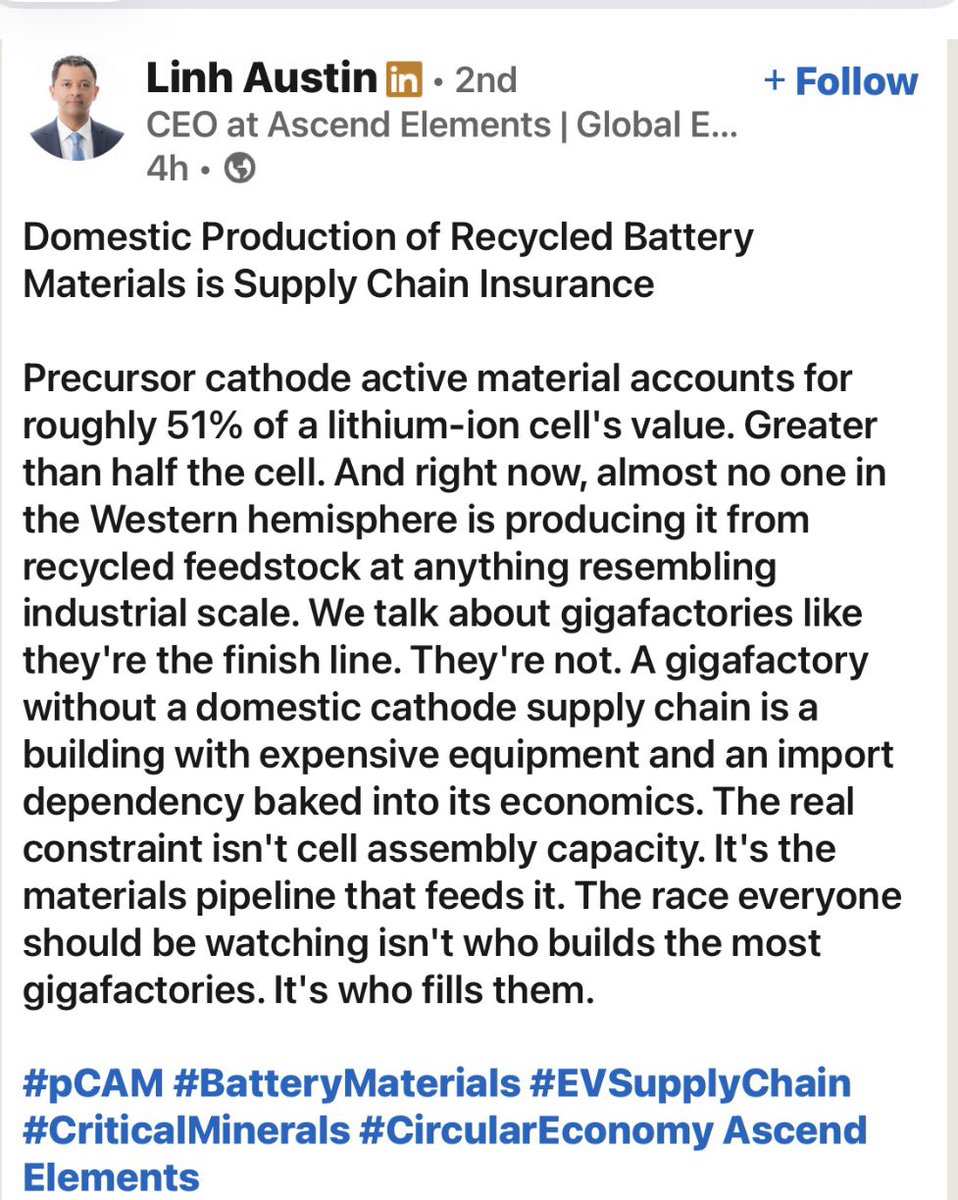
This is a post over on LinkedIn from the CEO of @AscendElements I wish the company was more active here on X, but I understand why they are not. This is a great explanation of why I am not an investor in OEMs but rather in their supply chains. What I find so exciting right now is that, for the first time in generations, we are watching a supply chain being built right in front of our eyes. Currently, when it comes to lithium concentrates and precursors, the US will be looking at Chile and Argentina. In the US, we are seeing expansion of production from brines in Texas, but most primary projects are still years away. Secondary sources will be the real heroes well into the next decade, ensuring that the US doesn’t lose valuable feedstock to other countries while providing, maybe not at primary scale, but enough material to help lower costs for domestic manufacturers.
Mith tweet media
English
0
1
7
769
Mith
Mith@Mith_·
FYI I was banned from Stocktwits because people reported me for being mean. Some were permabulls, and a few were just idiots, like those posting that Abe died and claiming I was begging for donations to bury him. A few even tried to get me banned on Twitter/X for “harassment,” and some went as far as reporting my Substack for funding hate speech groups to get it shut down. That campaign was likely led by some OGs because I wouldn’t join their camp. Could I have been nicer on Stocktwits? Maybe. But I refuse to hide behind alts and will only post as myself, and Abe and I are much happier and more productive by not being on Stocktwits.
English
1
0
5
171