Mith

9.8K posts

Mith banner
Mith

Mith

@Mith_

Lithium-focused researcher decoding critical mineral extraction, battery production, storage, and recycling, while occasionally exploring EV op-eds.

United States Katılım Eylül 2008
324 Takip Edilen2.1K Takipçiler
Sabitlenmiş Tweet
Mith
Mith@Mith_·
In this week’s Sunday article, I answer the questions of why I cover so many of the companies that are upstream of lithium-ion manufacturers, and why understanding their technology gives you a leg up. I also add context to the headlines about @AscendElements chapter 11 bankruptcy and give an update on the proceedings from the latest court filings.
English
1
1
10
1.1K
Mith
Mith@Mith_·
The risks you list are not even close to the real concerns facing the company right now. Most of what will be included in the DFS is already done. What they are missing is the nuance and fine-tuned numbers needed for a bankable version. The DFS will be published when it benefits the company to do so. When it comes to Tonopah, the big factor right now is the NEPA review. That is the go/no-go decider for the company. This is also where the judicial bucket of the process starts to fill up, and while I do not expect a problem with the Section 106 review, its proximity to Tonopah makes this a fairly straightforward case. It is still a mine, and extortion is a thing. The second facility is also not that big of a deal, or at least the execution of it is not, will be interesting to see what kind of tax abetment package they will get but, it all depends on the efficiency of the technology. At this point, they have somewhat substantiated the LHM component, but there is still the question of the long-term cost of the bipolar membranes, and the energy costs compared to comparable modified chlor-alkali electrochemical platforms have still not been addressed. Also, while we have seen that the de-manufacturing side can be profitable, we have yet to see whether they can produce battery-grade material at the same level of efficiency. Now granted they are just planning on using a basic SX platform with industry-standard thermal crystallization, the novel aspects will not show up for some time and are not needed for initial production. The problem is that this is something that, so far, no one in the US has been able to achieve at commercial scale. They will need to complete production trials before anything binding is really negotiated, so while they can start breaking ground on the second facility, it will still all come down to the TRIC site. And that is just the tip of the iceberg.
English
0
0
0
29
The Fat Pitch
The Fat Pitch@the_fat_pitch·
@harboreric we are in lack of lithium for the foreseeable future. we just wrote about a lithium recycling/miner play if you want to have a look 👇 x.com/the_fat_pitch/…
The Fat Pitch@the_fat_pitch

$ABAT reported Q3 FY26 earnings. $ABAT for who do not know is a domestic critical minerals play executing on two fronts: lithium-ion battery recycling and lithium production from one of the largest U.S. claystone deposits. Let's go through the numbers and this time (not like with $ALMU) they actually matter Q3 revenue came in at $7.8M, a 64% sequential increase from the prior quarter, while cash costs of goods sold (COGS) grew only 11%, signaling operational leverage. Non-cash items like depreciation and stock-based compensation bring GAAP gross costs to $7.8M for the quarter, but on an adjusted cash basis, COGS was approximately $5.8M. That means ABTC achieved a $2M adjusted gross profit, its first ever positive gross margin. Year-to-date (nine months into FY26), $ABAT has generated $13.5M in revenue against cash COGS of approximately $14M and management guided for a continued ramp into Q4. Balance sheet looks healthy: $38.5M in cash, zero debt. Zero equity was raised this quarter no ATM usage, no warrant exercises. A quick note on stock compensation, because the accounting can look confusing. On paper, this expense jumps wildly from quarter to quarter. Why? Because accounting rules force the company to record an expense whenever they guess a future milestone (like finishing a facility build or hitting a revenue target) might be hit. But ignoring accounting, and looking at reality, the company is steadily giving about 1 million shares every quarter to its employees. We actually like this. It means everyone from the engineers to the plant workers gets a piece of the pie, not just the executives at the top. CEO Ryan Melsert in the call explicitly stated: "Separate from our financials, at ABTC, we do think it's important that really all employees have company shares as part of their compensation agreements. This is throughout the entire structure of the company itself." LOVE IT!!!! Two Business Lines, Both Moving 🏗️ Battery Recycling — Nevada Facility🥇 Revenue growth was driven by increased capacity utilization at the Reno facility. Feed sources are also diversifying. A significant portion of their intake now comes from large energy storage systems supporting data centers and AI infrastructure. They also handle CERCLA-classified material (hazardous waste) and universal waste through partnerships with government agencies. This is very relevant since this is a highly defensible feed stream that standard recyclers aren't permitted to use. Given the operational success of the first facility, construction of a second recycling facility is now moving forward, expected to be located in the Southeast U.S. in the middle of the emerging American "Battery Belt" where OEMs are currently building gigafactories. Site selection was done in close consultation with supply chain partners. An announcement is expected shortly. Tonopah Flats — Primary Lithium The Tonopah Flats Lithium Project in Nevada is one of the largest identified lithium deposits in the U.S. Following the completion of its Pre-Feasibility Study (PFS) last fall, $ABAT is now advancing its Definitive Feasibility Study (DFS) the final engineering and financial analysis required before financing deals can be locked in. Scale here is significant: the project is targeting 30,000 tonnes per year of battery-grade lithium hydroxide. Based on the PFS economics, production costs are modeled at roughly $4,300 per tonne. At conservative long-term lithium pricing of $15,000–$20,000/tonne, a facility of this size could generate $450M to $600M in annual revenue at full scale. The project already carries a $2.57 billion After-Tax Net Present Value (mkt cap of $ABAT is now less than half a billion). The project has been designated a covered project under the FAST-41 federal permitting program (take it as a federal "fast pass", so less bureaucracy). The land sits entirely on BLM-managed territory, and all baseline environmental studies (started in fall 2022) have been completed and reviewed. With a $900M preliminary approval letter from the US Export-Import Bank already in hand, the completion of the DFS will be instrumental to finalize construction funding, and commercial operations to start by the end of the decade. SO MOST LIKELY TONOPAH WILL BE ON LINE AND FULLY OPERATIONAL AROUND 2030. The Risks 🚨 - The second facility and Tonopah DFS both require flawless execution without major delays or cost overruns. - Lithium and battery material spot prices remain volatile and directly affect revenue. - Stock-based compensation is meaningful and can swing GAAP results from quarter to quarter. Our Take The 64% sequential revenue jump it reflects operational scaling. The balance sheet is a very good and the second facility is coming. The lithium project has federal support and fast-tracked permitting behind it. We hold $ABAT and we think is a very long term play (4 years). We will add slowly to our position, but yes there is plenty of time to accumulate. We will keep providing coverage on the company. Stay tuned.

English
1
0
0
21
The Dealmaker
The Dealmaker@harboreric·
Lithium was trending and he was the top tweet
Juan Carlos Zuleta@jczuleta

Today, all #lithium prices, domestic and seaborne, as well as chemical and ore, and spot and futures, plunged in the Chinese market. A new shift may be about to take place. As anticipated, we have reached backwardation with the m-t futures price, which also means the end of 7 consecutive days of rising $Li2CO3 prices. A completely new short-term bottom might be in the works.

English
2
0
0
107
Mith
Mith@Mith_·
@harboreric Lol that guy, he is really good at posting charts and tables, not so good at explaining what any of it means. If you really want to keep up with the lithium financial side of the industry, just follow @RKEquityRocks
English
1
0
2
80
Mith
Mith@Mith_·
Nah, everyone needs hobbies, and ever since the days when we had to wait several minutes listening to a sound like someone was trying to shove a cat up Satan’s beefhole just to connect to the internet, I’ve been taking people like you for a spin. Some people collect spores, molds, and fungus. I find people like you and spend a little time each day showing the world just how completely idiotic they are. You should still feel special, however. I don’t do this for your average idiot. As for essays, lol, these are simple snippets compared to what I write every day for a living, but based on the depth of knowledge you’ve displayed, you may think they’re long.
English
0
0
0
18
Never You Mind
Never You Mind@Biirringy·
@Mith_ @thejollyjoel 🤣 I'm living in your head rent free. A lot of you are curious how I embarrass myself 🤣 ? If you say so. When are you going to post your next essay?
English
1
0
0
30
Mith
Mith@Mith_·
While I am turning around a section for a piece on how battery storage allows grid operators to defer building new generation, generation they may not need, I decided to see what else our $ABAT mental midget has been spouting. First let’s look at that loss,$9.3M, but before we do that we have to look at their revenue history. They first recorded revenue in 2024, which as we all know dropped without warning to where they went from a positive growth of their margin to a backwards movement. There was speculation, but it was easy to see based upon inventory numbers that they had a problem with the processing train and had to revamp it. What the extent was no one outside of the company and the Taco cart vendor know. But once that was done they then moved from the worst margin they ever had to the best at negative 2%. When you step back and look at the multi year trend, that deficit has been gradually improving from roughly $50M in FY2024 to the mid $40M range in FY2025, while revenue has scaled from essentially zero to over $4M over the same period, which was for one quarter. Is the current operations enough to make them truly cash positive? No, that will take battery grade. But for now the trick will be for them to continue that forward momentum. No need to go into much detail about the mine, I have shown over the course of several posts that his opinion on that matter is rather deficient. But to say a project that has submitted a Plan of Operations to the BLM as a pipe dream is like saying a 24 oz steak has no protein. As for the grant, as always so much missing context. After you wade through all the political BS the reason ABAT’s grant and several others were pulled is simple, milestones. This relates to a novice mistake Ryan made. A grant that requires merit reviews based upon scheduled budget periods is not a framework that will work with the timelines for a mine. Now the rebuttal of this is look at Kings Mountain that has a grant associated with it and has been able to meet its merit reviews and even publishing an EA. That is true but once again nothing is in a bubble. Kings Mountain is a reopening of an old mine, with years of studies already done. Tonopah when they negotiated the grant was a blank slate. But we also have to put that grant into context, and why I had a problem with it from day one. While pitched as a way to start operations, it was once again the company hedging itself by stepping up from a small scale demonstration plant to a large scale demonstration plant which in reality would be slightly higher in production than a recycling facility. When the grant was pulled, and I am 100% sure they did not just get the letter from the DOE and say “Damn didn’t see this coming” they dropped the whole R&D aspect of the initial production capacity from Tonopah and went the logical and proper way, building a strategy to scale from initial in phases. As for the “real money” this guy keeps dropping. In an industry expected to produce low end $10B to the widely optimistic $20B in revenue in 2030, and I am specifically talking about lithium-ion recycling, having a vertical in that market is not going to lead to chump change. This circles back to how I know this guy is clueless. At the end of the day advances in recycling directly benefit the refinement vertical. The company has 3 verticals and while they tend to use fancy names for them they are recycling, refinement, and mining. Without those first two verticals, they would still be at the point years ago where they had a CEO claiming he was the one who discovered lithium in the claystone of Nevada on Youtube and was sliding company shares to Nancy Pelosi’s son under the table. The mine is years away and will take care of itself, what @abt_company is doing right now is the work they can do, and that is advancing the technology while doing the legwork to get their product qualified so when the mine opens they are not still shopping around for a partner.
Never You Mind@Biirringy

@DB_6556 @MarcMil65466441 They reported a $9.3m LOSS. Their mining operation is still a pipedream - this is where the REAL money is. They had a federal grant WITHDRAWN, which they're still appealing, and no further government commitments so far. Are we talking about the same company?

English
5
2
21
3K
Mith
Mith@Mith_·
@Biirringy @thejollyjoel If you stoped making stuff up or stoped pretending you know anything about the company or the industry then I wouldn't have to waste my time on you. Actually a lot of us are curious to see how you embarrass yourself next.
English
1
0
0
16
Never You Mind
Never You Mind@Biirringy·
@Mith_ @thejollyjoel You can call me Todd, Bob or Dad, I really don't give a rat's furry rear end son. You just keep writing your essays and we'll just keep ignoring them, and we 'traders' will flip this stock as soon as we see fit 👍
English
1
0
0
17
Mith
Mith@Mith_·
Standard generic AI generated text, the only problem is initial capacity will be 5ktpa which is Phase 1. They will then ramp up over the next few subsequent years with two more phases, each rated at 12.5ktpa, till they reach that 30ktpa. All together there will be 8 phases throughout the expected 45 LOM. I really do not expect them to hit that 30ktpa until 2032 or so if they start construction in 2028, which could be around the time the NEPA review wraps up and the legal challenges start.
Mith tweet media
English
1
0
1
25
guillaume BONAFOS
guillaume BONAFOS@guillaumeMerig·
$ABAT ABTC has a claystone-to-lithium hydroxide pilot plant and is now focusing on building it out into a full-scale commercial refinery. The company published a pre-feasibility study for the project, projecting annual production of 30,000 tons of lithium hydroxide monohydrate
English
1
0
13
1.4K
Mith retweetledi
The NAM
The NAM@ShopFloorNAM·
Manufacturers thank @RepBlakeMoore for introducing the Critical Mineral and Extraction Tax Parity Act. By aligning the 45X statute with the recently updated 2025 Critical Minerals List, this legislation will ensure greater access to those materials and help manufacturers launch projects that will secure our supply chains. blakemoore.house.gov/media/press-re…
English
0
5
7
671
Mith
Mith@Mith_·
This is directly about something I have talked about many times. There are pieces of legislation out there for permitting reform, like the SPEED Act and the FREEDOM Act, with the last one even going as far as to tackle what every administration does then blames the last when they shift the approval process to projects that fit their political agenda. Limiting administrations’ ability to weaponize the permitting process for political gain, the problem is it is also a very handy tool for legislators to have as well.
Shawn Regan@Shawn_Regan

Conservatives have long argued that environmental overregulation makes it too hard to build. Now, as some on the Left are making similar arguments, you’d think permitting reform would be an easy win. Instead, fractures on the Right are helping stall it. My latest @dcexaminer

English
0
0
3
327
Mith
Mith@Mith_·
@memes_eV @Veritatem2021 Man if that is not a bot then it is the most desperate plea for attention I have seen in a long time. Every single rebuttal from them is no more than “I know you are but what am I”
English
1
0
1
63
Mith
Mith@Mith_·
@boogeymantradez How many times did MULN do this crap, and people made bank playing each and every RS.
English
1
0
1
56
Boogeyman Trades
Boogeyman Trades@boogeymantradez·
@thommic yes. Just playing for a delist runner. Not on the daily list , maybe they let it slide
English
1
0
0
72
Boogeyman Trades
Boogeyman Trades@boogeymantradez·
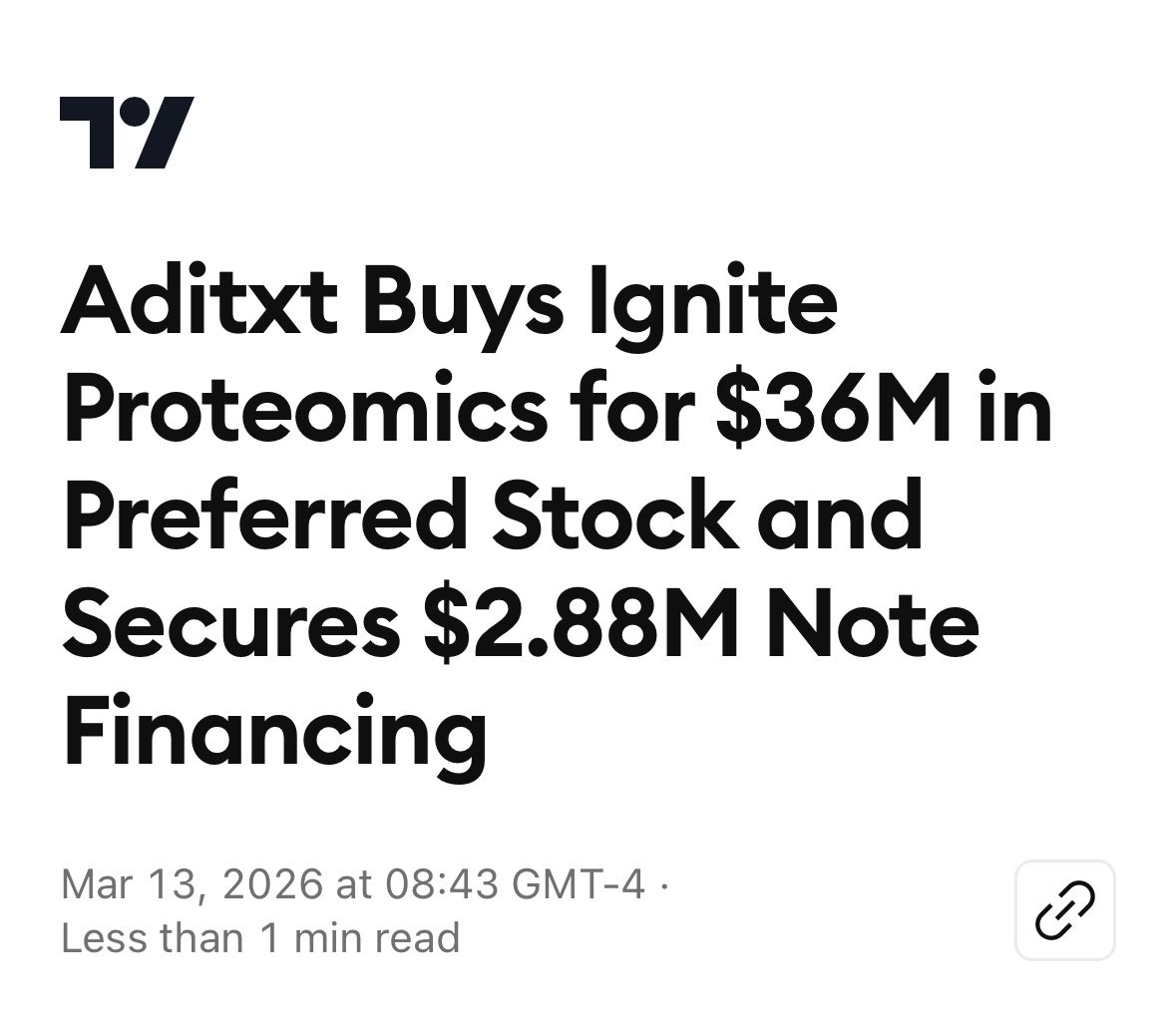
$ADTX bought in the .065 cent range. Shocked this one didn’t delist, she’s thin at 13.7 million float and current price gives it a 800K market cap, lol , just had a 36 million dollar acquisition 2 months ago.
Boogeyman Trades tweet media
Boogeyman Trades@boogeymantradez

$ADTX 1 for 27 reverse split will put this in the mid 1$ range at 510K float something we haven’t seen since $SMX which went to like 300$ this is an absolute pig but I’m in in case they pump it 13.7 million float , 1 for 27 puts it at 510K

English
2
0
6
7.2K
Mith
Mith@Mith_·
@AlecStapp I thought there was a chance to a all of the above when he agreed with Senator Cortez Masto that solar plus battery can be baseload during his confirmation hearing. That guy seems to have gotten lost once he left that hearing.
English
0
0
1
61
Mith
Mith@Mith_·
This is not really as big as it sounds. Think of it as a preemptive bill. It creates a framework for critical mineral production using Army land for mining, or waste streams for recovery, but that is about it. Right now there are no programs to do any of that. They would have to sit down and map all of the Army’s production facilities to identify waste streams that could actually produce critical minerals. The Army runs a significant organic industrial base, facilities manufacturing ammunition, missiles, combat vehicles, and chemicals, all of which generate process waste. For a private company to co-locate and build recovery infrastructure around those waste streams, the volumes would need to be substantial enough to justify the capital investment. At the scale the Army operates, that threshold is plausibly, which is what makes the waste stream angle the more interesting piece here. The monetization framework however is very opaque. The bill allows compensation in cash, minerals, equipment, or facility improvements, and includes detailed language about where Army revenue gets credited. But the structure feels more like a we will figure it out later than an actual commercial model.​​​​​​​​​​​​​​​​ It is a bill to enable other bills.
cek@cekdrew

WOW… $MP $USAR $AREC $UURAF $ALOY $UAMY $ABAT $MTMCF The “Army Organic Industrial Base Mineral Partnerships Act of 2026” bill would allow private companies to partner directly with Army industrial facilities to recover, process, and handle critical minerals using Army-controlled land, infrastructure, waste streams, and byproducts. This is NOT just about mining. The language heavily focuses on: • Processing • Recovery • Recycling • Waste stream extraction The Army can receive: • Cash • Minerals • Processed materials • Equipment • Infrastructure upgrades …and KEEP the proceeds to modernize Army industrial facilities. The bill specifically mentions: • Rare Earths • Lithium • Nickel • Titanium This is another massive signal that the United States government now views critical mineral processing and supply chains as a national security issue. Processing is the bottleneck. Not the rocks in the ground.

English
0
0
1
556
Mith
Mith@Mith_·
In their current form no, however unlike with Lithion where it was pieced out, this will be more like Li-Cycle where Glencore took all the assets. For Li-Cycle it was just a way for Glencore to recover whatever they could. For Ascend it is a way to keep the lights on, allowing them to continue operations while avoiding the crushing effects of the debt they have. And it provides the capital they need to move forward with the Poland plant which with current demand for battery metals in the EU very well could be the more profitable play. By the way there was a motion filed by some of the companies owed for APEX 1 basically saying they have a problem with the note holders walking away relatively clean without putting in any new capital. And based on the numbers in the filing they have a point, but not for all of the note holders. The junior noteholders had roughly $83 million outstanding and will most likely lose around $50 million of that. The senior noteholders however are tied to assets so they will most likely end up fine.
English
0
0
0
68
Mith
Mith@Mith_·
Real quick, I am waiting on the results of the auction which was today, but there is new information on the @AscendElements bankruptcy. On the 6th of this month they filed an emergency motion for $30 million in debtor in possession (DIP) funding, and this would be from a company called Kinterra (formally Bluegrass Infrastructure Partners Holdings LLC). Of that $30 million, roughly $18.8 million goes straight to Poland to exercise a land option for their Apex 2 facility there, where the Polish government has committed hundreds of millions in support. So nearly two thirds of the loan is not going to operations, it is going to preserve a foreign asset. The other piece of this is that Kinterra is also the stalking horse bidder, meaning they have signed a purchase agreement to buy substantially all of Ascend’s assets if no one else outbids them at auction. Their bid is not cash, it is a credit bid, meaning they are bidding the debt Ascend owes them rather than writing a check. In other words, they are buying the company with the company’s own money. The likely outcome is that Kinterra wins uncontested. Jefferies contacted 90 potential investors before the filing and got zero actionable proposals. The entire structure of this deal, the loan, the stalking horse bid, the termination triggers, all of it is built around preserving that Polish land option and the Apex 2 development. That is the primary driver of value here. If Kinterra is successful, the US operations come along for the ride.
Mith tweet media
English
1
0
4
444
Mith
Mith@Mith_·
We do know how many batteries it would take. This is where kilowatt hours (kWh) come in. We know how many batteries it takes to provide 1 kW for 1 hour. That is how they would figure that out. We do know how much space it takes. It would be based upon the volumetric density of the cells, the space needed to produce 1 kWh of capacity. But we also have a fair idea of the space the support equipment needs as well. We do know the fire concerns. In fact there is an effort right now to remove older ternary cells out of these sites and replace them with LFP. And the reason is the lower thermal stability of NMC cells for this kind of use, and Moss Landing is a prime example. They grandfathered that site in and used older codes they never should have just to get the site online. Companies are now rushing to fix that mistake at their own sites. But it is more than that. Instead of putting the batteries in buildings like they did with Moss Landing, by the way the irony there is that the fire occurred in the same place at that facility where they used to burn natural gas to generate electricity. Now these sites use fully self contained modular units with monitoring and fire suppression systems built in. By doing this they lower the amount of cells in each unit, and if there is a conflagration it is not like Moss Landing. Unlike what people think, EV batteries do not end up in landfills. Some do end up at junkyards but not landfills. The same thing with the modules used at energy storage systems. They end up at recyclers, and while some are processing them others like Redwood are taking the ones that still have a state of health that allows cascade utilization and deploying them for smaller data site related projects, mostly for UPS. Redwood is kicking the can down the road, but these batteries are not being disposed of in the classic sense, they are being processed to recover the high and even the low value materials. I do agree this was grandstanding but I know why he did it. In the past the @SecretaryBurgum had kinda stumbled, and during his confirmation hearing agreed that solar combined with batteries can be baseload. He has now walked away and sticks to the narrative that batteries are not a thing.
Your_Favorite_Mexican@MikeandLily_UFC

Thats a ridiculous statement. You have no idea how many batteries that would take, how much space it takes to hold them securely (fire concerns and securing them from outsider threat), and the environmental impact that those batteries have when you need to dispose of them. Its a ridiculous, stupid statement for grandstanding, which is the only thing govt is about anymore. So freaking stupid.

English
1
0
6
593
Mith
Mith@Mith_·
No. The biggest mistake that $AMYZF @Recyclico can make right now is to try and go down the path they were on, overreaching just to reach commercial scale. One of the things that caused the company to pull way back and abandon its attempts at commercial scale is that they contracted all of their R&D out. This led to them not being able to deploy the platform when the time came. It didn’t help that at the time they had a CEO who was dead-set on fulfilling the founder of the company’s dream of becoming a first mover. Larry was a dreamer and, with no disrespect intended, he really did not know how to make any of it happen, and his successor was just chasing signatures. Where they are now is exactly where they need to be: building out the platform, exploring new avenues for its use, and making realistic connections in the critical minerals industry before taking the step from demonstration to commercial. For me, I’m very curious to see how they deploy their platform beyond just black mass. The potential is there, and I think this is a clear case where diversification can help a company.
Mith tweet media
English
0
0
6
539
Mith
Mith@Mith_·
It is common; people understand manufacturers, and that is what QS is. Plus, it is a technology that honestly has been rather overhyped. ABAT is a supplier; they are boring, and most do not understand the actual mechanics. Lithium is such a misunderstood metal that many are just not comfortable with it beyond the times it is a momentum stock.
English
0
0
4
68
Scarlet Witch
Scarlet Witch@WandMax_616·
@StreislandFX Good let them sleep on it. I like how ABAT has been moving. When folks pay attention then it’s too late
English
1
0
1
260
Shirky
Shirky@StreislandFX·
$QS gets so much love. How come absolutely no one is talking about $ABAT. Revenues are booming, their plant has now a positive gross margin and institutionals own close to the same % of the company. Yet, it’s valued at 400m$. Everyone is sleeping on it, they’re here to stay.
English
3
1
27
1.7K
Mith
Mith@Mith_·
Once again @Biirringy, I am going to start calling him Todd, is wrong and is missing context. Since the PFS, $ABAT has moved part of the deposit into 2P reserves, probable and proven. Proven is the highest confidence category when it comes to mineral measurements, with probable one step below. Combined, they now have 2.7Mt of lithium hydroxide monohydrate as reserves. For context, Thacker Pass has 3 point something million in 2P reserves, but they list it as lithium carbonate, which can create some problems with direct comparisons. Still, it is safe to say that Tonopah Flats has around 1 million tons less of financially viable lithium reserves as a precursor than Thacker Pass. This is one of the reasons the company is now able to capitalize expenses for the project. Once they hit 2P reserves, almost every dollar spent on the project adds to its value, and in the last earnings they capitalized $1.3 million. Now for the timeline and EXIM. Based on emails that were shared with me from the BLM, around October of last year they were expecting to issue a Record of Decision (RoD) in the spring of 2027. That timeline was based on the company submitting a draft Plan of Operation (PoO) and when they expected to issue a Notice of Intent from that date. But based on the correspondence uploaded to NPED, there were some issues, mostly around uncertainty not about how the mine will work, but the extraction component. There were concerns about water and with some not sure about the overall configuration of the pit, but most of it was directly related to the extraction platform. However, FAST-41 does show they accepted the PoO last month. So I would say it is safe to assume we may be looking at H1 2028 before they finish the NEPA review and start pulling permits for construction. And that backs up what @thejollyjoel was saying about the start of construction in 2028. 2030 is possible for the start of operations, but it will likely be the ramp-up to Phase 1, which is 5 ktpa, with at least another year for Phases 2 and 3, ultimately reaching the initial throughput target of 30 ktpa. The EXIM loan is mostly a shiny bauble for retail investors right now. They paid the hundred bucks and got the letter of intent from EXIM. The next milestone will be EXIM accepting their application. That will require far more than what is contained in the PFS and will depend on a lot of the data generated during the NEPA review. And this is also a chicken-and-egg scenario: EXIM wants to see that the company can support daily G&A, which typically requires offtake agreements. At the same time, most OEMs want to see that a project has the financial backing to actually deliver the volumes they are agreeing to buy. Which comes first is a bit of a guessing game right now. We have not even gotten into the credit buffer the company will need which will result in the long term dilution in the form of senior secured notes. But that is for another time. One of the reasons they were able to move into 2P reserves is because those reserves are based on financial viability. The NEPA review is what determines whether the lithium can actually be mined while meeting environmental and social requirements. There is also something many of us are looking at, which is whether claystone projects are artificially inflating deposit measurements by using lower cut-off grades (CoG) than what seems reasonable. I think once Thacker Pass starts production we will finally see what a viable CoG is for smectite. The only thing is Thacker Pass has high amounts of illite, which other projects may not have, and that can lead to a lower CoG due to the ppm. But beyond that technical stuff, EXIM is not going to do anything definitive beyond an MOU or an MOA until NEPA is done. That is where TFLP is sitting right now, and there is really no reason for anyone to get excited about the project until Q4 of next year.
English
1
0
8
489
Never You Mind
Never You Mind@Biirringy·
@thejollyjoel @Mith_ Nah, the pace at which $ABAT is progressing, it'll be closer to 2030 before the mining operation is up and running Even then, we don't know how much raw material is there as nothing has been "proven" yet. In the meantime, they really need to secure that $900m EXIM funding
English
1
0
0
294