Britain's Green Party once wanted to protect the environment.
Nowadays, its leader wonders whether to build a society that simply doesn't include people who disagree.
@harryph on why it's time to stop laughing at these ideas:
Using a bank shouldn't mean consenting to government surveillance.
But under current law, it basically does.
@naomibrockwell on the third-party doctrine and why it has to go:
The goal isn't to raise kids who can survive in a crowd.
It's to raise kids who can build meaningful relationships.
Kelsy Achtenberg on what educational freedom looks like in practice:
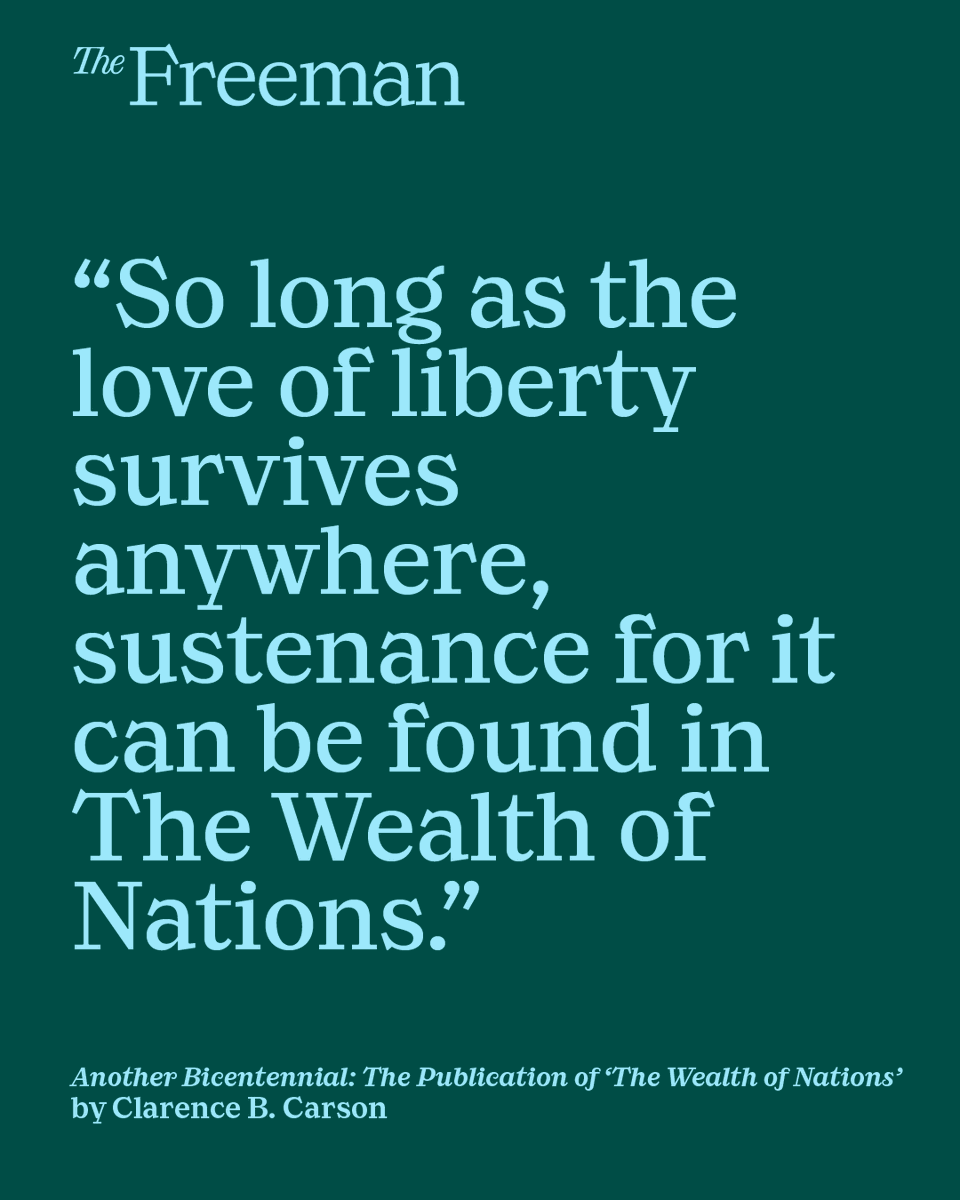
"So long as the love of liberty survives anywhere, sustenance for it can be found in The Wealth of Nations."
Written in 1976, and still true in 2026.
A Freeman classic worth revisiting at 250:
The best golf courses weren't planned.
They grew: from coastal land, wind, erosion, and centuries of unintended wisdom.
The moment designers tried to control all of it, the game got worse.
@allenmendenhall on why it matters:
California's housing regulations are so bad that even Costco found a workaround.
Markets don't stand still in the face of bad policy.
Justin Dean on a Hayekian outcome hiding in plain sight:
Not every problem is yours to fix.
Minding your own business isn't apathy. It's a form of respect for human freedom.
A 1976 Freeman classic that reads like it was written yesterday:
Social order isn't a creation of the State.
It emerges from the voluntary, reciprocal actions of free individuals.
@erikwmatson on what classical liberalism actually means:
Some chocolate bars no longer contain enough cocoa to legally be called chocolate.
Consumers know when a once-beloved treat tastes like an administrative error.
Nicole James on the slow-motion mugging of one of life's great pleasures:
There are people you spend time with.
And people you call when everything falls apart.
Aristotle knew the difference. @willwatsonog on why it still matters: