
Trymore Man 🇪🇺🇬🇧 đã retweet

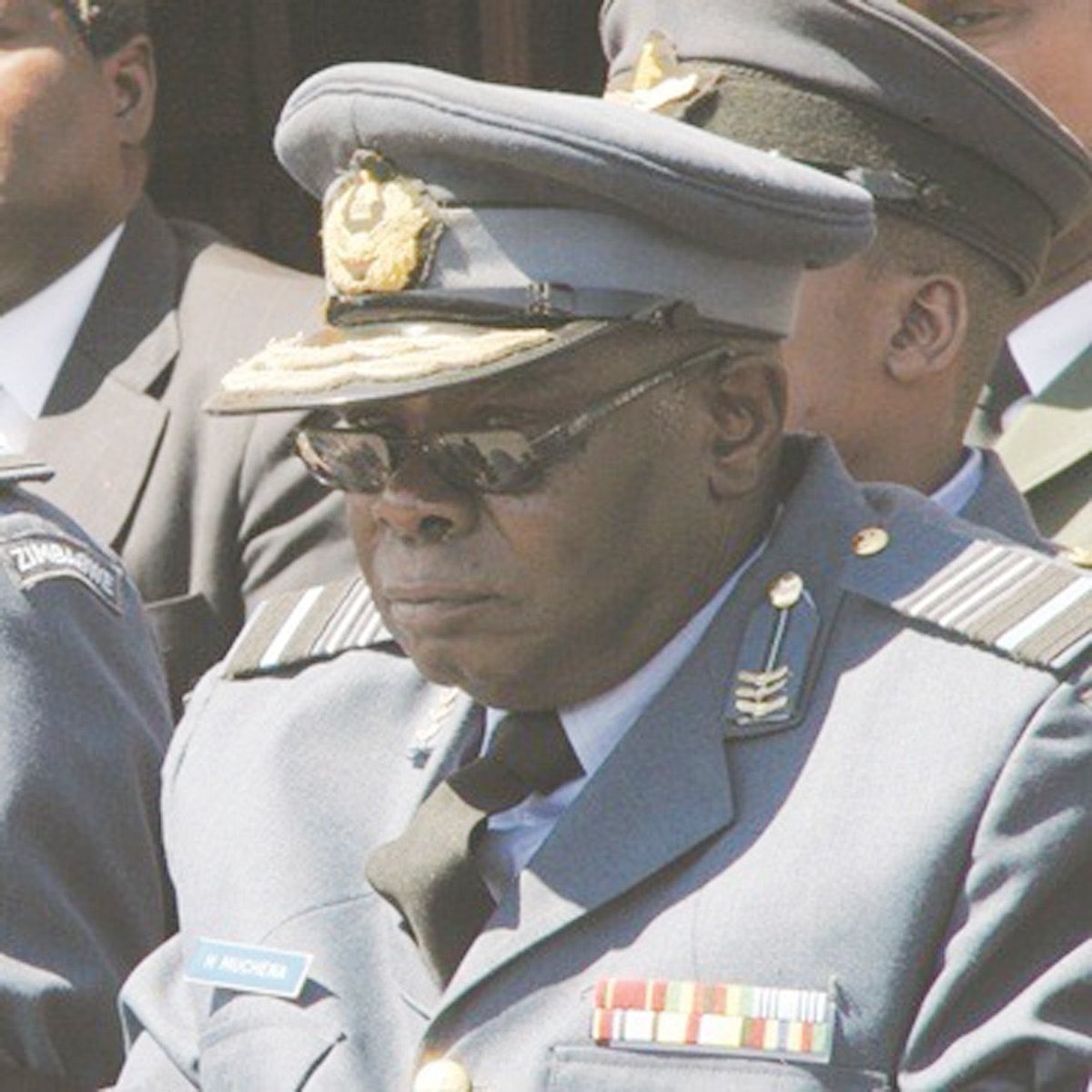
WHEN THE BARRACKS SPEAKS: When Retired General Henry Muchena declared publicly that the Zimbabwe Defence Forces are watching the unfolding political process and that should ZANU-PF become a security threat, the military will advise accordingly he was not speaking loosely. He was not engaged in bravado. He was articulating, in plain language, a principle that sits at the very foundation of this republic's constitutional architecture: that the defence forces of Zimbabwe exist not to serve a political party, but to serve the nation.
I write not to celebrate General Muchena's remarks as a provocation. I write to contextualise them because in Zimbabwe today, that context is being deliberately obscured by those with the most to lose from clarity. The ZDF does not belong to ZANU-PF. It belongs to Zimbabwe. That distinction is not semantic. It is constitutional, historical, and moral. Section 212 of the Constitution of Zimbabwe is unambiguous. The Zimbabwe Defence Forces exist to defend Zimbabwe, its people, its territorial integrity, and its constitutional order. Section 213 vests command of the defence forces in the President not as a party functionary, but as Head of State and Government, a distinction of profound importance.
Section 214 goes further. It prohibits members of the defence forces from acting in a partisan manner, furthering the interests of any political party, or prejudicing the interests of any political party. That prohibition runs in both directions. The ZDF cannot be weaponised for ZANU-PF. But by the same logic, the moment any political entity regardless of how long it has governed begins to conduct itself in ways that destabilise the constitutional order, the defence forces have both a constitutional duty and an institutional obligation to respond. This is not a novel proposition. It is not imported from foreign doctrine. It is written into the supreme law of this land, ratified by the people of Zimbabwe in 2013.
Those who dismiss the idea of military oversight of political conduct conveniently forget November 2017. Operation Restore Legacy was not carried out because ZANU-PF was functioning constitutionally. It was carried out because factional conduct within the ruling party had reached a point where the institutional security of the state was threatened. The ZDF acted. The nation accepted the intervention. SADC and the African Union did not condemn it. History did not condemn it.
I raise 2017 not to celebrate it as a model of democratic governance any honest soldier will tell you that military involvement in political transitions carries enormous institutional risk. I raise it because it demolishes the argument that the ZDF is or must be a passive observer of whatever a ruling party chooses to do. That argument has already been tested and found wanting not in theory, but in practice, on the streets of Harare, in November of 2017.
November 2017 did not happen in a vacuum. It happened because a political party placed its factional interests above the constitutional order. The ZDF drew a line. Zimbabwe watched. The world accepted it."
Critics will ask who defines what constitutes a security threat? It is a fair question, and it deserves a serious answer.
A political party becomes a security threat when its internal conduct produces outcomes that destabilise state institutions. When constitutionally mandated processes are manipulated to extend the personal tenure of individuals beyond what the law provides, that is not merely a political matter it is a constitutional crisis in slow motion.
English