UPSC NOTES

6.5K posts

UPSC NOTES banner
UPSC NOTES

UPSC NOTES

@UPSC_Notes

UPSC| Tips| Tricks| Motivation| WhatsApp Channel 👉 https://t.co/jFVqrM0mRn

New Delhi, India Tham gia Ağustos 2022
590 Đang theo dõi210.3K Người theo dõi
Tweet ghim
UPSC NOTES
UPSC NOTES@UPSC_Notes·
The Abraham Accords and the Changing Power Politics of West Asia The current conflict involving the United States, Israel, and Iran cannot be fully understood without examining the geopolitical transformation that began with the Abraham Accords. These agreements significantly reshaped alliances in West Asia and contributed to a new strategic rivalry in the region. Early Arab Recognition of Israel For decades after the creation of Israel in 1948, most Arab countries refused to formally recognize the Israeli state. Only two Arab countries had established diplomatic relations with Israel before the Abraham Accords. Egypt became the first Arab country to recognize Israel, signing the Egypt–Israel Peace Treaty on 26 March 1979 following the Camp David Accords. Later, Jordan normalized relations with Israel through the Israel–Jordan Peace Treaty on 26 October 1994. For nearly three decades after Jordan’s agreement, the diplomatic landscape in the Arab world remained largely unchanged. The Abraham Accords: A Strategic Shift (2020) A major turning point came in 2020 with the signing of the Abraham Accords. Under this framework, several Arab countries normalized relations with Israel. Among the most prominent signatories were the United Arab Emirates and Bahrain. The agreements were widely celebrated as a historic diplomatic breakthrough. Supporters argued that increased economic cooperation, technology partnerships, and security coordination between Israel and Gulf countries would bring stability and prosperity to the region. However, the accords also had deeper geopolitical implications. Iran viewed the agreements as a US–Israel–Gulf alignment that threatened its regional influence. Expanding Normalization and Regional Tensions Following the accords, discussions reportedly began between Israel and other Arab states regarding normalization. Among them, Saudi Arabia was widely believed to be close to joining the normalization process. However, the trajectory changed dramatically after the October 2023 attack on Israel by Hamas. Many analysts believe the escalation disrupted the momentum toward further normalization between Israel and Arab states. More recently, political changes in Syria have revived discussions around the Abraham Accords. After the fall of Bashar al‑Assad’s government, reports indicate that the new leadership under Ahmed al‑Sharaa may consider engaging with the normalization framework, though the situation remains uncertain. The Current Conflict and Gulf Vulnerability In the current confrontation involving Iran and the US–Israel alliance, the Gulf region has become one of the most vulnerable theatres of conflict. Among all countries affected, the UAE appears to have experienced the most direct pressure. According to the country’s defence ministry, more than 1,700 missiles and drones have been launched toward the UAE since the conflict began, although more than 90 percent were intercepted by air defence systems, fighter jets, and helicopters. In some cases, projectiles have landed near major civilian locations. Images of fires near international hotels in Dubai or within the grounds of Dubai International Airport quickly captured global attention. While there were no casualties in these incidents, the psychological and economic impact has been significant, particularly in a country that hosts millions of expatriates and tourists. Economic Interdependence with Iran Despite geopolitical tensions, the United Arab Emirates remains one of the largest trading partners of Iran, second only to China. Bilateral trade reached about $28 billion in 2024,continuing to grow even amid strict United States sanctions on Iran. In this sense,The Abraham Accords did not directly cause the conflict but significantly reshaped alliances and intensified the geopolitical rivalry in West Asia.
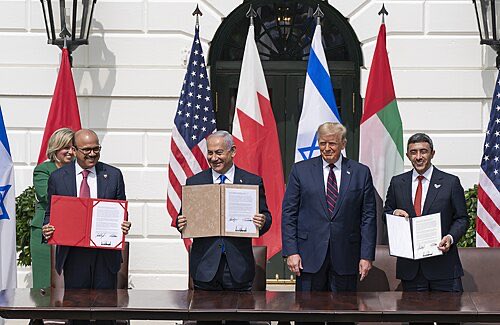
UPSC NOTES tweet media
English
3
12
74
15.6K
Ketan
Ketan@Ketanomy·
UPSC calls CSAT "matriculation level" the way Sherlock Holmes calls his deductions "elementary"😅
English
10
25
542
14.1K
UPSC NOTES
UPSC NOTES@UPSC_Notes·
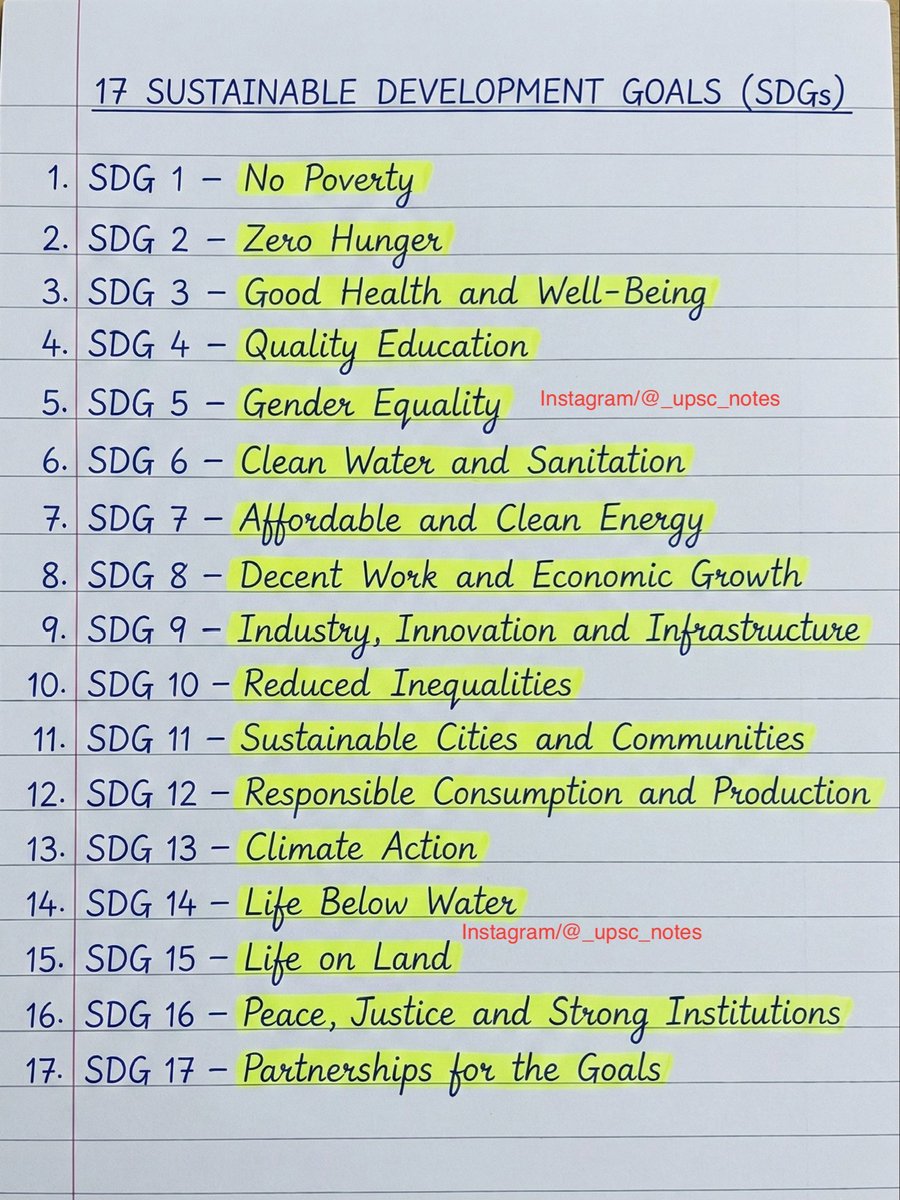
✅ 17 Sustainable Development Goals (SDGs) :-
UPSC NOTES tweet media
English
4
86
583
13.2K
UPSC NOTES
UPSC NOTES@UPSC_Notes·
Your cousin may have lied to you and secretly prepared for the UPSC exam. It is not as simple as you are saying. Without basic understanding, one cannot solve Prelims questions. There is a threshold of knowledge; beyond that, it becomes a neck-to-neck competition. It is not necessary that someone who works much harder will clear the exam. On the other hand, a person with a strong basic command and logical understanding of UPSC PYQs can easily clear the cutoff. But yes, good static knowledge is necessary. Ye Exam aisa hai ki isme tukka Nahi lagta boss.
English
0
0
4
311
Himanshu Singh
Himanshu Singh@Himanshu_3108·
@UPSC_Notes hai na?? my maternal cousin who isn't even an aspirant and works in IT..sat in the 2024 pre just bcs some of his college friends were doing upsc preparation from Delhi. he cleared that pre with ease..even scored extremely well in CSAT. though he could't clear mains stage!
English
2
0
12
2.2K
UPSC NOTES
UPSC NOTES@UPSC_Notes·
Hit me with the craziest UPSC EXAM facts you know.
UPSC NOTES tweet media
English
19
5
124
127K
UPSC NOTES đã retweet
x/CheGuevara
x/CheGuevara@Che_Guevara_08·
There is cascading effect to deteriorated the chances of Hindi aspirant from primary education to till UPSC Preparation. They have always a inferiority complex,its not they hv not ability but unnecessary pressure, biasness and resource crunch are the biggest challenges for them. Hindi medium students often encounter an educational environment where English is implicitly or explicitly privileged. This creates a subtle but persistent sense of inferiority, which over time becomes internalized.By the time these students reach higher education,many are already navigating not just academic challenges, but also a crisis of confidence. The problem deepens in the context of UPSC preparation.A significant proportion of Hindi medium aspirants come from humanities or arts backgrounds,often shaped by rote-based schooling rather than skill-oriented or analytical training.Unlike many English medium candidates who may have had early exposure to diverse reading materials, critical thinking exercises, and digital resources, Hindi medium students frequently begin their serious preparation almost from scratch.This creates an uneven starting line. As they engage with the UPSC syllabus,the structural tilt becomes more visible.The availability of high-quality study material,standard reference books,test series,and even mentorship is disproportionately skewed toward English. Translation gaps further complicate comprehension,often distorting nuanced concepts.The Civil Services Aptitude Test (CSAT),with its emphasis on comprehension and logical reasoning in English, becomes an additional hurdle rather than a neutral screening tool. At the personality test stage, the disadvantage takes on a more subtle but equally significant form.Language fluency, articulation, and cultural capital- often associated with English-speaking backgrounds-can influence perception, even unintentionally.As a result,Hindi medium aspirants may find themselves struggling not just to express their ideas,but to be perceived on equal footing. Thus,at every stage- prelims,mains,and interview-there are structural and psychological barriers that cumulatively slow down the progress of Hindi medium candidates. They are not eliminated from the race outright, but are often made to run under heavier constraints, leading to a persistent lag. Addressing this issue requires more than individual effort; it calls for systemic reform- equitable access to resources, better translation mechanisms, inclusive pedagogy,and a conscious effort to neutralize linguistic bias. Until then, the journey of Hindi medium aspirants will continue to be defined not just by competition, but by the need to constantly overcome structural inequities. |UPSC|
English
0
1
1
1.7K
Ccheena
Ccheena@CheenaInd·
@UPSC_Notes In the end, whatever they wrote in ethics paper is all false and all l00t the country
English
1
0
3
615
हिमांशु पंत
@UPSC_Notes For years you prepare in a circle, you learn no skill, nothing new just round and round and when you exhaust all your attempts you are left with nothing peak age is gone employment age is gone no zeal to learn something new. 💀
English
1
0
13
2.1K
UPSC NOTES
UPSC NOTES@UPSC_Notes·
@sHUBHam99289 Providing quality foundation course is a tough job, everybody can’t do it.
English
0
0
2
2.3K
Shubham Gupta
Shubham Gupta@sHUBHam99289·
@UPSC_Notes Apart from two coaching everyone else is ripping aspirants off !
English
6
0
5
2.6K