zero Ω

675 posts

zero Ω banner
zero Ω

zero Ω

@zeroomega_

The Most Trusted Web3 Marketing Agency Since 2018 📈🚀

Tham gia Mart 2022
39 Đang theo dõi2.4K Người theo dõi
zero Ω đã retweet
dom woods ♎️
dom woods ♎️@domwoods·
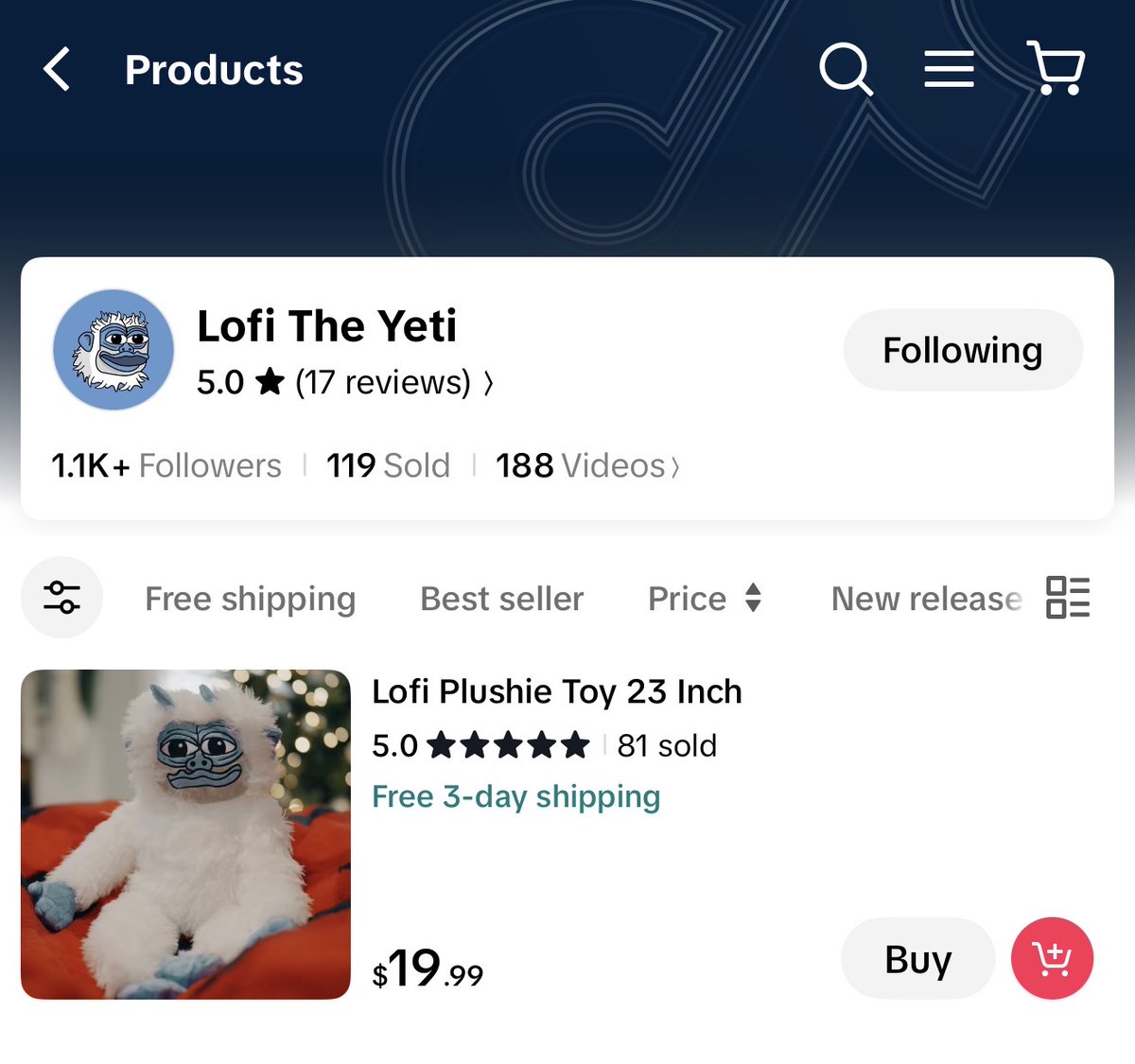
GM. A quick update for the ones paying attention ⤵️ We started pushing @lofitheyeti plushies on TikTok No big announcement. No promo campaign. Just testing. And they've been moving… fast People outside the 𝕏 timeline are finding Lofi That's how you know it's real. When people who've never touched crypto want your brand on their shelf We've also been in talks with the FuckJerry team on a collab that would put Lofi in front of a completely different audience No hype. Just building + shipping as always 🥶
dom woods ♎️ tweet mediadom woods ♎️ tweet media
English
34
22
63
3.9K
zero Ω
zero Ω@zeroomega_·
Google Just Pushed Open Models Forward Again Gemma 4 is not just any model release. It's a shift in where intelligence can run. ➤ Open weights under Apache 2.0 ➤ Designed for local and sovereign deployments ➤ Built for reasoning and agent workflows The key change is distribution. Frontier level capabilities are no longer confined to closed APIs. They are moving directly onto hardware you control. That matters for two reasons. 1. Control → data stays local → infrastructure is owned → no dependency on external providers 2. Scale Open models expand faster than closed systems. More developers More experimentation More iteration at the edge This is how capabilities propagate. From centralized labs → to global developer networks. The deeper implication is structural. AI is splitting into two layers: ➤ Closed models competing at the frontier ➤ Open models competing on distribution and integration And over time, distribution tends to win. Because the model that runs everywhere becomes the default layer intelligence is built on.
Google@Google

We just released Gemma 4 — our most intelligent open models to date. Built from the same world-class research as Gemini 3, Gemma 4 brings breakthrough intelligence directly to your own hardware for advanced reasoning and agentic workflows. Released under a commercially permissive Apache 2.0 license so anyone can build powerful AI tools. 🧵↓

English
1
0
5
209
zero Ω
zero Ω@zeroomega_·
$SUI just expanded its surface area. Now live on Solana via Sunrise. ➤ SUI assets now accessible within Solana DeFi ➤ Cross-chain capital becomes more fluid ➤ Barriers between ecosystems continue to compress The trend is clear. Chains are no longer competing in isolation. They are becoming interconnected liquidity layers. And in that environment, value accrues to assets that can move seamlessly across them.
Solana@solana

BREAKING: $SUI from @SuiNetwork is now live on Solana via @Sunrise_DeFi

English
2
0
9
651
zero Ω
zero Ω@zeroomega_·
@bitcodyy Bidders are lower. Smart money is waiting for the historical best average cost basis
English
0
0
0
26
zero Ω
zero Ω@zeroomega_·
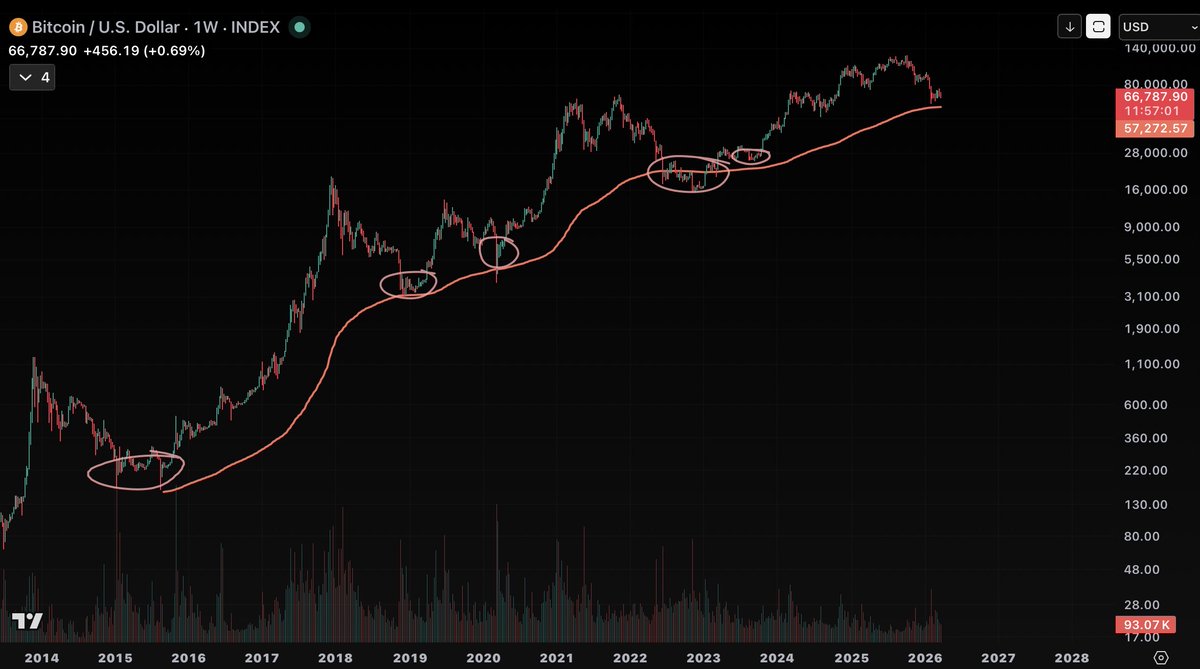
Bitcoin Is Starting To Lose Structure Again Key support zones are getting tested with weakening follow-through. ➤ $BTC trading near $66.7K ➤ Sitting inside new buyer cost basis range ($60K–$70K) ➤ Below this range opens a structural shift in positioning Onchain data shows accumulation here, but the profile is thinner than prior cycles. Thin clusters tend to fail faster under pressure. From a higher timeframe perspective: → 300W MA sits near $57.2K → Historically a major support zone across cycles If current demand fails to hold, that becomes the next logical magnet. The setup is not about immediate breakdown. It is about fragile support meeting weakening structure. When both align, downside tends to accelerate into deeper liquidity zones.
zero Ω tweet mediazero Ω tweet media
English
2
0
8
506
₿itcody 📈
₿itcody 📈@bitcodyy·
In The Week Ahead 📅 Tue – Consumer Confidence Wed – ADP + ISM Manufacturing PMI Thu – Jobless Claims Fri – Nonfarm Payrolls (Good Friday) Liberation Day turns 1. Markets brace for Tariff 2.0.
English
1
0
7
105
zero Ω
zero Ω@zeroomega_·
Crypto Just Entered The U.S. Housing Market Fannie Mae, backing ~$4T in mortgages, is now allowing crypto-backed home loans. ➤ $BTC and $USDC can be pledged as collateral ➤ No need to liquidate crypto holdings ➤ Mortgage terms remain standard ➤ Liquidation only triggered after extended default For the first time, digital assets are being integrated into real estate credit markets. That matters because housing is one of the largest pools of capital in the global economy. → crypto becomes productive collateral → long-term holders avoid taxable events → capital efficiency increases across portfolios Historically, crypto sat outside traditional finance. Now it is being pulled into core financial infrastructure. The deeper shift is collateral recognition. Once an asset is accepted in lending markets, it transitions from speculation to financial primitive. This is how integration happens. Through collateral frameworks that allow capital to move between systems. And once that bridge is built, it tends to expand.
zero Ω tweet media
Coinbase 🛡️@coinbase

Get your house and keep your crypto. Crypto-backed mortgages are here - increasing access to homeownership for millions of Americans. Buy a home without converting your portfolio by using BTC or USDC as collateral for your down payment. Offered by Better, powered by Coinbase.

English
1
0
4
181
eye zen hour 🥶
eye zen hour 🥶@eyezenhour·
petro-dollar 2.0 timeline: > destroy Nordstream in stealth > unravel European energy systems > double exports of LNG to Europe > aid implosion of Syria / Assad > isolate Iran as final pillar in the Gulf > capture Maduro and hidden $BTC > corner Venezuela's oil market > acquire total control of Western petrol > work with Israel to attack Iran's energy > force closure of Stair of Hormuz > global energy and oil demand skyrockets > U.S. steps in as only accessible supplier > prepare installation of new Iranian figurehead > shadow work to make OPEC irrelevant > petro-dollar upgrades to petro + LNG-dollar > new ENERGY-dollar boosts U.S. $ demand > Israel's energy export revenues hit $4B per year > cripple global energy infra to stall China's AI advance > signal to Russia what's next for their energy > negotiate peace deal with Ukraine-Russia > Trump leverage with Xi goes up 5x > accept local energy inflation temporarily > dominate AI race which is dependent on energy > achieve ASI and AI scale to win AI wars >>> control global energy corridors and supply control monetary system thanks to ENERGY-dollar control AI thanks to energy + moneytary dominance the U.S. empire turns 250 years old on July 4th 🇺🇸 looks like it just added at least another 250 years to it's future tenure
10Δ@_10delta_

3 weeks ago I argued the US goal in Iran is to seize the global oil spigot. Venezuela in January -> Iran in February. Neutralize every supply channel outside the dollar system within 90 days. Achieve a compliant successor government and complete energy dominance. The oil thesis was the obvious layer. However, when you zoom out & view the last four years as a single sequence rather than isolated geopolitical events, the architecture of the grander US plan becomes visible. 1st was Europe, which laid the groundwork. The Ukraine conflict provided the justification for sanctions that collapsed Russian pipeline gas from 150 billion cubic meters to 40. Then Nordstream was destroyed, which rewired the entire European energy system permanently. The US went from supplying 28% of Europe's LNG in 2021 to 58% by 2025, exporting a record 111 million MTs, the 1st country in history to break 100 MT. Europe was transformed from a customer with options into a captive market now purchasing its survival in USD. 2nd was Syria. The fall of Assad severed the critical node connecting China's Belt & Road Initiative to the Mediterranean. The trilateral railway linking Iran, Iraq & Syria, designed to bypass Western maritime chokepoints, was completely destroyed. This isolated Iran geographically & cleared the path for what came next. 3rd was Venezuela. In January the US effectively took control of the world's largest heavy crude reserves. The US Gulf Coast has the most advanced refining complex on earth, specifically built for heavy sour crude. Phillips 66, Valero & the rest are now positioned to process hundreds of thousands of barrels of Venezuelan crude daily. The US captured a massive strategic reserve & solidified its position as the dominant exporter of refined petroleum products, an industry worth $110 billion in 2025 alone. Venezuela & Iran were the two major oil supply channels that existed outside the dollar system. Both produce heavy crude sold primarily to China & evaded US financial supervision. Both now being neutralized within 90 days, which leads us to.. 4th is Iran & the Middle East energy shock. Israel struck Iran's South Pars gas field, the world's largest natural gas reservoir. Iran retaliated against Qatar's Ras Laffan, the single largest LNG facility on earth, responsible for a fifth of global supply. QatarEnergy's own assessment is that 17% of export capacity is gone and recovery will take up to 5 years. The Strait of Hormuz is closed. European gas prices spiked 70%. Asian spot prices doubled. The only remaining scaled supplier? The United States. If Iran falls & a successor government is installed that the US controls or influences (the Delcy model described weeks ago) then roughly 40 to 45 million barrels per day of global production out of 103 million is effectively under US control. OPEC becomes irrelevant because the US coalition is now the marginal producer. Now add the gas dimension & it goes beyond oil. This war is solidifying the petrodollar system as it evolves into a hybrid petro/LNG-dollar. The old system was built on Saudi crude priced in USD. The new system is built on American crude plus American gas from the Gulf Coast, with no alternative supplier of comparable scale. The dependency is deeper because LNG infrastructure requires long term contracts & regasification terminals that lock buyers into supply relationships for decades. Europe & the Pacific allies (Japan, South Korea, Taiwan, etc.) cannot pivot away as there is nowhere left to pivot to. They're now locked into the US energy system. The market confirms this. DXY went from 96 to 101. Gold down ~20% from its January all time high. Bitcoin down 20% on the year. Brent above $100. European & Asian institutions are liquidating precious metals and crypto to buy dollars because they need dollars to buy the only remaining scaled energy supply. The world is selling its gold to buy American energy in American currency. The dollar is now being weaponized through energy dependency. The structural repricing is happening regardless of how the conflict resolves. But the US grand strategy goes deeper.. Artificial intelligence is a physical industry. It runs on power and chips. Data centers require massive uninterrupted baseload electricity, primarily provided by natural gas. Semiconductor fabrication requires helium & rare earths. By choking the Strait of Hormuz & crippling Middle Eastern LNG & helium production, the US is systematically degrading China's ability to power its data centers & fabricate semiconductors at scale. The US is energy self sufficient, especially with newly captured Venezuelan reserves & expanding Gulf Coast capacity running on domestic gas. On the other hand, China is import dependent & every joule it imports effectively now transits chokepoints the US Navy controls.. Iran was the Belt & Road's overland energy bypass, the corridor that allowed China to mitigate the Malacca Trap. With Iran neutralized that corridor is severed. China faces a world where its compute infrastructure competes for scraps on a depleted global LNG market, while American data centers run at full capacity on domestic energy. Russia is next in the sequence. A post-war Iran reopening under US influence competes directly with Russia for the same refineries in China & India at lower cost. Iran's production costs are lower. Russia loses its last structural advantage in heavy crude & its economic lifeline. Additionally, under the Iran war cover, Ukraine has been opportunistically destroying Russian energy infrastructure & all signs point towards Russia being at the end of the line. The message from Washington becomes very simple: we dismantled two regimes in three months, your economy is about to get crushed, sign the Ukraine deal. Then Trump sits down with Xi holding every card. Complete energy dominance. The hybrid petro/LNG-dollar fortified, Iran cleared, Russia cornered, & China facing the Malacca Trap fully closed with no remaining energy bypass. Israel & the GCC are absorbing the kinetic cost of a conflict whose primary beneficiary, counter to the mainstream narrative, is actually America (First). Qatar offline for 5 years reprices the entire global gas market in favor of US exporters for the remainder of the decade. The Gulf states face years of rebuilding. Europe faces its 2nd energy crisis in four years. Sure, the average American might face temporary moderate inflation & higher gas prices. But if you are the architect of the US empire & you view the rise of China & Chinese ASI as an existential winner takes all scenario, the collateral damage is acceptable cost. Whoever controls the energy corridors controls the monetary system. Whoever controls the monetary system & the energy supply simultaneously controls the compute infrastructure that determines which civilization builds ASI first. The US is seizing all 3.

English
66
201
1.5K
188.9K
₿itcody 📈
₿itcody 📈@bitcodyy·
$BTC has been sitting around ~$70.5K since early February. Half the timeline says lower. The other half says higher. That's usually what range conditions look like. Meanwhile: - War headlines - Morgan Stanley spot ETF received official listing notification from NYSE - Coinbase rejects Senate CLARITY Act stablecoin compromise And Bitcoin is just... holding. Structure: - Above Hypertrend (no full confirmation yet) - Above 21 MA - Below 50 / 100 / 200 MA - Sitting above local POC Momentum: - Low volume - Weak follow through - StochastiX mid-range = chop Translation? No urgency, panic, or expansion yet. Just compression. The next high volume node sits just above the 200 MA. Break above the 50 MA with volume and the 100 comes into play. Then the 200. Then the next volume node. Reject and the range continues, or downside rotation to the next leg lower. Right now, price is just chopping up the impatient. When Bitcoin sits still during chaos, you should probably pay attention.
₿itcody 📈 tweet media
English
9
4
22
840
zero Ω
zero Ω@zeroomega_·
Google Just Attacked One Of The Biggest Bottlenecks In AI Memory Their new compression method, TurboQuant, changes the economics of running large models. ➤ ~6x reduction in KV-cache memory ➤ Up to ~8x speed improvement ➤ Zero accuracy loss That combination is rare. Most optimizations force a tradeoff between speed, cost, and performance. This removes it. The key insight is where the constraint actually sits. Training gets the attention. Inference carries the cost. Every time a model runs, it relies on the KV cache, a memory layer that stores context so the model can “think” efficiently. That cache becomes a bottleneck at scale. → more context = more memory → more memory = higher cost → higher cost = slower adoption TurboQuant compresses that layer without degrading output. The implications are structural. ➤ Larger context windows without exponential cost ➤ Faster inference across production systems ➤ Lower compute requirements per query ➤ More efficient vector search at scale This is an infrastructure unlock. As compression improves, the constraint shifts again. From compute → to distribution From hardware → to application layer The pattern is consistent. Every efficiency gain expands the surface area of AI adoption. And when constraints fall, usage compounds.
Google Research@GoogleResearch

Introducing TurboQuant: Our new compression algorithm that reduces LLM key-value cache memory by at least 6x and delivers up to 8x speedup, all with zero accuracy loss, redefining AI efficiency. Read the blog to learn how it achieves these results: goo.gle/4bsq2qI

English
3
1
7
207
₿itcody 📈
₿itcody 📈@bitcodyy·
Tether just signed a Big Four firm for its first full independent audit. $184B market cap. 550M users. Biggest inaugural audit in financial market history. Meanwhile Circle $CRCL tanks 18% on CLARITY Act yield news. Wild day for stablecoins.
English
3
0
11
313
zero Ω
zero Ω@zeroomega_·
MoonPay just standardized something the agent economy was missing. The wallet layer. Open Wallet Standard (OWS) is the infrastructure that allows AI agents to actually hold and use capital. Until now, every agent system had the same flaw. ➤ Keys stored in .env files ➤ Fragmented wallet implementations across chains ➤ No shared interface for signing or storage That does not scale to autonomous systems. OWS from @moonpay changes that. ➤ One encrypted vault ➤ One interface across chains ➤ Local-first signing with no key exposure ➤ Designed specifically for agent execution environments This sits directly beneath emerging payment rails. → x402 → MPP → agent-to-agent transactions Those define how agents pay. OWS defines where the capital lives and how it is secured. That distinction matters. Because without a standardized wallet layer, there is no consistent way for agents to operate economically. The deeper shift is architectural. AI agents are moving: ➤ From cloud → local / VPS ➤ From stateless → persistent ➤ From tools → economic actors In that environment, latency, custody, and interoperability become constraints. Local-first wallets solve all three. This is the foundation for machine-native finance. Agents that can hold assets, sign transactions, and interact across chains without human involvement. The stack is forming in real time: → intelligence → coordination → payments → custody OWS fills the last gap. And once agents can securely control capital, they stop being tools. They become participants in the economy.
MoonPay 🟣@moonpay

x.com/i/article/2036…

English
1
0
6
181
zero Ω
zero Ω@zeroomega_·
“CT is dead” is a sentiment you see every cycle. It usually shows up at the same time. When price compresses When engagement drops When easy narratives stop working What people are actually reacting to is a shift in incentive structure. In bull markets: ➤ Noise gets rewarded ➤ Speed beats accuracy ➤ Distribution > insight In bear or transition phases: ➤ Signal starts to matter again ➤ Low quality engagement gets filtered out ➤ Audiences become more selective And like any market, when low quality supply exits, what remains has more value. At the same time, the content layer itself is evolving. → AI is compressing content creation → Distribution is becoming more competitive → Original thought is becoming the scarce asset “CT is dead” is not a death signal. It is a quality reset. And those phases are where the next set of high signal accounts are built.
eye zen hour 🥶@eyezenhour

What did you expect? You follow trash accounts engagement farming with "What's the next 100x ticker" who post 5x a week You follow "KOLs" who can barely form an opinion of their own but are great at promoting scams And then you come on here to cry and say CT is so different now wah wah wahhh The issues isn't them It's you Learn to follow accounts that actually provide signal Not just more noise and regurgitate nonsense Have seen a few dozen posts like this over the last week and it's honestly just getting comical There's no denying that @nikitabier and the 𝕏 guys changed the algo and CT posts are deprioritized or different than normal Wait... Maybe that's a good thing? Maybe now you have more opportunity to find more high caliber content creators or people who apply critical thinking when sharing content here Again: if your timeline is pure doom and gloom and you feel like CT is horrible, that's a you problem It's normal in a bear market for the tourists to leave It's normal in a bear market for the scammer to leave It's normal in a bear market for some traders to fade @shivst3r said it perfectly here: - AI is about to swallow everything an run on blockchain rails and you're bearish? - Institutions are adopting crypto and stablecoins like never before and you're bearish? You need to make a change Be the change you want to see on the timeline Going to follow up with a list of high quality accounts that you can rely on for solid insights

English
1
0
7
179
zero Ω
zero Ω@zeroomega_·
@bitcodyy The signs are starting to show
English
0
0
0
42
₿itcody 📈
₿itcody 📈@bitcodyy·
Every cycle, CT "dies." And every cycle, it turns out to be one of the best signals the market gives you. 2018: CT was dead. BTC dropped from $20K to $3K. Everyone logged off. Then it ran to $69K. 2022: CT was dead again. LUNA collapsed. FTX imploded. $16K BTC. Then it ran to $126K. The pattern isn't random. CT goes silent when retail is underwater and disengaged. That silence is data. It means you're close to max pain. Right now: • AAII bearish sentiment near 2025 highs • CT engagement dropping • "Is CT dead?" actively trending • New onboarding slowed to a crawl If you've seen this movie before, you know how it ends. CT doesn't die. It hibernates. The people who stay are the ones who get paid on the next leg up.
English
3
1
13
839
zero Ω
zero Ω@zeroomega_·
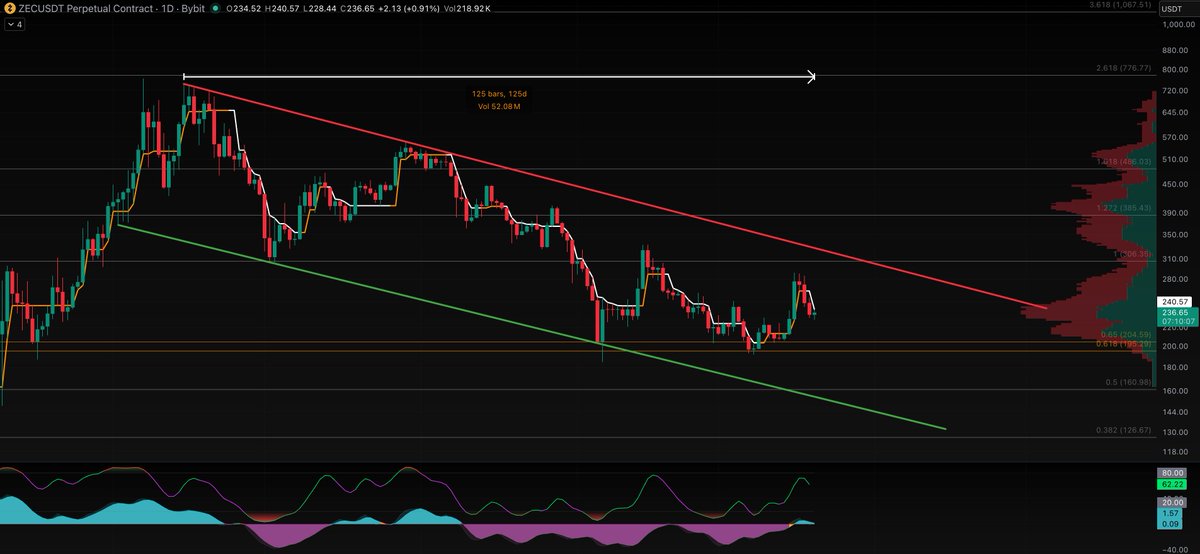
$ZEC is starting to compress at a key structural level. While price has trended down for ~125 days, underlying signals are beginning to shift. ➤ Price sitting at a local POC with acceptance ➤ Tagged the macro golden pocket during recent downside ➤ Bullish momentum divergence building over the past month ➤ StochastiX spent the majority of 2026 in oversold conditions This is how basing structures typically form. Not through immediate reversals, but through exhaustion and compression at value. The key level remains clear. → HyperTrend at ~$240 Reclaiming that level with acceptance shifts structure and opens the path for expansion. Failing to do so likely extends the range while momentum continues resetting. Onchain data is showing increasing commitment to privacy infrastructure. If price begins to align with that trend, this becomes less about narrative and more about repricing a structurally strengthening network.
zero Ω tweet media
eye zen hour 🥶@eyezenhour

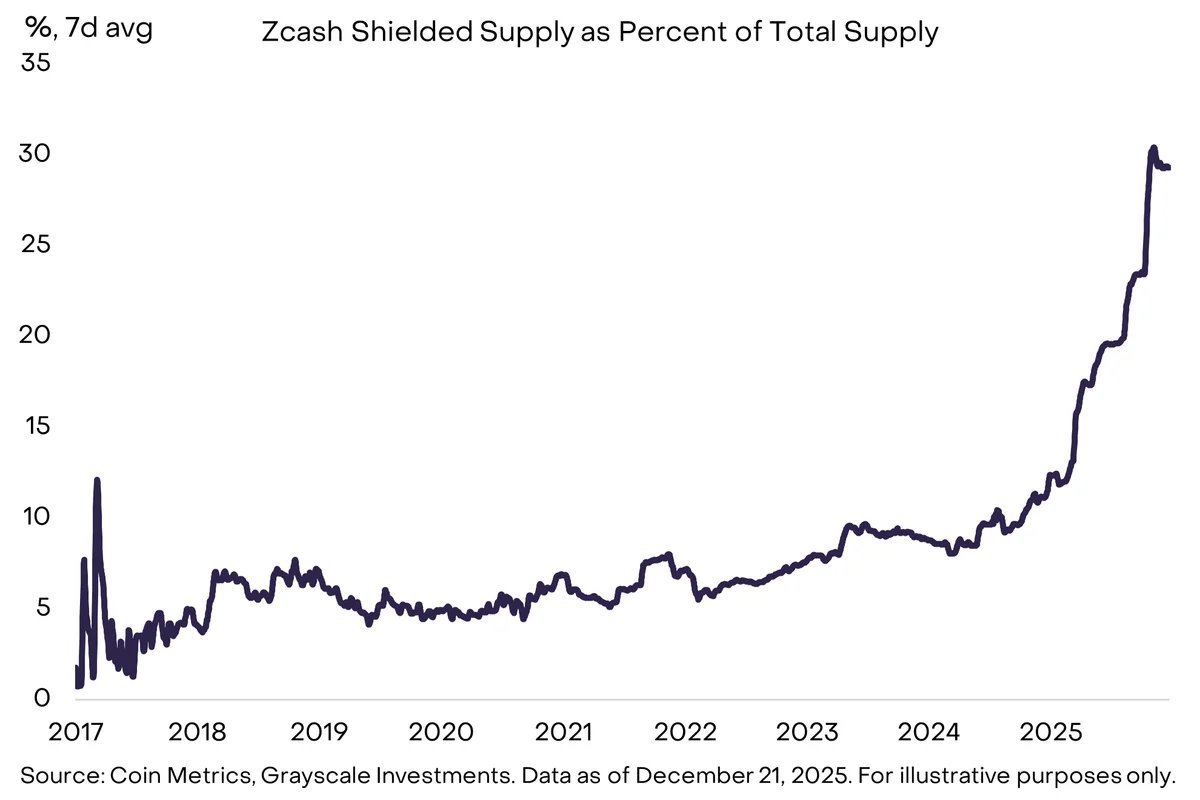
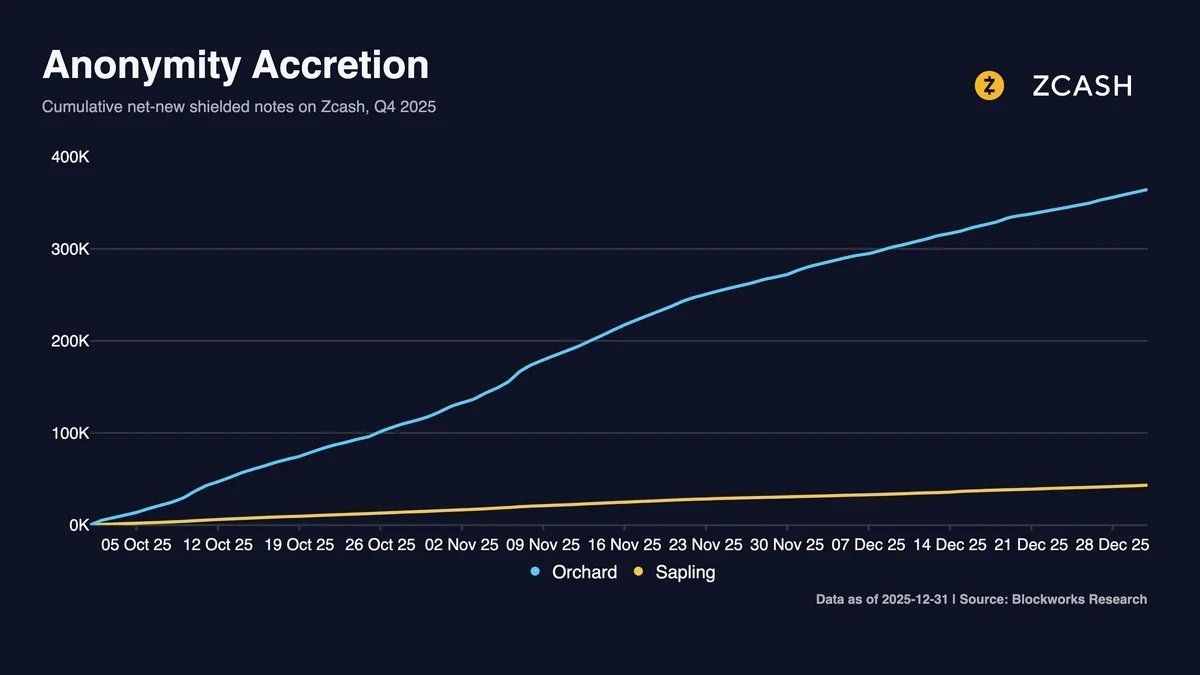
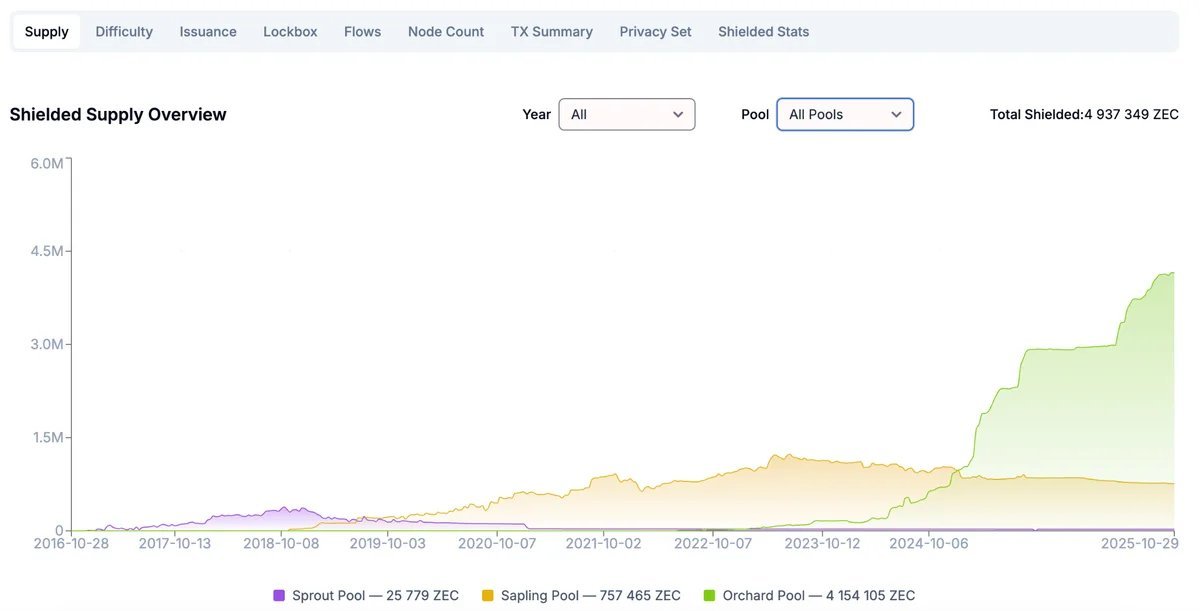
Privacy onchain isn't a narrative or a meta... @Zcash is proving it ⤵️ Over the last five years, $ZEC held in shielded pools has steadily increased More of the asset supply is moving into the network’s privacy layer rather than remaining in transparent circulation By the end of Q4 2025: ➭ 5,067,532 ZEC were held in shielded pools ➭ Equal to 30.8% of circulating supply A larger shielded pool expands the anonymity set and strengthens privacy guarantees for every participant using the system Q4 data showed further expansion ➭ Shielded transactions increased 224% QoQ ➭ The anonymity set grew by 407,686 notes Those metrics suggest privacy usage is becoming more embedded in the network rather than remaining a niche feature Product improvements may also be contributing @zodl_co, Zcash’s mobile self-custody wallet, is making shielded transactions easier to access for everyday users. Early signals include 25k+ installs, strong user ratings, and integrated swaps and off-ramps Governance is evolving as well, with token holder voting becoming more central to protocol decision-making Over time, stronger coordination frameworks can improve alignment between developers, users, and long-term capital Bottom line: The important signal is the multi-year growth in $ZEC held inside shielded pools Price action will follow. Cypherpunk Manifesto on top

English
1
0
6
291
eye zen hour 🥶
eye zen hour 🥶@eyezenhour·
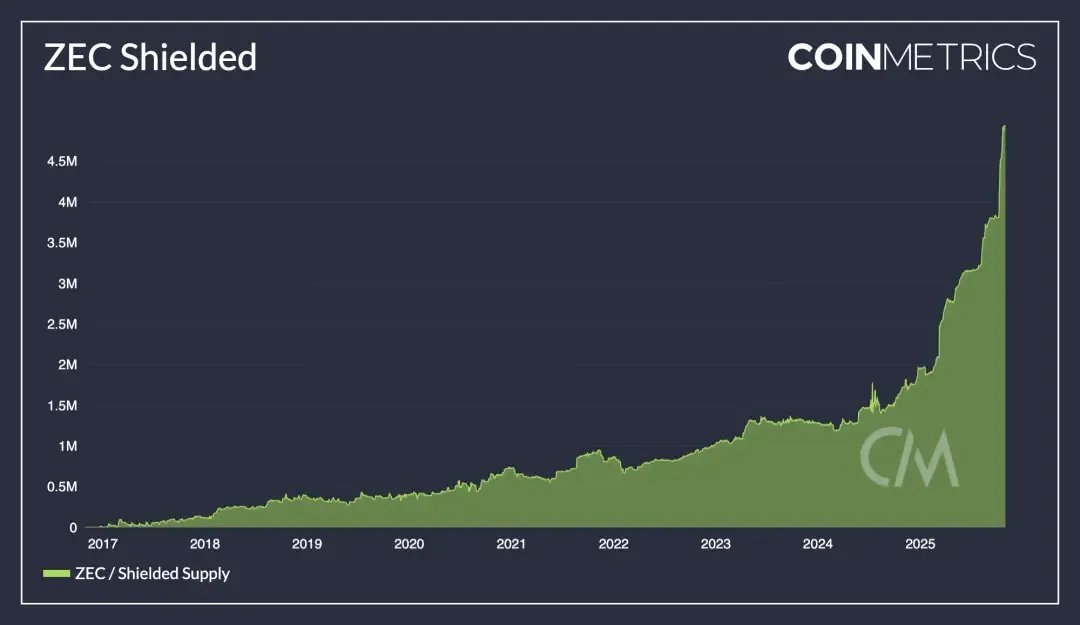
Privacy onchain isn't a narrative or a meta... @Zcash is proving it ⤵️ Over the last five years, $ZEC held in shielded pools has steadily increased More of the asset supply is moving into the network’s privacy layer rather than remaining in transparent circulation By the end of Q4 2025: ➭ 5,067,532 ZEC were held in shielded pools ➭ Equal to 30.8% of circulating supply A larger shielded pool expands the anonymity set and strengthens privacy guarantees for every participant using the system Q4 data showed further expansion ➭ Shielded transactions increased 224% QoQ ➭ The anonymity set grew by 407,686 notes Those metrics suggest privacy usage is becoming more embedded in the network rather than remaining a niche feature Product improvements may also be contributing @zodl_co, Zcash’s mobile self-custody wallet, is making shielded transactions easier to access for everyday users. Early signals include 25k+ installs, strong user ratings, and integrated swaps and off-ramps Governance is evolving as well, with token holder voting becoming more central to protocol decision-making Over time, stronger coordination frameworks can improve alignment between developers, users, and long-term capital Bottom line: The important signal is the multi-year growth in $ZEC held inside shielded pools Price action will follow. Cypherpunk Manifesto on top
eye zen hour 🥶 tweet mediaeye zen hour 🥶 tweet mediaeye zen hour 🥶 tweet mediaeye zen hour 🥶 tweet media
eye zen hour 🥶@eyezenhour

$ZEC REBOUNDS STRONGLY 👀 ➭ Golden pocket support held well (0.618–0.65) ➭ HyperTrend reclaimed ($239) ➭ Pushed off 50MA with thruster boosters ($233) ➭ 100 / 200 MA trending upward ➭ StochastiX resetting from oversold Trend structure stabilizing after the 2.618 extension cycle move 21MA (~$294) is the next expansion trigger Full breakdown on what I'm eyeing for Zcash here ⤵️ t.me/eyezenhouralpha

English
10
17
115
19.5K
zero Ω
zero Ω@zeroomega_·
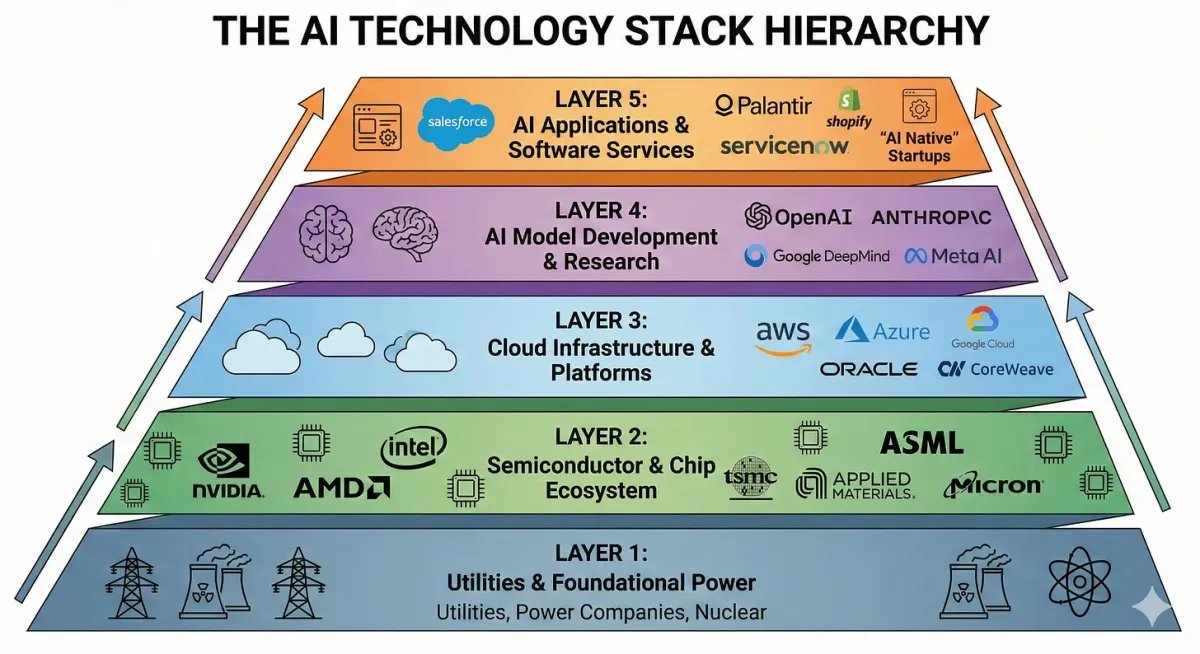
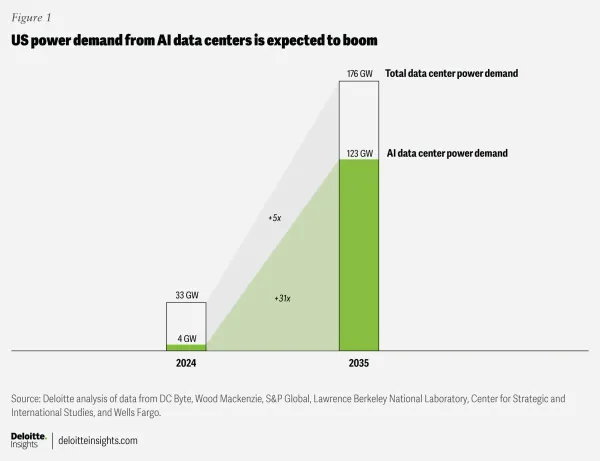
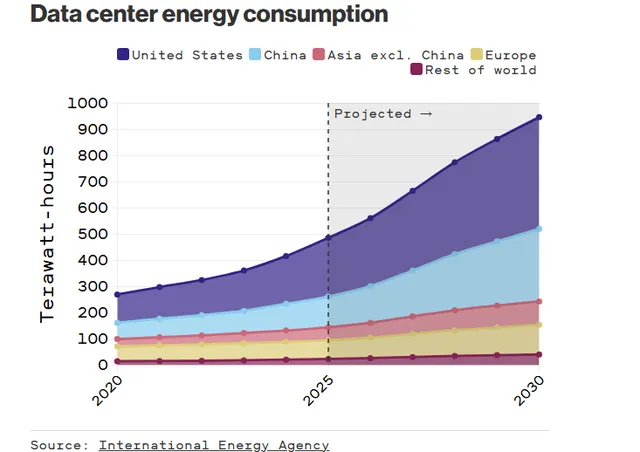
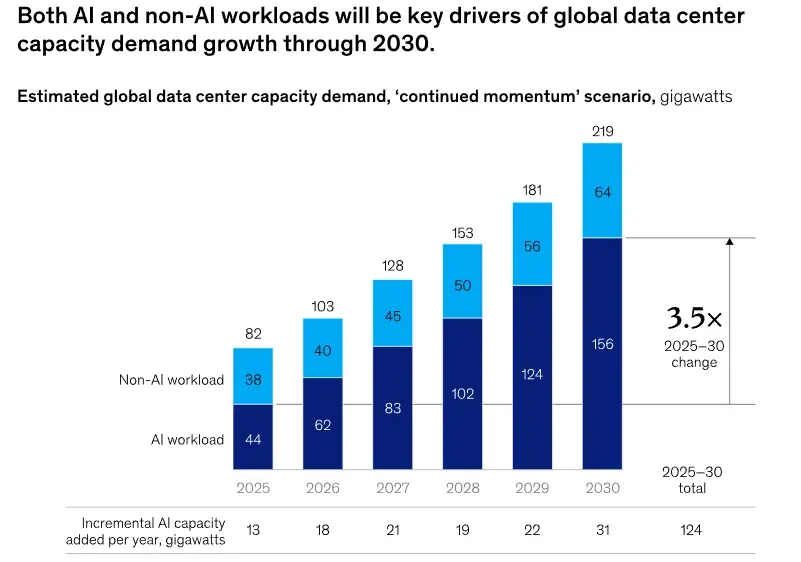
Some Of You Missed This Most of the market focuses on apps, copilots, and model releases. That is where attention sits. But long-term adoption is constrained by something much more basic: physical capacity. Jensen Huang’s five-layer framework makes that clear. The AI stack: ➭ Energy ➭ Chips ➭ Infrastructure ➭ Models ➭ Applications The layer that matters most for scale is infrastructure. That is the bridge between compute and real-world deployment. AI runs on data centers, cooling systems, networking, land, steel, and grid access. Every new model and every successful application pushes demand lower into the stack. That means: → More GPU clusters → More power demand → More cooling capacity → More physical buildout This is why AI should not be framed purely as a software cycle. It is an infrastructure cycle. And infrastructure cycles determine how far a technology can actually scale. The model layer gets the headlines. The buildout layer determines whether adoption can compound. If the world wants AI at global scale, it needs to build: ➭ More energy capacity ➭ More data centers ➭ More transmission and grid support ➭ More industrial systems around compute📷 That is where the real constraint sits. And that is why the long-term winners will not come only from model innovation, but also from the layers enabling intelligence to operate at scale. TL;DR AI is not just a model race. It is a physical buildout story. The infrastructure layer is what turns AI from a product into essential economic infrastructure.
zero Ω tweet mediazero Ω tweet mediazero Ω tweet mediazero Ω tweet media
NVIDIA@nvidia

x.com/i/article/2027…

English
4
0
8
211
eye zen hour 🥶
eye zen hour 🥶@eyezenhour·
A HUGE Inflection Point for DeFi Just Arrived ⤵️ Bitcoin is a $1.4T+ asset But less than 0.37% of it is used in DeFi The constraint has never been demand It has been trust Unlocking Bitcoin liquidity has historically required intermediaries → Wrapped assets (taxable events) → Custodians (trust issues) → Opaque balance sheets (regulatory issues) The old model risks prevented us from tapping deep into $BTC liquidity And those risks have already been realized across multiple cycles Thankfully, a new approach has emerged: Hashi A novel developer primitive built on @SuiNetwork Hashi enables native Bitcoin to be used as collateral in smart contracts → No wrapping → No synthetic assets → No centralized custody in the core design Bitcoin remains on its native chain Collateral is verified across both Bitcoin and Sui Execution is enforced by smart contracts The system reduces trust to two components: ➭ The Sui validator set ➭ The governing smart contract All collateral and loan conditions remain observable while liquidations and collateral management are handled programmatically The initial use case is straightforward BTC-backed lending Bitcoin can function as a collateral asset without being sold or transferred to a centralized entity This allows liquidity access without altering the underlying position and potentially creating a taxable event with $cbBTC or $WBTC Hashi is a brilliant primitive layer that ultimately allows other systems to build on top of it Hashi is launching on Devnet with early institutional alignment across custody, infrastructure, and capital markets Institutional partners that Sui has brought in like: → @Ledger@BitGo@FalconXGlobal@Bullish@ereborbank So much $BTC is stagnant in ETFs or locked in wallets that are not kinetic Hashi introduces a model where native $BTC can be used as collateral through smart contracts, reducing trust to just validators and code. Brilliant The ability to unlock a TRILLION dollars in Bitcoin's value is a massive opportunity for DeFi It's great to see Sui building the rails to support the future of finance and Bitcoin!
eye zen hour 🥶 tweet media
Sui@SuiNetwork

Introducing Hashi: a new era of Bitcoin finance on Sui. Bitcoin's market cap exceeds $1 trillion. < 0.5% of it is used in DeFi. Hashi is here to change that, with commitments from industry leaders including BitGo, Bullish, Erebor Bank, FalconX, Fordefi, Ledger, and more.

English
15
21
99
9.1K
zero Ω
zero Ω@zeroomega_·
Do you understand what Polymarket just did? They turned information into a live, tradable environment. “The Situation Room” is not just a bar. It is a physical interface for real time markets. ➤ Live X feeds ➤ Flight tracking ➤ Bloomberg terminals ➤ Polymarket odds updating in real time This is the convergence of news, data, and capital. For years, information was consumed passively. Read the headline Watch the segment Form an opinion Now information is immediately priced. → events become markets → narratives become probabilities → attention becomes capital allocation Polymarket is making that process visible in real time. A room where people don’t just watch events unfold. They trade the outcome of reality as it happens. The deeper shift is structural. Markets are becoming the primary interface for interpreting the world. Not media. Not analysts. Not institutions. Markets. If this model scales, “watching the news” becomes obsolete. You either understand the probabilities. Or you are trading against people who do.
Polymarket@Polymarket

We're excited to announce 'The Situation Room' by Polymarket is coming to Washington, D.C. The world's first bar dedicated to monitoring the situation. 🧵

English
4
0
11
339