AllThingsIntel

315 posts

AllThingsIntel banner
AllThingsIntel

AllThingsIntel

@AllThingsIntel

Software & Intelligence Engineer | Creator of Apollo, the First Open Source In-Character Reasoning Model

All My Links → 加入时间 Kasım 2025
233 关注30 粉丝
置顶推文
AllThingsIntel
AllThingsIntel@AllThingsIntel·
🧵 1/2 Just launched: The first open-source reasoning model that fully thinks in-character 🧠 The entire reasoning process (not just responses) embodies the persona you provide through system prompts. This makes interactions more realistic and human-like. Uncensored and unbound.
English

1
0
2
3.5K
Sahil
Sahil@sahilypatel·
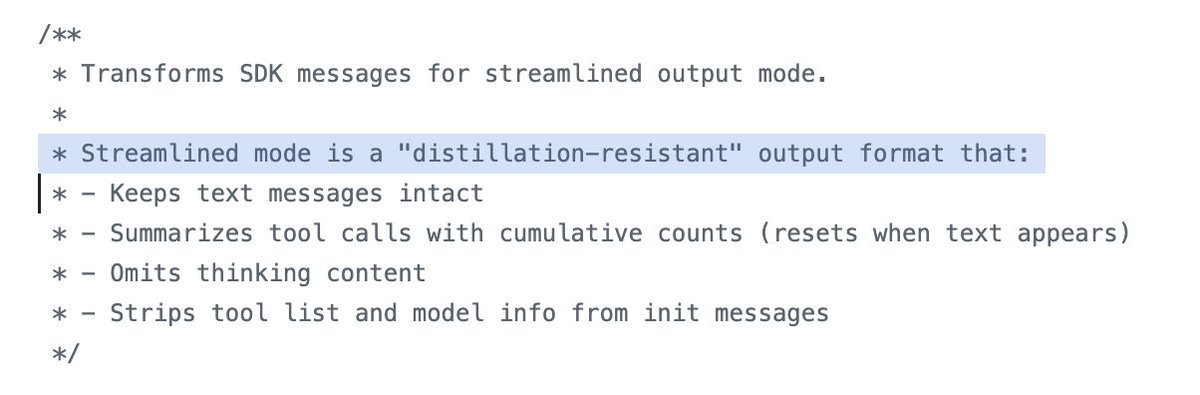
Anthropic built two anti-distillation systems into Claude Code to stop competitors from training on its data One injects fake tool calls into the model's output stream to corrupt any scraped training data Another strips all tool call details into vague summaries so competitors can't reconstruct what the agent actually did
Sahil tweet mediaSahil tweet media
Chaofan Shou@Fried_rice

Claude code source code has been leaked via a map file in their npm registry! Code: …a8527898604c1bbb12468b1581d95e.r2.dev/src.zip

English
12
16
370
36.2K
AllThingsIntel
AllThingsIntel@AllThingsIntel·
Anthropic would never intentionally sacrifice its reputation to solicit informal code reviews, especially when doing so wouldn’t meaningfully increase human review. The vast majority of scrutiny would come from people simply feeding the codebase into Claude Code or Codex themselves. The same community excitement could easily have been achieved by officially open-sourcing it after so long in private, without the reputational cost of an apparent leak.
Arvid Kahl@arvidkahl

Hot take: Anthropic leaked Claude Code intentionally to get a nerdosphere code review it would have never gotten if they had just open-sourced it.

English
0
0
0
28
AllThingsIntel
AllThingsIntel@AllThingsIntel·
To everyone mocking Anthropic over the Claude Code leak: LLMs are unlikely to make mistakes this basic and obvious. This was a human, either a slip-up or someone who thought it should be open source. And that person is definitely having a really hard time.
English
0
0
1
51
Angel 🌼
Angel 🌼@Angaisb_·
Mythos is so good at security that Claude Code source code got leaked
English
43
60
1.7K
45.4K
AllThingsIntel
AllThingsIntel@AllThingsIntel·
@championswimmer Well, they could just open source it properly then. The vast majority of reviewers would use Claude Code or Codex to review it anyway, so there’s not much gained from this leak.
English
0
0
1
749
AllThingsIntel
AllThingsIntel@AllThingsIntel·
@theo Well, we could apply the same logic and argue that if Cursor went open source, it would let Anthropic fix Claude Code. Neither seems likely to happen.
English
0
0
1
395
Theo - t3.gg
Theo - t3.gg@theo·
If Claude Code was OSS, the community could help fix this. If you could use your Claude Code subs in other harnesses, we could help much more with diagnosing. Instead, we just deal with the consequences of the black box: worse code, no insights, endless pain
English
29
5
499
25K
AllThingsIntel
AllThingsIntel@AllThingsIntel·
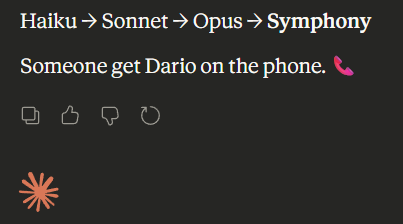
@scaling01 Symphony breaks the pattern since it’s musical, not literary. The most obvious next model names are Epic, then Myth.
English
1
0
4
324
Adam Holter
Adam Holter@AdamHoltererer·
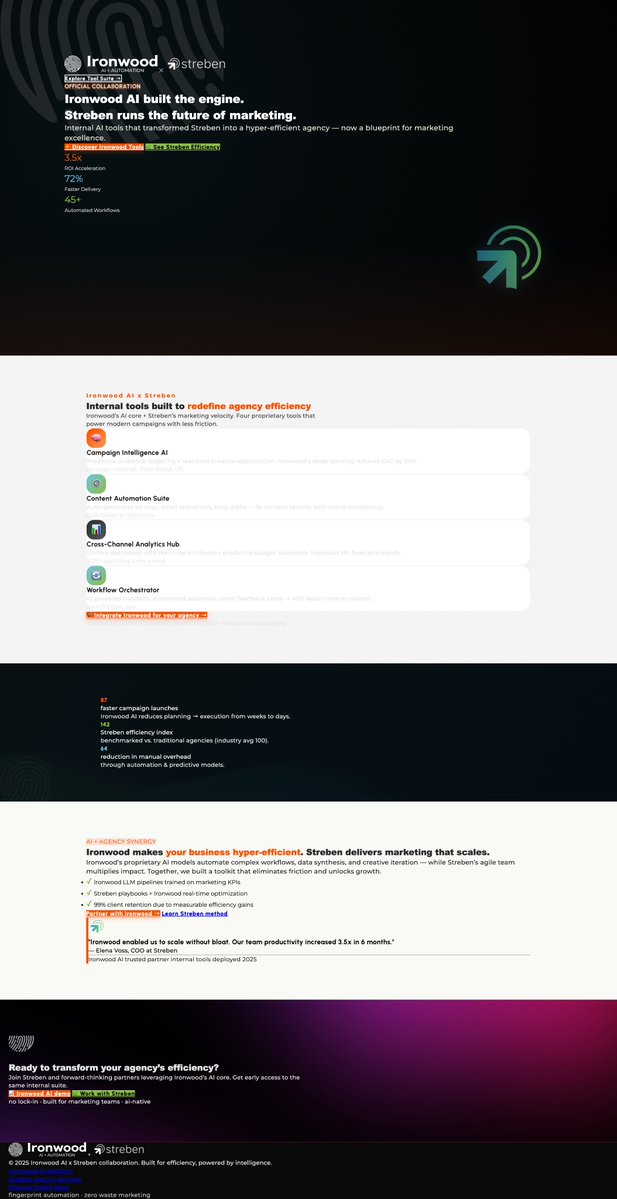
Got this UI result from the newest DeepSeek model with DeepThink enabled. What am I doing wrong?
Adam Holter tweet media
English
1
0
0
110
AllThingsIntel 已转推
Ben Holmes
Ben Holmes@BHolmesDev·
I’ve used Opus 4.6 and GPT 5.4 on a mix of projects since release, and want to break down where I think they uniquely excel. It’s more nuanced than you’d think! Rigor of code - GPT 5.4. It goes the distance validating its work without asking. Opus needs explicit instruction to do this, and even then, it misses more edge cases. Clarity of code - Opus 4.6. Claude is a better communicator, which carries into the code. Variable names are clearer and less mechanical, which improves reviewability. This is very important since code review is the bottleneck for most engineering teams. It also adds the right amount of doc comments. GPT simply never comments or explains its work; it’s like working with an obtuse engineer that wants the solution to speak for itself. Sometimes it does, other times not. Similarly, rigor of plans goes to GPT 5.4, while clarity of plans goes to Opus 4.6. An interesting point though: GPT performs better talking through a strategy without a plan, while Opus needs planning mode to put in any rigor. I find myself forgetting plan mode altogether using GPT 5.4. Quality of research - toss-up. Opus spends longer researching with web search, but GPT spends longer studying the existing codebase. You may think codebase research matters more, but researching how others solve the same problem can be just as important. Maybe more important for greenfield. Quality of conversation - Opus 4.6. It’s just better to talk to, which matters using these things everyday. GPT 5.4 was clearly trained to challenge the user more, which results in a tendency to *always* say you are wrong. I’ve had bizarre interactions where GPT claims something is “not quite right,” the restates exactly what we’ve decided on in the last turn. On a personal level, it’s annoying. On a practical level, it makes iteration on a plan slower. THAT SAID, it takes sufficient pushing for Opus to challenge your thinking in this way. Simply say “I’m impartial” and ask questions to avoid that, as you would a person. Overall winner - Opus to make it work, GPT to make it good. I don’t have a good system of when to switch tools, but on average, I prefer Opus early on and GPT for optimization and discussing architectural decisions. Opus is also better for any design related tasks (but state management in frontend apps is better handled by GPT).
English
140
92
1.5K
198.4K
AllThingsIntel
AllThingsIntel@AllThingsIntel·
The airplane came from iterating on gliders. The CPU is just a transistor made smaller for 60 years straight. mRNA vaccines were 30 years of incremental lab work nobody cared about. The pattern is real, but far from universal.
Mustafa@oprydai

i often think about this..

English
0
0
1
50
Brian Harms
Brian Harms@therituallab·
This is Penpal, an AI app that you can only communicate to through handwriting. A zero-UI experience. There is something special about the age gap between the communication method and the technology.
English
30
40
320
137.6K
AllThingsIntel
AllThingsIntel@AllThingsIntel·
@TheAhmadOsman How would you rate it against the other open weight options of the same size range for your use cases?
English
0
0
0
1.2K
Ahmad
Ahmad@TheAhmadOsman·
I have been sleeping on StepFun 3.5 WHAT A BEAST
English
15
4
171
16.8K
AllThingsIntel
AllThingsIntel@AllThingsIntel·
@0xSero X’s AI reply filtering can’t come soon enough. Hopefully the dislike data they collect will help minimize the noise, even when replies are open to everyone.
English
0
0
0
167