Matthew Lefkowitz
6.5K posts

Matthew Lefkowitz
@LefkowitzSyS
Standard-issue, middle-class, suburban-California psuedo-intellectual who loves to hyphenate. Sire/Sovereign.
San Francisco, CA 加入时间 Kasım 2011
104 关注89 粉丝


Call me crazy, but I want my tax dollars to go towards feeding hungry kids instead of bombing Iran.
GOP Ls@GOP__Ls
🚨 Trump has completely eliminated food benefits for 4.3 million Americans.
English

Drop the most random SJSU football player you can think of in the comments! Let’s see who actually remembers them. 👇 🏈

English
@JacobL1994_ Why is GWOT veteran bitterness directed towards IDF over US rules of engagement? IDF did not make those rules.
Alameda, CA 🇺🇸 English

I think some of the bitterness GWOT veterans have towards IDF guys comes from seeing them be able to operate without the idiotic rules of engagement that got so many of them killed.
In Iraq, if you took sniper fire from a minaret from a mosque, you just had to sit there and take it. In Gaza or Lebanon if that happens it eats a 120mm high explosive tank shell. In Afghanistan if a guy fired at you and then put his weapon down then you couldn’t shoot at him anymore. If that happened in Gaza or Lebanon dude is getting half a belt from a Negev.
It has to be kind of embittering to see a military operate that puts its own troops lives ahead of people who are going to hate you no matter how much “hearts and minds” efforts you make. Gaza is a 45 minute drive from Tel Aviv. Israel doesn’t have the luxury of such self-delusion that the Pentagon embraced.
Daniel Lee@siabaaLee
The period from 2006 to 2009 in Iraq was a strategic and operational mess. Higher headquarters and civilian leadership in DC often had unclear or shifting objectives, and assessments were frequently written to satisfy whatever narrative the academics, colonels and above, or political masters wanted to hear that quarter. We were handed impossible tasks and regularly accomplished them anyway. To hindsight second-guess the people on the ground who were actually dealing with that soup sandwich is beyond the pale. @infantrydort recently shared one such account on X: a detailed first-person description of a 2008 firefight near Sadr City, in which his small element was attacked from multiple directions during a dust storm, took sniper fire and mortar rounds, called for artillery and air support on the buildings the fire was coming from, and held their ground. @HicksCBER, a retired military academic responded by implying the officer had never thought through the implications of calling for fire in an urban setting and didn't know anything worth knowing. The veteran's reply was raw and unfiltered, the kind of response you get from a man who actually carried the weight of those decisions. Both reactions make sense. This post is about the context that was missing from that exchange. Fights matching that pattern occurred across eastern Baghdad and the surrounding belt in April 2008. On April 17 and 18, a heavy dust storm engulfed the city. Mahdi Army gunmen used the cover to attack coalition front lines and checkpoints. Iraqi units at police stations and positions came under pressure, with some companies deserting or being overrun before American forces reinforced. Fighting continued through the night and into the next day while aviation and drones were grounded by the storm. Official reports recorded 17 Iraqi soldiers and 22 militiamen killed in that span, along with civilian casualties. A second wave hit around April 27 and 28 during another dust storm. Mahdi Army fighters again attacked blockades and positions around Sadr City and in eastern and northeastern Baghdad. In one documented clash, a large group assaulted a joint Iraqi and US checkpoint in northeastern Baghdad with small-arms fire. Twenty-two Mahdi Army fighters were killed in that single engagement. Additional fighting in eastern Baghdad that same period left another 16 militants dead. Broader reporting from the same days noted that most of the roughly 41 Mahdi fighters killed in recent clashes had been attacking checkpoints and patrols while using the sandstorm to offset the lack of air cover. US and Iraqi forces responded with ground counterattacks, armor support where available, and fires into urban areas. These actions were part of the militia response that followed Prime Minister Maliki's launch of Operation Charge of the Knights in Basra in late March 2008. The Iraqi government was moving against Jaish al-Mahdi strongholds and criminal networks in the south. Tehran enabled pushback through its proxy networks, producing coordinated pressure in both the south and the Baghdad belt. Dust storms became a recurring tactical factor that allowed militia groups to mass against checkpoints, bridges, and canal crossings while degrading Coalition ISR and aviation. The consistent pattern across these fights included use of captured equipment, indirect fire, and deliberate operation in dense urban terrain where civilian presence complicated targeting. That was terrain the enemy chose precisely because it created that complication. That last point is the one the armchair critics consistently miss. Michael's charge, that the officer never thought through the implications of calling for fire in an urban setting, gets the causality backwards. The enemy engineered that dilemma deliberately. They amassed in dense neighborhoods, used civilians as tactical cover, and timed attacks to dust storms that grounded air assets and degraded ISR. The choice was not between a clean option and a messy one. It was between accepting friendly casualties and accepting the risk of civilian harm inside an urban environment the enemy had deliberately occupied. That is not an ethical failure. That is the enemy's strategy, successfully imposed. At higher levels the picture remained muddled. The Surge had produced tactical gains, but the broader strategy was shifting toward transition with unclear and sometimes competing priorities between Washington, MNF-I, and an increasingly assertive Iraqi government. Assessments often emphasized metrics that looked good in briefings rather than the harder ground truth small units were facing. The result was the same soup sandwich across sectors: adaptive enemies executing a recognizable pattern while ground forces handled the immediate friction with limited resources and guidance. Iranian Qods Force facilitation of weapons, training, and direction gave militia groups the capacity to sustain these surges and impose real friction on Coalition and Iraqi forces. Small units on the ground were dealing with the effects of that proxy system in real time, without the luxury of the strategic clarity their critics now claim to possess. The veteran's raw response, that he didn't stop for an ethics huddle, that he would level an entire neighborhood to protect one of his men, will strike some as troubling. It shouldn't. Not caring in the moment is not the same as not carrying the weight afterward. The men who executed these missions lived with the uncertainty about who was truly in the fight versus caught in the middle. Some of that weight is spiritual. Every person involved still bore the image of God, even when the necessities of the moment did not allow for perfect distinctions. That burden is real, and it is one reason why honest processing of what actually happened matters more than lectures from people who were never in it. This is where detached ethics criticism falls short. Comments that reduce these decisions to individual moral failures ignore both the documented pattern and the enemy's deliberate tactics. When small elements faced coordinated assaults on checkpoints and key terrain during dust storms, with effective enemy fires and civilians in the same dense areas, the immediate requirement was to break contact, protect their people, and hold ground. Reducing that to an ethical lapse from a safe distance isn't serious moral reasoning. It's the projection of classroom standards onto conditions the classroom cannot replicate. The men who did this work in 2006 to 2009 do not need to be turned into case studies for someone else's virtue. They need the space to describe the actual pattern of fights they faced: small units accomplishing impossible tasks inside a strategically confused war against adaptive, Iranian-enabled proxies, without being second-guessed by people operating from safety and hindsight. The ground truth of that period deserves more respect than armchair ethics. Respect to the men who carried it.
English
@Mazelit_ Not true of the GOP. Take it from me, a happy, Jewish Republican anecdote. The tent is big and the stakes holding up the tent move, as needed, to make room for political refugees. Come!
English

There is no room for Jews in the current 2-party system in America. The liberals send us out to slaughter and the trolls on the Right are no better.
I’m politically homeless. I’m OK with that. Anyone else here?
English

Matthew Lefkowitz 已转推

This song pretty much sums up the City I was born, raised and lived for 34 years…
Pray for the Israel Day Parade tomorrow.
English
@alyssakrejmas House of Bagels on Geary is fine. Schlok's on Fell is very good.
English

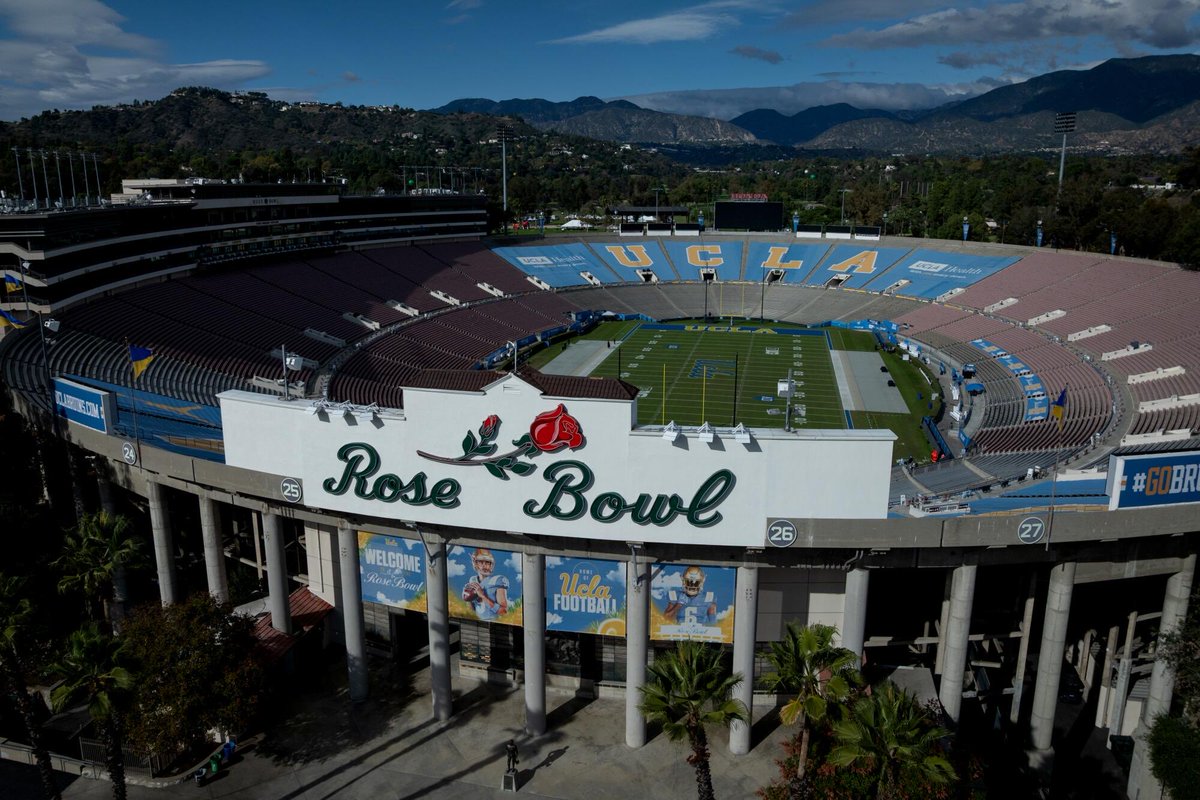
Drop the most random UCLA football player you can think of in the comments! Let’s see who actually remembers them. 👇 🏈
English

I am not particularly political however having been in SF for the better part of 3 months and watching the @spencerpratt campaign in LA, I have a few observations.
1. Listening to the screams of addicts at 3 in the morning on Union Square is slightly terrifying at first. And then you just accept that we are living in an open asylum.
2. I have yet to go a full day without seeing at least 1 human openly smoking crack or shooting up.
3. I have seen more ass cracks in public than any human should be subjected to.
4. On day 8, I had the lovely misfortune of having pee splattered on my as a woman unleashed upon a light pole.
On what planet is any of this humane? How is this acceptable?
I wanted to love it here and mostly I do. I have met some amazing people, the weather is obnoxiously perfect and we are making more progress in the startup/tech ecosystem than we ever would have back home.
That being said, am I going to ever put permanent roots down in a city where my out of town friends or potential children will have to navigate piles of feces on the sidewalk or miss their bus stop because some tweaker is freaking out and puts you on high alert? Honestly, no.
I can't vote legally in the state or I would wholeheartedly support anyone who is for cleaning this shit up.
English

Spencer Pratt used his social media platform to spread extreme misinformation & disgusting scare tactics against our housing laws, including SB 79 (more homes near public transit) & SB 9 (duplexes & fourplexes).
Pratt is a mega NIMBY & he lies, which he’s doing again here.
Bobby LaValley@Bobby_LaVallley
.@spencerpratt: "We’re going to build so much housing, the entire city will be cranes. We’re going to look like Dubai in eight years."
English
Drop the most random Stanford football player you can think of in the comments! Let’s see who actually remembers them. 👇 🏈 🌲

English
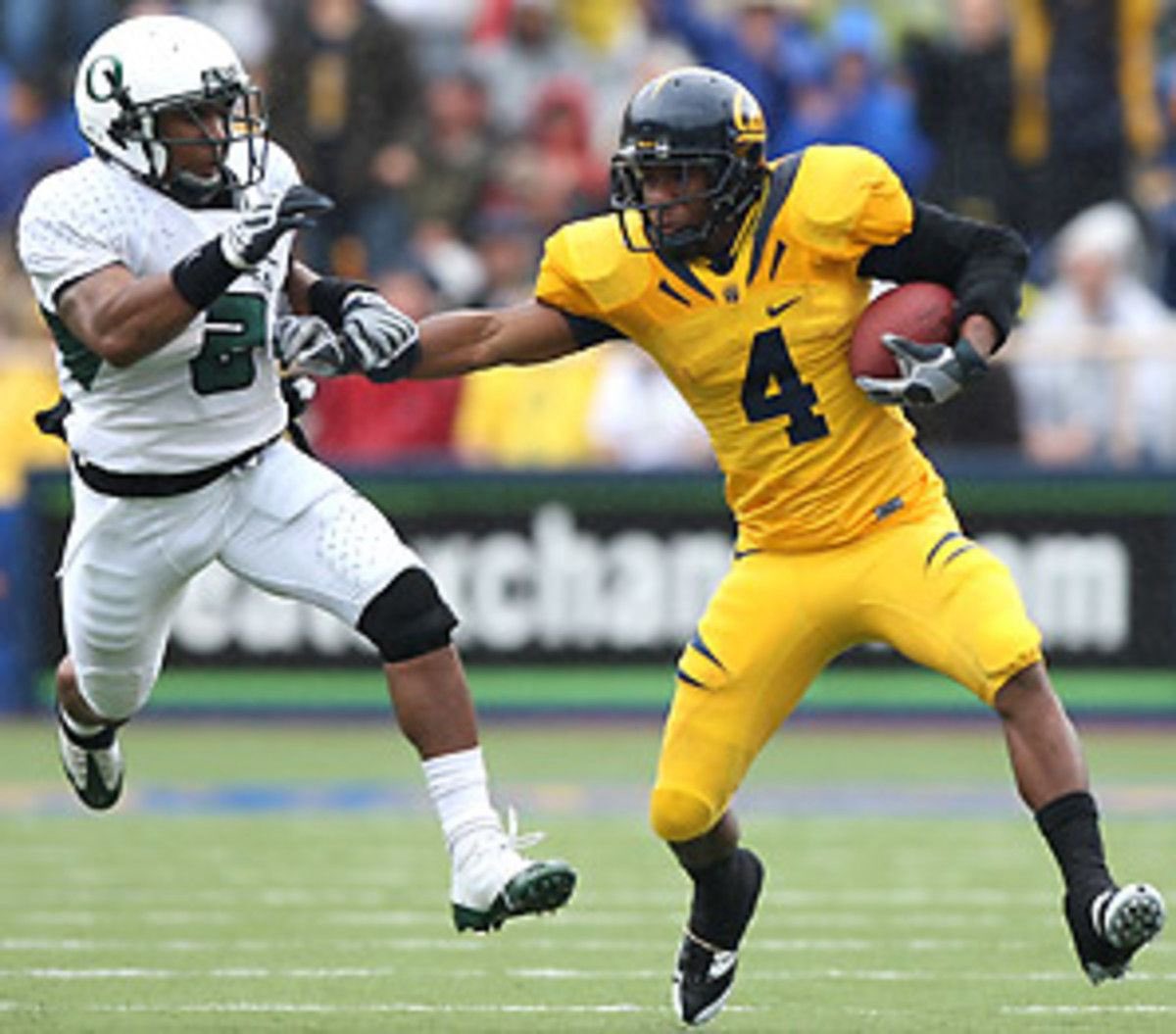
Who remembers watching Jahvid Best at Cal? 🛩️
English

@moseskagan There was a time when communists were proud of their identity and proclaimed it loudly rather than, as today, identifying as "democratic socialists" or "progressives" or some other euphemistic label.
Alameda, CA 🇺🇸 English
This is important in LA, too.
Neither Bass nor Nithya are communists. Both are basically normie Dems who swung too far left (for my liking, anyway) during the '20-'24 period when so many other people did, too.
Throwing around "communist" just makes us sound crazy to the kind of middle-of-the-road, sensible voters moderates are trying to persuade.
Jay Martin 🏠 🏢🏚️🌇@jaymart222
From a political perspective, calling existing programs “communism” is a tactical error. The reaction to the Mayor’s housing plan is the textbook case. The city already had the power to take buildings from bad landlords. In rem foreclosure. Eminent domain. 7A administrators. None of it is new. And all of it requires court judgments, waiting periods, and Council sign-off. There is no instant seizure button, no matter how the rhetoric sounds. COPA is the same story. It is a right of first offer, not a seizure. San Francisco has run it since 2019 with no legal challenges and a market that never slowed. The heavy-handed version New York tried two decades ago, Local Law 79 of 2006, is the one the courts struck down. The careful version survives. The seizure version loses. Of course they shouldn’t be passing bills of questionable legality in the first place but that’s not the point I’m debating. The idea of the policies themselves must become toxic to touch. The Mayor’s rhetoric is built to gin up his base and inflame his opposition. It does not match the legal reality of what he can actually do. And right now the public believes things are going well. Voters went from 66% wrong track last fall to a right track majority today. Every hard input says the same thing. The anecdotal conversations people claim to have with their neighbors do not change that. So when you label all of it communist or socialist, you tie his current popularity to policies I would argue are bad ones. You do his work for him. Labels do not move voters. Impacts do. Look at the numbers. Voters give socialism the cold shoulder and pick capitalism head to head, but two thirds back the millionaire’s tax anyway. Majorities back free childcare but also support limited government power. The policy outruns the label every time. Attack the label and you lose. Attack the impact and you have a chance. Those who oppose bad policy should be proving it is bad to the people who do not already agree. Just calling it bad desensitizes everyone. Every time you say communism without tying it to something real, you make the word easier to embrace. Tie the proposals to the reality, or stop using the labels.
English