LeftFlank99☭🪂🔻☫
8.6K posts

LeftFlank99☭🪂🔻☫ 已转推

Average liberal more upset about Trump saying praise be to Allah than they are about the illegal invasion of another country.
English
LeftFlank99☭🪂🔻☫ 已转推

Did you know that from 1992 to the present, at least 54 Jewish/Zionist charities have been shut down by the Canada Revenue Agency.
Among their crimes have been fraudulent use of tax legislation and supplying charitable resources to non charitable recipients including hardline Zionist groups, settlement activity and supporting the genocidal occupation forces.
Canada has become a leading case in revoking charities linked to “Israel” by enforcing tax law through sustained, evidence-based advocacy. We must all learn the lessons of this process and up our game in the UK, US and elsewhere so we can begin to shut down Zionist charities everywhere.
There are at least 3,000 in the UK and tens of thousands in the U.S.
My latest article: How Canada leads the way in closing down Zionist charities
Via @MayadeenEnglish
Link in replies.
English
@RTNToronto Why the fk are its agents in kkkanada for? Who wh0red our sovereignty?
English



@BustinCidyermum @GlickGlickman @STSCBA_7 Wait...its 110 countries already??? Can't leave u sneaky guys alone for one moment🙄 So let me get this straight...the antisemitic trophe of Judeo-bolshevism is true. Is it also because god promised communism to u guys 3000 yrs ago🤔
English

@LeftFlank99 @GlickGlickman @STSCBA_7 Ok first of all, Jews were not kicked out of 109 countries, that’s rețarded
Second, no one is afraid of emojis, it’s just unbelievably hilarious/ironic because you’re out here being antisemitic as a communist when communism is literally Jewish and was founded by Jews🤣
English

LeftFlank99☭🪂🔻☫ 已转推

@s_m_marandi Seyed can you remember Madeline Albright ? This is what these DEMONS do to children in the middle east......
500,000 dead Iraqi children was "worth it" according to Albright .....
English
LeftFlank99☭🪂🔻☫ 已转推

LeftFlank99☭🪂🔻☫ 已转推

#NEW: ‘Seeing 300 patients a day’: East-end Toronto hospital warns of surge in ER demand as visits double
ctvnews.ca/toronto/articl…
English


English


@Sabrina_HTR @N0Appreciation @TBrit90 Wait until the amerimutts turn on each other when gas prices are too high and they cant afford groceries.
English

@N0Appreciation @TBrit90 You’ve lost every base in the Middle East.
A century of hegemony, gone in 30 days.
Thousands are dead, and they still won’t tell you the truth. And you’ve lost over $100 billion since the start of the war, your sponsors have realised you’re all talk.
English



@GlickGlickman @STSCBA_7 @maybesatire @6ixbuzztv Better than the tiny hat demon seeds cosplaying as non-psychopathic normal humans.😘❤️
English

@LeftFlank99 @STSCBA_7 @maybesatire @6ixbuzztv Cosplaying as an Arab revolutionary is so pathetic lmaooo
English
LeftFlank99☭🪂🔻☫ 已转推

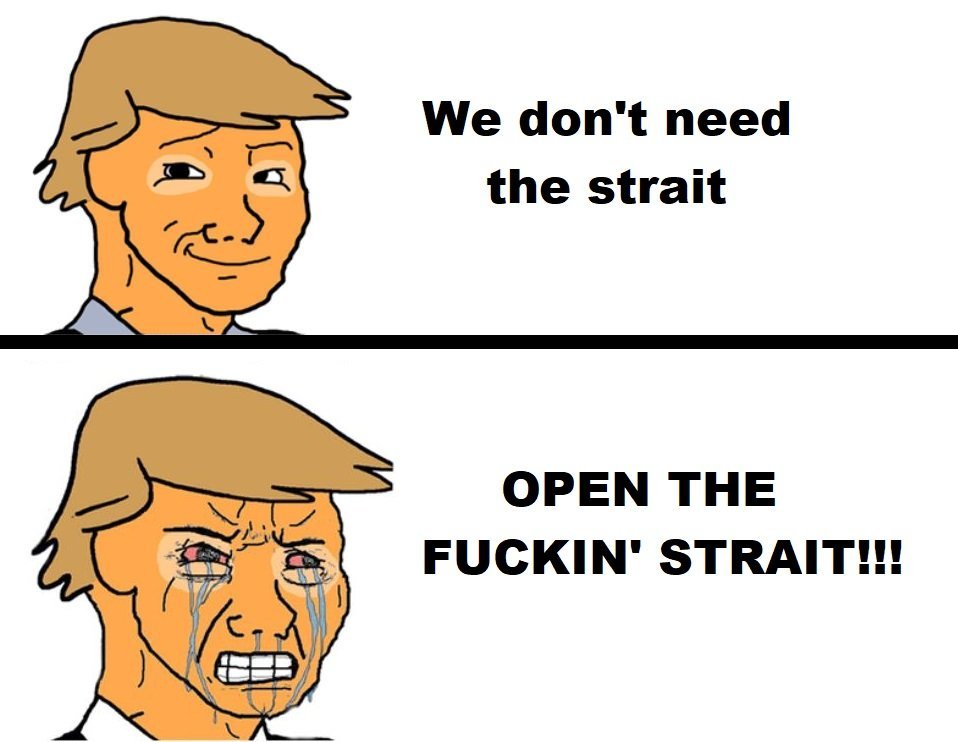

Iran is demanding sovereign control over the Strait of Hormuz. If it succeeds in imposing this logic, it will undermine the very foundation of international maritime law. The Strait of Hormuz is an international strait governed by the regime of transit passage: passage cannot be arbitrarily prevented or made selective. If Iran succeeds, it will open a Pandora's box: other states will also decide they can act the same way.
Let's look at other straits that are critically important for the global economy:
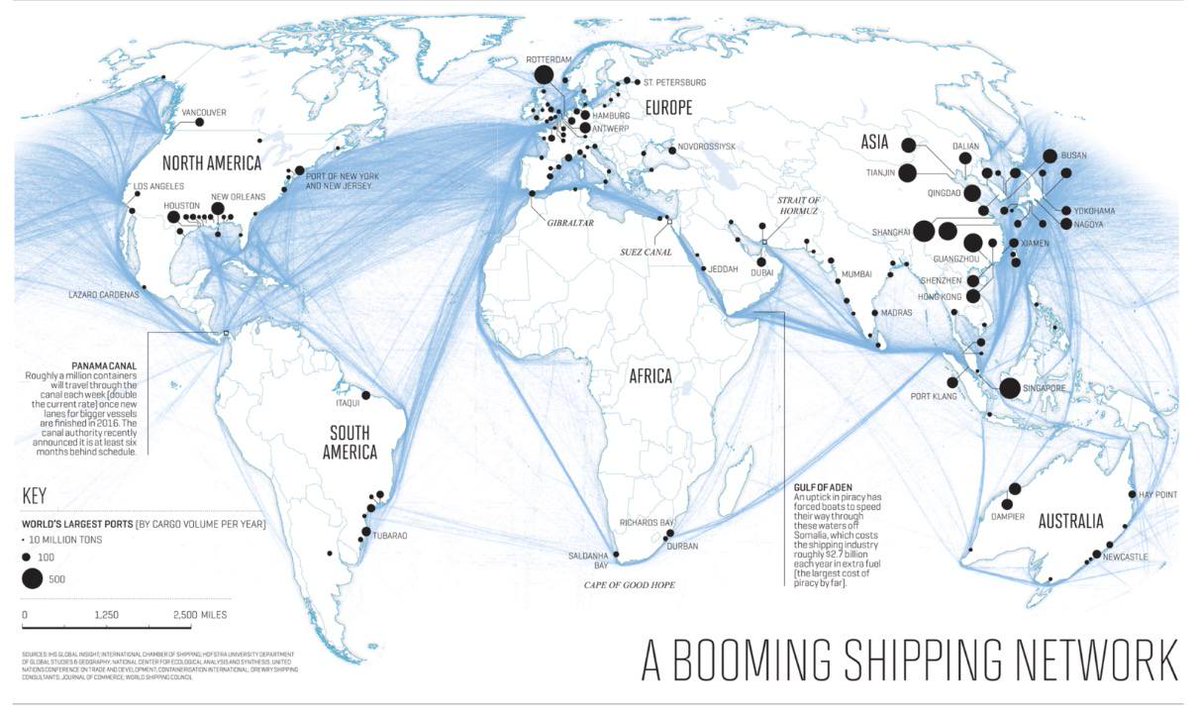
◾️ The Straits of Malacca and Singapore are the next most dangerous example. The Strait of Malacca is the world's busiest oil chokepoint, as well as one of the main corridors for common trade; studies estimate that about 20% of global maritime trade passes through the Strait of Malacca, amounting to approximately $2.4-2.5 trillion annually. In theory, Indonesia, Malaysia, and Singapore could all seek to exert tighter control here. If even one of these countries were to impose a system of permits, selective inspections, or political restrictions, global trade would suffer.
◾️ Bab-el-Mandeb is another example of how control over a narrow strait can quickly become a tool of war. In 2023, approximately 9.2 million barrels per day passed through it, but following the escalation, flows dropped to about 4.0-4.2 million barrels per day in 2024-2025. Formally, Yemen, Djibouti, and Eritrea may attempt to strengthen their control here, and effectively, armed non-state actors may also be involved. The threat is clear: whoever controls this chokepoint can sever the maritime link between Europe and Asia via the Red Sea and the Suez Canal.
◾️ The Bosphorus and the Dardanelles are a separate case, as they are already subject to a specific regime under the Montreux Convention, and Türkiye has broader authority over military vessels. But that is precisely why this example is important. In the first half of 2025, approximately 3.7 million barrels per day of oil and petroleum products passed through the Turkish Straits, not counting grain and other Black Sea exports. The danger here lies elsewhere: the existing legal exception could become a justification for new exceptions in other straits.
◾️ The Danish straits are a critical exit route from the Baltic Sea. In the first half of 2025, approximately 4.9 million barrels of oil and petroleum products passed through them daily. Formally, Denmark could impose stricter controls here, and in a broader regional sense, so could the states that control the approaches to the Baltic Sea. If Europe ever adopts a policy of selective access through such a strait, it would mean that even within the Euro-Atlantic space, freedom of navigation is no longer considered absolute. This would be a critical moment for maritime law.
◾️ The Taiwan Strait is perhaps the most dangerous case in the long term. According to CSIS estimates, approximately $2.45 trillion worth of goods passed through it in 2022, accounting for more than one-fifth of global maritime trade. There is only one potential contender for political control here - China. If Beijing manages to impose a system where passage depends not on international rules but on Chinese jurisdiction, it will be a turning point. Then, not only regional security would be at risk, but also the very principle that major trade routes cannot be controlled by a single state through political decision. And since the Taiwan Strait is also linked to the risk of a major war between the US and China, maritime law here directly confronts the risk of global escalation.
◾️ Arctic shipping routes demonstrate that this logic now extends beyond traditional straits. Russia regards the Northern Sea Route as a "historic national transport corridor" and demands compliance with the navigation rules established by Moscow; in 2024, the Northern Sea Route Administration issued 1,312 permits for 975 vessels. Canada, for its part, considers the Northwest Passage to be part of its internal waters, while the United States and other states disagree with this approach. Here, the risk is particularly significant for the future: if Arctic routes begin to be established as a licensed passage under the control of coastal states, this will provide yet another strong argument for those who wish to establish their own control in other areas.
So, control over sea lanes is becoming a new weapon. If Iran breaks this barrier in the Strait of Hormuz, other states will also begin competing for control of the seas. The next conflict may arise not only over territory, but over the right to determine who has access to global trade, energy, and naval traffic. This is the real danger: the Strait of Hormuz could lay the groundwork for many future wars.
English
English

@_rathbone @MarioNawfal It's not about being naive. It's about how much crack he's been smoking
English

Trump never wanted this war, he was misled into it, and now is stuck trying to get out of it as Iran refuses to give him an off-ramp
English
LeftFlank99☭🪂🔻☫ 已转推
LeftFlank99☭🪂🔻☫ 已转推