@guy_lesch It was a fascinating discussion, indeed. Just finished your book, one of the most well written and balanced on the topics of neuroscience and free will that I have read. Congratulations!
Tomorrow night at 8pm - come join me at the National Museum for Scotland. Should be a fascinating and dark discussion of the biology and nature of human sin #edscifest
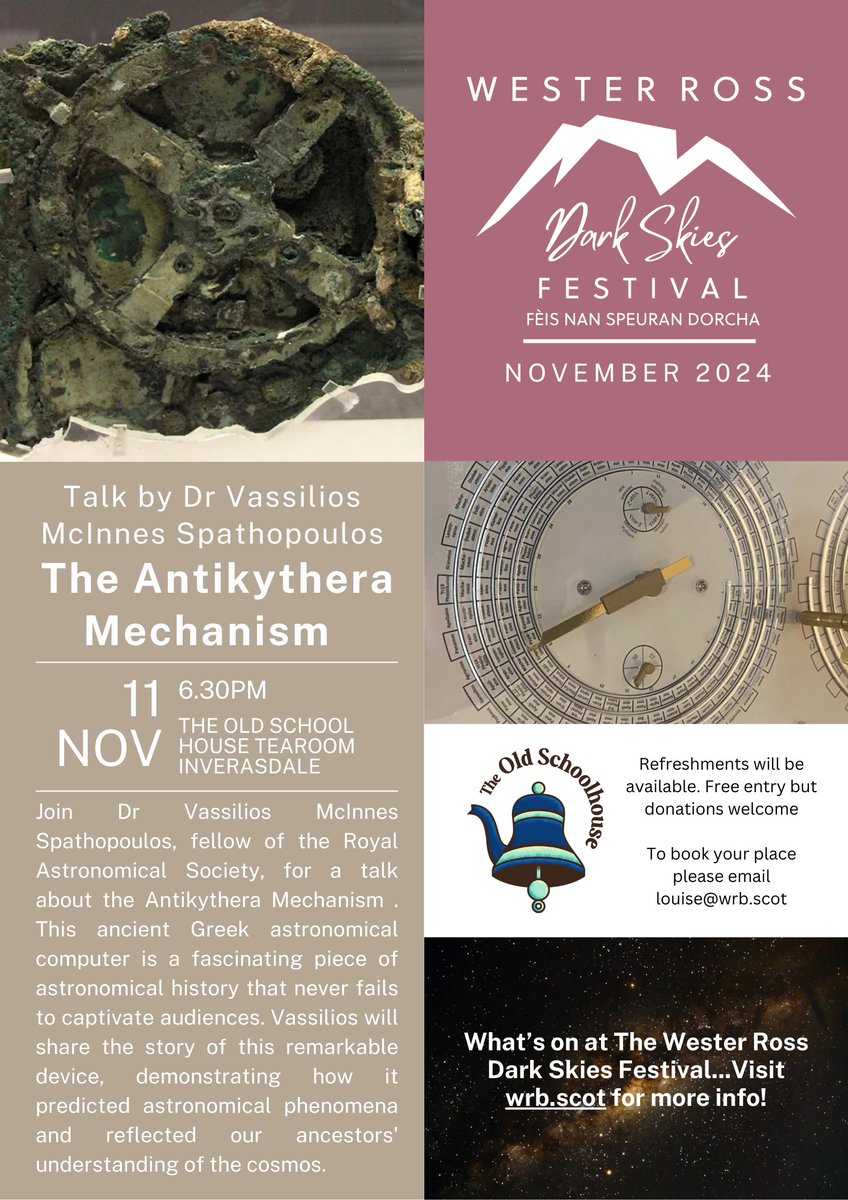
We have the Olympic Games in 2024 and a model of the Antikythera Mechanism knows it! (we would also have the Isthmian Games if they were still happening)
@R_Trotta I do a lot of astronomy outreach and it has given me several new insights and ideas. If I had to choose, I would say that the part on how the stars may have given the edge to Sapiens vs the Neanderthal, as it was something completely new to me.
First text from inside intact Herculaneum scrolls! And they’ll have more very soon… My piece for @Nature - most exciting story I’ve worked on in a long time nature.com/articles/d4158…
The @OrkSciFest is famous in Greece!🇬🇷
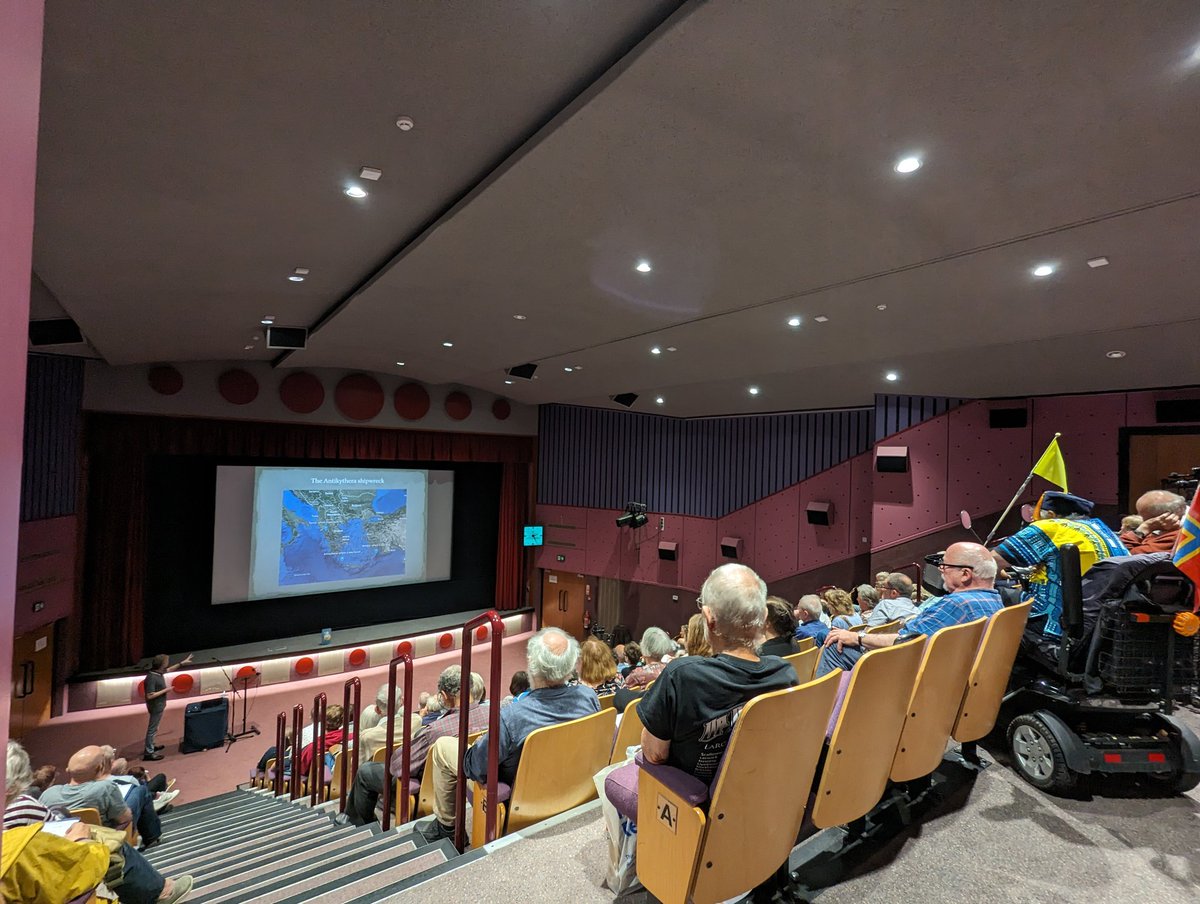
Thanks to Dr Vassilis Spathopoulos' @MyScienceWalks fascinating presentation about an ancient Greek computer, the Antikythera, to an almost full house @pickyorkney.
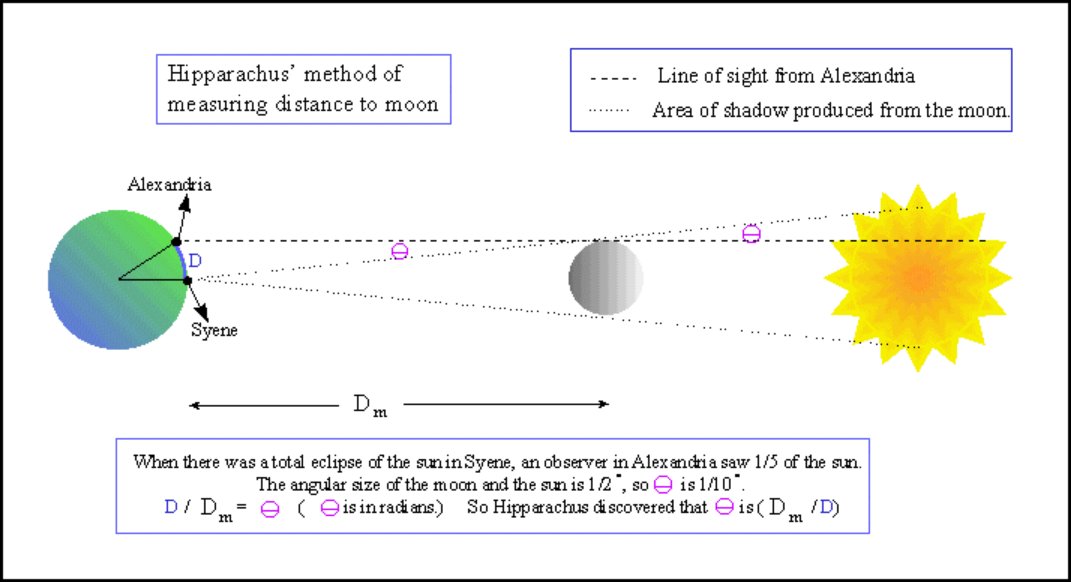
In 190 BCE, Hipparchus measured the distance from the Earth to the Moon during a solar eclipse that was a total eclipse at Syene and a partial eclipse at Alexandria. He found 396,103 km vs 384,400. This is the method he used
[source: buff.ly/34nGaXJ]
@astrofalls@juzajaro The ancient Greek astronomer Hipparchus did it over 2,000 years ago: #ref1083282" target="_blank" rel="nofollow noopener">britannica.com/science/parall…
While I was capturing the lunar eclipse from the Arizona, I was also capturing it remotely from Australia 8,000 miles away. This shift in perspectives shows the parallax of the moon and the stars