Podcast Alpha

1.5K posts

Podcast Alpha banner
Podcast Alpha

Podcast Alpha

@PodcastAlphaX

Signal. Not noise. Forensic breakdowns of the world’s most influential podcasts. Substack - https://t.co/1GNcZMJIWU DM to remove clips

United States 加入时间 Nisan 2026
270 关注6K 粉丝
置顶推文
Podcast Alpha
Podcast Alpha@PodcastAlphaX·
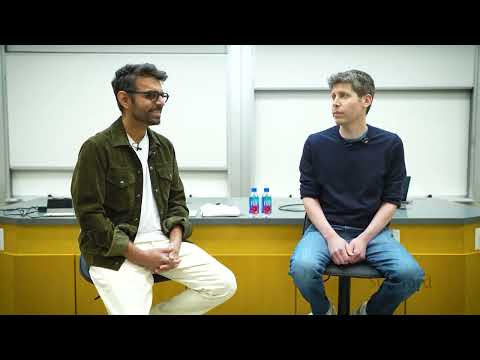
The market said AI scaling would stop working. @sama bet against it at YC. Then again at OpenAI. Both times, the market was wrong. His career principle: when something works at small scale and no one has tested 10x, that is almost always worth attempting. He ran large YC batches when smart people said focus on 10. He scaled AI models when top researchers said gains were uninteresting. The market systematically underweights scale bets because they break things visibly. That is not evidence the thesis is wrong. What this means for where to look next: podcastalpha.substack.com/p/sto-altman-2… Source: Stanford CS153 Frontier Systems - youtube.com/watch?v=F_7M4H…
YouTube video
YouTube
English
4
1
17
4.3K
Podcast Alpha
Podcast Alpha@PodcastAlphaX·
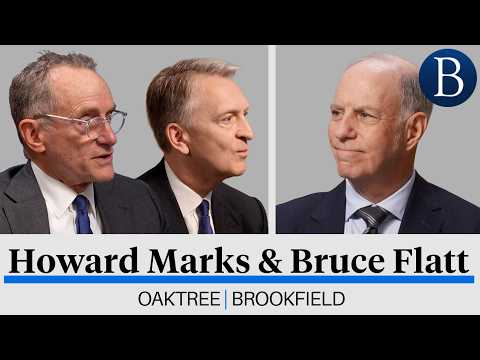
Software credit: market is worried. Performance data says otherwise. Marks explains the gap. Howard Marks, Oaktree co-chairman via @Barrons: no distress spike in software-backed direct lending as of mid-2026. Companies are not failing. His mechanism - meaningful credit impairment requires large revenue losses first, and current portfolio companies are performing. The worry is sector-level sentiment running ahead of company-level stress. Where he will not go: a clean bill of health. His own 17-year credit bull run thesis says somewhere in $1.7 trillion of direct lending there are vintage errors from peak-generosity underwriting that have not been tested. Trade implication: short sellers focused on software credit distress may be early rather than right. The distinction matters. Early and right are not the same position. Full framework: podcastalpha.substack.com/p/bar-marks-in… Source: At Barron's - youtube.com/watch?v=ZPpcUU…
YouTube video
YouTube
English
0
0
0
86
Podcast Alpha
Podcast Alpha@PodcastAlphaX·
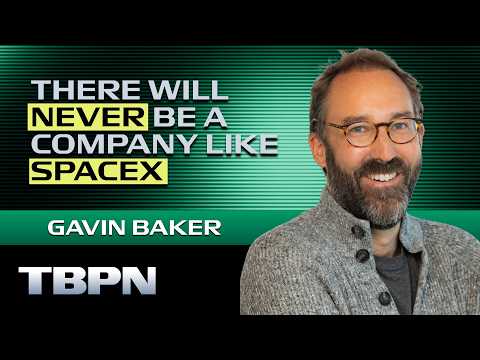
Why is OpenAI cutting codex pricing right now? Gavin Baker @GavinSBaker of Atreides Management thinks every major player knows the answer - and is acting on it privately. Baker told @johncoogan on @tbpn: OpenAI's codex price cuts are not a margin decision. They're a strategic move to stay in the recursive self-improvement loop - the cycle where AI improves its own code. Companies that lose coding token share now may find themselves outside that loop when it matters most. Baker's read on $META: Zuckerberg has no articulated product anchor for "personal superintelligence." But the mechanism that forced his hand in 2022 - the stock - is likely to activate again. What the end game looks like and who survives it: podcastalpha.substack.com/p/gavin-baker-… Source: TBPN - youtube.com/watch?v=PW5n3Z…
YouTube video
YouTube
English
0
0
4
579
Podcast Alpha
Podcast Alpha@PodcastAlphaX·
$20 to $250 billion. That is what it costs to build one AI factory. Bruce Flatt, Brookfield CEO on @Barrons, makes the supply-side argument: demand for AI compute is off the charts. Supply cannot keep up. And that is structural, not cyclical. Building an AI factory means siting a power source, connecting it to the grid, constructing the facility, procuring chips, and financing the whole thing. Each step takes years. Brookfield is the world's largest private power builder. It's converting that supply constraint into 25-year contracts with sovereign AI programs and investment-grade tech companies - some with better credit ratings than governments. Flatt has a conflict here: he's describing a tailwind for his own business. His thesis doesn't require AI demand to stay high. It requires supply to stay constrained. Full breakdown: podcastalpha.substack.com/p/bar-marks-in… Source: At Barron's - youtube.com/watch?v=ZPpcUU…
YouTube video
YouTube
English
1
0
1
359
Podcast Alpha
Podcast Alpha@PodcastAlphaX·
Apple's vertical moat thesis has a new problem. Cristiano Amon @cristianoamon told Arjun Kharpal @ArjunKharpal: in the phone-centric world, Apple's advantage was owning the gravity center. Every device orbited the phone. That logic breaks when the agent - not the phone - becomes the center of your digital life. In the agent-centric model, Samsung glasses plus Apple phone plus Sony earbuds can coexist through the same agent. You do not need vertical integration to have a coherent experience. This is structurally bearish for Apple's hardware lock-in and structurally bullish for chip suppliers who serve any OEM. Full ecosystem shift breakdown: podcastalpha.substack.com/p/cristiano-am… Source: CNBC Tech Download - youtube.com/watch?v=5x2nDK…
YouTube video
YouTube
English
0
0
1
406
Podcast Alpha
Podcast Alpha@PodcastAlphaX·
$NVDA and @OpenAI are not competing. They are stacked. @AnjneyMidha surfaced the tension at Stanford: Jensen Huang likens compute to a utility. @sama likens intelligence to a utility. Both are right - at different layers. Consumers will think in tokens and agent subscriptions, not hardware. The same way a cell phone bill is about data, not base stations. NVIDIA owns the compute utility layer. OpenAI competes for the intelligence layer above it. The tension is real - but the layers are distinct, not substitutes. How to think about value at each layer: podcastalpha.substack.com/p/sto-altman-2… Source: Stanford CS153 Frontier Systems - youtube.com/watch?v=F_7M4H…
YouTube video
YouTube
English
0
0
1
434
Podcast Alpha
Podcast Alpha@PodcastAlphaX·
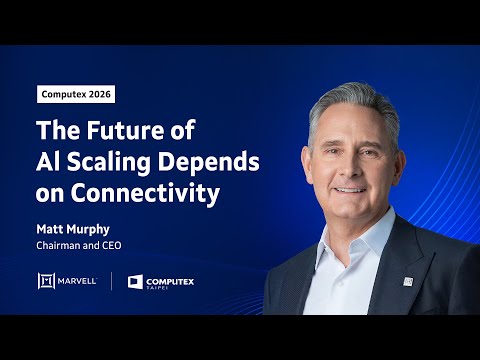
If you are thinking about $MRVL, the bull case has a clear kill condition Murphy did not answer at COMPUTEX. CPO hardware is real. A 51.2T switch with 16 optical engines on-package was on stage, not on a slide. The copper wall at 400Gbps is physics, not a product cycle. But there is no confirmed hyperscaler production date for co-packaged optics. If CPO enters production within 18-24 months, the revenue path to $16.4B+ is conservative. If the timeline slips, the stock is priced for a transition that has not happened. The signal to watch: any hyperscaler announcement of CPO production deployment. That is the re-rating event. Full trade setup and what to watch: podcastalpha.substack.com/p/episode-summ… Source: COMPUTEX 2026 Keynote - youtube.com/watch?v=DSnugw…
YouTube video
YouTube
English
0
0
1
690
Podcast Alpha
Podcast Alpha@PodcastAlphaX·
Copper connects every server in a data center rack today. At 400Gbps, it physically cannot. This is the transition $MRVL is built for. The physics: double the bandwidth and you cut copper's reach in half. At 400Gbps per lane - next-gen data center standard - copper reach falls to ~1.25 meters. That is shorter than most rack heights with cable routing. Result: every hyperscaler running 400Gbps needs an optical solution inside the rack. Not wants - needs. Mandatory capital spend. Marvell showed the hardware on stage at COMPUTEX. A 51.2T switch with 16 optical engines on-package, fiber running directly out of the chip. No copper PCB traces. Their competitors showed PowerPoints. What this means for the $MRVL position: podcastalpha.substack.com/p/episode-summ… Source: COMPUTEX 2026 Keynote - youtube.com/watch?v=DSnugw…
YouTube video
YouTube
English
0
0
8
1.4K
Podcast Alpha
Podcast Alpha@PodcastAlphaX·
Jensen's trillion-dollar comment is the noise. The $2 billion is the signal. At COMPUTEX, Jensen Huang walked on stage, pointed at Marvell CEO Matt Murphy, and called $MRVL "the next trillion-dollar company." That got the headlines. What got less coverage: NVIDIA put $2B of its own capital into Marvell as a strategic anchor investor the same week. And it designed NVLink Fusion - its next-gen hyperscaler architecture - around Marvell's connectivity silicon. When a company talks their book, that is cheap. When they back it with $2 billion, the math changes. What the investment actually means for how you model $MRVL: podcastalpha.substack.com/p/episode-summ… Source: COMPUTEX 2026 Keynote - youtube.com/watch?v=DSnugw…
YouTube video
YouTube
English
0
2
8
2.5K
Podcast Alpha
Podcast Alpha@PodcastAlphaX·
Model parity is not a consensus view. It is a load-bearing bet for the entire routing thesis. Matan Grinberg of Factory on @twentyminutevc: his changed view after 12 months is that at least four frontier models will remain roughly equivalent. That is what makes model-agnostic routing defensible. If one lab pulls decisively ahead, enterprises accept lock-in, routing collapses, and the integrated lab-plus-tool offering wins. @HarryStebbings pushed him on this. Grinberg names it explicitly as his bear case for his own company. Benedict Evans made the same call on June 8: foundation models will commoditize like mobile operators. Two independent sources. Same conclusion. The model parity question is the single most important variable to track for AI infrastructure positioning. Full breakdown: podcastalpha.substack.com/p/20vc-matan-g… Source: 20VC with Harry Stebbings - youtube.com/watch?v=lgo_Qb…
YouTube video
YouTube
English
0
0
2
550
Podcast Alpha
Podcast Alpha@PodcastAlphaX·
US LNG: stranded Permian gas with nowhere to go. Now: the world's largest LNG exporter, filling demand Qatar left behind. Chevron CEO Mike Wirth on @Bloomberg_Live is running the same playbook for AI data centers. Stranded West Texas gas - prices at or below zero when pipeline takeaway is full - monetized by building demand near the resource. The hyperscaler is the new LNG off-taker. The off-grid power plant is the new liquefaction terminal. This is not a moonshot. Chevron already runs 5 GW of self-generation for its own facilities. The technology exists. The gas is cheap. The customers want isolated power. What the LNG parallel means for $CVX positioning: podcastalpha.substack.com/p/mike-wirth-h… Source: Bloomberg Energy Security Executive Briefing 2026 - youtube.com/watch?v=sZT3VA…
YouTube video
YouTube
English
1
0
1
429
Podcast Alpha
Podcast Alpha@PodcastAlphaX·
If you hold $NET, this one changes an input. Gavin Baker @GavinSBaker of Atreides Management told @jordihays on @tbpn: CDNs like Cloudflare and Akamai deliver under 1% of global tokens today. Possibly under 10 basis points. The bulk of token generation happens inside hyperscaler and neocloud data centers. CDNs handle the final delivery hop - real, but small. Cloudflare is trading at all-time highs on AI narrative. Baker's framework says the stock is pricing in infrastructure upside that isn't flowing through token throughput yet. Token factory = yes. Token deliverer = maybe. The gap between those two labels is a valuation gap. Who passes Baker's token path test and who doesn't: podcastalpha.substack.com/p/gavin-baker-… Source: TBPN - youtube.com/watch?v=PW5n3Z…
YouTube video
YouTube
English
1
0
48
8.8K
Podcast Alpha
Podcast Alpha@PodcastAlphaX·
24-36 months of Brookfield buying non-tech at low multiples. 24-36 more ahead, says Flatt. Bruce Flatt, Brookfield CEO on @Barrons, gives the market read from deal flow - not from index levels or macro forecasts. AI-adjacent tech captures the headlines at elevated multiples. Cash-flow businesses in every other sector are moving into private hands at low multiples. Brookfield has been active in that space for over two years and sees no reason it ends. The mechanism: AI productivity genuinely raises earnings power in tech, which justifies some premium. Non-tech multiples have not re-rated to match. Index investors blend both. PE investors with sector selectivity can pick the discount. That's the thesis for the next cycle. Full read: podcastalpha.substack.com/p/bar-marks-in… Source: At Barron's - youtube.com/watch?v=ZPpcUU…
YouTube video
YouTube
English
0
0
2
695
Podcast Alpha
Podcast Alpha@PodcastAlphaX·
Marvell spent $36 billion over 10 years to own every connectivity distance in a data center. $22.5B in acquisitions. $18B in organic R&D. Cavium for compute and networking. Inphi for $10B for data center interconnect. Celestial AI for photonic fabric. Xcon for scale-up switching. And one technical bet that could have destroyed the company: skipping the 7nm process node entirely, jumping from 14nm straight to 5nm. Murphy on stage: "Nobody does this. Nobody takes that kind of risk. But we did and it worked - flawlessly." That node-skip is what got Marvell into the hyperscaler qualification cycles driving 75%+ of revenue today. The full picture on what $36B built and whether it is defensible: podcastalpha.substack.com/p/episode-summ… Source: COMPUTEX 2026 Keynote - youtube.com/watch?v=DSnugw…
YouTube video
YouTube
English
0
1
9
1.5K
Podcast Alpha
Podcast Alpha@PodcastAlphaX·
Bitcoin conferences do not drive Bitcoin adoption. Products do. @saylor's clearest statement at BTC Prague 2026: everyone in the conference room already owns Bitcoin. The next billion users will arrive through products so easy to buy they never think about what is inside. iBit is the proof. Nobody buys a BlackRock ETF because they believe in Bitcoin self-custody. They buy it because their advisor can allocate to it. STRC is the fixed-income version of the same model. The implication for investors: the highest-value companies in the Bitcoin ecosystem are not the ones serving existing holders. They are the ones building compliant instruments for the 99.9% who will never self-custody. Strategy and BlackRock are the public market trade. Full breakdown: podcastalpha.substack.com/p/btcprague-sa… Source: BTC Prague 2026 - youtube.com/watch?v=r2X04I…
YouTube video
YouTube
English
0
0
0
236
Podcast Alpha
Podcast Alpha@PodcastAlphaX·
NVIDIA just wrote $MRVL a $2 billion check. Not a partnership announcement. Not a product deal. A $2B strategic investment - Jensen Huang putting NVIDIA's own capital behind Marvell's connectivity platform. The mechanism: NVIDIA built NVLink Fusion so hyperscaler custom chips can run inside the same fabric as NVIDIA GPUs, with Marvell providing the connectivity layer. NVIDIA now benefits financially when Marvell wins. That is not praise. That is alignment. If you hold $NVDA, you now hold a company whose interests move with $MRVL's success. The full breakdown of what NVLink Fusion means for both positions: podcastalpha.substack.com/p/episode-summ… Source: COMPUTEX 2026 Keynote - youtube.com/watch?v=DSnugw…
YouTube video
YouTube
English
1
2
17
3.4K
Podcast Alpha
Podcast Alpha@PodcastAlphaX·
Why is @jvisserlabs not long hyperscalers right now, even though he is bullish on AI? Because the next 3-6 months in semiconductor infrastructure look like "equal news of disappointment with equal news of surprises." The market has priced in the largest earnings growth in its history. His actual portfolio positions: long silver (expects 10x), long copper, long energy. Short narrative, long physical inputs. The thesis: whoever wins the AI model war still needs silver, copper, and power to run. Own the inputs, not the output. The AI mid-cycle slowdown argument and where Visser is actually positioned: podcastalpha.substack.com/p/jordi-visser… Source: The Pomp Podcast - youtube.com/watch?v=gAqXcG…
YouTube video
YouTube
English
0
0
6
2.4K
Podcast Alpha
Podcast Alpha@PodcastAlphaX·
Before AI: a startup needed 100 engineers to build what a founding team can now do with a token budget. @sama at Stanford: the 2014 startup playbook he helped write is obsolete. The constraint has shifted from headcount and capital to vision and problem selection. He has not seen anyone write the new version yet. The implication for incumbents: the moat that was "we have 500 engineers and you don't" just got much thinner. The moat that survives is the one built on proprietary data, distribution, or insight - not build capacity. Full context: podcastalpha.substack.com/p/sto-altman-2… Source: Stanford CS153 Frontier Systems - youtube.com/watch?v=F_7M4H…
YouTube video
YouTube
English
0
3
8
1.7K
Podcast Alpha
Podcast Alpha@PodcastAlphaX·
SpaceX at $2T isn't an aerospace valuation. It's an orbital compute bet. Gavin Baker @GavinSBaker of Atreides Management told @jordihays on @tbpn: terrestrial gigawatts cost $60B. Orbital gigawatts - once Starship hits reusable economics - cost $30B. That's not a rounding difference. That's a structural cost advantage no ground-based competitor can replicate. Baker draws the parallel to NVIDIA and Tesla at sub-$2B market cap. The same investor instinct that held those names before most believed applies here. SpaceX has that visceral quality. What he doesn't resolve: whether all of this is already priced in at IPO, or whether the market is still pricing it as an aerospace stock. That gap is the trade. Baker's full long arc case on SpaceX: podcastalpha.substack.com/p/gavin-baker-… Source: TBPN - youtube.com/watch?v=PW5n3Z…
YouTube video
YouTube
English
0
0
11
1.1K
Podcast Alpha
Podcast Alpha@PodcastAlphaX·
If you hold $MU, $CRWV, or any Western AI infrastructure name - this changes an input. Perplexity CEO @AravSrinivas on @twentyminutevc: the right leading indicator for AI infrastructure is not GPU purchase announcements. It is permit wins and power deals. GPU procurement is weeks. Power and land procurement is years. Companies that have already secured grid connections, permits, and self-generation capability in permissive jurisdictions have structural advantages the chip buyers do not. Track who is closing power deals in Texas, Wyoming, and internationally. That is where the buildout optionality actually sits. Full power constraint analysis: podcastalpha.substack.com/p/aravind-srin… Source: 20VC with Harry Stebbings - youtube.com/watch?v=OxFyVc…
YouTube video
YouTube
English
0
0
0
588
Podcast Alpha
Podcast Alpha@PodcastAlphaX·
Ajinomoto refused to raise prices. That's the signal the bottleneck trade is over. Gavin Baker @GavinSBaker of Atreides Management told @johncoogan on @tbpn: Ajinomoto makes ABF substrate - a critical material in advanced chip packaging. It was constrained during peak AI demand. It chose not to extract rent. When scarce suppliers stop raising prices, the scarcity premium is dissipating. The "buy whatever is upstream and short" trade is done. Baker's next question: which AI infrastructure companies have durable pricing power when supply constraints clear? That list is shorter than the bottleneck trade implied. The post-bottleneck rotation Baker is making: podcastalpha.substack.com/p/gavin-baker-… Source: TBPN - youtube.com/watch?v=PW5n3Z…
YouTube video
YouTube
English
3
1
18
4.3K