置顶推文

Solstice
8K posts

@solsticefi
$USX and YieldVault. Delta neutral. Solana native. Discord: https://t.co/1S4EHYG9hc





The Drift exploit is all over CT - does it change anything for institutional Solana? 23.5 Degrees unpacks it today at 1 PM UTC. @ben_solstice and @RyanDay are joined by @Rockaway_X and @itschriselias. Set your reminder below.


In institutional credit markets, unstaking delays mean liquidity risk. Solstice just removed that barrier with Lido V3 stVaults. CorPrime is the first to use Solstice's stVault infrastructure. They will deploy stETH as collateral across their prime financing operations. stETH as collateral only works if you can liquidate instantly. stVaults give CorPrime that without delays.





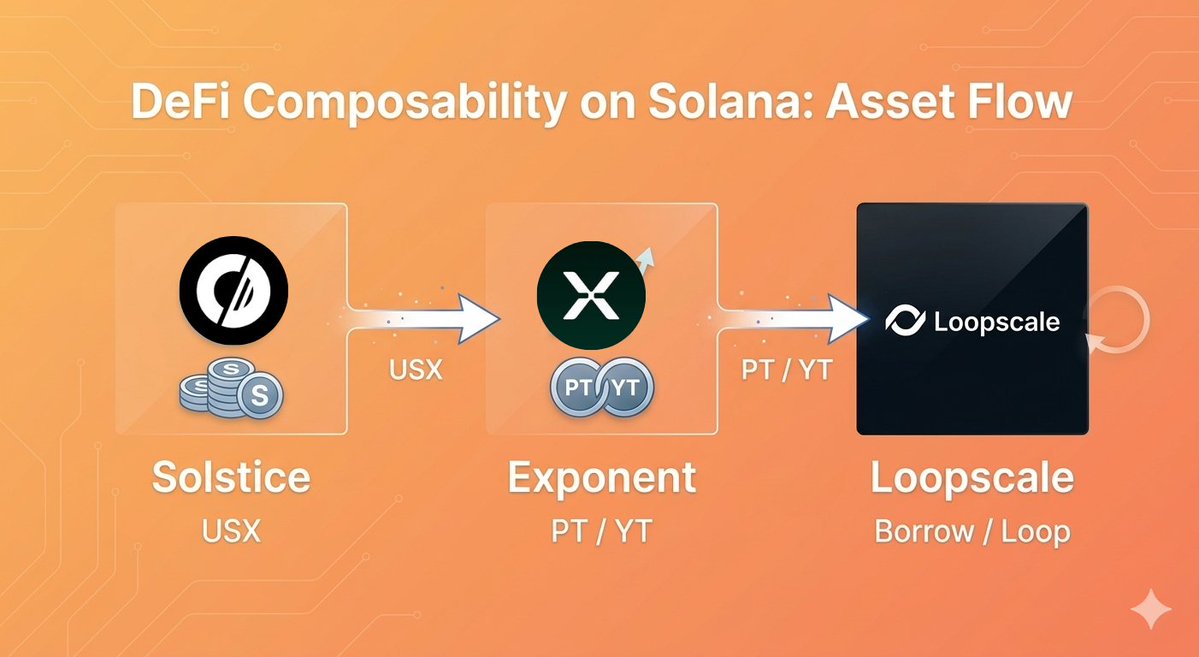
I Learned Solstice #1 - Understanding the PT Maturity Shift and Why It Matters ? ➥ @Solsticefi is building a native stablecoin ecosystem on Solana around , its main stablecoin, and , a yield bearing version that can generate returns more automatically. Together with protocols like Exponent and Kamino, Solstice creates a system where users can access both more fixed and more flexible yield strategies. The key point is simple: PT and YT have an expiry date. When the old term ends, users cannot stay in the same position forever. They need to redeem the old one first, then decide whether to enter the new one. Solstice does not auto roll positions, because users are meant to reassess the market before moving on. The difference between PT-USX and YT-USX. PT-USX is the more stable side, offering principal plus fixed yield until maturity. > YT-USX is the variable yield side, so it depends more on realized APY and incentives. > In short, PT is for users who want more predictable, while YT fit users who are more bullish on future yield. Overall, the main message is that the move into a new term is not just a technical update. It is a moment for users to pause, reassess market conditions, and choose their next step more carefully. My hot take: Solstice mechanism is smart because it forces users to think. That is great for product quality, but it also means the system rewards informed users more than passive ones