David King
8.5K posts

David King
@Spaceception
Engr student, SF writer, & space nerd. My favorite person is @veejericaodd ❤ The universe is probably littered with the one planet graves of cultures... - R.M.
One AU, more or less 加入时间 Aralık 2015
273 关注251 粉丝

@Truthful_ast It was great! I like how you add the music of the different countries that do these missions.
Does their mission work like Apollo, where 2 Taikonauts go to the surface, and 1 remains in Mengzhou? Or are they only sending up 2 Taikonauts.
English

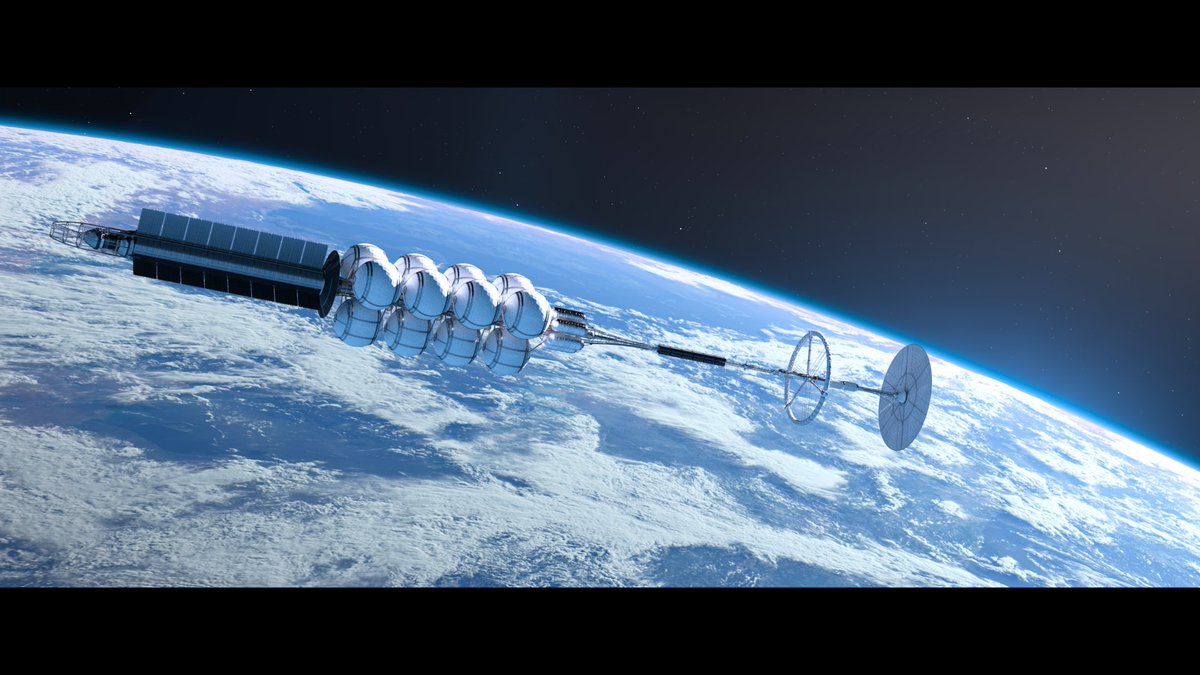
@Truthful_ast Project Daedalus, because it's something people designed to be a spacecraft, and it likely inspires some design choices in art to this day, like those spherical tanks. deviantart.com/blikjebier/art…
Or for a modern example, Firefly.


English

@zoi716 Super Falcon-1
I wonder what you could do with that. Similar to the Delta IV? W/ a weaker 1st stage, much more powerful 2nd
The BE-3U would be comically overpowered, even if it set to >1/2 throttle.
The overall vehicle would be >2.5m diameter to be flush with the upper stage.
English

@SpaceKoala Neutron in the 1st poll, NG on this one.
I don't know where Starship will be. We'll be more than halfway through the year when F13 goes, and even assuming F14 is orbital a month later, that leaves 3-4 months in the year. They could fly the the long duration flight in Q4 26.
English
David King 已转推

@Gateway2Space Less than a year is different than before 2027. I think it could very well slip into next year, but would overall take less than a year if their optimisim is warranted.
English


@deltaIV9250 Assuming $214m/launch (based on NSSL contracts last year), that's $6.8b a year. A lot, but for $3.4b per Lunar mission, and being able to do 2 a year, that's a bit better than today. Cost can be lower too (NSSL went as low as $119m, 3.8b total here).
How long are the missions?
English


@NeuralinkApe @SawyerMerritt They were already planning to do it, and had some of the upgrades on the side ready to go. But it still took them 7 months. And as much damage as IFT-1 caused, a lot of it was repairable, not just broken. The tower, for instance.
English

@SawyerMerritt How come SpaceX fixed theirs and added water cooling in like couple of weeks
English

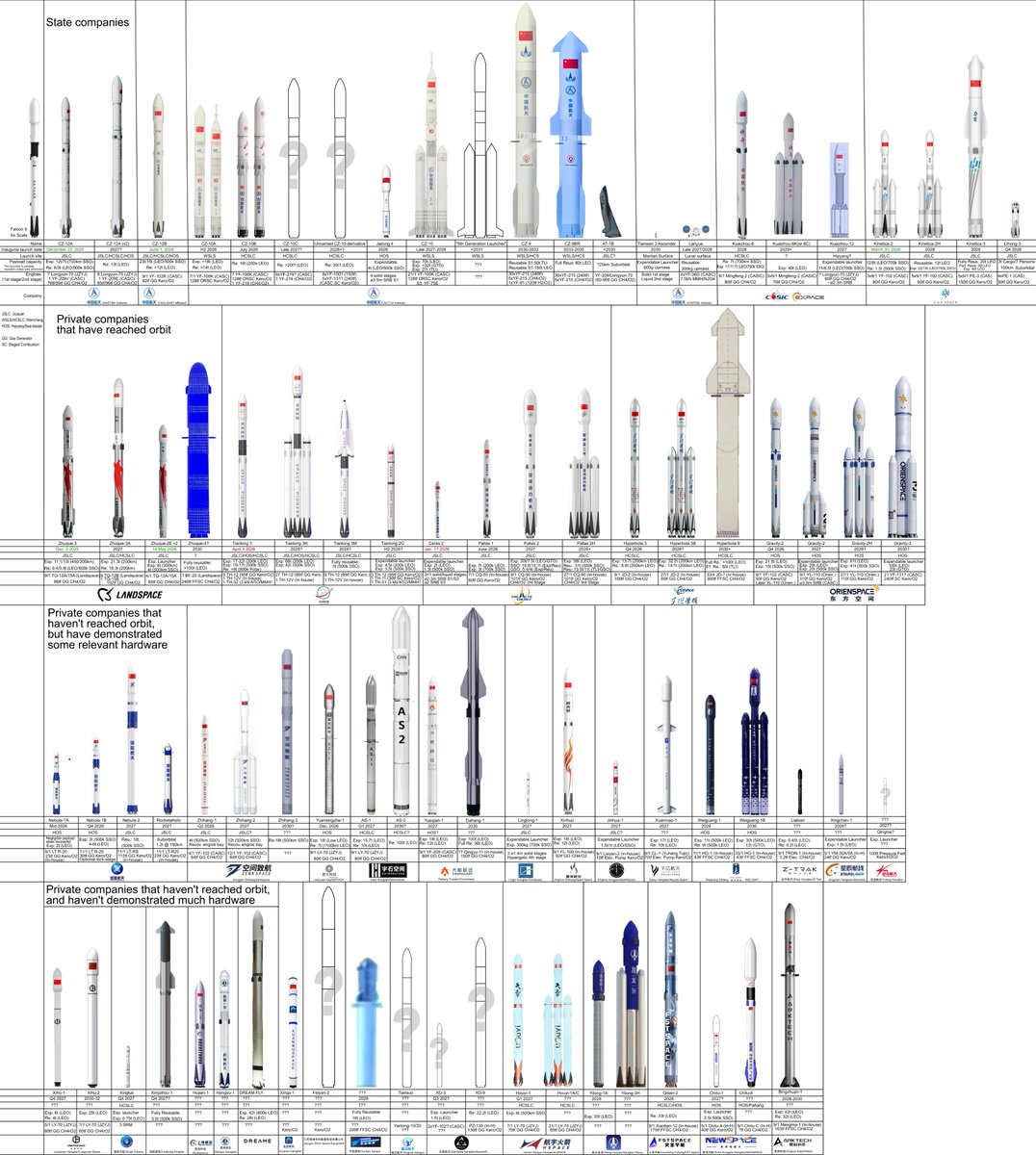
@TAbusnardo I wonder how many will be active in a decade, or how many will be canceled.
Like the small lift rocket 'boom' we saw a while back. A lot of different rockets, but only a handful of companies are left standing (and almost all pivoting to medium lift).
English

@Echo5550 @ThePrimalDino They don't need to make a launch window for TLI, so a day launch is definitely possible!
English

@ThePrimalDino I’m for it as long as it's also a mandatory day launch
English
David King 已转推

@BenHsiao0522 @pintleinjector Does Mk 1s diameter of 3.08m not include the legs? Or are they not retracted on launch?
English

@Spaceception @pintleinjector FCC documents indicate that Blue Moon MK1 Mission 1 will be deployed to LEO, which is feasible in terms of payload capacity, but Vulcan fairing may not be wide enough to accommodate the landing leg.

English

Actually nvm Vulcan makes so much more sense for this if ULA can lock in and get that thing flying again and add an LH2 line for fuelling the spacecraft
Pintle@pintleinjector
They should weigh flying blue moon mk 1 on a falcon heavy tbh, just to see if theres any way to keep making progress on their lunar ambitions.
English
David King 已转推

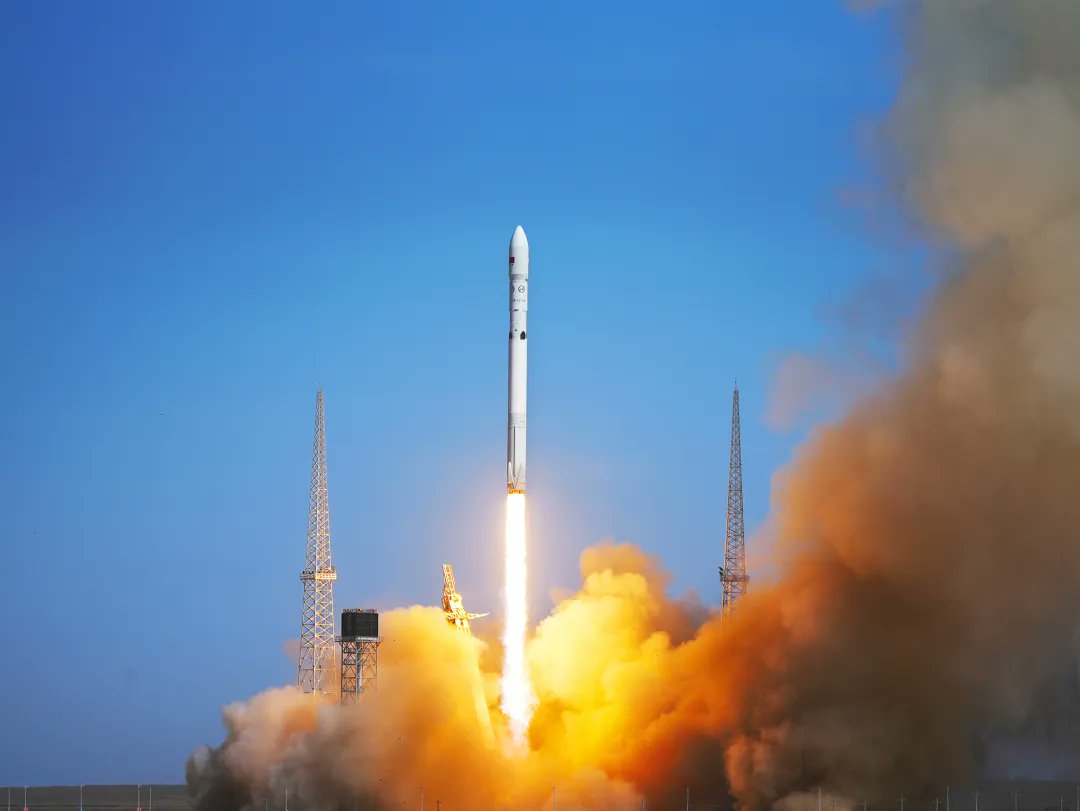
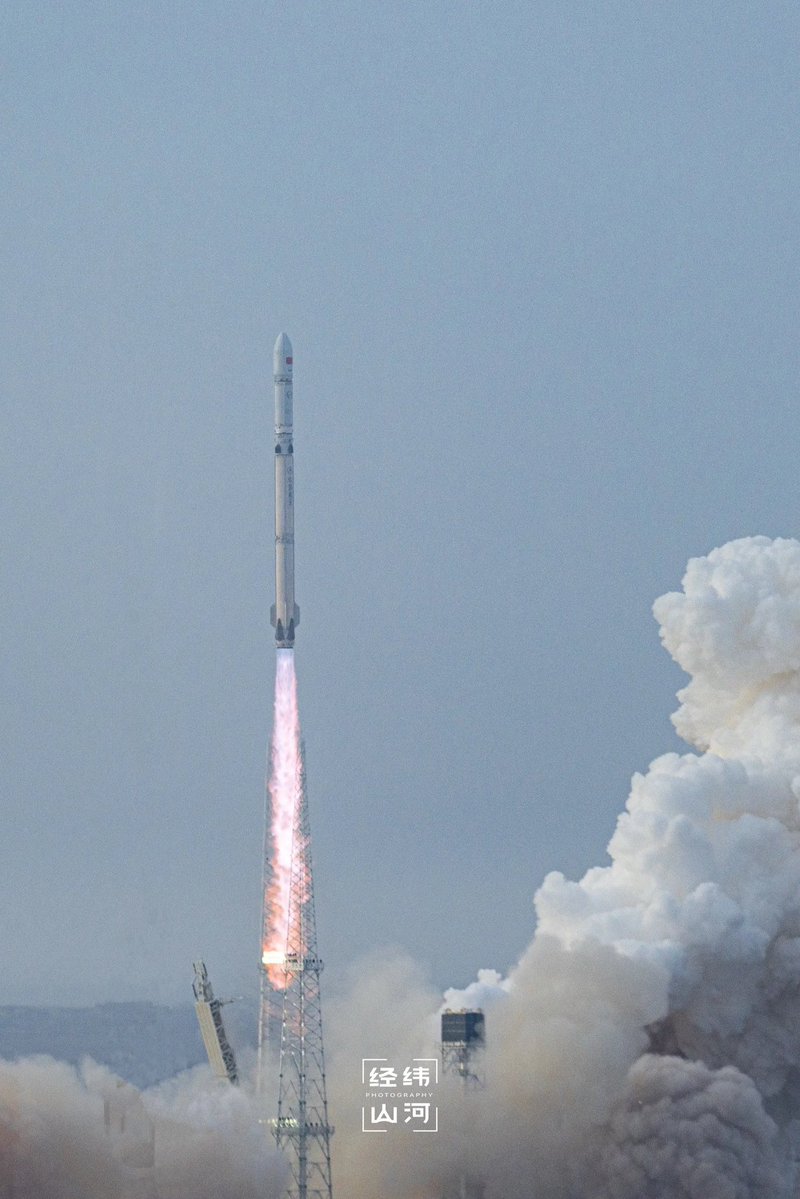
Today China succesfully launched yet another reusable rocket, the Long March-12B!
This brings China's total count of flown reusable orbital rockets up to 3 making them tie with the United States!
The three Chinese lifters are Zhuque-3, LM-12A, and now LM-12B all of which have debuted in the last 5-6 months and were all succesful in the mission objectives!
And the three American lifters are currently Falcon, Starship, and New Glenn.
Although Terran R and Nova are making fast progress, Nova will not have reuse on the first flights and it's unknown if Terran R can make its NET date of late 2026, this means China will surpass the US in active reusable rockets jumping from the now 3 reusable rockets to 4 in a month and 5-6 by the end of the year.
China's space program is ramping up faster than even America's during the Apollo program.


星海@starmil_admin
congrats on the successful first flight of CZ-12B
English
David King 已转推
David King 已转推

🚀 Space exploration timeline:
1903 — Tsiolkovsky publishes the rocket equation
1904
1905
1906
1907
1908
1909 — Goddard writes first paper on liquid propellants as fuel for rockets
1910
1911
1912
1913
1914 — Goddard patents designs for a liquid-fueled rocket and a multi-stage rocket
1915
1916
1917
1918
1919 — Goddard publishes "A Method of Reaching Extreme Altitudes"
1920
1921 — Goddard begins experiments with liquid oxygen and gasoline rocket engines
1922
1923 — Goddard successfully tests first liquid propellant engine
1924
1925
1926 — Goddard launches world's first liquid-fueled rocket
1927 — VfR (Society for Space Travel) founded in Germany; von Braun joins as a teenager
1928
1929 — Goddard launches rocket carrying first scientific payload (barometer & camera)
1930
1931 — Korolev co-founds GIRD (Group for Study of Reactive Motion) in Moscow
1932 — Von Braun becomes chief engineer of German Army rocket program
1933 — Korolev leads launch of USSR's first liquid-fueled rocket
1934 — Von Braun's A-2 rockets reach 2.4 km altitude
1935
1936 — Korolev designs RP-318, USSR's first rocket-powered aircraft
1937
1938
1939 — Von Braun's A-5 rocket reaches 8 km altitude
1940
1941
1942 — Von Braun's A-4 (V-2) rocket becomes first human-made object to reach space (100 km)
1943 — V-2 production begins; JPL formally established in USA
1944 — V-2 used as weapon against London and Antwerp; first ballistic missile attacks in history
1945 — USA recruits von Braun
1946 — USA and USSR independently begin reverse-engineering V-2
1947 — First animals (fruit flies) launched to space aboard a V-2
1948 — Korolev's R-1 rocket successfully launched
1949 — Albert II, a rhesus monkey, becomes first mammal in space aboard a US V-2 rocket
1950
1951
1952
1953 — Korolev begins design of R-7
1954 — Korolev writes letter to Moscow advocating for an orbital satellite program
1955 — USA announces Project Vanguard
1956 — Von Braun's Redstone rocket successfully tested; R-7 development nears completion
1957 — Korolev's R-7 becomes world's first ICBM; Sputnik 1 — first artificial satellite in orbit; Sputnik 2 carries Laika — first living creature in orbit
1958 — USA launches Explorer 1; NASA founded; first US attempt at Moon probe (Pioneer 0) fails
1959 — Luna 1 (USSR) — first spacecraft to escape Earth's gravity; Luna 2 — first human-made object to reach the Moon; Luna 3 — first photos of Moon's far side
1960 — First weather satellite (TIROS-1) launched by USA; first communications satellite (Echo 1); two Soviet dogs (Belka & Strelka) orbit Earth and return safely
1961 — Gagarin — first human in space, April 12; Alan Shepard — first American in space, May 5
1962 — Mariner 2 — first spacecraft to fly by another planet (Venus); Telstar 1 — first active communications satellite
1963 — Tereshkova — first woman in space
1964 — Ranger 7 — first close-up photographs of the Moon's surface
1965 — Leonov — first spacewalk; Mariner 4 — first close-up images of Mars
1966 — Luna 9 — first soft landing on the Moon; first orbital docking (Gemini 8); Surveyor 1 — first US soft Moon landing
1967 — Apollo 1 fire kills three astronauts; Venera 4 — first probe to enter another planet's atmosphere (Venus)
1968 — Apollo 8 — first crewed mission to orbit the Moon; famous Earthrise photograph
1969 — Apollo 11 — first humans on the Moon; Apollo 12 — second Moon landing
1970 — Apollo 13 — Moon mission aborted after explosion; Luna 16 — first robotic Moon sample return; Lunokhod 1 — first lunar rover
1971 — Salyut 1 (USSR) — first space station; Mariner 9 — first spacecraft to orbit another planet (Mars); Apollo 14 & 15 Moon landings
1972 — Apollo 16 & 17 — final Moon landings; Pioneer 10 launched toward Jupiter; last humans on the Moon
1973 — Pioneer 10 — first spacecraft to fly by Jupiter; Skylab — first US space station
1974 — Mariner 10 — first gravity assist maneuver; first flyby of Mercury
English