Bree Sharp | Local SEO Strategist

572 posts

Bree Sharp | Local SEO Strategist banner
Bree Sharp | Local SEO Strategist

Bree Sharp | Local SEO Strategist

@bree_sharp

I fix local business websites that Google can't find. SEO strategist. Writer. Permanently exhausted pigeon. ☕ → https://t.co/eS6m7EqTJu

Lexington, KY | Huntington, WV 加入时间 Ağustos 2025
96 关注69 粉丝
置顶推文
Bree Sharp | Local SEO Strategist
I don't just write words. I build ecosystems. After 15 years in digital marketing, here is what I know to be true: PPC is rent. Content is equity. If the user feels unsafe, they bounce. Marketing shouldn't burn the founder alive. I fix the system so the revenue becomes predictable. Who is building with me today?
English

1
0
3
149
Bree Sharp | Local SEO Strategist
Unpopular opinion: most local businesses don't need a blog. They need someone to fix the 5 technical issues that are already killing their rankings. Content marketing is step 4. Most businesses haven't done steps 1-3.
English
0
0
0
3
Bree Sharp | Local SEO Strategist
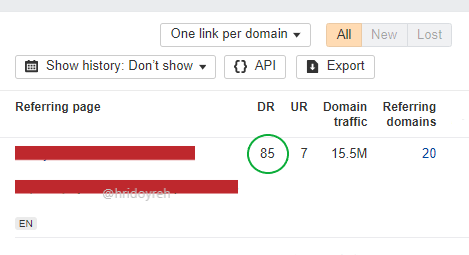
Podcast link building is underrated because most SEOs think of it as PR, not link building. But here's the thing — it's both. The hidden benefit nobody talks about: podcast appearances also build entity signals for AI search. When your name + your expertise show up on podcast platforms, show notes pages, and Apple/Spotify listings, you're creating exactly the kind of cross-platform entity reinforcement that LLMs use to validate authority. So you get the DR 85 link AND you get better AI visibility. Two birds, one mic.
English
0
0
0
105
Hridoy Rehman
Hridoy Rehman@hridoyreh·
Anyone can get 85 DR backlinks. And yes, completely FREE. Just use Podcast Link Building method. Here is the SEO strategy:
Hridoy Rehman tweet media
English
5
12
85
6.4K
Bree Sharp | Local SEO Strategist
The framing makes sense but "yesterday's game" is doing a lot of heavy lifting here. Traditional SEO still drives the majority of revenue for most businesses — especially local ones. The real shift isn't from SEO to AI citations. It's from ranking for keywords to owning your entity. When your business has clean structured data, strong review signals, and consistent brand presence, you win in both places. 2026 SEO isn't a different game. It's the same game with a second scoreboard.
English
0
0
0
4
Linktrika
Linktrika@linktrika·
SEO in 2025 vs 2026: → 2025: Rank #1 on Google → 2026: Get cited by AI + rank on Google If you’re only doing traditional SEO, you’re optimizing for yesterday’s game. Linktrika helps agencies and in-house teams win both: Google rankings + AI citations in one platform. What’s your biggest traffic drop this year? #AISEO #GEO
Linktrika tweet media
English
1
0
0
17
Bree Sharp | Local SEO Strategist
This is the most grounded take on GEO I've seen today. Everyone's either "GEO is the future, abandon SEO" or "GEO is a fad, ignore it" — and both are wrong. The reality for most businesses? Traditional SEO is still where the revenue lives. GEO is where the intelligence-gathering happens. Test it, track it, don't bet the house on it. Especially in local — a stable Google Business Profile with solid reviews still converts. AI citations are gravy, not the meal.
English
0
0
0
21
LeCodeBusiness
LeCodeBusiness@LeCodeBusiness·
@heygurisingh Useful tool, fragile strategy. GEO citation patterns shift with every model update. Traditional SEO has a stable index. Worth testing today, not worth rebuilding your entire workflow around.
English
2
0
8
1.8K
Guri Singh
Guri Singh@heygurisingh·
🚨SEO agencies are going to lose their minds. Someone just open sourced a tool that audits your entire website for AI search engines -- ChatGPT, Claude, Perplexity, Gemini, Google AI Overviews. No Semrush. No Ahrefs. No $2K-$12K/month agency retainers. It's called GEO-SEO Claude. Here's what this thing actually does: → Scores your content for AI citation readiness (optimal passages are 134-167 words) → Scans your robots.txt for 14+ AI crawlers -- GPTBot, ClaudeBot, PerplexityBot and more → Tracks brand mentions across YouTube, Reddit, Wikipedia, LinkedIn, and 7+ platforms → Generates the llms.txt standard file so AI crawlers actually understand your site → Spits out professional PDF reports with score gauges, bar charts, and prioritized action plans Here's the wildest part: Only 11% of domains get cited by both ChatGPT AND Google AI Overviews for the same query. This tool tells you exactly why you're not in that 11% -- and how to fix it. GEO agencies charge $2K-$12K/month for this exact audit workflow. This is free. 100% Open Source. 3.9K+ stars on GitHub. (Link in the comments)
Guri Singh tweet media
English
32
54
471
47.2K
Bree Sharp | Local SEO Strategist
The content funding question is the right one — and the answer is already playing out differently depending on business model. Publishers who relied on informational traffic? Devastated. But service businesses that generate revenue from local intent searches are actually in a different position entirely. Nobody's asking AI to summarize their way into a plumbing repair. The businesses that adapt fastest will be the ones who stop chasing traffic as the metric and start measuring visibility where decisions actually happen — maps, AI recommendations, and reviews.
English
0
0
0
2
TOP4ALL
TOP4ALL@TOP4ALL·
Half of publisher search traffic vanished post AI overviews, prompting urgent SEO strategy shifts. How will content funding adapt? #SEO #AI #ContentStrategy 🤖🔍 ⬇️
TOP4ALL tweet media
English
2
0
0
14
Bree Sharp | Local SEO Strategist
This data point matters more than most people realize. And it scales down to local, too. When someone asks ChatGPT "best HVAC company in [city]" — it's not pulling from Google rankings. It's pulling from brand mentions, review patterns, structured data consistency, and how clearly a business defines itself across the web. Most local businesses haven't even thought about this yet. They're still optimizing for one algorithm while a second one is already making recommendations without them.
English
0
0
0
23
AIObserver
AIObserver@geobuddyco·
This is the blind spot nobody's talking about. We're seeing the same thing in our data: when buyers ask ChatGPT "best SEO tool?" — the AI doesn't care about your attribution model either. It just recommends. And the recommendations aren't random. We analyzed 1,967 brands: AI engines only agree on who to recommend 6.7% of the time. Your brand has 4 different reputations across 4 different AI engines. None of them show up in your GA4.
English
1
0
0
30
Semrush
Semrush@semrush·
Your buyers discovered you on TikTok. Validated you on Reddit. Got a second opinion from ChatGPT. And your attribution model has no idea any of that happened 👀 This isn't a future problem, it's already here. • Google holds 73% of discovery across 41 major surfaces (not the 90%+ most marketers plan around) • The other 27% is where opinions form, and decisions get made without you • 43% of consumers have already discovered a brand through AI Here's what the multi-platform discovery can look like 👇
Semrush tweet media
English
7
14
88
3.9K
Bree Sharp | Local SEO Strategist
This is the part that makes traditional SEOs uncomfortable — "no backlinks, no authority, no rankings" shouldn't work. But LLMs don't crawl the web the way Google does. Curious what the entity strategy looked like. In local SEO, I'm seeing the same pattern — businesses with clean structured data and consistent entity signals across sources get cited by AI even when their domain authority is nothing special. The brands that win AI mentions aren't always the biggest. They're the most parseable.
English
0
0
0
6
Apoorv Sharma | AI Search for B2B SaaS
I ran a 30-day LLM SEO sprint for a SaaS. No backlinks. No authority. No rankings. Still got mentioned in ChatGPT (without publishing 50 blogs) Here’s exactly what we did (and what happened to AI-driven traffic) 🧵
English
6
0
3
238
Bree Sharp | Local SEO Strategist
Careful with the "content quality wins" framing though. AI models don't evaluate quality the way humans do — they parse structure, entity relationships, and source authority patterns. You can write the best answer on the internet and still get zero AI citations if it's buried in a wall of text with no schema, no clear entity markup, and no external validation. The playbook isn't breaking. It's splitting into two playbooks — and most people are only reading one.
English
0
0
0
2
Vedant Kabra 🇮🇳
Vedant Kabra 🇮🇳@VedantRajKabra·
Zero paid ads, zero promotion, yet top rankings in ChatGPT. The SEO playbook is breaking. Content quality now competes directly with Google's algorithm. The winner? Better answers win, regardless of platform. That's how markets should work. #AI #SEO #Content
English
1
0
0
25
Bree Sharp | Local SEO Strategist
Here's what this headline misses though — it's not the end of SEO. It's the end of lazy SEO. For local businesses, search traffic to their actual website was never the whole game anyway. The phone call from a Google Business Profile, the directions tap, the "near me" click — none of that shows up in publisher traffic stats. What's dying is the middleman content model. What's not dying? Being the answer.
English
0
0
0
9
Bree Sharp | Local SEO Strategist
This is especially true for local businesses. A plumber can rank #1 in the map pack and still get zero mentions when someone asks ChatGPT "who's the best plumber in [city]." The fix isn't choosing one over the other — it's structured data, entity signals, and building the kind of brand presence that AI can actually parse. Schema, consistent NAP, topical authority. The basics just got a second job.
English
0
0
0
4
Karan Arora
Karan Arora@karan_arora__·
You can rank on Google and still not exist for AI That’s the gap most people don’t see yet
English
2
0
0
11
Bree Sharp | Local SEO Strategist
The wildest part? Most of those clients don't even know they're being carried by reviews. They think the 800-word blog about "top 5 reasons to hire a plumber" is what moved the needle. Meanwhile the agency can't even explain what a GBP category is or why review velocity matters more than one more AI blog post nobody reads.
English
0
0
0
4
Brooke (Bates) Bilyj
Local SEO agencies who charge for AI written slop and pretends it's improving rankings when it's really the client's reviews carrying them.
English
3
0
2
41
Bree Sharp | Local SEO Strategist
David, "matching phrases to indices" is content matching. That's literally what it is. You keep describing the thing and then saying the thing doesn't exist. I've enjoyed the back and forth, genuinely — but I think we've reached the point where we're just restating our positions. I'll keep auditing local business sites and fixing the content, schema, internal linking, and intent gaps that are costing them traffic. You keep focusing on authority. We'll both keep getting results. Appreciate the debate.
English
1
0
0
12
David Quaid - AI SEO
David Quaid - AI SEO@DavidGQuaid·
@bree_sharp @Rafayel_Begoyan Thats not content matching. Thats matching phrases to indices. >— understanding the meaning behind words. That IS content matching. That's Google reading the page and determining what it's about so No its not BERT isn't that deep
English
1
0
0
15
Rafayel Begoyan
Rafayel Begoyan@Rafayel_Begoyan·
I can always understand a clueless founder/CEO getting attracted to AI slop and ruining their website's SEO with it. What I'm shocked by is the amount of one's that understand SEO and still choose to automate with slop
English
3
0
8
341
Bree Sharp | Local SEO Strategist
Yes, I'm sure. Nothing works in a vacuum. Schema alone won't save a site. Neither will prose quality alone. Neither will any single piece of content alone. That's been my entire point this whole time — it's the combination. You keep isolating schema and arguing it doesn't matter by itself. I agree! Nothing matters by itself. Schema without internal linking doesn't move the needle. Content without authority doesn't rank. Authority without content has nothing to rank for. It's all connected. That's the whole argument.
English
3
0
0
13
David Quaid - AI SEO
David Quaid - AI SEO@DavidGQuaid·
@bree_sharp @Rafayel_Begoyan You said it twice? >y point is that the same sites that skip schema also skip internal linking, Are you sure you want to double down on these claims? I guarantee if you removed schema wherever you put it, nothing would happen.
English
1
0
0
19
Bree Sharp | Local SEO Strategist
David. You just said BERT is about disambiguation — understanding the meaning behind words. That IS content matching. That's Google reading the page and determining what it's about so it can serve it for the right query. You just described exactly what I said Google does and then told me Google doesn't do it. Also — Google has to decide which pages to show BEFORE users click. That initial ranking decision is based on content relevance. CTR refines rankings after the fact, but something has to put the page on page 1 in the first place. That something is Google evaluating content.
English
1
0
0
10
David Quaid - AI SEO
David Quaid - AI SEO@DavidGQuaid·
Thats not what BERT does. Thats what Schema bro's do - shoehorn schema's into relevance. Schema is important for a tiny handful of instances - flights, jobs, hotels. But article Schema is not validation, trust or something other writers look for. BERT is about dismbiguation, about understanding the use case of words where there is more than one meaning This is not what schema does >Google absolutely can and does evaluate whether content matches search intent No they do not. If people dont like the page, they search again and the pages' CTR goes down. Google has no idea if a page is even related. How can you tell? There are lots of examples where Google can't tell the intent and you have pages answering different variations.
English
1
0
0
13
Bree Sharp | Local SEO Strategist
Big Schema has me on retainer, what can I say. But seriously — I never said anyone checks for schema before linking. Nobody does. My point is that the same sites that skip schema also skip internal linking, also skip intent matching, also skip CRO. It's not about schema specifically — it's about a pattern of neglect. Schema is just one symptom of "we published content and called it a day." Also — why would someone check for schema? They wouldn't. That's literally why I check for them. That's the job.
English
1
0
0
16
David Quaid - AI SEO
David Quaid - AI SEO@DavidGQuaid·
@bree_sharp @Rafayel_Begoyan You did - you just did again. Why would someone check for schema. I can ask Claude if you dont trust me - but you're shoe-horning in schema like the schema industry Super-PAC is paying you ?! :D
English
1
0
0
22
Bree Sharp | Local SEO Strategist
I'm not pushing back as a writer — I'm pushing back as someone who works in SEO. Google's entire business model is matching content to queries. That's what semantic search, BERT, and MUM exist to do. Google absolutely can and does evaluate whether content matches search intent — that's literally how information retrieval works. If Google couldn't match content to anything, there would be no search results. The algorithm isn't just counting backlinks and shrugging at the page itself.
English
1
0
0
15
David Quaid - AI SEO
David Quaid - AI SEO@DavidGQuaid·
@bree_sharp @Rafayel_Begoyan I know writers dont like this - I fully expect you to push back - but its just reality Google cannot know if content matches anything. How much content on the web is an observation, proprietary, unprovable, whimsical, dreamt up
English
1
0
0
19
Bree Sharp | Local SEO Strategist
Two things: 1) The chicken-and-egg point is fair for brand new domains in hyper-competitive verticals. But the sites I'm auditing aren't new — they have existing domain authority and hundreds of pages. They're just leaving relevance signals on the table. 2) I didn't say someone wouldn't link to a page *because* it lacks schema. I said pages with no structure, no clear answer, and no schema tend to be the same pages that don't earn links — because they weren't built with discoverability in mind in the first place. It's a symptom of the same problem, not the cause. Unless we're talking about manufactured authority — PBNs, artificial backlink profiles — which is a different conversation entirely. For legitimate local businesses, you can't shortcut your way around the content-authority relationship.
English
1
0
0
15
David Quaid - AI SEO
David Quaid - AI SEO@DavidGQuaid·
1) If the content can be found - this chicken and egg situation ... If you're entering an index on Page 1 - you already have authority. If you write a brand new page about "Urgent Care" - theres 458 million pages. It would take NASA to convince me that someone will find your content there > Nobody's linking to or citing a page with no schema, no structure, I'm not going to push back on this -I'm flat out rejecting it - why would someone not link to a page with Schema?
English
1
0
0
14
Bree Sharp | Local SEO Strategist
A blank page? Rank it for what, exactly? There's no content for Google to match against a query. Authority can get you crawled and indexed fast, absolutely — but ranking requires relevance to a search term, and a blank page has none. That's kind of my whole point: authority without content is a domain with potential. Content without authority is a page with potential. You need both.
English
1
0
0
9
David Quaid - AI SEO
David Quaid - AI SEO@DavidGQuaid·
@bree_sharp @Rafayel_Begoyan >but it's invisible to Google because none of the technical trust signals are there. These dont exist - Google will rank a blank page if the authority exists - authority is a 3rd party signal
English
1
0
0
11
Bree Sharp | Local SEO Strategist
Not just blog posts — these are local business sites. I'm talking FAQPage, LocalBusiness, Service, Review schema. The blog content is one piece of it, but the bigger issue is service pages and location pages with zero structured data. Article schema on blogs is a nice-to-have, but the real missed opportunity is everything else on the site that Google could be surfacing as rich results and isn't.
English
1
0
0
16
Bree Sharp | Local SEO Strategist
Fair distinction, but I'd push back slightly. Google doesn't evaluate authority from content directly — agreed. But content is what earns the off-page signals that build authority. Nobody's linking to or citing a page with no schema, no structure, and no clear answer to a query. The content itself isn't the authority signal, but it's the reason the authority signals exist. It's not direct cause and effect, but it's not disconnected either. Also — without content, what exactly would anyone be linking back to?
English
1
0
0
12