Damian Dąbrowski

5.8K posts

Damian Dąbrowski banner
Damian Dąbrowski

Damian Dąbrowski

@dabrodev

Damian Dąbrowski | AI | SaaS | Games | Sci-Fi | Jr Agentic Engineer | Electrical Power Engineer |

Polska 加入时间 Ekim 2011
558 关注361 粉丝
Damian Dąbrowski
Damian Dąbrowski@dabrodev·
You don't need Hermes Agent to run ads fully autonomously. You need an autonomous campaign loop. Because the problem with ads is not that founders cannot generate one more creative. The problem is that they do not have a system for what happens after the creative is generated. Most campaigns fail here: too few angles tested, too much spend burned on losers, no clear winner, manual decisions made too late, remarketing that repeats instead of extending the story. That is why an “AI ad generator” is not enough. A performance campaign needs an operator. A system that can: read the landing page, build the brief, generate variants, launch the test, monitor performance, pause weak creatives, scale the winner, and trigger remarketing automatically. That is what I am building with Livra. Current campaign structure: 4 creatives 2 formats 1 ad set 24/7 monitoring automatic loser pausing winner scaling sequential remarketing The point is not to create more ads. The point is to create more signal for the algorithm and remove manual campaign babysitting from the founder’s day. For the user, this changes 3 things: 1. Faster testing You are not waiting days for new creative iterations. 2. Less wasted spend Weak variants are paused instead of soaking up budget. 3. Better follow-up The winning creative becomes the base for sequential remarketing, not just a one-off ad. Most AI ad tools stop at creative generation. Livra is built to run the campaign. I created a full guide showing the exact autonomous ads loop: test → learn → pause losers → scale winner → remarket. Like this post, comment ADS, and follow me so I can DM you the full guide.
Damian Dąbrowski tweet media
English
0
0
0
5
Damian Dąbrowski
Damian Dąbrowski@dabrodev·
Livra + Claude Opus + GPT Image 2 = Autonomous Ads Manager Phase 1 in Livra is a pure casting test. Three different actors, three real Meta-feed creatives, one shared product story. The only variable is the face. Meta optimizes inside the ad set and the winning actor automatically carries into Phase 2 scaling and Phase 3 sequential remarketing.
Damian Dąbrowski tweet media
English
0
0
0
54
Damian Dąbrowski
Damian Dąbrowski@dabrodev·
Today I rewrote how Phase 1 cold testing works in Livra. Old version: one persona rendered through three different style approaches. Same face, three vibes. New version: three different actors from my persona library, one per approach. Different faces, same product. The reason matters more than the change. Cold testing in Meta is signal extraction. You want one clean variable so the algorithm tells you exactly what worked. Most ad generators rotate styles or copy or hooks, often two or three variables at once, and the learning phase becomes guesswork. If the variable under test is the actor and only the actor, the answer Meta returns is unambiguous. This face sells your product. That answer compounds downstream. The winning persona scales in Phase 2 with the same face plus minimal variations. Phase 3 sequential remarketing rests on the audience recognizing that face from cold test. Casting decision in Phase 1 becomes the spine of the whole funnel. Quality of test setup determines quality of every later phase. That is the lesson. Image rendered through Vertex AI, 4:5 portrait, 2K. Same prompt on both: NB 2 (gemini-3.1-flash-image-preview) takes 32 seconds, NB Pro (gemini-3-pro-image-preview) takes 44 seconds. #buildinpublic #ai #saas #metaads
Damian Dąbrowski tweet mediaDamian Dąbrowski tweet media
English
1
0
0
13
Ellaa
Ellaa@learnwithella·
I just built a Claude Code SEO agent that replaces your $200/mo. Ahrefs subscription 🤯 One prompt → keyword gaps found, competitors analyzed, content written in your brand voice, rankings tracked weekly. All inside Claude Code. Perfect for DTC brands and agencies who know SEO matters but never have the bandwidth to actually do it consistently. If your SEO workflow looks like this — log into Ahrefs once a month, export a CSV, skim it for 5 minutes, close the tab, tell yourself you'll write that blog post next week, never do... This agent runs the entire loop for you: → Connects to Google Search Console and pulls your real ranking data → Finds your "gap zone" — keywords sitting at positions 5-20, one article away from page 1 → Uses Apify to scrape who's outranking you and breaks down exactly why they're winning → Interviews you once about your brand, customers, and positioning — then never asks again → Writes content in your voice — not generic AI slop that tanks after 90 days → Tracks rankings weekly and feeds what's working back into the next cycle → Optimizes your product listings for AI shopping — so you show up when someone asks ChatGPT for a recommendation, not just Google No $200/month tools you open once and forget. No freelancers writing content that sounds like everyone else. No manually checking rankings and forgetting to act on it. What you get: - Keyword cards with a specific action recommendation for each gap zone opportunity - A competitive breakdown — who's beating you and the exact fix for each keyword - A weekly content plan generated from your real GSC data - A brand voice profile Claude uses for every article it writes - Product listing optimization for AI shopping (ChatGPT, Gemini, Perplexity) — the new SEO nobody's doing yet Built 100% in Claude Code with Google Search Console. I put together a full playbook with the skill files, brand interview, and the exact weekly workflow. Want it for free? > Like this post > Comment "SEO" And I'll send it over (must be following @learnwithella so I can DM)
English
563
49
821
43.9K
Ellaa
Ellaa@learnwithella·
Claude Code + ChatGPT Images 2.0 is f*cking cracked 🤯 I rebuilt my static ad system inside Claude Code on the new ChatGPT Images 2.0 model. One brand name + one URL = 40 production-ready static ads. All inside Claude Code. Perfect for DTC brands and agencies who need high-volume ad creative without briefing a designer or spending hours in Canva. If you're finding winning ad concepts on Meta and manually recreating them one at a time — copying prompts, pasting product details, tweaking aspect ratios, downloading, organizing... This system eliminates the entire loop: → Give Claude a brand name and URL → It researches the brand's fonts, colors, packaging, and photography style → Builds a Brand DNA document from scratch → Fills in 40 proven ad templates (headline, us vs them, testimonial, UGC, review cards, stat callouts) with brand-specific details → Fires every prompt to ChatGPT Images 2.0 with your product photos as reference → Downloads finished ads into organized folders with an HTML gallery No manual prompt filling. No Canva templates. No copy-pasting between tools. What you get: → 40 ad formats filled with your exact brand colors, fonts, and copy → Text that actually renders correctly (the new model handles dense copy, logos, and multi-language callouts cleanly) → Product photos passed as reference so the model matches your real packaging → A reusable system — new brand, new folder, same pipeline Built 100% in Claude Code with ChatGPT Images 2.0. I put together a DIY playbook showing the exact architecture so you can build this yourself in Claude Code. Want it for free? > Like this post > Comment "CHAT" And I'll send it over (must be following @learnwithella so I can DM)
English
277
30
364
18.5K
Mike Futia
Mike Futia@mikefutia·
I just vibe coded a static ad generator in Claude Code that creates 100+ Meta ads in minutes. All using the new, insane ChatGPT Images 2.0 model. One competitor ad + your product photo + your brand kit = dozens of on-brand variations, each targeting a different customer persona. Built 100% in Claude Code on the new ChatGPT Images 2.0. Perfect for DTC brands and agencies who need more statics at scale. Here's how it works: → Upload any competitor ad as your reference template → Add your product photos and brand kit (colors, fonts, logos) → AI generates 10 customer profiles from your brand research → Pick how many variations you want (10, 20, 30) → Tool fires every prompt to ChatGPT Images 2.0 with persona-specific copy for each one No designer back-and-forth. No Canva templates. No generic "Shop Now" on everything. What you get: → Ads that mirror winning concepts in your brand's voice → Text that actually renders correctly (the new model handles dense copy, logos, and multi-language callouts cleanly) → Copy targeted to specific customer pain points and personas → Multi-brand/client support with saved brand kits → Reusable customer profiles you build once and generate from forever I recorded a full walkthrough showing exactly how this works, including ALL the prompts I used so you can build it yourself. Want access to all the prompts for free? > Like this post > Comment "STATICS" And I'll send it over (must be following so I can DM)
English
489
38
680
47.6K
Michel Lieben
Michel Lieben@MichLieben·
I'm giving away the Claude Code skills we use to manage $300k/mo in ad spend at ColdIQ. 4X ROAS on $1M+ spent. Ivan, our head of growth, built them off 300+ hours running ad campaigns for our clients. They run Google, Meta, and LinkedIn ads from the terminal in plain English: → bulk edits across platforms → custom audiences from CRM lists → creative fatigue detection before CTR dips → bid adjustments at scale → performance audits across periods Reply "ads" and I'll send the full repo. Must be following.
Michel Lieben tweet media
English
5.3K
356
4K
416.3K
Vadim
Vadim@VadimStrizheus·
this 19/yo made 100 UGC ads without speaking. 😭 Imagine spending $30k on creators when you could do it for $0.35 a video the UGC market is going to 1000x within the next 3 months with Marketing Studio @higgsfield hands-down the highest skill to learn in 2026.
English
17
30
438
80.6K
Damian Dąbrowski
Damian Dąbrowski@dabrodev·
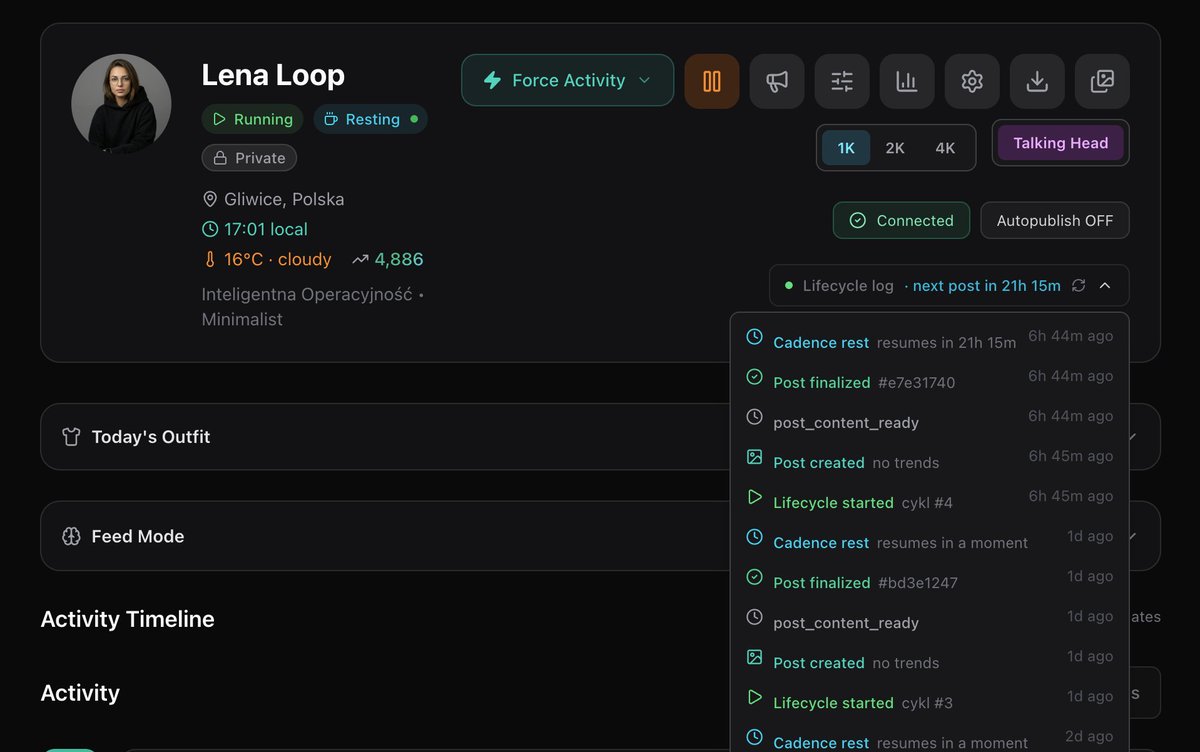
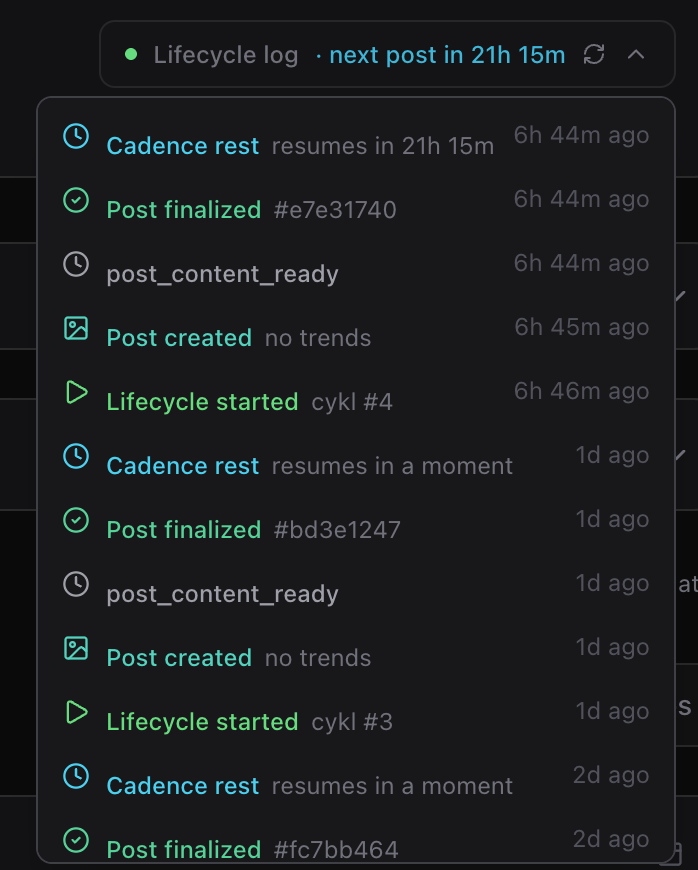
It depends on the app. In one of my AI Influencer apps, the AI persona has a lifecycle, so it wakes up, goes to sleep, chooses different activities, checks trends, and makes posts. It’s fully autonomous, but some activities can also be triggered manually. So to give the user more control and overview, I added a lifecycle log and a real-time status showing what happened and what is happening right now.
Damian Dąbrowski tweet mediaDamian Dąbrowski tweet media
English
0
0
1
15
Mitch
Mitch@miiightymitch·
@dabrodev Interesting, how are you using that setup for frontend observability?
English
1
0
0
10
Damian Dąbrowski
Damian Dąbrowski@dabrodev·
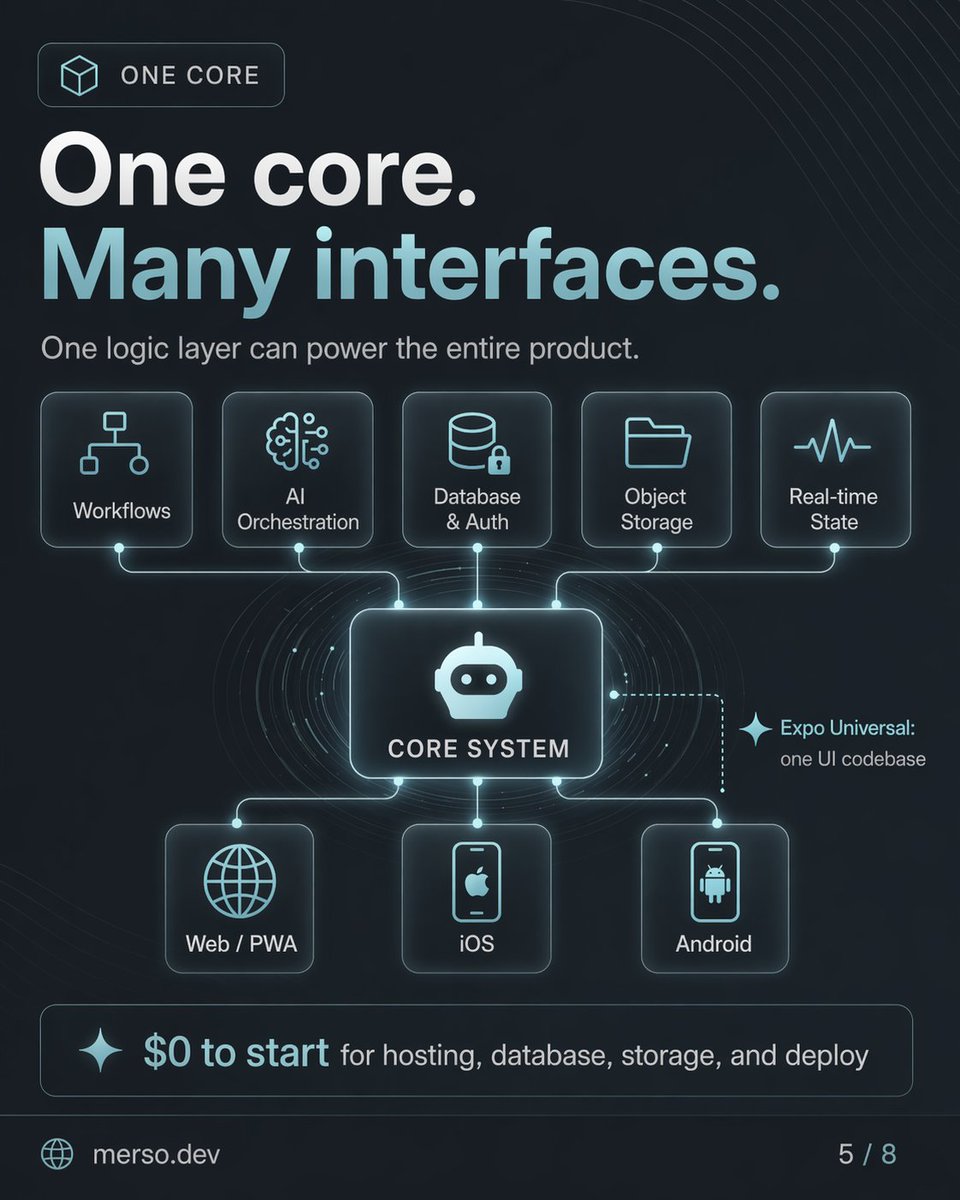
The best stack for autonomous web app AI-driven SaaS with $0 infrastructure costs: - Nextjs for frontend - Hono as API Layer - Cloudflare R2 for storage - Cloudflare workflows for business logic - CF Durable Objects with WS for UI observability
English
1
0
0
61
Damian Dąbrowski
Damian Dąbrowski@dabrodev·
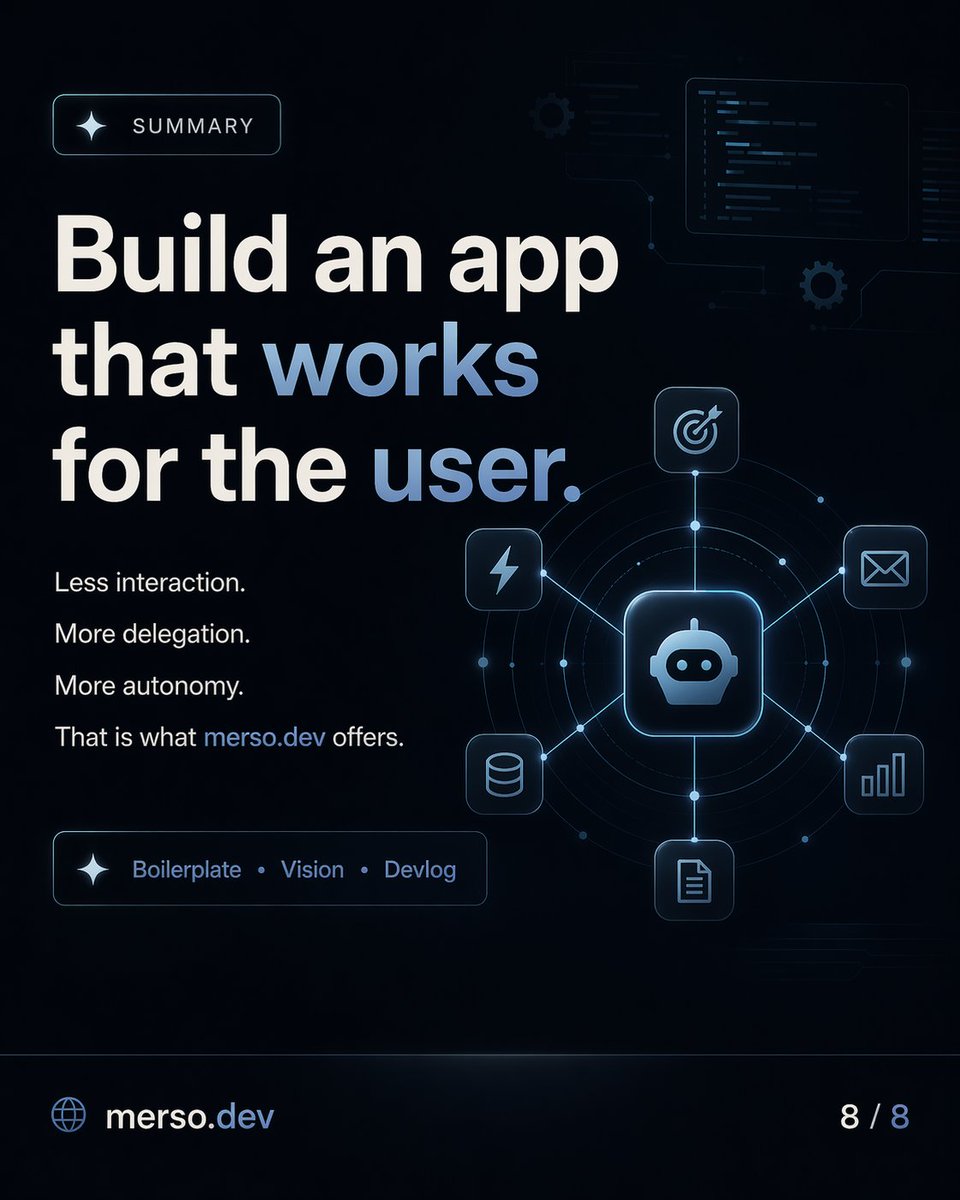
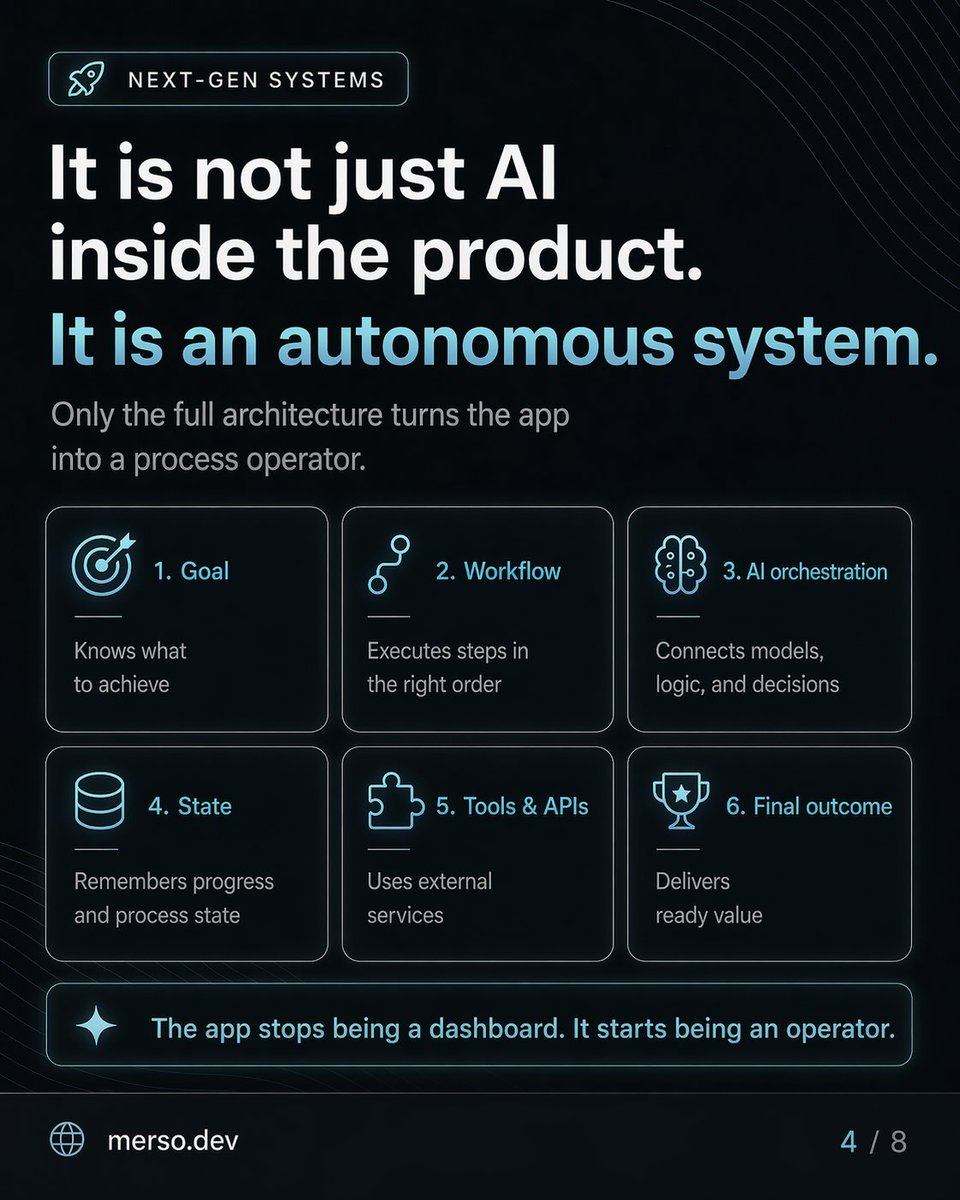
The real change happens when the whole system becomes autonomous: - goal - workflow - AI orchestration - state - tools and APIs - final outcome The app stops being a dashboard. It starts being an operator. Build systems that work for the user, not the other way around.
Damian Dąbrowski tweet mediaDamian Dąbrowski tweet mediaDamian Dąbrowski tweet mediaDamian Dąbrowski tweet media
English
0
1
0
21
Damian Dąbrowski
Damian Dąbrowski@dabrodev·
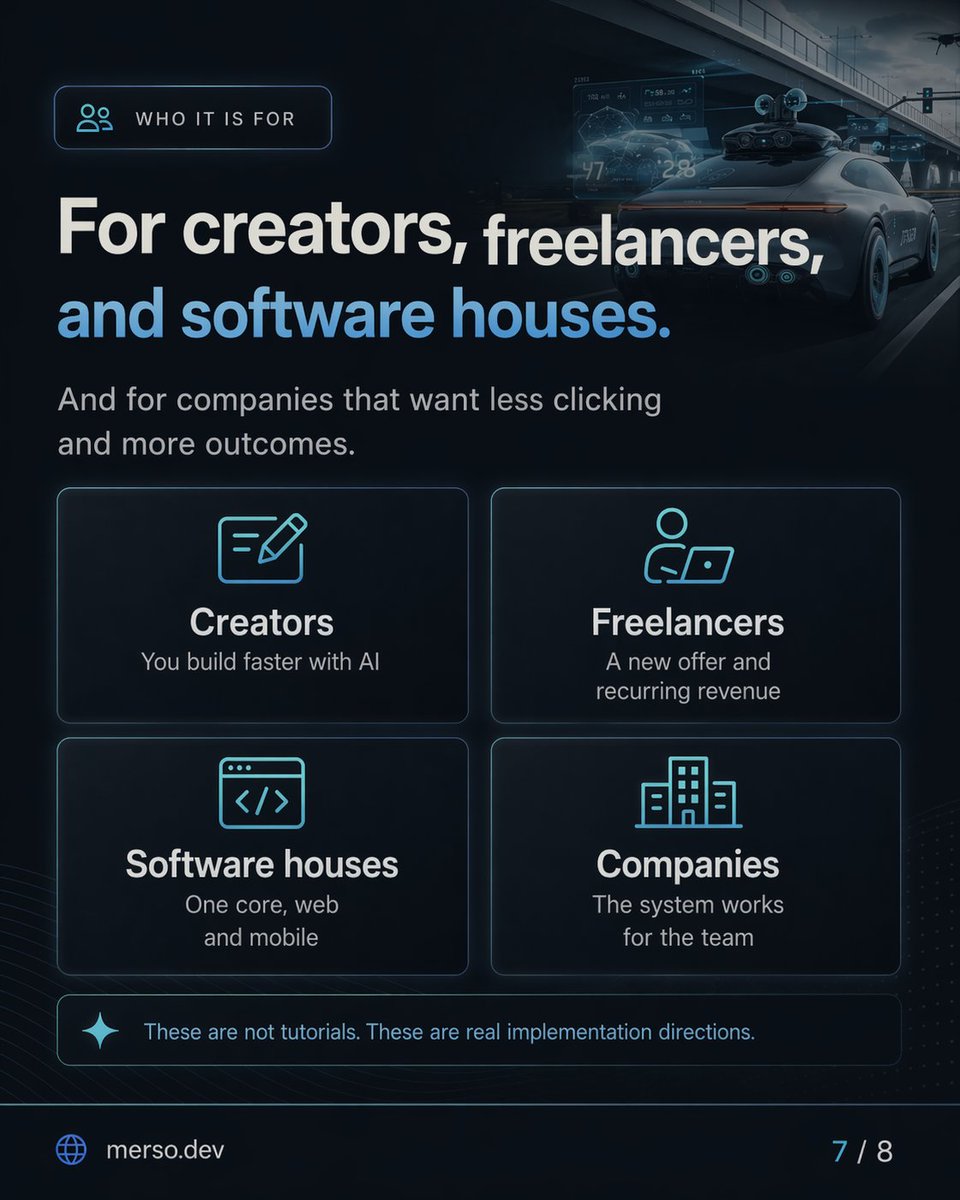
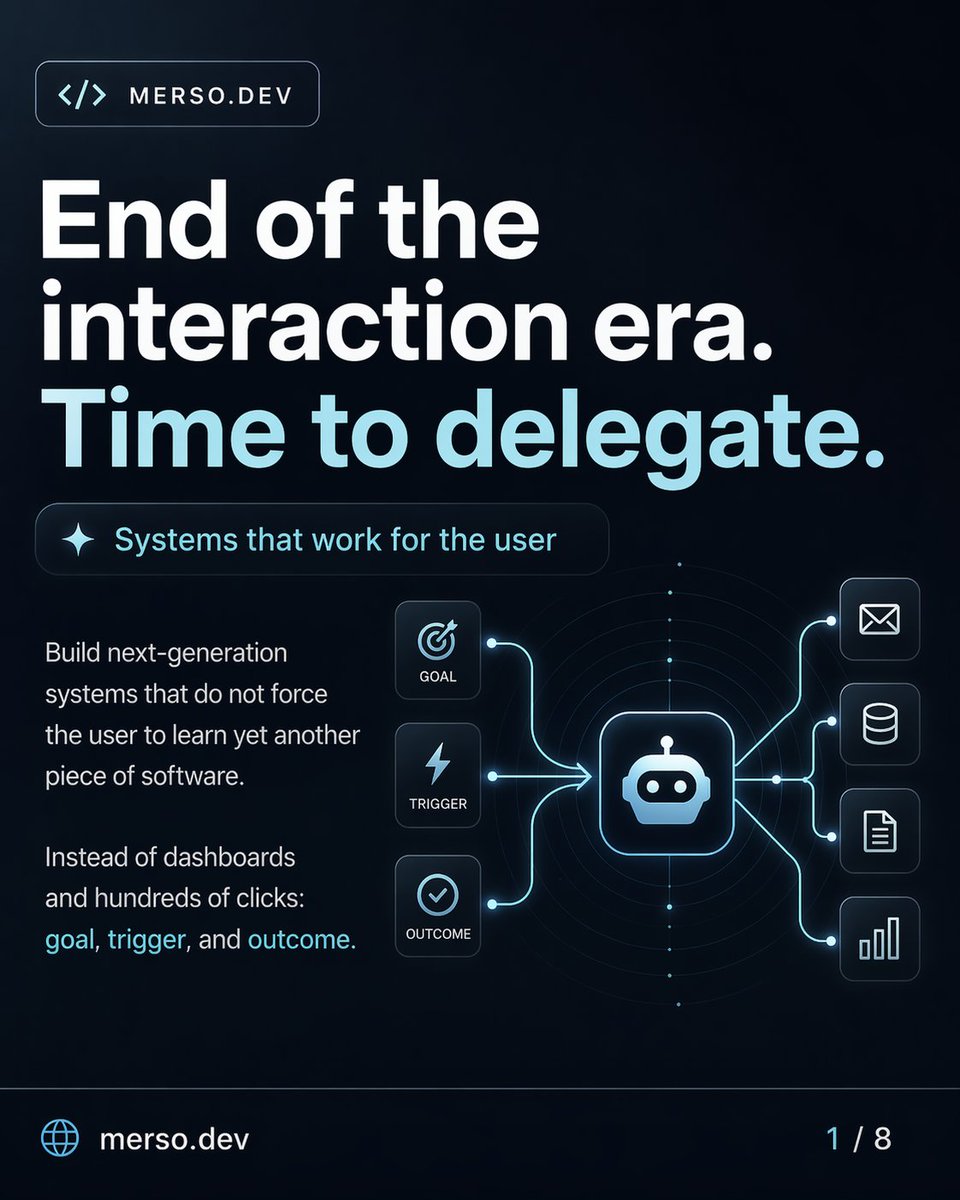
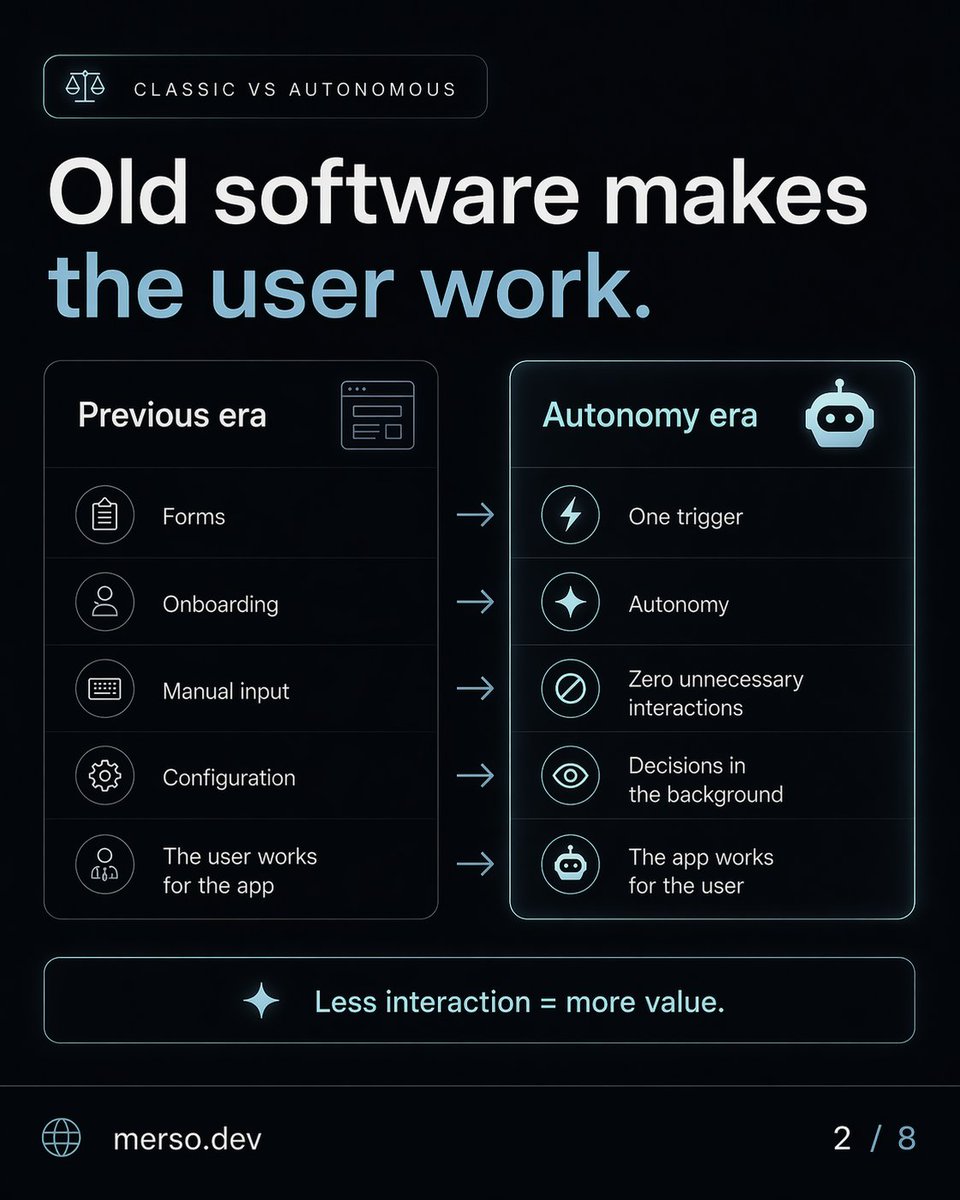
The next generation of software will not ask users to learn another dashboard. It will ask for the goal. Old software made users work: - forms, onboarding, configuration, manual input, endless clicking. New software works for the user: - one trigger, autonomous decisions, background - workflows, and a clear outcome. This is the shift I care about most: - less interaction - more delegation - more autonomy AI inside the product is not enough.
Damian Dąbrowski tweet mediaDamian Dąbrowski tweet mediaDamian Dąbrowski tweet mediaDamian Dąbrowski tweet media
English
1
0
0
19
Damian Dąbrowski
Damian Dąbrowski@dabrodev·
@miiightymitch WebSockets - Durable Objects can act as WebSocket servers that connect thousands of clients per instance. You can also use WebSockets as a client to connect to other servers or Durable Objects.
English
1
0
0
10
Damian Dąbrowski
Damian Dąbrowski@dabrodev·
That’s the roadmap: Fundamentals → LLMs → Workflows → Agents → Production → Portfolio Learn the stack. Build real systems. Ship proof of work.
English
0
0
0
27
Damian Dąbrowski
Damian Dąbrowski@dabrodev·
6. Portfolio Turn skills into proof of work. Build end-to-end projects, document case studies, show real workflows, and publish what you learn. Credibility comes from shipped systems, not from theory.
Damian Dąbrowski tweet media
English
1
0
0
20
Damian Dąbrowski
Damian Dąbrowski@dabrodev·
Agentic Engineer is not just “someone who uses AI.” It’s someone who can design, connect, orchestrate, and ship systems that actually do work. Most people stop at prompting. But the real shift starts when you learn how to combine: • LLMs • workflows • tools • memory • decision loops • observability • production thinking This is the path from AI builder to someone who can create real autonomous systems. Below is the full roadmap for becoming an Agentic Engineer.
Damian Dąbrowski tweet media
English
1
0
0
37