duckee032

28 posts

duckee032 banner
duckee032

duckee032

@duckee032

加入时间 Ekim 2024
169 关注11 粉丝
BasedBuilder
BasedBuilder@BasedBuilder007·
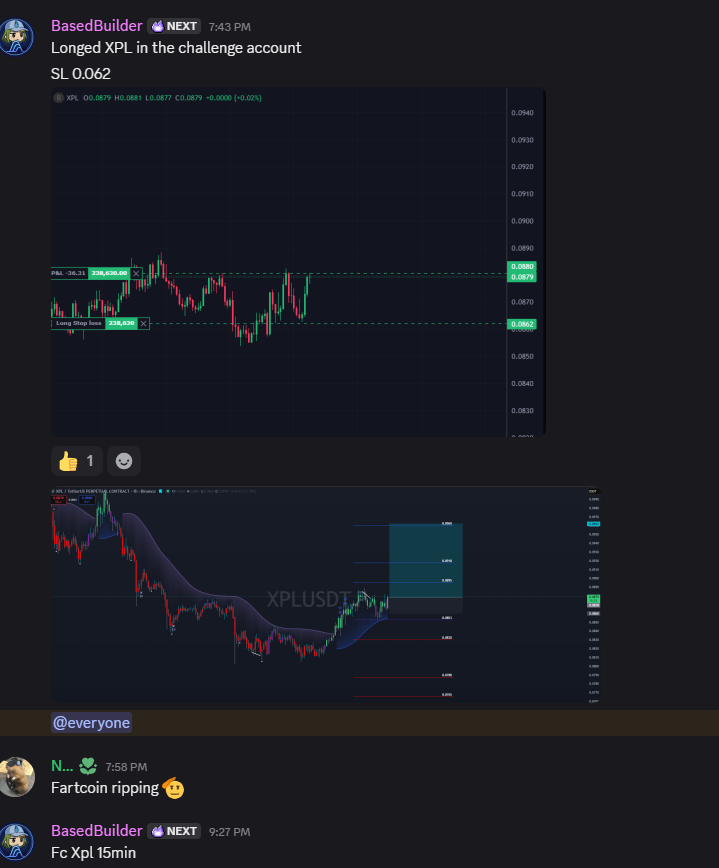
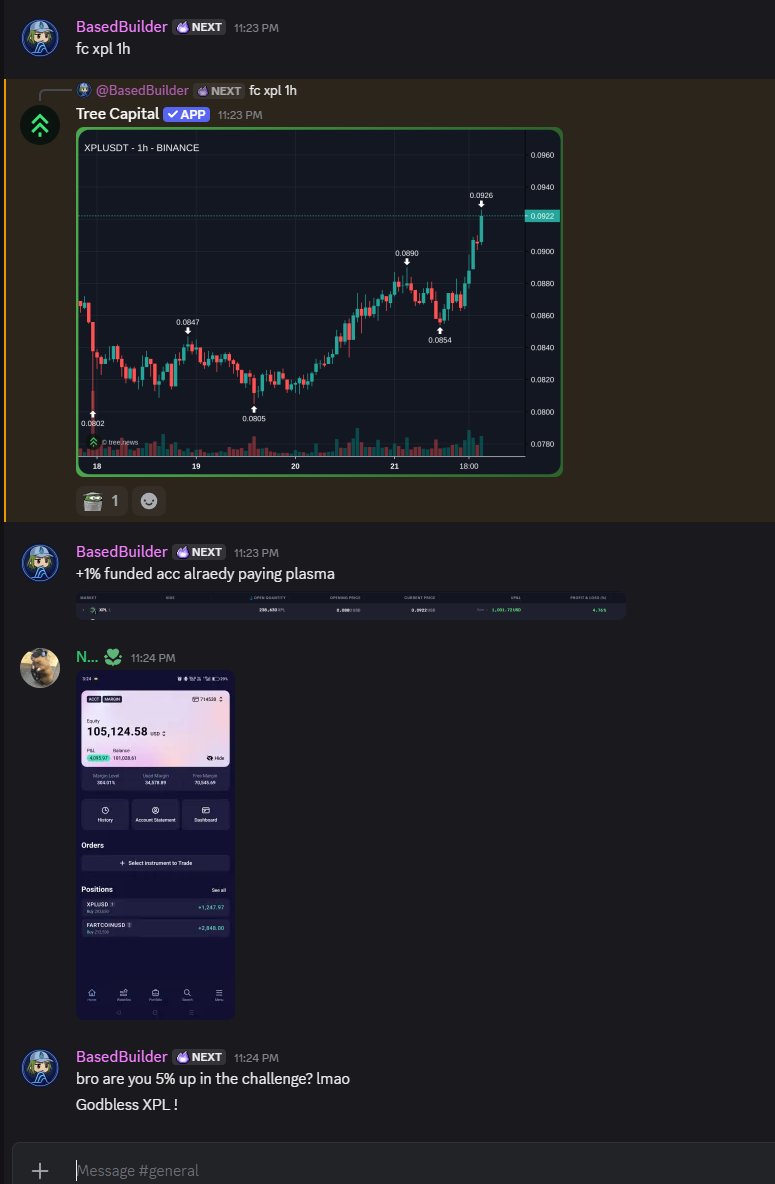
This is a normal day in BasedBuilders Cave. BasedTraders build here; use BASED for 50% discount. Price will go higher once market phases advance. We print into the Discord, @nitik_sol +5% into his challenge whop.com/basedbuilders/
BasedBuilder tweet mediaBasedBuilder tweet mediaBasedBuilder tweet media
English
3
0
9
585
duckee032 已转推
TheStable
TheStable@TradingStable·
After almost 2 decades in markets, these are a few simple pillars that we think actually matter. Everything else is decoration. Thread/
English
3
28
202
46.7K
duckee032 已转推
hoeem
hoeem@hooeem·
if you are interested in trading and have no idea where to start I’d recommend: > Crypto Cred trading tutorials on YT > These eight books (post 1/2) it’s a starting point to get into trading:
hoeem tweet mediahoeem tweet mediahoeem tweet mediahoeem tweet media
English
19
37
195
61.1K
duckee032 已转推
Steve Burns
Steve Burns@SJosephBurns·
🧠 Smart Risk-Taking Principles for Traders according to N. N. Taleb: Nassim Nicholas Taleb (former options trader & author of Antifragile, Skin in the Game, The Black Swan) doesn’t preach “risk management.” He teaches smart risk-taking: survive at all costs, love volatility, and stack asymmetry in your favor. 1. Never risk ruin
First rule: probability of total wipeout must be exactly zero. One blow-up ends the game forever. Protect your core capital like your life depends on it (it does). 2. Use the Barbell Strategy
85-90% in ultra-safe assets (T-bills, cash equivalents).
10-15% in extreme high-convexity bets (small, asymmetric upside).
Skip the “mediocre middle” entirely. This is how you stay antifragile. 3. Demand positive asymmetry (convexity)
Only take positions where downside is capped and upside is unlimited. Think long options or tail-risk hedges—not symmetric bets or leveraged long/short where you can lose more than you risk. 4. Skin in the Game
If you’re trading other people’s money without personal downside, you’re not a trader—you’re a risk-transfer artist. Real edges come from bearing your own losses. 5. Build antifragility, not just robustness
Don’t just survive volatility—design your book so shocks make you stronger. Small, repeated stressors (hormesis) compound into edge. Fragile systems break; antifragile ones improve. 6. Seek optionality
Pay small premiums for flexibility. Keep multiple paths open. Tinkering beats rigid plans. Every small convex bet you can afford to lose is a free lottery ticket for positive Black Swans. 7. Via Negativa > prediction
Stop trying to forecast. Instead, subtract fragilities: cut leverage, kill complex models, avoid anything you don’t deeply understand. What you remove is more powerful than what you add. 8. Distrust models & “risk management” theater
Fat tails dominate. Gaussian assumptions are intellectual fraud in trading. Study real risk-takers who’ve survived multiple cycles—not theorists with no skin in the game. 9. Tinker with many small convex risks
Take lots of cheap, high-upside bets that can’t hurt you much individually. Most will lose small. The rare winners pay for everything + more. This is systematic “risk-loving.” 10. Precautionary principle on steroids
When uncertainty is high (always), be hyper-conservative with size and leverage. The blow-up you fear won’t look like the last one. Prepare for what you can’t predict. Bottom line (Taleb’s style):
Smart risk isn’t about avoiding volatility—it’s about positioning so volatility becomes your edge. Survive long enough, stay convex, keep skin in the game, and the market eventually pays you for being antifragile.
Steve Burns tweet media
English
6
109
479
31.3K
duckee032 已转推
Robot James 🤖🏖
Robot James 🤖🏖@therobotjames·
don't major in minor things if you try to teach yourself diy kwant trading from stuff people write on the internet, you’re going to waste a lot of time majoring on minor shit. i see it on twitter all the time.
English
11
25
481
63.2K
duckee032 已转推
Horse
Horse@TheFlowHorse·
I never heard this until today but I think it is a really useful analogy. I think the original author was the CEO of Coca Cola. Imagine life as a game in which you’re juggling five balls in the air. These balls represent the core elements of your life: Work, Family, Health, Friends, and Spirit. Here’s the insight: Work is a rubber ball. If you drop it, it will bounce back. You can recover. You can find another job, rebuild a business, or restart a project. But the other four balls: Family, Health, Friends, and Spirit, are made of glass. If you drop one of these, it will be irrevocably scuffed, cracked, or even shattered. Some damage simply can’t be undone. The analogy cuts through the noise of hustle culture by forcing a simple question: Which balls are you treating as rubber when they’re actually glass? Many people invert the priority, they treat work like glass (terrified to drop it, sacrificing everything to keep it aloft) while treating health, relationships, and inner peace like rubber, assuming they’ll always bounce back. The reality is often the opposite. Careers are more resilient than we think; bodies, relationships, and peace of mind are more fragile. I think it’s a useful mental model, especially for some people here chasing a dream in markets. The markets will always be there tomorrow, but many of the glass balls won’t last forever.
English
30
44
465
27.7K
duckee032 已转推
Dr SHRADDHEY KATIYAR
Dr SHRADDHEY KATIYAR@Wegiveyouhealt1·
After a certain age, your parents slowly become your children. They ask simple questions, repeat stories, and depend on your patience the way you once depended on theirs. Very few understand this role reversal. What looks like innocence or inconvenience is really time coming full circle. Don’t correct them harshly. Don’t rush them. Care for them the way they once protected you. This is not a burden. It is repayment, quietly wrapped as love.
English
919
14K
76.1K
2.2M
duckee032
duckee032@duckee032·
@PopPunkOnChain I want to ask what is the incentive for someone to bid more than min amount?
English
2
0
0
128
Pop Punk
Pop Punk@PopPunkOnChain·
Traditional prediction markets have a liquidity problem. Pumpcade time weighted parimutuel markets do not. They require a single YES bid and a single NO bid of ANY size to execute and resolve.
English
14
8
89
2.1K
duckee032 已转推
positivity moon
positivity moon@arrtnem·
You read a list like that and it looks clean. Bad at math to CS at Harvey Mudd. Could not run to the end of the street, now your feet have carried you further than most people have ever driven in one day. Too shy to order pizza, now you stand in front of a room and tell people where to sit. Homesick kid who cried at midnight pick up, now buying one way tickets and learning how different cities smell at 06:40. On the page it looks like magic. In the body it was probably a thousand small humiliations in a row. You do not go from sucking at math to surviving problem sets because your brain suddenly decided to be gifted. You go because you sat there at 00:23 with a half dead mechanical pencil, eyes burning, staring at a proof that made you feel like you were made of static. You go because you went to office hours where you felt stupid. Because you watched other kids raise their hands while you tried not to throw up from the feeling of being behind. You do it enough times that eventually the panic in your chest shows up twenty minutes later instead of right away. Then one day someone asks you to explain something and your mouth answers before your fear gets there. Getting good at something often just means your shame got tired of showing up first. Same with the running. There is this myth that people who finish ultramarathons are built different. Some are. Most are just the same person who once got a side stitch at minute four, hated their life, and still put their shoes on again two days later. Blisters that burst in cheap socks. Knees that complained for a week after that first 10k. Early mornings where the alarm rang at 05:10 and you lay there bargaining with nobody. You do it enough, and at some point your brain quietly files “I can run for hours” under normal, the same way it once filed “I sit in chairs.” The body learns almost anything if you make it uncomfortable in the same direction often enough without killing it. The shy phone calls are my favorite part of list. Everyone thinks confidence is this personality trait some people got in their starter pack. In reality it looks like you holding your phone, your thumb hovering over the call button, heart pounding for a stupid pickup order. Voice cracking when they say “how can I help you.” Getting the order wrong. Hanging up and replaying it twelve times in your head while you eat lukewarm food. Then doing it again next week. And again. One day it is boring. You are halfway through spelling your name before you realize you did not rehearse. From there to hosting events is the same ladder, just more rungs. One tiny interaction at a time where you did not die. A child who could not sleep in a different house without their stomach twisting, who counted the hours till morning under a stranger’s glow in the dark stickers. That same nervous system now stamps passports. Airport bathrooms, rental sheets, different ceilings every month. The grief is that nobody sees the link. They see the cool solo traveler, not the kid who trained for this by feeling like their chest was collapsing at ten years old on a friend’s floor and somehow making it to morning. If you zoom out, the pattern is simple: repetition changes what your nervous system calls “possible.” Do something enough, and your brain stops ringing the fire alarm every time. Not because you became a completely different, but because your internal risk calculator updates its numbers. The dangerous lie would be to pretend this is easy. “Just do it a lot.” As if “a lot” does not include failure, boredom that tastes like cardboard, embarrassment that makes your ears burn, mornings where the last thing you want is another rep. You can get good at almost anything, but the price is often your illusions. You will find out how impatient you are. How much you hate being seen as a beginner. How quickly you want to quit when progress is not cinematic.
nicole alonso@_nicolealonso

i’m convinced you can get good at anything if you just do it enough. exhibit a: - I sucked at math → became a cs major at harvey mudd - terrible runner my whole life → just finished an ultramarathon - too shy to call & order pizza → now I host events - too homesick as a kid for sleepovers → moved across the country & now solo-travel across the world


English
9
102
730
70.3K
duckee032 已转推
Jeffrey Scholz
Jeffrey Scholz@Jeyffre·
Each week, ask yourself: “What actions would take me closer to my goal?” Then in the next week ask yourself: “Did I actually finish those actions? What actions should I do next week?” It’s really simple: pick the right course of action and follow through. On repeat. If you aren’t doing this, there are only a few possibilities: 1 - you don’t have a clear goal, so you can’t plan action towards it 2 - you have a goal, but you lack the insight to pick the actions that lead towards that goal 3 - you have a goal, you know the actions to take, but you are either too lazy, distracted, or unorganized to finish the actions 4 - you actually do the right actions, but you do them half-heartedly. You’ll hit your goals eventually, but at a much slower pace By the way, this is exactly the same as managing a team. Does your team have a goal, do they know what actions take them towards the goal, and do they actually complete the actions? If you don’t follow this framework (or a variant of it), you’ll end up busy but not accomplishing anything.
English
4
13
135
5K
duckee032 已转推
Justin Skycak
Justin Skycak@justinskycak·
For anyone interested in a STEM career, acquiring advanced technical skills early unlocks the most valuable thing in existence. Something even money can't buy. TIME. If you acquire demonstrable, alien-level technical skills, you can get doors opened earlier. You don't have to wait until college to do research projects under professors, or even paid internships. If you're intentional about acquiring skills and putting yourself out there, you can kick-start a serious career before most people your age are even taking serious classes. And once you acquire early junior-level experience, that opens the door to early senior-level experience, and so on. Compound this virtuous cycle over and over and you end up way ahead. What's the point of being way ahead? IT BUYS YOU TIME. Unfortunately, lots of people misunderstand the point of compressing time. They think compressing time is about winning a rat race against your peers. But that's not really what it's about. There's a race, but the thing you're racing against is much scarier and much more powerful than any other human. You're racing against TIME ITSELF. Time is the #1 killer of dreams and aspirations. When someone gives up on their dream, or gives up on figuring out what that dream is, it's typically a result of them losing the race against time. Pink Floyd put it best: “You are young and life is long, and there is time to kill today. And then one day you find ten years have got behind you. No one told you when to run. You missed the starting gun. And you run, and you run, to catch up with the sun, but it's sinking.” Whether you realize it yet, achieving your dreams is a race against time. Time forces convergence, and premature convergence is what kills dreams. It's hard to understand this when you're young, before you have any sense of the wrath of time or the meaning of convergence. But no matter how many times you claim you’ll never settle for something less than ikigai, -- it won't keep the sun from setting, -- it won't keep the time from passing, -- it won't keep you from increasingly desiring things that only a stable life can provide, and -- it won't keep you from gradually turning the dial from “explore” to “exploit.” The further time gets ahead of you, the more likely you are to settle into a life that is “fine,” or even “good” -- despite being unable to shake the feeling that you could have found something better if you had more time. That is the point of compressing time. That is the point of removing skill bottlenecks early. It’s about unlocking doors early and running down avenues that you might be interested in exploring, so that: 1) If you get the feeling the path you're going down has twisted and turned into something that's no longer a great fit for you, you can double back and explore other avenues before doors start locking behind you. 2) You can spend time trying to break down a wall instead of running through an existing door if that’s something you want to do. 3) Once you find your path into a land that makes you as happy as you can imagine, you can maximize your time in that land.
ₕₐₘₚₜₒₙ@hamptonism

Use math to improve your life.

English
9
94
812
49.7K
duckee032
duckee032@duckee032·
@adrianhetman have you ever struggle with daydreaming? like you need to do something but waste time dreaming about doing it. if you had ever been in that position, would love to read about your story
English
0
0
0
5
Adrian ⛩️ Hetman 🐺 | 📓+🖋️+☕️
Based on my recent articles, what’s something you would want me to write that you’re currently struggling with? I don’t have all the answers, but I’ve done a lot and dealt with a lot of remote work problems and have some solution that do work for me. Nothing is perfect but as I’m writing this blog to remind myself about everything I should be doing to keep myself sane and happy, I know I’m not the only one struggling with such things. So please, drop a comment and share what you would like to read about. I have already some topics I have in mind to write about but would love to see what you may want to see from me.
English
1
0
4
433
duckee032 已转推
Orikron 🇵🇹 骆培思
🇨🇳 A man in China lost a game of Xiangqi. He spent 4 hours analyzing his loss despite the heavy rain and the protestations of his wife.
English
891
4.9K
65.3K
22.8M
duckee032 已转推
Deep Psychology
Deep Psychology@DeepPsycho_HQ·
Be delusional.
Deep Psychology tweet media
English
96
4.2K
22.8K
1.3M