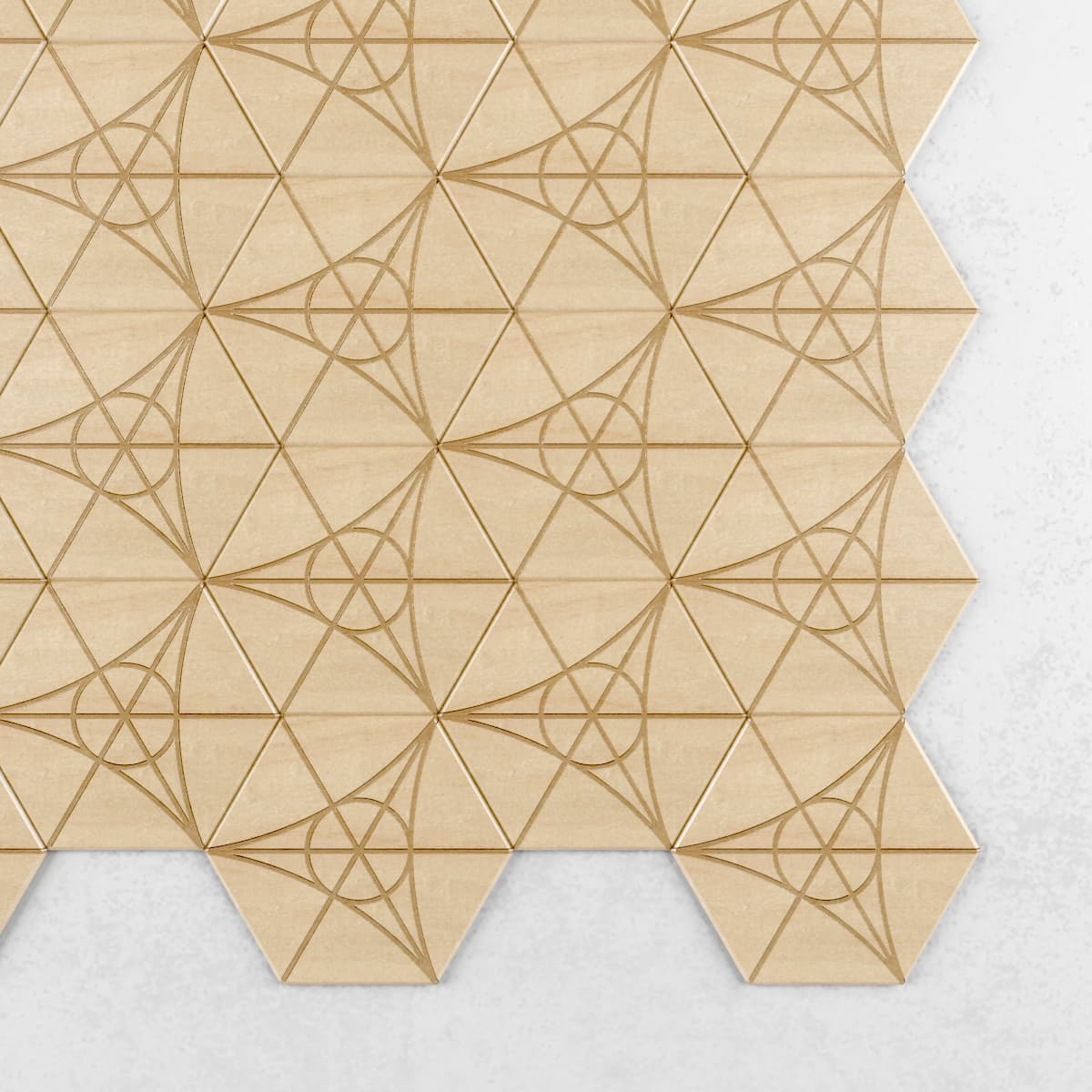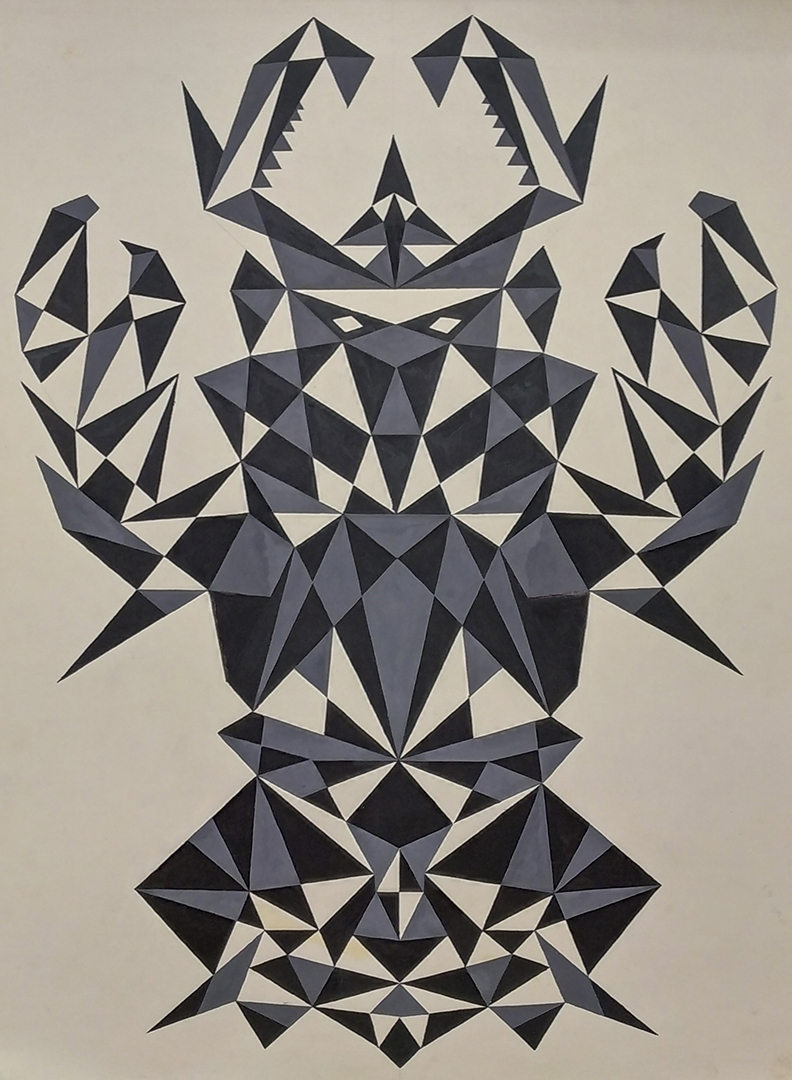
1⃣I drew this picture a long time ago in 1997, at art school, when I was given the task of drawing a geometric composition on a free theme. I had the idea of drawing the picture spontaneously, without thinking or sketching.
I took a ruler and a pencil and in a few hours created this futuristic beast.
I think this work became an experience of creative flow, an impulse, and once I immersed myself in it, the picture drew itself.
I think this work is the starting point of my love for geometric art and sacred geometry.
Thank you, art school.💚🙏
I have been using this principle ever since. Creative freedom opens up a state of flow in me, and I create all my works in it.💫
2⃣Since my art school days, my favorite book has been The Graphic Work of M.C. Escher. I constantly revisited it. I was very inspired by the works of this artist-mathematician, and each time I felt a surge of creative energy, but I didn't know how to realize it.
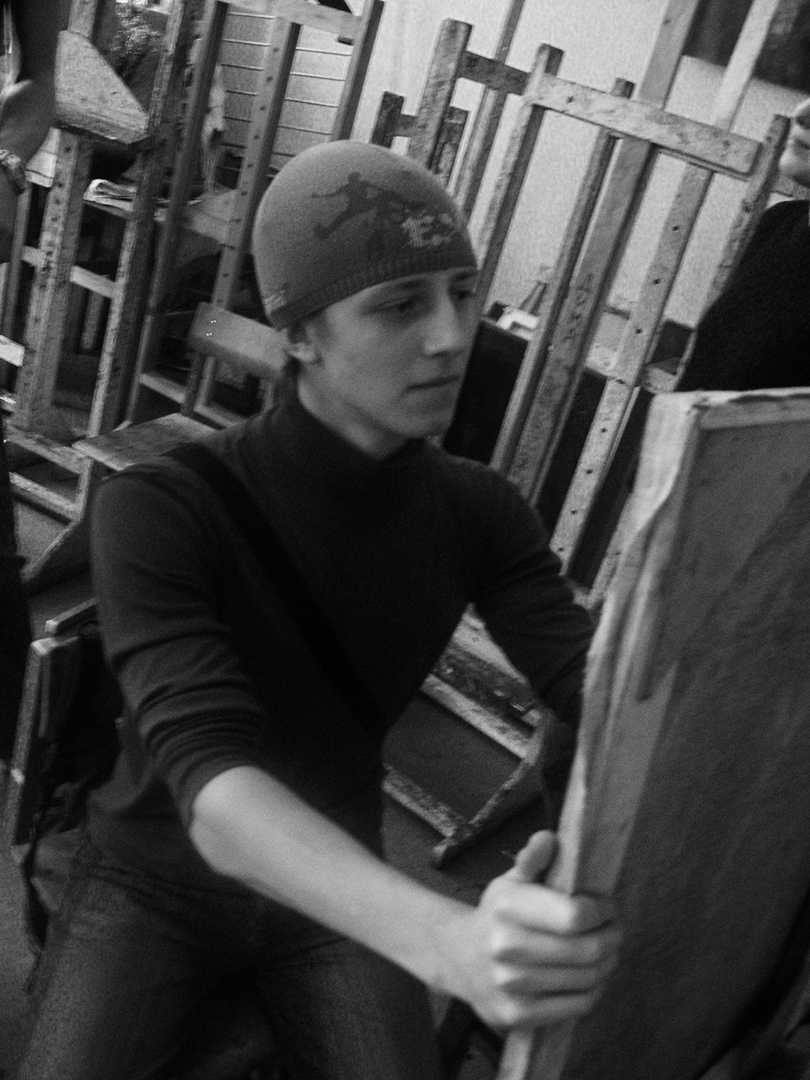
3⃣After graduating from art school and regular school in 2002, I enrolled in the N.K. Roerich Art School. During my studies, I really enjoyed the subject “Decorative Composition.”
We were given creative freedom, developed our imagination, and were taught to come up with new ideas. I learned how to make cardboard models, come up with ornaments, develop conceptual design projects, and paint with oil paints.
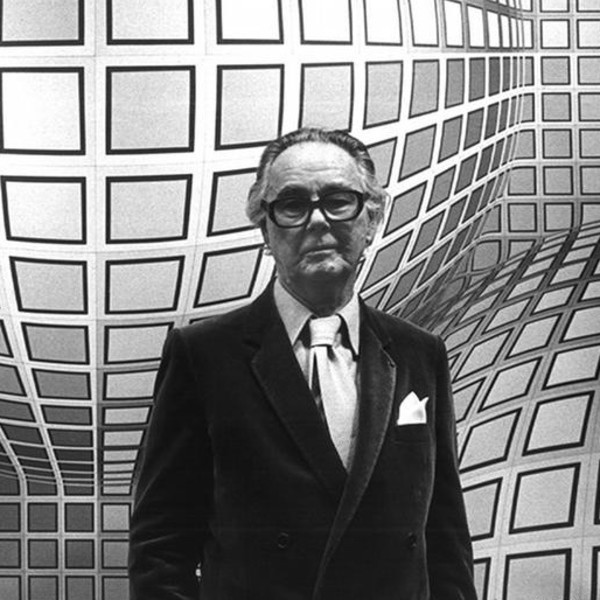
4⃣At school, I became interested in the work of another geometric artist, Victor Vasarelli, who became part of my artistic taste. I was drawn to experiments with form, color, and rhythm. I decided to find my own style in this direction.
5⃣After graduating from Roerich's school, I continued my studies to obtain a higher education in art. In 2006, I was accepted into the state-funded department of the Baron A.L. Stieglitz Art Academy.
At the academy, I further honed my skills as an artist, from sculpture to creating full-fledged interior and exterior design projects. My search for my identity in art continued.
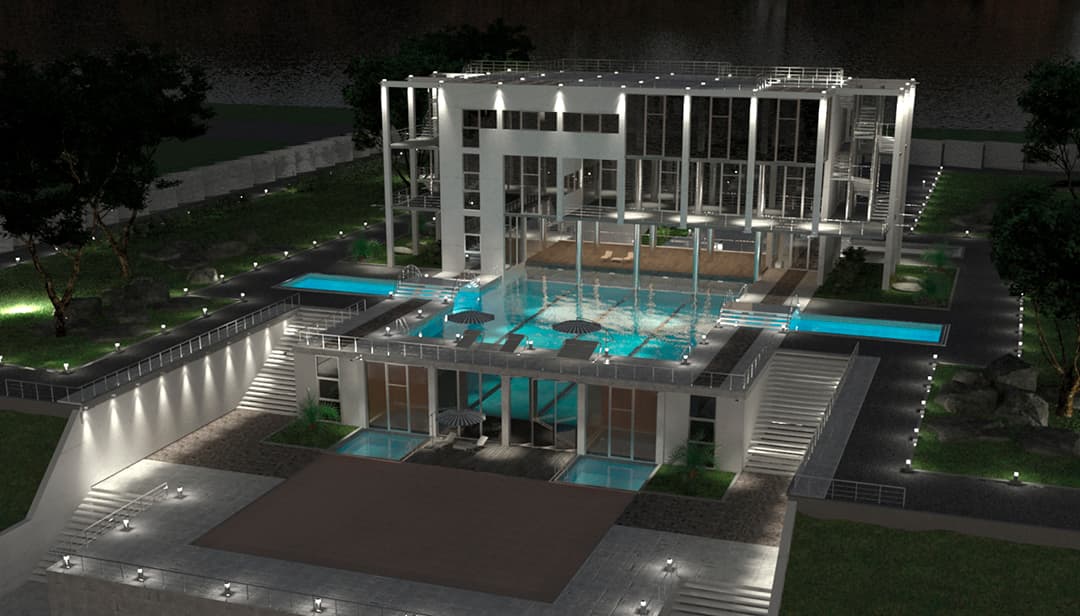
My diploma project was completed entirely on a computer and consisted of a large concept project for a country house with detailed landscaping and interiors.
6⃣During my last two years of study at the Stieglitz Academy, I worked with Autodesk 3ds max and AutoCad. I really liked the interface of these mathematical programs, which offer a huge variety of tools and parameters.
I drew and devised architectural plans, and then created 3D volumetric models of these plans, striving to achieve photorealistic quality in the visualizations of the project's interiors and exteriors. I found this quite easy to do. I worked with inspiration.
7⃣After graduating from the Academy in 2012, I focused on interior design and gained extensive experience in this field. I liked this work, but not 100%. I always wanted more creative tasks than routine work involving drawing hundreds of blueprints and project documentation.
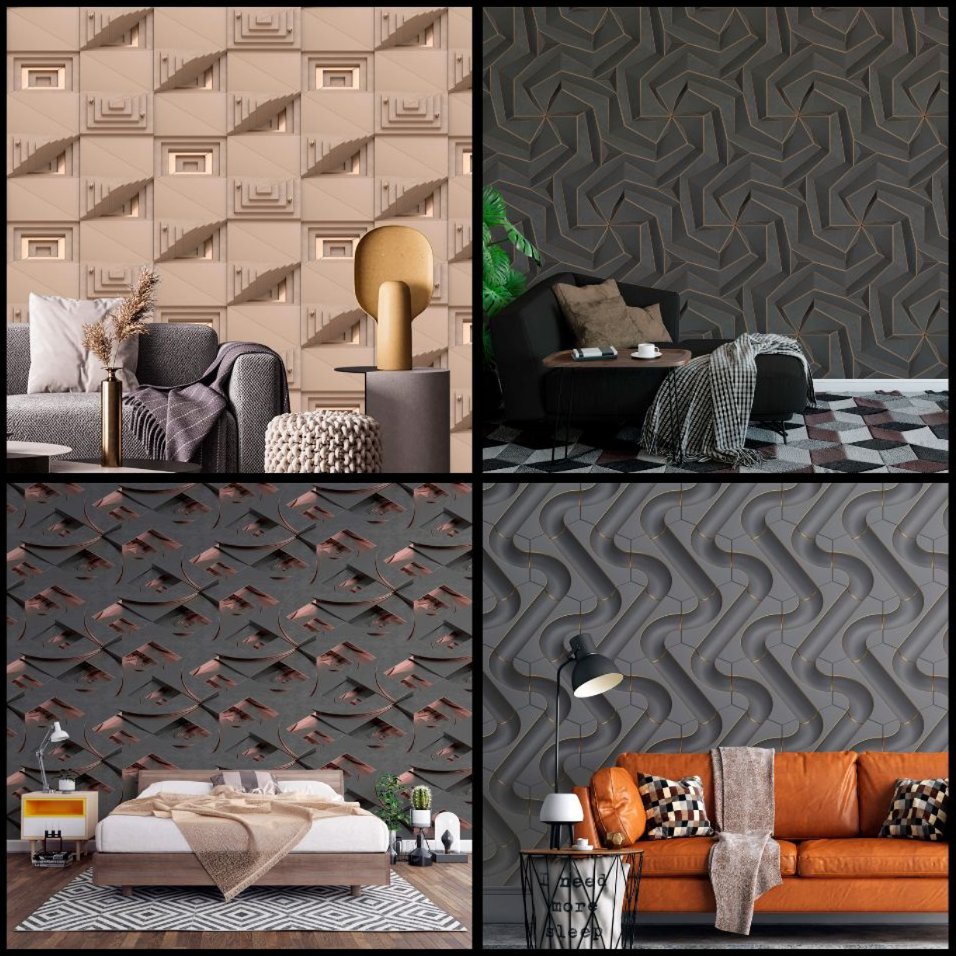
Once, for one of my design projects, I needed to develop a geometric design for wall panels. I completely immersed myself in developing the pattern design and came up with it fairly quickly.
It was a creative task that inspired me greatly, and I decided to continue coming up with seamless patterns for wall panels as a hobby.
I worked in interior design and continued to create new geometric pattern compositions in my spare time.
I remembered my favorite artists, the mathematicians Escher and Vasarely.
My hobby turned into an endless stream of ideas and new geometric experiments. It was the kind of creativity I had always been looking for.
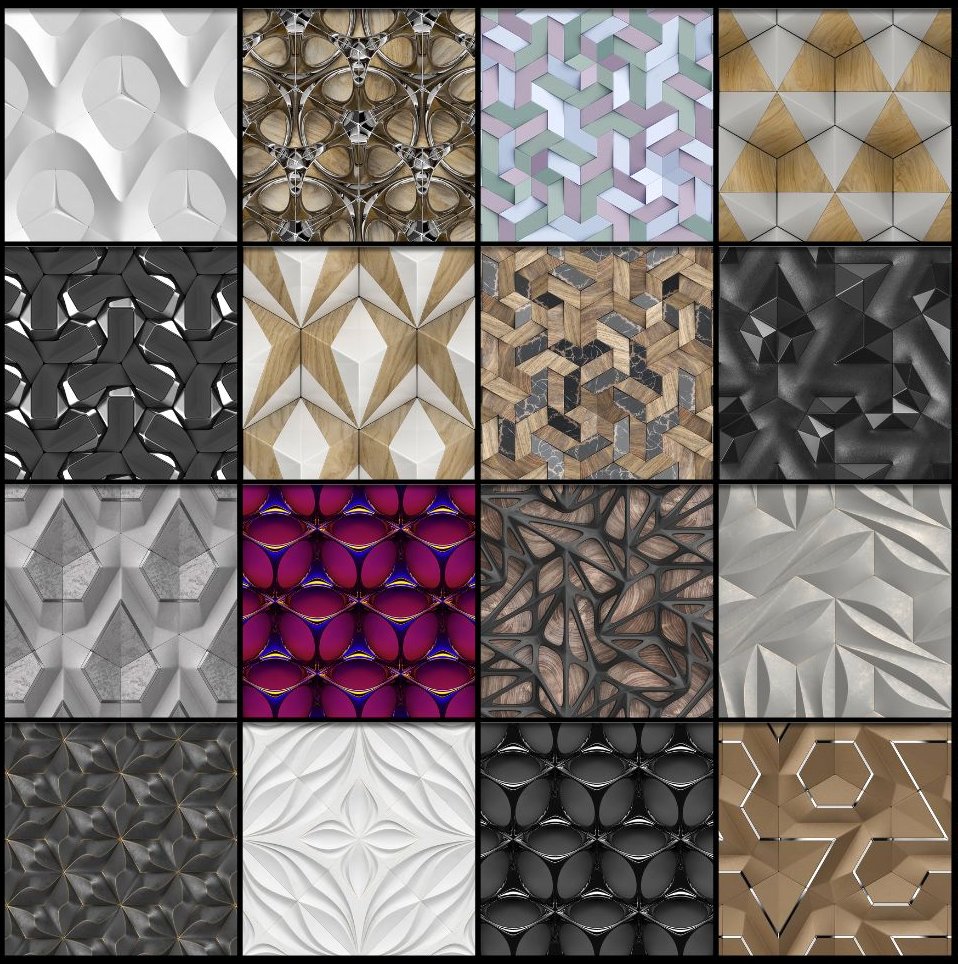
8⃣My creative work, which involved designing patterns for wall panels, gradually evolved into creating seamless patterns for walls.
However, it was not an easy task, because I wanted to create seamless patterns in 3D, but at that time, the technology did not exist yet.
I searched the entire internet but could not find any tutorials or articles explaining how to do it.
So I had to invent my own method for creating seamless patterns in a 3D program.
I experimented a lot with the lighting settings in the program and finally found the perfect settings that allowed me to make a three-dimensional 3D pattern SEAMLESS.
I was so happy because at that moment my art gained another important function. My patterns could not only be printed as a picture and hung on the wall, but also used to fill planes of any size.
Of course, I didn't invent seamless patterns myself; this art is thousands of years old, but no one had ever tried to create them in 3D before; usually, 2D programs were used for this.
Due to the peculiarities of 2D programs, it was very difficult to achieve a realistic volume effect; seamless patterns were linear and flat.
So my creativity in creating 3D patterns turned into a real stream of imagination, geometric ideas, and discoveries.
9⃣I decided to come up with a creative pseudonym for myself.
Without thinking too long, it came to mind almost immediately.
I came up with the word GeoModule.
It reflected the main directions of my art, geometry, and modular structures. Since then, my second name in the world of creativity has been GeoModule.
I also came up with a symbol for this word - an image of my creativity, the Sphere of Harmony, reminiscent of the Yin-Yang.
Since childhood, I have been fascinated by Buddhist and Taoist philosophy. The Yin-Yang symbol was my teacher, and I decided to adopt a stylized version of it as my creative symbol.
For me, its meaning is this: geometry is infinite, it flows from one form to another in a spiral, transforming endlessly and remaining in harmony with itself and the space around it.
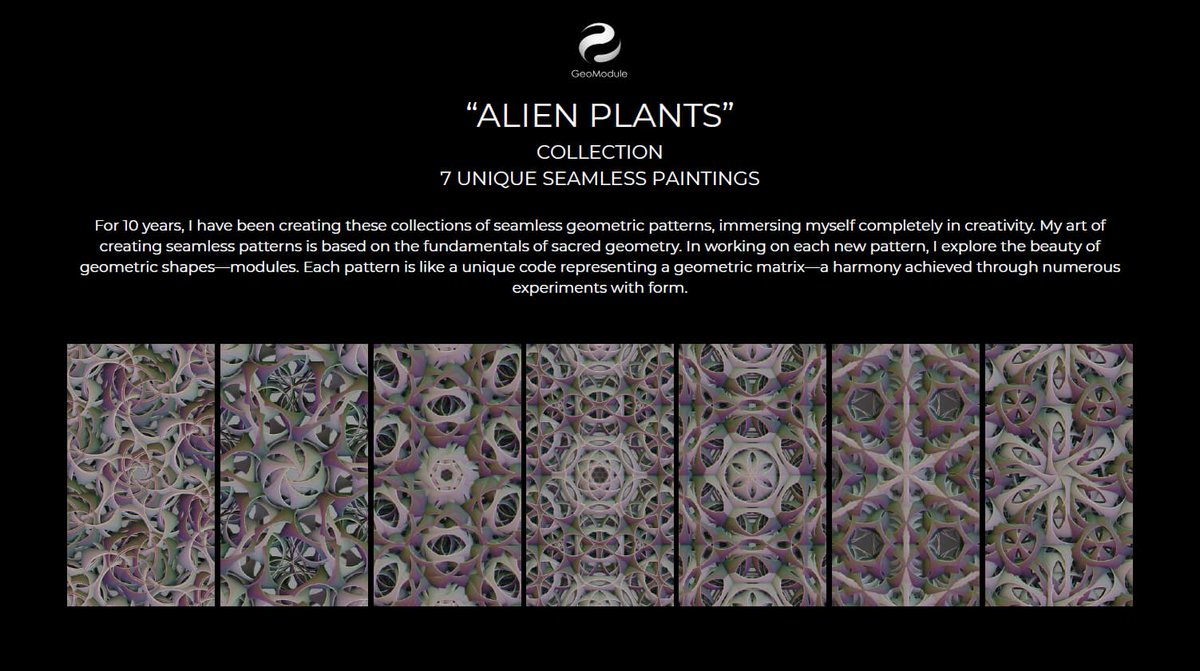
🔟I have been creating 3D patterns for 10 years now, and I still have endless ideas in this area.
I have come up with hundreds of different patterns and thousands of color options.
Being a digital artist turned out to be a very interesting task for me, so I gradually moved away from interior design and became a modern digital artist.