Post

Kode Gurukul
Kode Gurukul@kodegurukul·
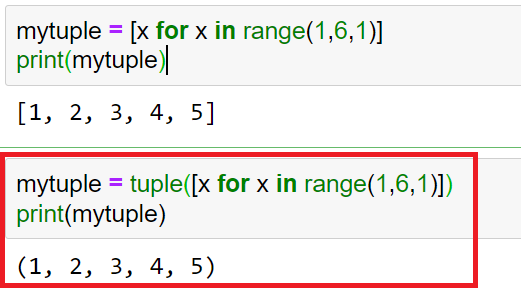
@Python_Dv Answer is D.) It will generate the list, not the tuple, to create the tuple, we can to use the tuple method.
Kode Gurukul tweet media
English
0
0
0
453
Prem Prakash
Prem Prakash@4EverPrem·
@Python_Dv D. range(1,6,1) => start index = 1, end index = 6 (excluding it, so stop at index 5), step value = 1 Another point to note, although it is called myTuple but it's not a tuple, instead it's a list.
English
0
0
0
216
Wojciech Subiektywny56
Wojciech Subiektywny56@subiektywny56·
@Python_Dv D - [1, 2, 3, 4, 5] range(start, stop, step) range(1, 6, 1) Start – index 1 Stop – index 6 Step - 1
Nederlands
0
0
0
103
Rakesh Das
Rakesh Das@RakeshDas_18·
@Python_Dv D. [1, 2, 3, 4, 5] is the output. Explanation: The list comprehension [x for x in range(1, 6, 1)] generates a list containing numbers from 1 to 5 (inclusive).
English
0
0
0
194
Paylaş