Casey Sprake

74 posts

Casey Sprake banner
Casey Sprake

Casey Sprake

@CaseySprake

Market Strategist at AG Capital. Translator of global macro trends into actionable investment insights. Always asking "what if" to manage risk and cut noise.

Johannesburg, South Africa انضم Aralık 2025
68 يتبع219 المتابعون
Casey Sprake
Casey Sprake@CaseySprake·
@Askash Cape Town really said: “traffic on the N1 or traffic on the Atlantic… your call"😁
English
1
0
6
594
Ash Müller
Ash Müller@Askash·
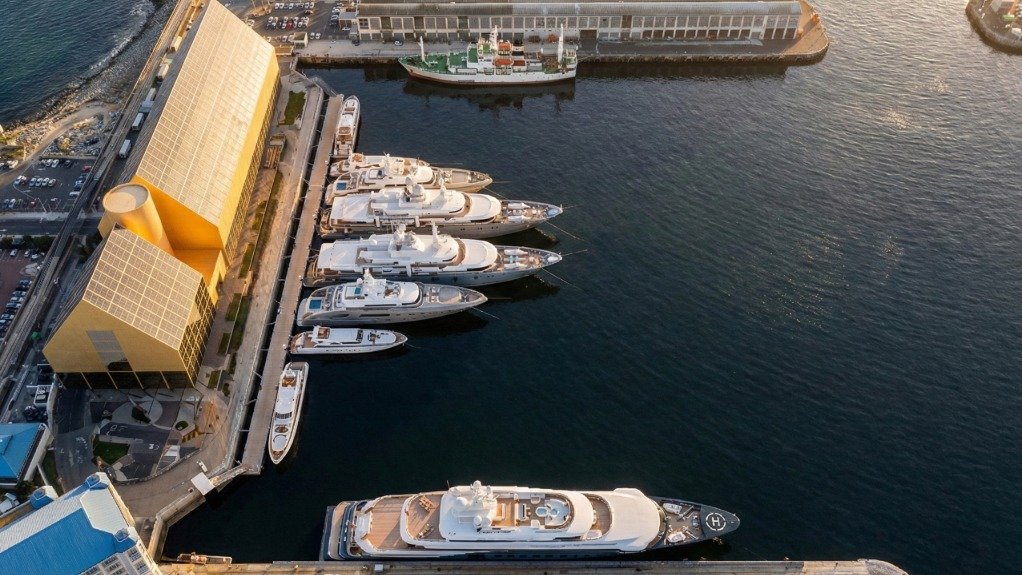
You can now park a 90-metre superyacht outside your hotel room in Cape Town🤯🛥️ Yet another luxury edition to the V&A Waterfront… Positioned right in front of Africa’s first-ever Marriott Edition Hotel - The new Quay 7 Superyacht Marina - valued at R230 million. The precinct welcomed 35 superyachts during the 2024/25 season, and some stayed for a few months or a year. This marina is built to do two things. In peak season, it parks massive superyachts (40 to 90 metres long). When things quiet down, it switches over to support Cape Town’s boat builders, helping them prep and export catamarans. Completion date is set for October 2026.
Ash Müller tweet media
English
24
55
308
20.6K
Casey Sprake
Casey Sprake@CaseySprake·
Ever wondered why the S&P 500 looked so strong but felt risky underneath? 🎙️Tune in to my chat with Michael Avery on Classic Business, as we break down how the ‘Magnificent Seven’ drove the market and why a shift might be underway.
English
0
0
3
48
Casey Sprake
Casey Sprake@CaseySprake·
Agreed, Everyone suddenly becomes an energy expert when oil spikes 😅 But fair enough, it impacts us all at the end of the day. On the fuel shortage risk -it’s still low for now. SA has decent buffer stocks. The real issue isn’t an immediate shortage, it’s higher prices if global tensions persist and people panic buying So: pain at the pump > empty tanks (at least at this stage).
English
0
0
1
29
Ace of wall street™️💴
Ace of wall street™️💴@Michael86259668·
@CaseySprake @mommy_moneyza What's your take on the possibility of fuel shortage asking for the sudden surge of oil and energy experts that I had no clue their where so many in South Africa thank you Cassy.
English
1
0
0
90
Casey Sprake
Casey Sprake@CaseySprake·
Imagine paying nearly R7 more for a litre of diesel in just two weeks’ time. For farmers hauling produce, taxi drivers filling up every day, and commuters already stretched thin, that’s not just an inconvenience - it’s a growing hit to consumers’ wallets. With only a fortnight left before April’s official fuel price announcement, South Africa is bracing for one of its steepest increases in years. The Central Energy Fund’s latest data paints a grim picture: if prices were adjusted today, diesel would climb by up to R6.75 a litre, and 95-octane petrol by nearly R4. Add the 21c per litre increase in fuel levies, and we’re looking at a potential R7 surge for diesel and almost R4.20 more for petrol. The culprits are both local and global. Brent crude oil has stormed past $100 per barrel for the first time since 2022, driven by escalating tensions in the Middle East. Meanwhile, the rand has weakened around 5% since late February, compounding the pain. Interestingly, the weaker currency’s contribution (about 30c to 44c per litre) is small compared to the oil price impact. Nevertheless, together they form a potent inflationary cocktail. The impact of higher fuel prices on South Africa’s inflation doesn’t happen overnight. It unfolds in waves, each with its own rhythm and reach. Click on my latest article below to read more.
Casey Sprake@CaseySprake

x.com/i/article/2033…

English
3
3
3
408
Casey Sprake
Casey Sprake@CaseySprake·
South Africa's governance overhaul could reshape the risk premium. Markets, distracted by louder headlines, have barely noticed. South Africa's Public Service Amendment Bill has cleared both houses of Parliament and now awaits President Ramaphosa's signature. Described as the most significant governance reform since the 1996 Constitution, the Bill does something that has never been done in South African law: it draws a hard line between political office and administrative function. Ministers and MECs would lose the power to make appointments, manage day-to-day operations, and control hiring decisions within their departments. Those powers would be devolved to professional heads of department, appointed on merit. Senior officials would face restrictions on political party involvement. Moreover, the Director-General in the Presidency would be formally established as the administrative head of the public service, responsible for coordinating all national and provincial departments. In short, the legislation is designed to end cadre deployment as a structural feature of governance - replacing political loyalty with professional competence as the basis for public service appointments. Click on the article below to read more about why this matters to markets.
Casey Sprake@CaseySprake

x.com/i/article/2038…

English
1
3
7
709
Casey Sprake
Casey Sprake@CaseySprake·
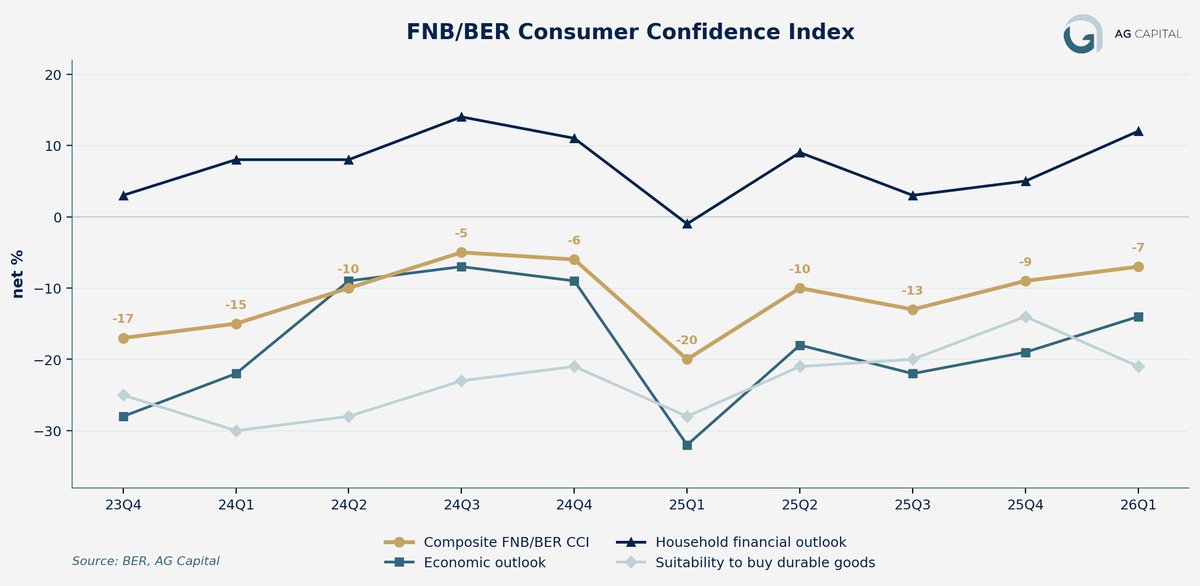
South Africa’s consumer confidence has a postcode problem. The headline says recovery, the detail says fragile. The FNB/BER Consumer Confidence Index rose to -7 in Q1 2026, its strongest reading since late 2024. On the surface, this suggests a recovery gaining traction: lower interest rates, firmer equity markets, a stronger rand, and the fiscal relief announced in the February Budget all played a role. However, a closer look at the data's composition paints a far less reassuring picture for South African investors. The improvement was driven almost entirely by high-income households, whose confidence jumped from -12 to -4. Middle-income sentiment registered only a marginal uptick, while low-income confidence deteriorated -weighed down by persistently weak job creation and tighter social grant measures. This is an important distinction. It reveals not only where consumer spending growth is concentrated, but where it is conspicuously absent. For investors positioned in domestic retailers or consumer discretionary names that depend on broad-based spending, this data warrants caution. The recovery is narrow, and narrow recoveries seldom sustain themselves. Most commentary will gravitate toward the improving headline number. What deserves greater scrutiny is the durable goods sub-index, which slipped back despite the broader improvement. This is the canary in the coal mine. When households report a brighter outlook for the economy and their own finances, yet remain reluctant to commit to big-ticket purchases, it signals deep-seated anxiety about borrowing costs and the prospect of future rate relief. The SARB's decision to hold rates at 6.75% in January reinforced that caution - and with the Iran conflict now injecting fresh uncertainty into the inflation outlook, the prospect of meaningful rate cuts in 2026 is fading rapidly. Importantly, the CCI survey was conducted before the US-Israeli military strikes on Iran at the end of February. Since then, the landscape has shifted materially. The Strait of Hormuz (through which approximately 20% of global oil transits) has faced material disruption. Brent crude has surged past $100/barrel. The rand has weakened. Global equity markets have sold off. These are not abstract risks- they feed directly into South African fuel costs, inflation expectations, and the SARB's interest rate decisions. Should oil remain elevated and rate cuts be pushed further out, the next CCI reading could readily reverse everything gained in Q1. For South African investors, the practical takeaways are clear: Do not chase the headline. A move from -9 to -7 in an index that has been in negative territory for years does not constitute a green light for aggressive consumer-facing positioning. Watch durable goods, not the composite. The durable goods sub-index remains the most reliable forward indicator of actual consumer spending behaviour. At present, it is signalling that the recovery lacks depth. Position for the rate path, not the rate hope. Markets have been priced for rate relief that may not materialise. Portfolios tilted toward rate-sensitive sectors should be stress-tested against a "higher for longer" scenario, or, worse, defensive hikes should oil-driven inflation force the SARB's hand. Hedge the geopolitical tail. The Iran conflict is not reflected in this data. Any portfolio that does not account for sustained oil disruption, rand weakness, and delayed easing is carrying more risk than it appears. At AG Capital, we believe conviction beats consensus. The CCI improvement is real, but it is fragile, narrow, and already overtaken by events. The investors who outperform from here will be those who read through the headline - not those who trade on it.
Casey Sprake tweet media
English
0
2
4
348
Casey Sprake
Casey Sprake@CaseySprake·
South Africa is watching one of the biggest trade reroutes in decades unfold… from the side lines. With the Strait of Hormuz effectively closed, global shipping has been forced around the Cape of Good Hope, placing us directly on the world’s busiest new trade lane. A 112% surge in diverted vessels sounds like an economic windfall. It isn’t. Because ships that don’t berth don’t spend. And right now, they’re sailing straight past us. This isn’t a geography problem. It’s a competitiveness problem. South Africa has the location. What it lacks is the infrastructure, efficiency, and operational credibility to convert passing traffic into real economic gain. So while the world reroutes, we’re left asking: Are we a strategic waypoint… or just a landmark? Read more ↓ freightnews.co.za/article/the-wo…
Casey Sprake tweet media
English
0
1
1
159
Casey Sprake
Casey Sprake@CaseySprake·
There’s probably one last, panicked leg lower ahead as markets wake up to the risk of real‑world fuel shortages (disrupting commutes, production, even food security) and to the need for physical and financial prices to finally converge after an overly optimistic and sanguine outlook
English
0
0
0
80
Casey Sprake
Casey Sprake@CaseySprake·
Markets are waking up this morning and finally confronting a harsher macro reality: structurally higher energy prices, mounting risks of fuel supply disruption, and rate hikes replacing any further easing. The recession probability curve is steepening. Layer on hotter US inflation data, disappointing AI ROI signals from Tencent and Alibaba, and widening cracks in private credit and the bullish narrative of early 2026 looks increasingly fragile
English
1
0
1
116
Casey Sprake
Casey Sprake@CaseySprake·
Yesterday was a big day. SA futures close-out hit ~R89.4bn -potentially a record. Meanwhile markets finally clocked that the Iran conflict isn't a quick resolution story. Even if the war ended tomorrow, oil prices won't normalize quickly- supply chains take months to swing back into full gear. Sentiment took a hit. Europe & the UK felt it first.
English
0
1
2
185
Casey Sprake
Casey Sprake@CaseySprake·
Always good to exchange ideas in a room full of curious minds. A great morning spent with the Inospace team, listening to Frans Cronje discuss South Africa’s political outlook as we look ahead to the local elections later, along with the wider geopolitical forces shaping the global environment.
Casey Sprake tweet media
English
1
0
5
415
Casey Sprake
Casey Sprake@CaseySprake·
When the United States and Israel launched coordinated strikes on Iran on February 28 under Operation Epic Fury, the consequences were never going to stay contained within Iran's borders. Within days, the conflict had spilled into one of the world's most critical maritime arteries. By March 2, tanker tracking data told the story plainly: no ships were broadcasting AIS signals in the Strait of Hormuz, traffic had fallen to essentially zero, and war-risk insurers had withdrawn cover entirely, making the economic case for transit impossible even for operators willing to run the risk. Iran's new Supreme Leader, Mojtaba Khamenei, has since declared the stranglehold on shipping a "tool to pressure the enemy," with no resolution on the horizon. The disruption is staggering in scale. The strait carries roughly 20% of the world’s daily oil supply, with China, India, Japan and South Korea accounting for nearly 70% of shipments. About 30% of Europe’s jet fuel supply originates from or transits through the waterway. For South Africa, sitting at the southern tip of Africa with two major ports and a long coastline, the question was immediate: does this crisis represent an opportunity? Click on my latest article below to read more👇
Casey Sprake@CaseySprake

x.com/i/article/2034…

English
0
1
2
122
Casey Sprake أُعيد تغريده
Javier Blas
Javier Blas@JavierBlas·
Both sides are now targeting upstream (ie, production) oil and natural gas assets. Is this an attempt to escalate to de-escalate? Or is it simply a sign that escalation is spiralling out of control?
English
161
462
2.1K
345.8K
Casey Sprake
Casey Sprake@CaseySprake·
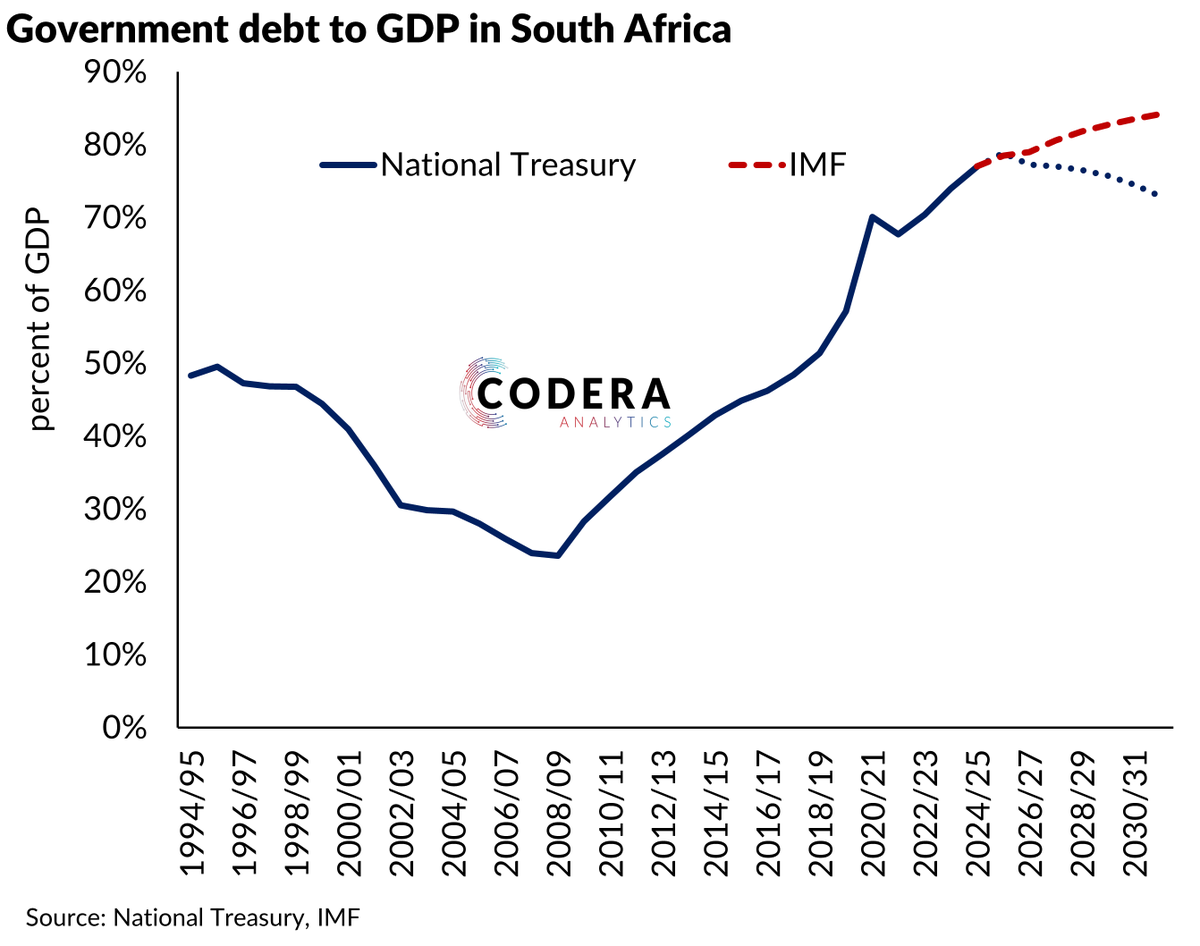
Key differences here are that the IMF suggests that debt will not stabilize, with risks tilted to the downside, potentially reaching 85-92% of GDP by 2028/29 due to lingering fiscal deficits. NT however, expects debt to stabilise in 2025/26 and decrease thereafter, driven by a 0.9% primary surplus of GDP and improved economic growth. Who's forecasted trajectory will ultimately win out?
Daan Steenkamp@daan_steenkamp

While the National Treasury of South Africa has projected debt to stabilise, the latest IMF projections (published 11 February 2026) continue to imply that debt will not stabilise. @CoderaAnalytics

English
0
0
0
102
Casey Sprake أُعيد تغريده
Daan Steenkamp
Daan Steenkamp@daan_steenkamp·
While the National Treasury of South Africa has projected debt to stabilise, the latest IMF projections (published 11 February 2026) continue to imply that debt will not stabilise. @CoderaAnalytics

Daan Steenkamp tweet media
English
0
6
4
523
Casey Sprake
Casey Sprake@CaseySprake·
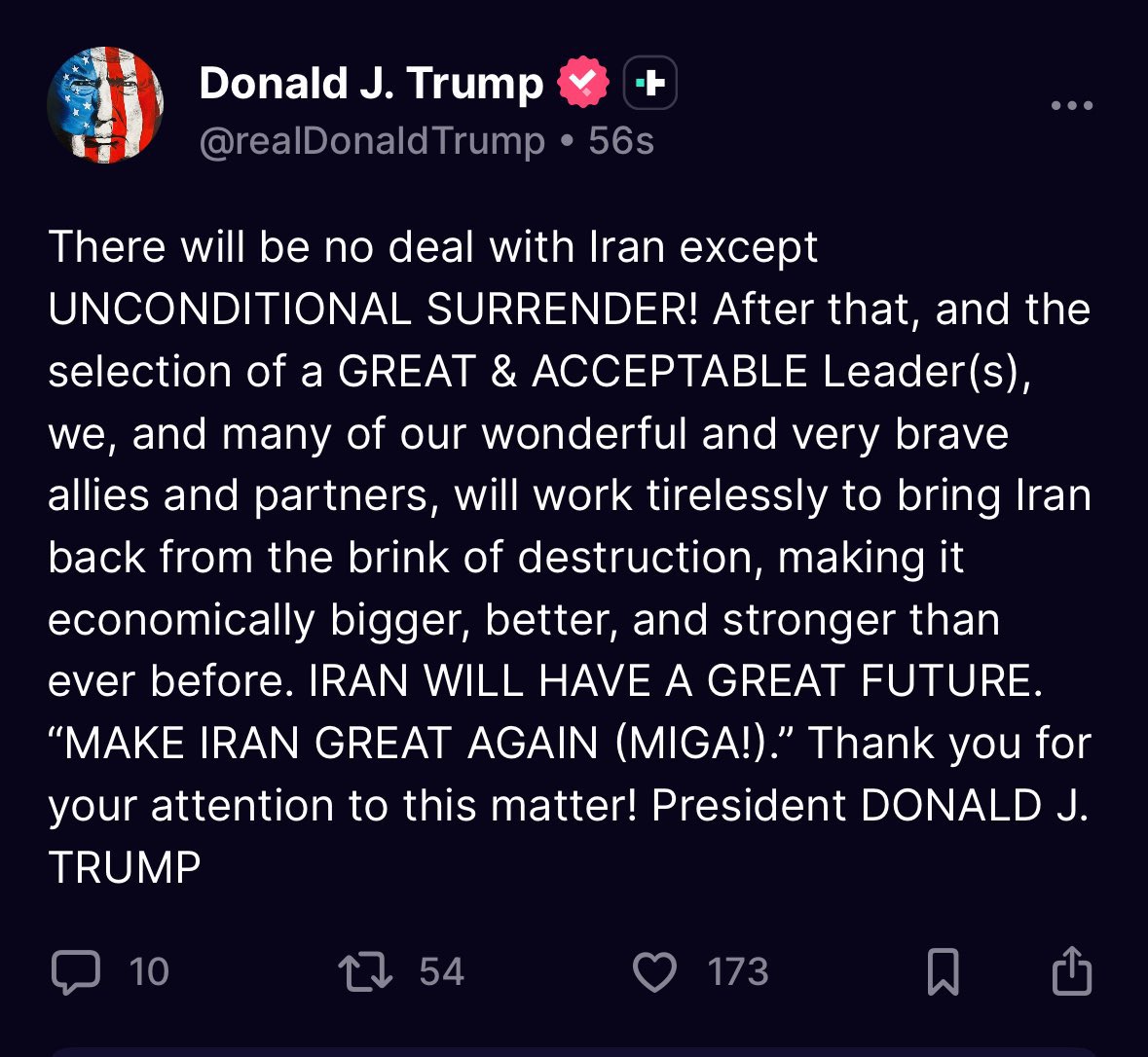
@parci36 Geopolitics now apparently comes with branding guidelines. MAGA_MIGA. Waiting for the ETF ticker.
English
0
0
2
10
Casey Sprake
Casey Sprake@CaseySprake·
Feels like I’m constantly harping on about making regulation more business-friendly, but in case we needed another reminder: every extra hour firms spend navigating red tape is an hour not spent hiring, investing, or expanding.
IMF@IMFNews

South Africa’s economy showed resilience in 2025, but growth remains too low to reduce unemployment decisively. A simpler, more predictable licensing and permitting system could help unlock investment and job creation. Read our Country Focus for more: imf.org/en/news/articl…
English
0
0
1
232