Clare Smith ن Rh-negative blood.

1.3K posts

Clare Smith ن Rh-negative blood. banner
Clare Smith ن Rh-negative blood.

Clare Smith ن Rh-negative blood.

@Claresmiling

Just another disciple. Irish and proud. I wish only good to everyone. Love thy neighbour. This should explain to some what I believe. Matthew 21:12-13 🙏✝️❤️.

Dublin. انضم Ocak 2025
197 يتبع80 المتابعون
Clare Smith ن Rh-negative blood. أُعيد تغريده
Heritage Matters🔱
Heritage Matters🔱@HeritageMatterz·
The harmonizing equilibrium of the forest and melody. Folk Harpist Alisa Marie.
English
27
281
1.1K
20.9K
RadioGenoa
RadioGenoa@RadioGenoa·
She complains that in Ireland 99% of teachers are Irish, white and Catholic.
English
1.1K
600
2.2K
51.7K
Suffragent
Suffragent@Suffragent_·
"We're here because you were there," says @zarahsultana. "That's why my grandparents came to this country - because Britain's rulers looted their homeland." More proof of revenge colonisation. 🇬🇧
English
602
463
2.3K
139.2K
Clare Smith ن Rh-negative blood.
Clare Smith ن Rh-negative blood.@Claresmiling·
@jess7719 @ICEgov He's not getting any here you can be sure of that. His sister started a campaign about it we all think it's hilarious. She's gone very quite quickly in the last few days.
English
0
0
0
17
WA girl 4 Trump
WA girl 4 Trump@jess7719·
@ICEgov Sounds like he lied to get the visa in the first place so he shouldn't even have gotten here in the first place. Whatever the case, he needs to go back. I'm not sure why he feels he is owed sympathy by the public.
English
1
1
5
1K
Asian Dawn
Asian Dawn@AsianDawn4·
🇯🇵 Ugandan migrants in Tokyo, Japan, demand the Japanese government help Uganda....
English
93
43
226
10.8K
Reiko Watanabe
Reiko Watanabe@ReikoSPCT·
@Claresmiling Hi, I’m Reiko from Spectee, an online news agency, reaching out to request permission to use your video. - Did you record/own this video yourself? - May we and our media partners use it with credit? - And please let me know the filming date/time/location. Thanks.
Reiko Watanabe tweet media
English
1
0
0
17
Viral Stringer
Viral Stringer@StringerViral·
@Claresmiling Hello @Claresmiling , I hope you are fine . I am a journalist with a London based news agency . Is this your video ? We would like to use it for our coverage and to distribute it with our media partners with Credit to you . Can you please follow me back for DM . Thanks
English
2
0
0
24
Vladislav Starostenko
Vladislav Starostenko@vladivalz·
@Claresmiling Hi Clare! I'm reaching out from VBear media. Your video from Dublin looks fantastic! We'd love to share it with our media partners. Would it be possible to use it on a non-exclusive license, with full credit to you? Thanks for considering! vbear.media/permission
English
2
0
0
28
Clare Smith ن Rh-negative blood. أُعيد تغريده
War Radar
War Radar@War_Radar2·
BREAKING: 🇮🇹 Prime Minister Giorgia Meloni approves deployment of the Italian Navy to block all vessels carrying illegal immigrants into Italy.
English
671
3.6K
31.7K
972.5K
Clare Smith ن Rh-negative blood. أُعيد تغريده
Ed Lynch 🇮🇪
Ed Lynch 🇮🇪@edlynch86·
Say it like it is with absolutely no filter. I love it 😂😂😂
English
49
243
1.5K
16.4K
Genius Tech
Genius Tech@Geniustechw·
An Irish liberal just said MAGA is NOT welcome in her country 😡🇮🇪 Your response?
English
500
35
105
8.6K
PsychoGreaser
PsychoGreaser@HikeGhost·
@Geniustechw Don't be jealous. In 3 years, we will loan Trump and ICE to Ireland, so they can unphuck that place too.
English
4
3
54
455
ArchaeoHistories
ArchaeoHistories@histories_arch·
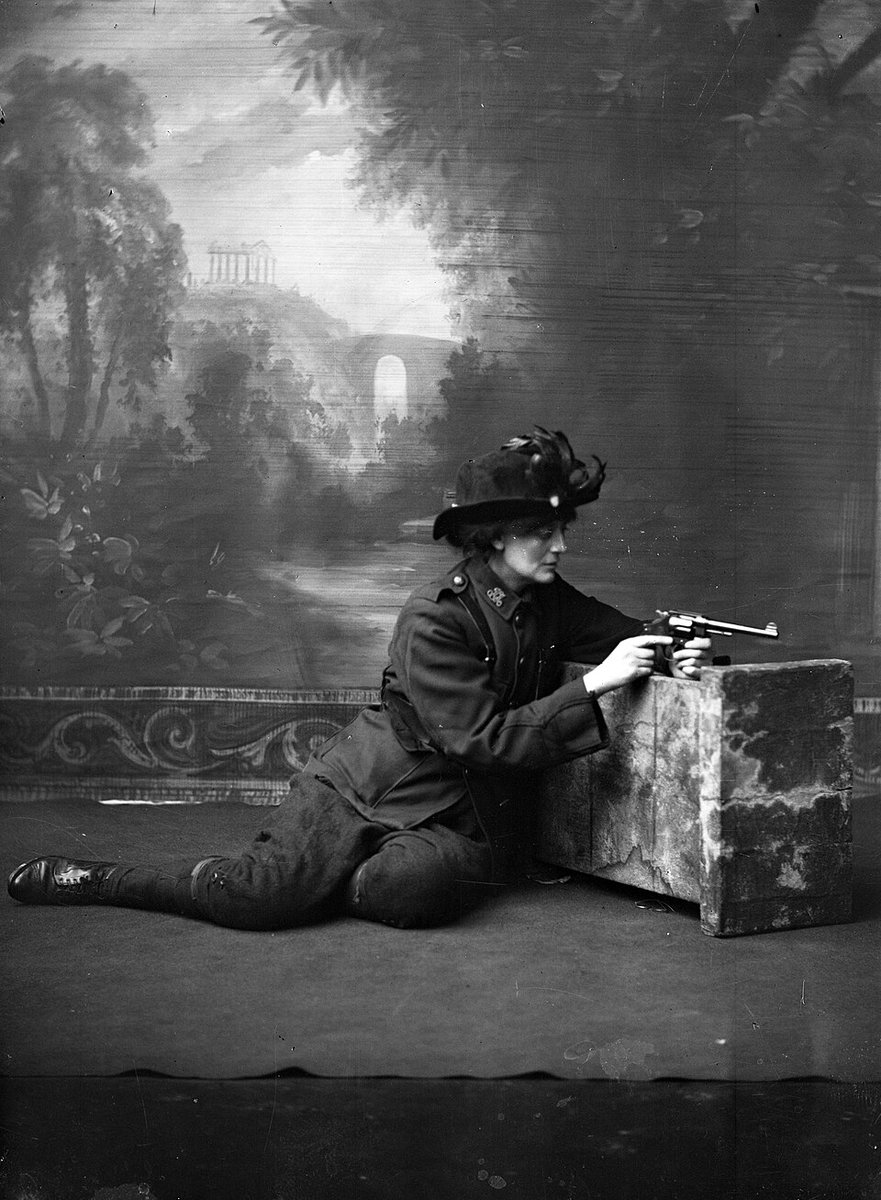
On February 4, 1868, a daughter was born into privilege at Lissadell House in County Sligo. Constance Gore Booth entered a world of servants, horses, and inherited authority. The estate overlooked the Atlantic. Her family belonged to the Anglo Irish landed class, tied closely to British rule in Ireland. From childhood she witnessed two realities side by side. Inside the estate there was comfort and education. Beyond its gates tenant farmers struggled with poverty and insecurity. Her father, Sir Henry Gore Booth, was known locally for treating tenants with relative fairness during difficult years. Even so, the wider system of land ownership left deep inequality across Ireland. The contrast shaped Constance’s early thinking. Instead of remaining within the expectations of aristocratic life, she studied art in London and later in Paris. There she met Count Casimir Markievicz, a Polish artist. After their marriage in 1900 she became known as Constance Markievicz. The title of countess did not draw her toward comfort. Returning to Ireland, she became involved in nationalist and labor movements. She helped establish Na Fianna Éireann, which trained young boys in Irish history and discipline. During the 1913 Dublin Lockout, when thousands of workers were dismissed during a labor dispute, she organized food relief for families facing hunger. Her support was practical and direct. In 1916 she joined the Irish Citizen Army and took part in the Easter Rising. Stationed at St Stephen’s Green in Dublin, she served as a lieutenant. When British forces suppressed the uprising after six days, she was arrested and court martialed. A death sentence was issued and then commuted to life imprisonment on account of her sex. She objected to the distinction, insisting she had acted as a soldier among equals. Released in 1917, she was arrested again the following year during renewed political unrest. While imprisoned in 1918 she was elected to the House of Commons, becoming the first woman chosen as a Member of Parliament in Britain. She refused to take her seat in London, aligning instead with the newly formed Irish assembly, Dáil Éireann. In 1919 she became Minister for Labour, the first woman to hold cabinet rank in Europe. The years that followed were marked by the War of Independence and then civil conflict over the Anglo Irish Treaty. Markievicz opposed the treaty, believing it fell short of full independence. She endured further imprisonment and financial strain. Much of her inheritance had already been spent supporting political causes and families in need. By the mid 1920s she lived modestly, far removed from the privilege of her birth. She died on July 15, 1927, in a public ward of a Dublin hospital at the age of fifty nine. Crowds gathered for her funeral, many from working class districts where she had been active. Her journey from landed aristocrat to revolutionary minister was not compelled by poverty or exclusion. It was a conscious departure from advantage. Constance Markievicz’s life illustrates how political commitment can cross class boundaries. She did not abandon her origins quietly. She redirected them. In a period when women lacked voting rights and formal power, she assumed leadership in armed revolt and in government. Her legacy rests less in titles and more in the decision to stand with those who had little voice, even when that decision required surrendering comfort, status, and security. © Vintage Facts #archaeohistories
ArchaeoHistories tweet media
English
11
63
303
13.2K