
Constance L Hunter

12.8K posts

Constance L Hunter banner
Constance L Hunter

Constance L Hunter

@ConstanceHunter

Macroeconomist|Triangulating Data|@nberpubs Board|Data Junkie|Policy Wonk|my own views| #Econ101 #SecretLivesOfEconomists

Earth انضم Kasım 2011
2.2K يتبع9K المتابعون
Constance L Hunter
Constance L Hunter@ConstanceHunter·
This is why I am so disciplined about my sleep routine. Going to bed and waking up at the same time every day is critical for those who have trouble sleeping. Meditation and non-sleep deep rest are also quite helpful. @hubermanlab has a great one that is free on @YouTube.
Aakash Gupta@aakashgupta

The scariest finding in this paper: the subjects couldn't tell it was happening. UPenn ran this study on 48 healthy adults. One group slept 8 hours. Another slept 6. Another slept 4. For 14 straight days. They tested cognitive performance every 2 hours from 7:30am to 11:30pm. The 6-hour group's reaction times, working memory, and sustained attention deteriorated on a near-linear curve. By day 14 they were performing at the same level as someone who hadn't slept at all in 48 hours. The 4-hour group hit that threshold by day 6. Here's the part that should unsettle everyone who thinks they "do fine" on 6 hours: the subjects' self-reported sleepiness flatlined after the first few days. Their brains kept getting worse. Their perception of how impaired they were stopped updating. The cognitive decline was invisible to the person experiencing it. The researchers found a hard threshold. Any wakefulness beyond 15.84 hours in a day produces cumulative neurobiological cost. That cost compounds every single day you exceed it and does not reset with a weekend of sleeping in. About 35% of American adults sleep less than 7 hours a night. 40% of those get 6 hours or less. In 1942 that number was 11%. We built an entire professional culture around a sleep schedule that this paper says is functionally equivalent to pulling consecutive all-nighters. "I'm fine on 6 hours" is the most common response to sleep research. The first thing chronic sleep debt destroys is your ability to notice chronic sleep debt.

English
0
0
0
558
Constance L Hunter أُعيد تغريده
Rory Johnston
Rory Johnston@Rory_Johnston·
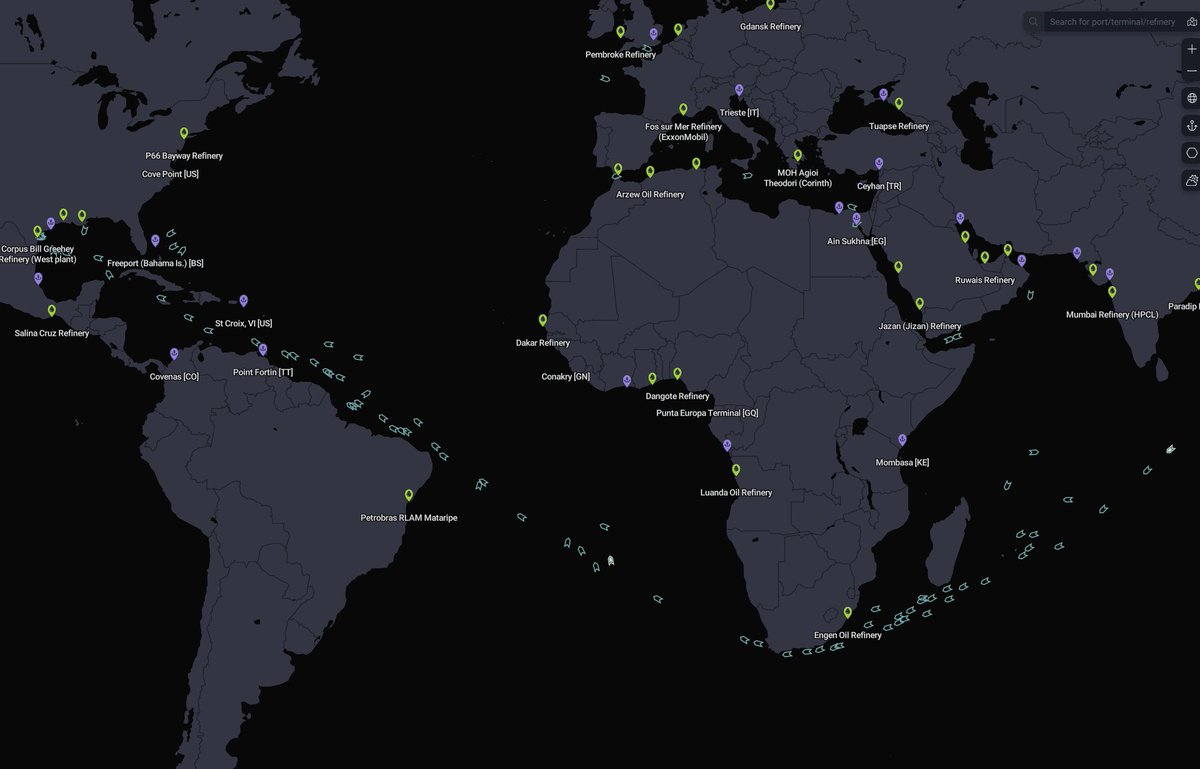
Very cool seeing the wave of empty tankers heading to the US to pick up some desperately needed crude for Hormuz-starved markets. All the tankers on the map below are empty VLCCs (~2 million barrel capacity each) currently heading for the US Gulf Coast.
Rory Johnston tweet media
Ayuso@AyusoValue

US crude exports are about to boom.

English
322
1.7K
7.6K
1.6M
Constance L Hunter أُعيد تغريده
Lincoln Square
Lincoln Square@LincolnSquareHQ·
2pm ET TODAY: EIU's Democracy Index 2025 evaluates the democratic health of 167 countries. EIU's Democracy Index 2025 evaluates the democratic health of 167 countries. Macroeconomist @ConstanceHunter of @TheEIU talks to @eisendrath LIVE on Lincoln Square to tell us where the United States fares on this list. open.substack.com/live-stream/16…
Lincoln Square tweet media
English
0
2
3
543
Constance L Hunter أُعيد تغريده
FedResearch
FedResearch@FedResearch·
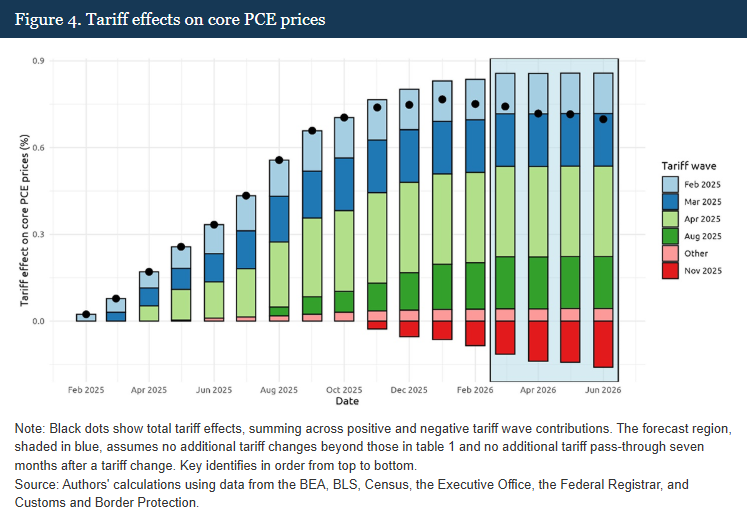
The authors estimate that the tariffs implemented through November of 2025 can explain the entirety of excess inflation in the core goods category and contributed to a 0.8 percent boost in core PCE prices through February 2026. federalreserve.gov/econres/notes/… #FEDSNote
FedResearch tweet media
English
8
174
560
231.3K
Joseph Brusuelas
Joseph Brusuelas@joebrusuelas·
Market Minute: Allentown, hubris, urea and sulfur: Wars always result in hard lessons learned. This one will be no different. While the North American economy is more self-sufficient regarding oil and food supplies than its trade partners and competitors, the rarely spoken of molecules that are deeply embedded into the fabric of our lives and economies are nevertheless products whose origins and prices are set globally. What we celebrate and what is real are rarely the same. realeconomy.rsmus.com/market-minute-…
English
1
2
6
1.1K
Constance L Hunter أُعيد تغريده
Anish Moonka
Anish Moonka@anishmoonka·
Christina Koch was a firefighter at the South Pole at -111°F before she ever applied to be an astronaut. That was maybe the fourth most interesting line on her resume. She grew up in North Carolina, got three degrees from NC State, and her first real job was building deep-space instruments at NASA. Then she left for Antarctica. Spent three and a half years bouncing between the Arctic and Antarctic as a research scientist, including a full winter at the South Pole base. That means going months without sunlight or fresh food, with a crew of about 50 people and no way out until flights resume. While she was down there, she also joined the glacier search-and-rescue team. After coming back, she went to Johns Hopkins and built instruments for two NASA missions (one of them is still orbiting Jupiter right now). She figured out how to start a tiny vacuum pump that NASA designed for a future Mars rover. Johns Hopkins nominated it for their Invention of the Year in 2009. Then she went back to the field. More time in Antarctica and a stretch up in Greenland. A government research station in northern Alaska, near the top of the world. Then she ran another one in American Samoa, near the equator. In 2013, NASA selected her from 6,300 applicants. Eight people got in. Her first space mission was supposed to be a normal rotation on the International Space Station, but NASA extended it. She ended up staying 328 straight days and orbiting Earth 5,248 times, covering about 139 million miles (roughly 291 round trips to the Moon). Up there, she ran over 210 experiments, including tests of cancer drugs in zero gravity and 3D printers that can build structures close to human tissue. Six spacewalks, 42 hours floating outside the station. She learned Russian for the training. She flies supersonic jets. Right now, Koch is on Artemis II, heading for a flyby behind the far side of the Moon. The crew launched on April 1 and is on track to travel about 252,000 miles from Earth, which would break the all-time human distance record of 248,655 miles set by Apollo 13 in 1970. That record has stood for 56 years, and it was set during a disaster that nearly killed the crew. Fred Haise, one of the Apollo 13 astronauts, is 92 now. He told Koch: "I heard you're going to break our record." Nobody had left Earth's neighborhood since December 1972. Koch and her three crewmates are the first in 53 years, and they are coming home at about 25,000 mph. That is faster than any crewed spacecraft has ever come back through the atmosphere.
All day Astronomy@forallcurious

BREAKING🚨: Artemis II astronaut Christina Koch officially becomes the farthest any woman has ever traveled from Earth.

English
336
6.3K
38.9K
1.9M
Constance L Hunter أُعيد تغريده
Volodymyr Zelenskyy / Володимир Зеленський
Our signal to the United States and countries in the Middle East about the Strait of Hormuz was that we were open to discussing it. As of today, I don't see any country lifting the blockade on its own, only joint steps can bring results. Ukraine has experience with launching the Grain Corridor in the Black Sea despite Russia’s attempts to block the flow of food and other goods. The situation now is similar, but it is about energy. Our suggestion – based on our experience – was as follows. The war and the negotiations on reopening the Hormuz Strait can go in parallel. It’s worth trying to find a diplomatic solution, and this could be beneficial for both sides in the war. An alternative step would be to control the Strait unilaterally, as Ukraine did with the Grain Corridor. Achieving this would require interceptors, military convoys to escort the vessels, a large integrated electronic warfare network, and other tools. We stand ready to help with this. But for now, we are not yet involved. So far, no one has made such a request. We are simply sharing our knowledge. If one day our partners want to make use of it, we would be ready. From an interview with NewsNation.
English
1.3K
2.7K
16.6K
1.4M
Constance L Hunter
Constance L Hunter@ConstanceHunter·
The labor market takes a licking and keeps on ticking. The volatility in the labor market makes it challenging to parse the signal from the noise, but it does suggest momentum in the U.S. economy despite headwinds.
English
0
0
3
340
Constance L Hunter
Constance L Hunter@ConstanceHunter·
Market is not buying what Trump is selling.
Constance L Hunter tweet media
English
0
0
1
403
Constance L Hunter أُعيد تغريده
Patrick De Haan
Patrick De Haan@GasBuddyGuy·
Top 10 largest state increases in average diesel price vs a month ago: AZ +$2.34/gal CA +$2.25/gal NV +$2.12/gal NC +$1.93/gal FL +$1.93/gal SC +1.86/gal TN +$1.86/gal UT +$1.85/gal ID +$1.84/gal CT +$1.81/gal
English
12
46
180
15.1K
Claudia Sahm
Claudia Sahm@Claudia_Sahm·
“I have been told, for example, that millions of Americans think the Federal Reserve is a system of government-owned forests and wildlife preserves where, I suppose, bulls, bears, hawks, and doves live together in blissful harmony. Having spent 19 months as the Fed’s vice-chairman, I know this isn’t the case.” an Alan Blinder classic
English
8
19
207
15.7K
Constance L Hunter أُعيد تغريده
Volodymyr Zelenskyy / Володимир Зеленський
When I travel outside of Ukraine, I get daily intelligence updates online. This morning, I was briefed that U.S. military facilities in the Middle East and the Gulf region were photographed by Russian satellites in the interests of Iran. On March 24th, they imaged the U.S.–UK joint military facility on Diego Garcia located in the Chagos Archipelago in the Indian Ocean. They also captured pictures of Kuwait International Airport and parts of the infrastructure of the Greater Burgan oil field. On March 25th, they took pictures of the Prince Sultan Air Base in Saudi Arabia. The Shaybah oil and gas field in Saudi Arabia, İncirlik Air Base in Türkiye, and Al Udeid Air Base in Qatar were all imaged on March 26th. There are no Ukrainian facilities on this list. But who is helping whom when sanctions are lifted from an aggressor that earns daily revenue and provides intelligence for strikes against American, Middle Eastern, UK, and U.S.–UK bases and so on? When surveillance is carried out over facilities in Ukraine, we always understand that they must be protected, since plans are in motion to destroy them – energy and water infrastructure, military facilities, and so on. Everyone knows that repeated reconnaissance indicates preparations for strikes. How can sanctions be eased if this is what the Russians are doing? There must be pressure on the aggressor. And lifting sanctions is certainly not pressure. It looks strange. Sanctions are being lifted, while the aggressor is providing intelligence to strike facilities, including those of the countries that are discussing or have already lifted sanctions. From my conversation with journalists (3/3).
English
1.5K
10.2K
41.5K
3.4M