web devs are fighting over which AI wrapper to build next while the guys writing C++ and managing memory allocation for the GPUs are quietly buying islands.
Violence against women is never acceptable.
We demand accountability, support for survivors, and real justice.
Stand with women. Stand against abuse. 💜
A 5-day plan to set up Claude:
(made for teams, not individuals)
✦ Monday (45-60 min): Set up Projects
Build a separate Project for every task your team does repeatedly. Let Claude interview you. Upload ONE gold-standard example per Project.
Full guide below (the article).
✦ Tuesday (15 min): Create Prompt Templates
For each Project, generate a one-sentence prompt template with a single [INPUT] field. Your teammates copy-paste it and fill in their raw notes.
✦ Wednesday (20-25 min): Test for a "wow"
Pick one real task you did manually this week. Run it through your Project. Screenshot the before/after. This becomes your proof for Thursday.
✦ Thursday (35 min): Convert 1 person
Don't train 10 people. Pick the one who's drowning. Sit with them for 15 min. Use THEIR work. Then, make them a co-owner of the Project.
✦ Friday (60 min): Roll out to the team
Send ONE message to your team channel. Lead with ONE specific result. List 3 things they can do RIGHT NOW. Then DM 2-3 people separately.
@rubenhassid
Earns $400 per hour by using chatGPT Prompts
I've created a guide with 24 methods to help you earn $5,000 daily
Normally $199, but today, it is free. (Only For 48 Hours)
So, what are you waiting for?
To get it;
Like & Repost
Comment 'Send'
Follow me so I can DM you.
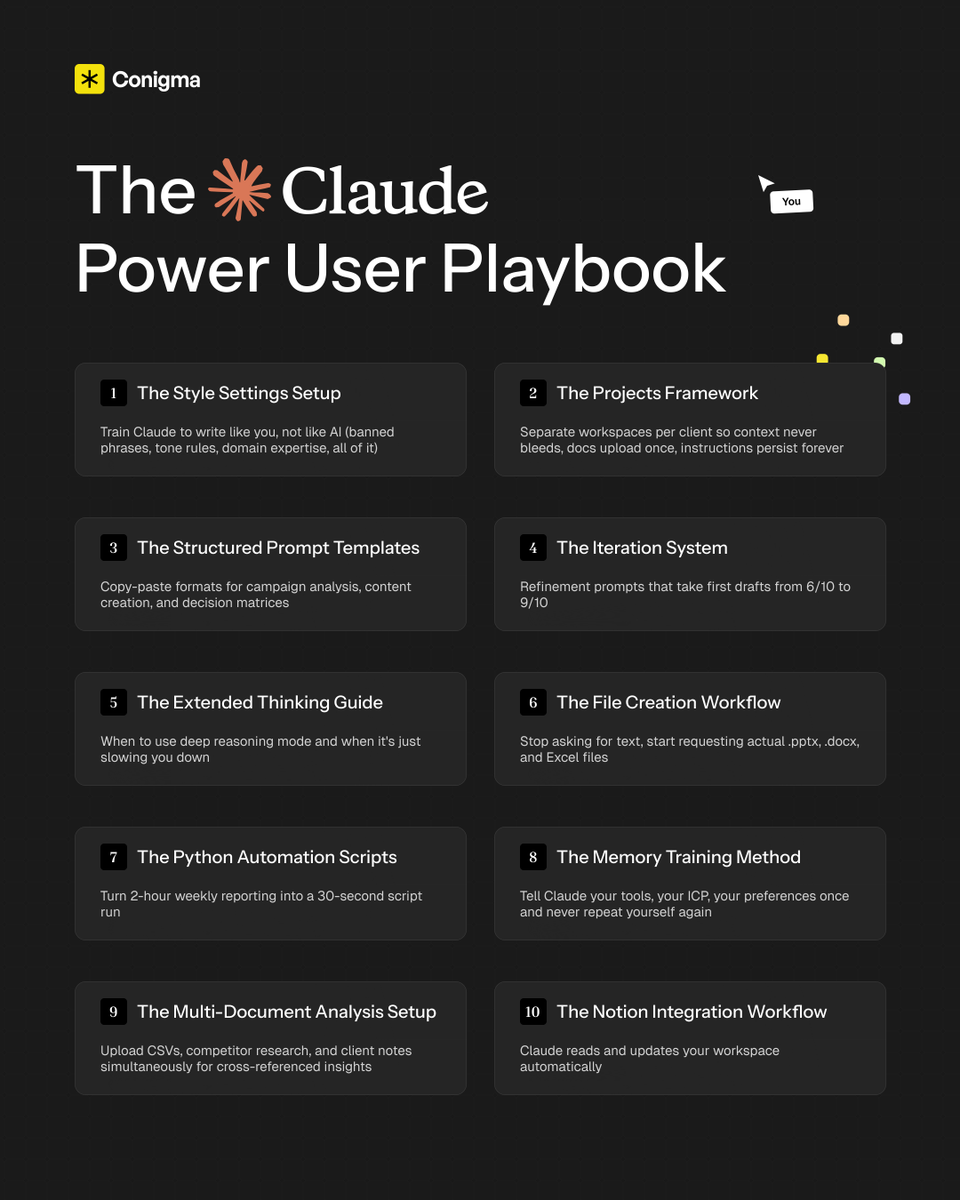
If you don't have my "Claude Power User Playbook" yet...
The one I built to get 10x more output from Claude every session with a complete system across settings, prompting frameworks, file creation, memory management, and advanced workflows...
Just comment "CLAUDE" and I'll DM it to you for free (must follow)
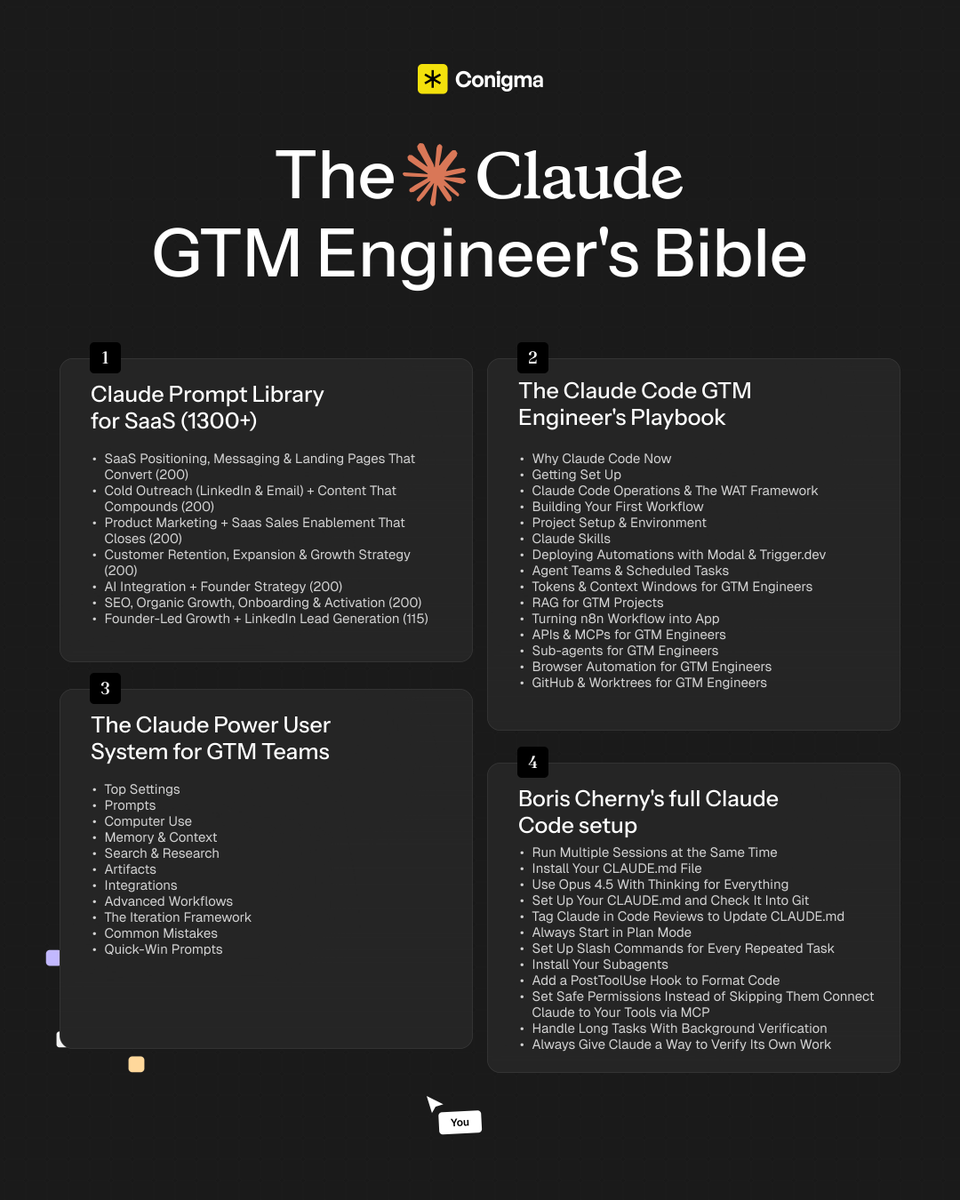
SHOCKING: 99% of GTM engineers using Claude are barely scratching the surface.
Right now, the entire internet is screaming "Claude, Claude, Claude"... But here's the truth: just prompting it won't build GTM infrastructure.
To unlock its real power, you need to master:
- Claude Code deployment with the WAT framework and CLAUDE. md self-improvement loop
- MCP connections, sub-agents, and automations running 24/7 without you
- Pre-built prompt systems covering every GTM function you actually run
I spent 100+ hours building and documenting the most complete Claude GTM Engineering Bible and compiled every prompt, workflow, build sequence, and deployment guide into one resource.
I'll give it to only 500 people.
To get it:
1. Follow me MUST (so I can DM)
2. Comment "CLAUDE"
3. I'll DM you the bible
If you don't follow or comment, you won't receive it.
GOODBYE $60K COPYWRITERS⚠️
CLAUDE JUST KILLED THE CONTENT AGENCY.
5 POSTS/WEEK. 30 MINUTES. $20/MONTH.
NO VA.
NO COPYWRITER.
NO "SEND ME YOUR BRAND GUIDELINES".
Copy these 5 prompts to automate your LinkedIn like an agency:
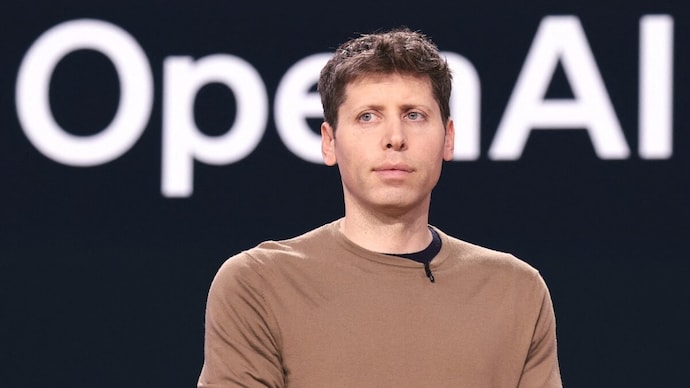
Sam Altman just posted a goodbye letter to developers.
He called it a thank you note.
Developers are not happy.
Here's what he said and what it actually means: 🧵
🚨BREAKING: Researchers just proved that ChatGPT is failing you constantly. And you have no idea it's happening.
Not the failures where it says something wrong and you catch it. The other kind. The silent ones. The ones where you walk away satisfied with an answer that was incomplete, misleading, or flat-out wrong.
78% of AI failures are invisible to the user.
You never notice. You never push back. You move on. The wrong information lives in your head as fact.
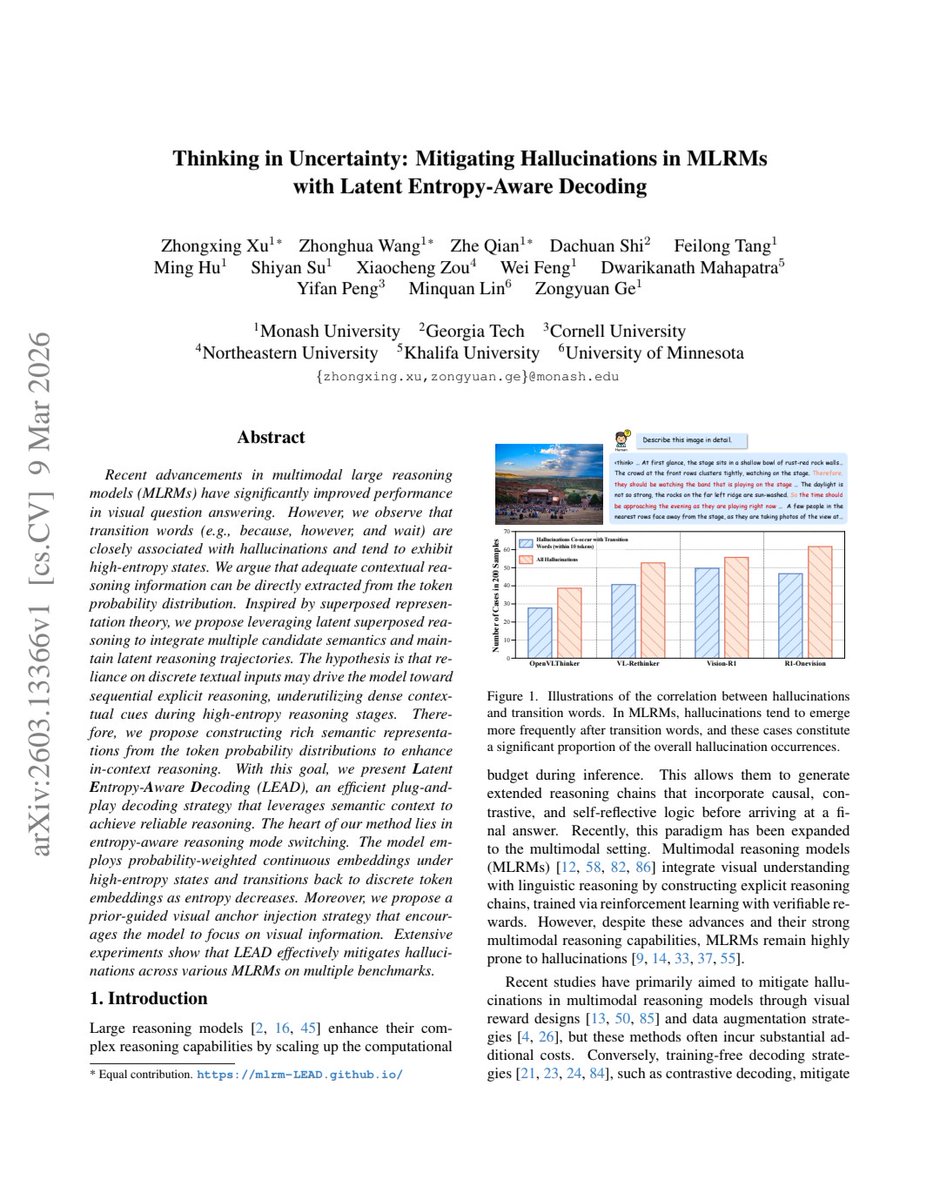
Researchers analyzed hundreds of thousands of real conversations from WildChat — one of the largest datasets of actual human-AI interactions ever collected. Not lab simulations. Not controlled experiments. Real people having real conversations with ChatGPT about real things that mattered to them.
They categorized every failure. Then they measured how often users detected them.
Most of the time, they didn't.
Here's how the invisible failures work.
The most dangerous failure isn't the one that sounds wrong. It's the one that sounds exactly right. Confident tone. Fluent sentences. Logical structure. Everything that makes you trust an answer — present. Everything that makes the answer correct — missing.
The AI doesn't stumble when it's wrong. It doesn't hedge. It doesn't slow down. It delivers incorrect information with the same velocity and certainty it delivers correct information. There is no signal that something went wrong.
So you don't check. Why would you? It sounded right.
Here's what the researchers found inside those failures.
The most common invisible failure: the AI answers a question you didn't ask. You asked something specific. It detected a related topic and answered that instead. The response is coherent, relevant-seeming, and completely misses your actual need. You read it. You think you got an answer. You didn't.
The second most common: confident incompleteness. The AI gives you part of the answer and stops. Not because it ran out of knowledge. Because it pattern-matched to a response length that felt complete. You got 60% of what you needed and left thinking you got 100%.
The third: plausible fabrication. Not hallucination in the obvious sense — a made-up name, a fake citation. Subtle fabrication. A statistic that's close but wrong. A date that's off by a year. A nuance reversed. Nothing that triggers your skepticism. Everything that embeds quietly as knowledge.
Here's the part that makes it structural, not accidental.
These failures aren't random. They cluster around a specific condition: when the user already has partial knowledge about the topic.
If you know nothing, you ask follow-up questions. If you know a lot, you catch the errors. If you know just enough to feel informed but not enough to verify — which is the exact situation most people are in for most topics — you are maximally vulnerable to invisible failures.
The AI isn't failing the experts. It isn't failing the complete beginners. It's failing the people in the middle. Which is almost everyone. Almost all the time.
It gets worse.
The researchers found that conversational warmth actively suppresses failure detection. When the AI is friendly, apologetic, and engaging, users rate the interaction as successful even when the output was objectively wrong. The experience of being helped overrides the reality of not being helped.
You feel heard. You feel assisted. The answer was wrong. You leave happy.
Now think about every decision you've made recently where ChatGPT was part of your research. Every answer you accepted because it was fluent and confident. Every time you didn't check because the response felt complete.
You weren't evaluating the quality of the answer. You were evaluating the quality of the experience.
Those are not the same thing. And 78% of the time, the gap between them went unnoticed.
🚨 Picsart just launched an AI agent marketplace.
130 million creators can now "hire" AI assistants the same way they'd hire a freelancer.
This is what the shift from tools to agents looks like in practice 🧵
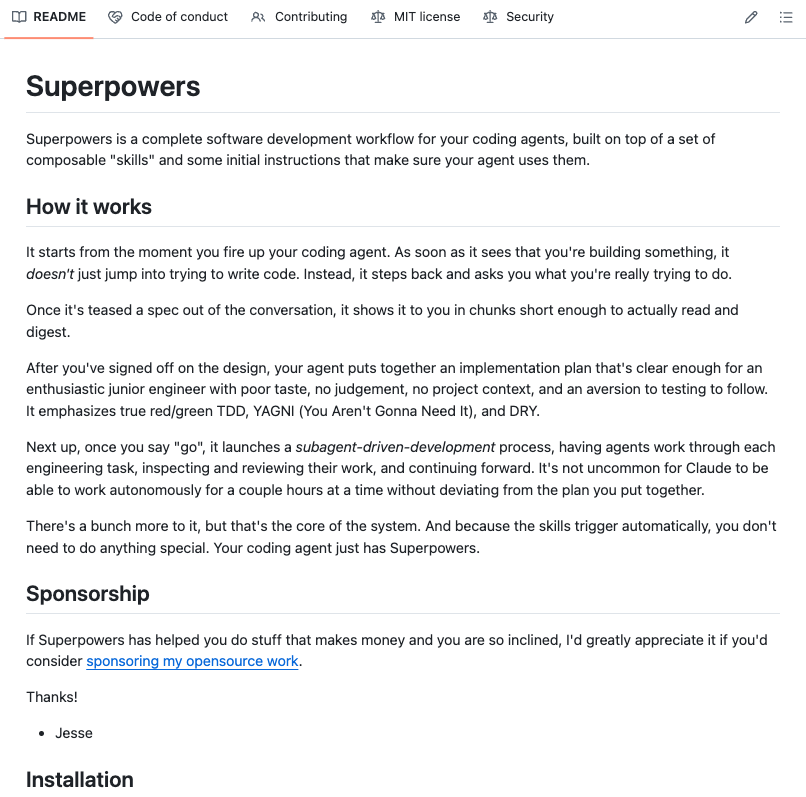
🚨 Someone just open sourced the exact workflow that stops your coding agent from going off the rails.
It's called Superpowers.
A complete software development framework that runs inside Claude Code, Codex, or OpenCode. It doesn't add tools. It changes how your agent thinks before it touches a single line of code.
Not a prompt. Not a wrapper. A full methodology that turns a chaotic coding agent into a disciplined engineer.
Here's the problem it solves.
You fire up Claude Code. You describe what you want. It immediately starts writing. No clarifying questions. No design review. No implementation plan. Just code — fast, confident, and quietly building on assumptions you never agreed to.
Four hours later you have 800 lines that technically run but don't do what you actually needed.
Superpowers stops that from happening at step one.
Here's how it works:
→ The moment you describe something to build, the agent stops. It asks what you're actually trying to do
→ It drafts a spec and shows it to you in short readable chunks — not a wall of text
→ You approve the design before any code gets written
→ It generates an implementation plan clear enough for an engineer with no context, no judgment, and no testing instincts to follow correctly
→ It enforces true red/green TDD, YAGNI, and DRY throughout execution
→ It then launches subagent-driven development — agents work through each task, inspect their own work, and continue forward autonomously
Here's the wildest part:
Once you approve the plan and say go, Claude can work autonomously for two hours straight without deviating. Not because it got smarter. Because it's following a structure tight enough to keep it on track.
The skills trigger automatically. You don't configure anything. You don't change how you prompt. You just have a coding agent that now thinks before it acts.
One command to install in Claude Code:
/plugin marketplace add obra/superpowers-marketplace
Then:
/plugin install superpowers@superpowers-marketplace
That's it. Your coding agent just got Superpowers.
40.9K GitHub stars. 3.1K forks. 254 commits. MIT License.
100% Open Source.
🚨 𝗕𝗥𝗘𝗔𝗞𝗜𝗡𝗚: Google Gemini can now build you a full AI video channel from scratch like a $20K creator consultant (for free).
Here are 7 prompts that take you from zero to a monetized AI video channel in 70 days: (Save for later)👇
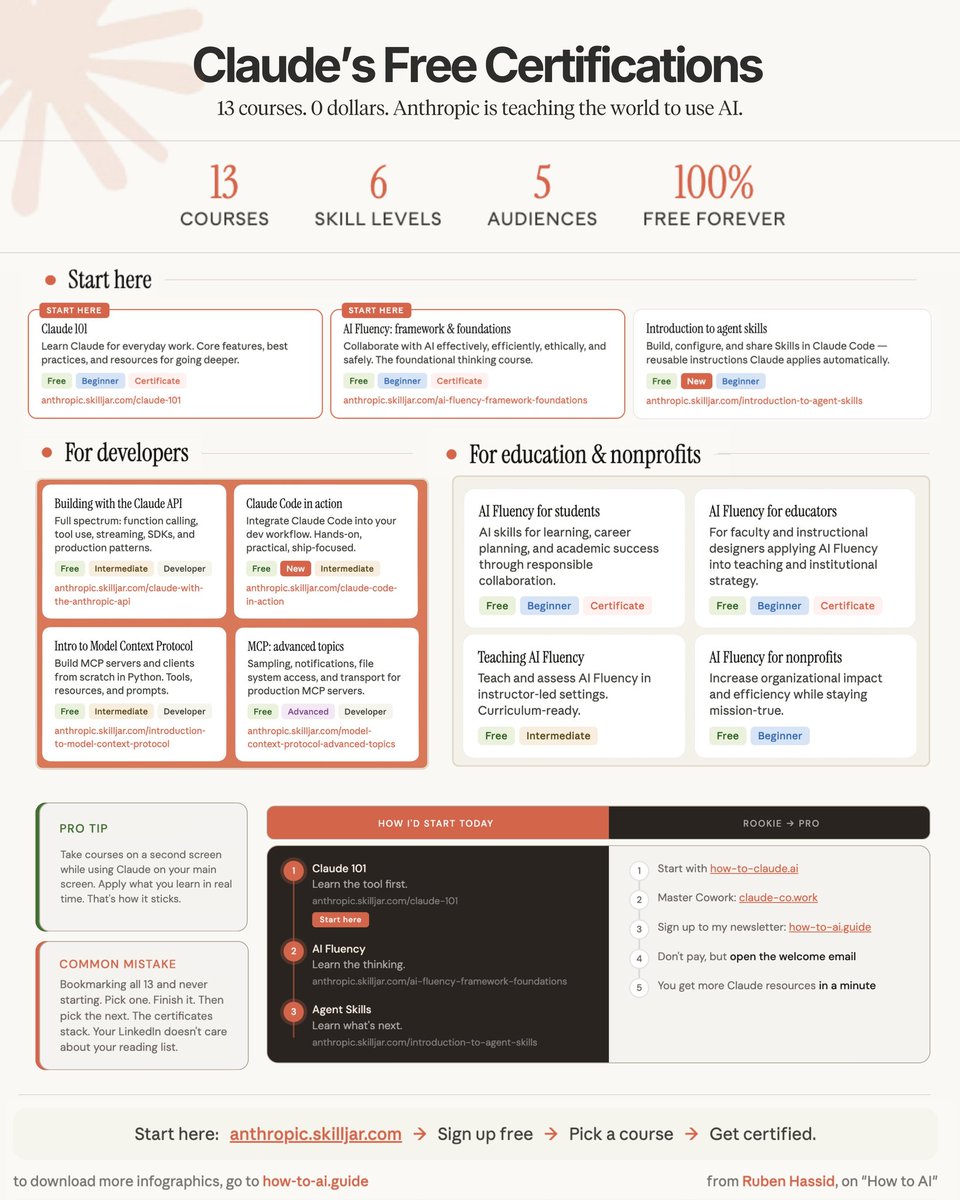
Anthropic just dropped 13 free AI courses with certificates.
Most people have no idea these exist.
If you're building with AI in 2026 and you're not certified, you're leaving credibility on the table.
Here's every course, ranked by who it's for:🧵