NN

7.3K posts

NN

NN

@HumanusUnus

انضم Ocak 2025
40 يتبع135 المتابعون
NN
NN@HumanusUnus·
@FeserEdward Such art is possible, because the artist believes it reflects reality, albeit in an imperfect manner. Great art is dependent on great beliefs, which are more rare now than ever. One would think our intelligentsia would address that. But they prefer cheap political point scoring.
English
0
0
0
1
NN أُعيد تغريده
Peter Kwasniewski
Peter Kwasniewski@DrKwasniewski·
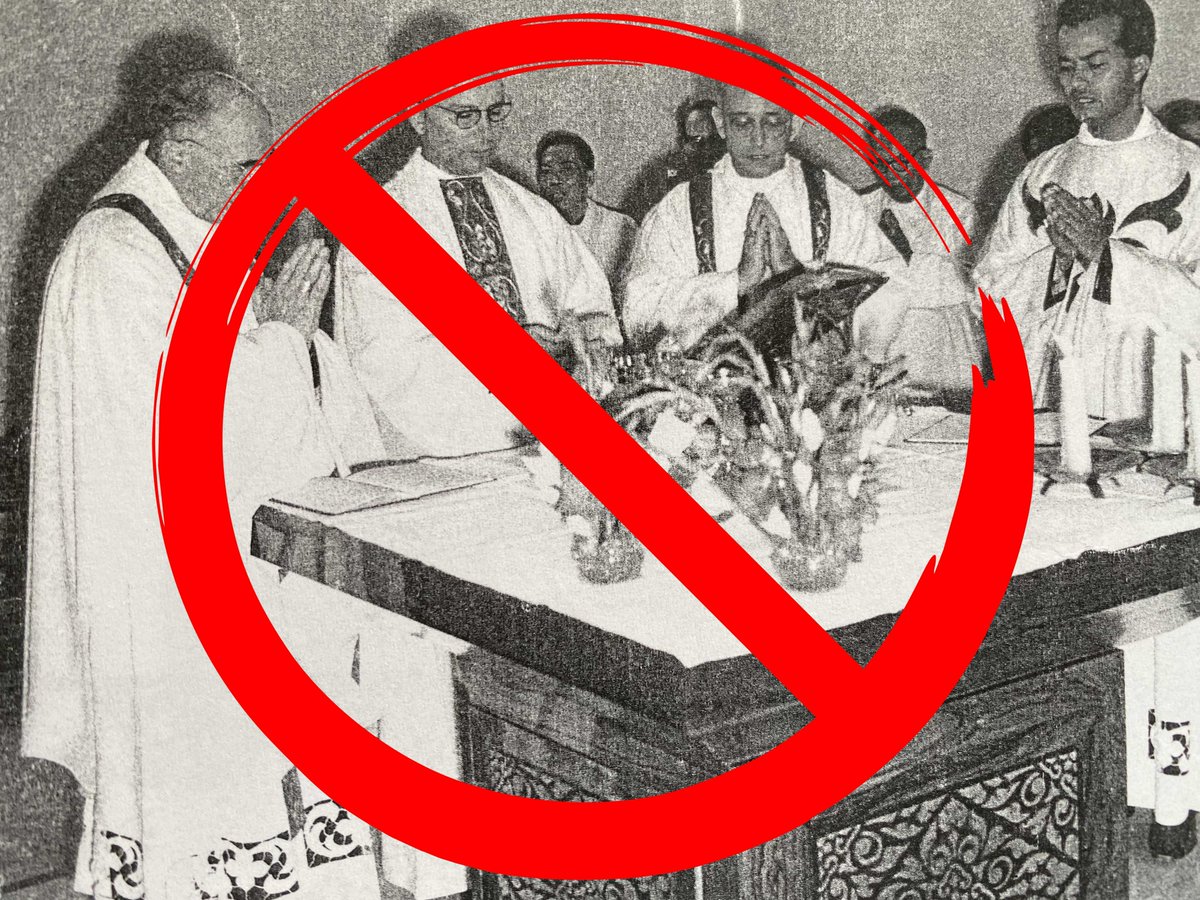
One of the Fathers of the Second Vatican Council, Paul-Pierre Philippe, OP, was no minor figure; later he was created a cardinal and made prefect of the Congregation for Oriental Churches. During the Council he gave a rousing intervention against concelebration, which Bishop Schneider has rediscovered, and which I share today at NLM. It cannot be said that Archbishop Philippe was in any way mistaken, either in his theological synopsis or in his prognostication of the spiritual and liturgical effects of routine concelebration. Read it yourself and see. newliturgicalmovement.org/2026/04/agains…
Peter Kwasniewski tweet media
English
6
34
111
5.8K
NN أُعيد تغريده
Antonio Socci
Antonio Socci@AntonioSocci1·
Non è solo "il diritto di non emigrare". Leone XIV, con rispetto e stima, parla ai giovani africani di qualcosa che somiglia a un DOVERE morale: restare nel proprio Paese per migliorarlo con il loro studio e il loro lavoro. E' quello che i vescovi africani ripertono da anni.
Giovanni Sallusti@GioSallusti

C’è un #PapaLeone che non piace, che non trova eco sui giornaloni, che non viene applaudito a media unificati. È quello che nel suo viaggio pastorale in #Africa riprende la grande lezione di Ratzinger e Wojtyla sul “diritto a non emigrare”… #LiberaMente radioliberta.net/2026/04/22/non…

Italiano
2
22
94
1.8K
NN أُعيد تغريده
Pascal Calu
Pascal Calu@pcalu·
@CDogmatics The person responsible for the account is a direct friend of Rupnik. I worked in Rome with the Vatican Curia for two years.
English
2
2
8
907
NN أُعيد تغريده
Fr Thomas Crean OP
Fr Thomas Crean OP@crean_fr·
Amused to read in Milner's "The End of Religious Controversy" that the Church of England in the 17th century sold indulgences to fund a crusade.
Fr Thomas Crean OP tweet media
English
5
6
80
3.9K
NN أُعيد تغريده
Henry von Blumenthal
Henry von Blumenthal@PaulinusOfTrier·
So long as Rupnik remains at large, we don’t need a Devil’s Advocate in the cause for canonisation of Pope Francis
English
3
11
90
2.7K
NN أُعيد تغريده
Department of State
Department of State@StateDept·
The Trump Administration affirms that there are two sexes: male and female. The State Department will operate on this objective basis for consistency, privacy, and safety in shared spaces. Thank you for your attention in this matter. 🇺🇸
Rapid Response 47@RapidResponse47

"The State Department issued a memo on Monday titled 'Updates Regarding Biological Sex and Intimate Spaces, Including Restrooms,' which clarifies that the agency must abide by Trump’s executive order protecting sex-segregated private spaces." dailysignal.com/2026/04/21/exc…

English
458
2K
10.8K
301.5K
NN أُعيد تغريده
Catholic Sat
Catholic Sat@CatholicSat·
Pope Leo XIV has arrived in Equatorial Guinea, where he is greeted by Teodoro Obiang Nguema Mbasogo, probably the worst dictator in Africa
English
64
173
2K
164.5K
NN
NN@HumanusUnus·
@CatholicSmark This assumes the publicly available evidence would not be refuted by the privately (classified) available evidence. Why anyone is obliged to accept such an assumption is apparently beyond explanation.
English
0
0
0
16
Kevin Tierney
Kevin Tierney@CatholicSmark·
I think people will be very upset not that Barron is wrong here, but because he lays out why the Church will not definitively say the Iran War is unjust, even with the evidence it is.
Bishop Robert Barron@BishopBarron

There is a way past the absurd and deeply divisive “war” between the President and the Pope, which has been enthusiastically ginned up by the press. And it is indicated in the Catechism of the Catholic Church, paragraph 2309 to be precise. After laying out the various criteria for determining a just war—proportionality, last resort, declaration by a competent authority, reasonable hope of success, etc.—the Catechism points out that “the evaluation of these conditions for moral legitimacy belongs to the prudential judgment of those who have responsibility for the common good.” The assumption is that the just war principles function, to use the technical term, as heuristic devices, designed to guide the practical decision-making of those civil authorities who have to adjudicate matters of war and peace. The role of the Church, therefore, is to call for peace and to urge that any conflict be strictly circumscribed by the moral constraints of the just war criteria. But it is not the role of the Church to evaluate whether a particular war is just or unjust. That appraisal belongs to the civil authorities, who, one presumes, have requisite knowledge of conditions on the ground. So, is the war in question truly the last resort? Is there really a balance between the good to be attained and the destruction caused by the war? Are combatants and non-combatants being properly distinguished in the waging of the conflict? Do the belligerents have right intention? Is there a reasonable hope of success? The posing of those questions—indeed the insistence upon their moral relevance—belongs rightly to the Church, but the answering of them belongs to the civil authorities. The Pope has said, on numerous occasions, that he is not a politician and that his role is not the determination of any nation's foreign policy. But he has just as clearly said that he will continue to speak for peace and for moral constraint. In making both of these claims, he is operating perfectly within the framework of paragraph 2309 of the Catechism. If we understand that the Pope and the President have qualitatively different roles to play in the determination of moral action in regard to war, we can, I hope, extricate ourselves from the completely unhelpful narrative of “Pope vs. President.”


English
15
2
35
3.7K
NN
NN@HumanusUnus·
@PhilLawler More like “that things can be fixed, in spite of obstinate opposition and sabotage from Boomers, both amongst the bishops and laity.”
English
0
0
1
89
Philip Lawler
Philip Lawler@PhilLawler·
Diocesan priests know full well that the Catholic Church is suffering through a period of decline, and that speaks to failures of leadership. But perhaps they have convinced themselves that things aren’t so bad in their own dioceses. open.substack.com/pub/pflawler/p…
English
5
4
32
3.3K
NN أُعيد تغريده
Paul R. DeHart
Paul R. DeHart@PaulRDeHart·
Aquinas does not think something is good because it’s desired or the object of appetite as Hobbes says. Aquinas says just about the opposite. Something is desired because it appears to be good and rationally desired insofar as it really is good / desirable. As we, since Hobbes and Hume, use the word appetite and good, we are prone to get Aquinas’s view backwards and upside down. Unless we mute his distinction between real and apparent good and his claim that we always act for done apparent good—but that’s not the same as saying whatever we desire is a real one.
English
1
1
15
509
NN أُعيد تغريده
Bloomberg
Bloomberg@business·
French billionaire Vincent Bolloré has created a Christian-inspired think tank with other wealthy business leaders to propose a conservative agenda ahead of the country’s presidential election next year bloomberg.com/news/articles/…
English
55
304
968
87.5K
NN أُعيد تغريده
Bishop Robert Barron
Bishop Robert Barron@BishopBarron·
Today is the feast of St. Anselm, one of the great geniuses of the theological tradition. In his “Cur Deus Homo,” he offered an explanation of the cross that beguiles theological minds to this day. But he is most famous, of course, for what came to be called the “ontological argument” for God's existence. Brilliant people have criticized it (Aquinas and Kant most famously), but equally brilliant people have defended it (Bonaventure, Descartes, Charles Hartshorne, and Alvin Plantinga to name a few). Einstein's colleague Kurt Gödel famously advocated it, arguing that a supremely perfect being must have all possible perfections, including that of necessary existence. Therefore, we can conclude from the very notion of God that God necessarily exists. Perhaps we could honor St. Anselm today by taking the time to think deeply about “that than which nothing greater can be thought.”
English
57
158
1.2K
38.7K
NN
NN@HumanusUnus·
@wecek321 @hf_222222 This is completely divorced from any historical or theoretical reality.
English
0
0
0
9
Scott Smith
Scott Smith@hf_222222·
I have mentioned it before, but the way many people suddenly agree States should submit to papal moral judgements on matters such as war & peace, is a reminder of how modern Catholic Social Teaching is in many ways just a specific form of integralism.
English
3
5
56
3.9K
NN أُعيد تغريده
Damian Thompson
Damian Thompson@holysmoke·
You cannot be serious. That is not what Barron is asserting. Obviously he doesn’t think that the actual elimination of a whole civilisation would constitute a just war. Have you started taking lessons in précis from Chris Hale?
English
7
3
24
2.3K
First Things
First Things@firstthingsmag·
“The president’s ill-mannered and ill-lettered denunciation of the Holy Father over his anti-war preaching might be dismissed as nothing more than ‘Trump being Trump,’ but it illustrates how even an administration not overtly hostile to the Church can turn on Rome when its spiritual leadership conflicts with a temporal political agenda.” @JournoStephen
First Things@firstthingsmag

Trump, Leo, and the Death of Integralism by Stephen Daisley @JournoStephen firstthings.com/trump-leo-and-…

English
7
13
18
4.5K
NN أُعيد تغريده
𝐍𝐢𝐨𝐡 𝐁𝐞𝐫𝐠 🇮🇷 ✡︎
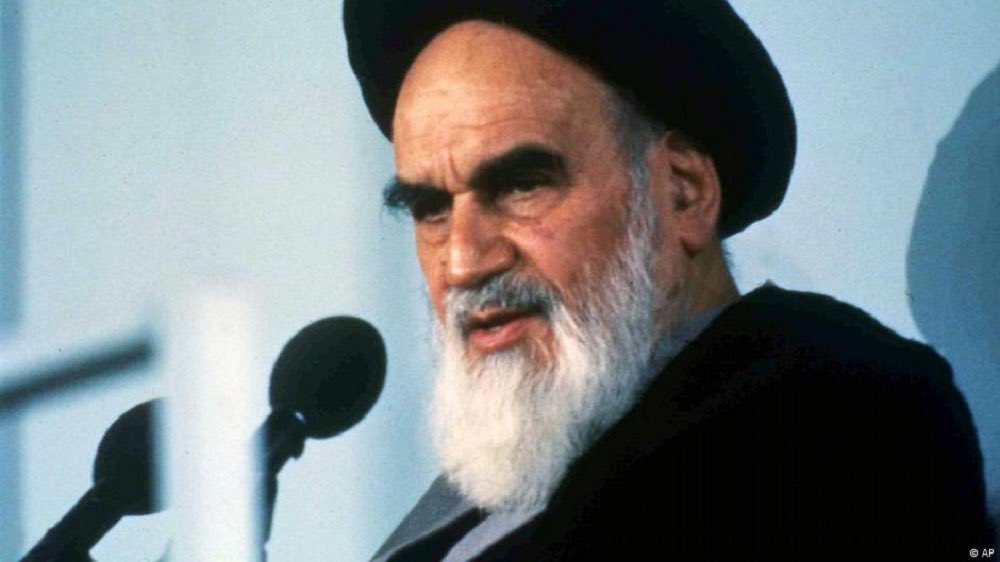
Ayatollah Khomeini wrote detailed child molestation guidelines for 9 year olds and under. During his exile in Iraq, he would regularly abuse the children of his followers during "overnight marriages". He was a demon and a pedophile.
𝐍𝐢𝐨𝐡 𝐁𝐞𝐫𝐠 🇮🇷 ✡︎ tweet media
English
735
8.5K
23.3K
477K
NN أُعيد تغريده
The Spectator
The Spectator@spectator·
‘A century ago, the most potent moral figure in Western society was Jesus Christ. Now it is Adolf Hitler. Perhaps we still believe that Jesus is good, but not with the same fervour and conviction that we believe Nazism is evil. Crosses and crucifixes have lost most of their power in our culture. It is possible to play with them, even joke about them, and no one really minds. Not so with swastikas, which pack an emotional punch like no other visual image.’ ✍️ Ed West Article | spectator.com/article/how-hi…
The Spectator tweet media
English
16
19
133
16.9K
NN أُعيد تغريده
Jason Bartlett
Jason Bartlett@Jason2bartlett·
I’m just a white South African having a lovely, peaceful and safe weekend on my farm in Alabama. God is God
English
2K
4.1K
46.3K
1.9M