Gr8Xit
23.2K posts

Gr8Xit
@MarcGr8
https://t.co/ksiFwm6WLe not active anymore due to Musk
Brabantse Wal انضم Mart 2009
1 يتبع2.1K المتابعون


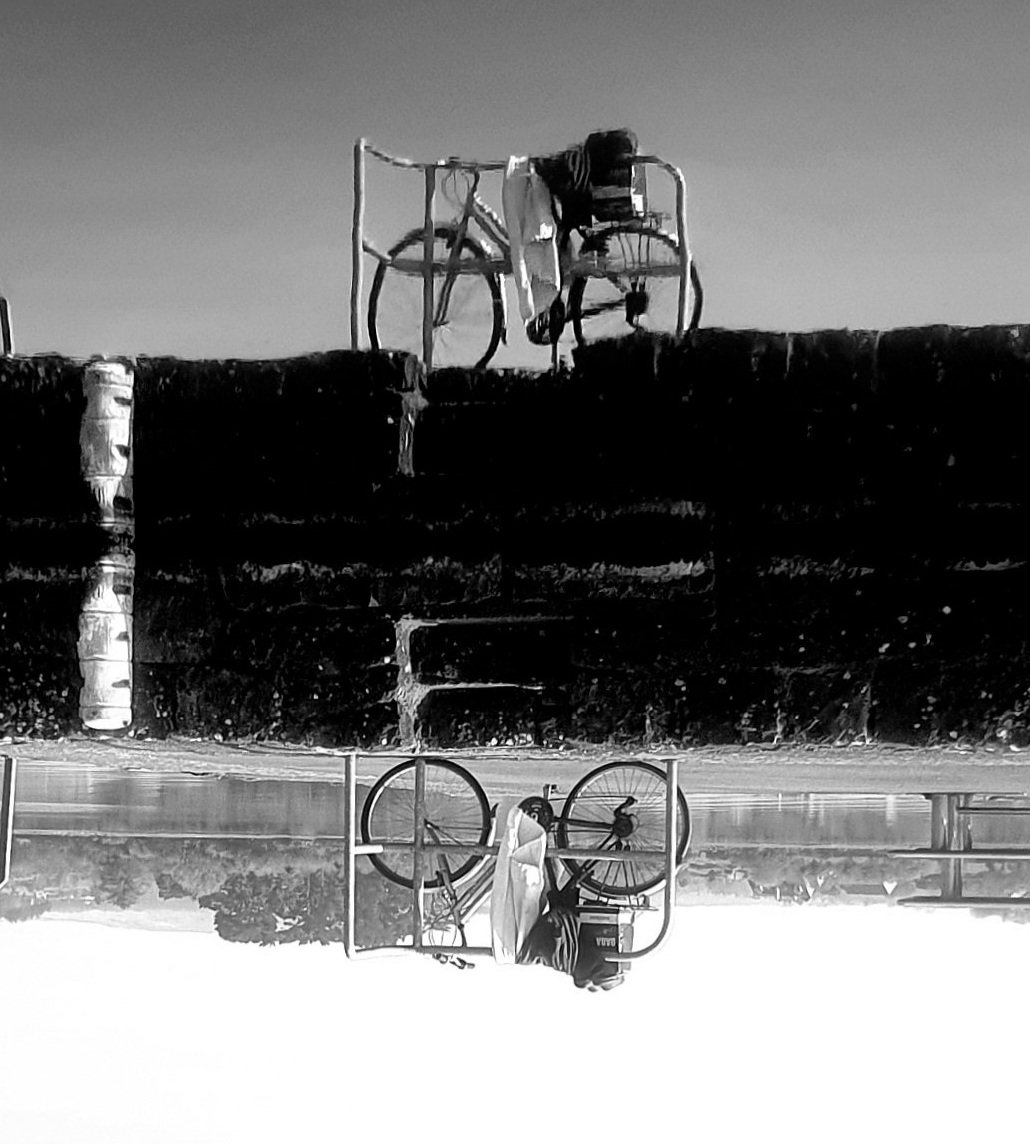


Alles van unieke historische waarde is weerloos. #Daciagold #Daciahelmet #Daciabracelet
x.com/twitamand/stat…
Nederlands
Wat een verlies. @twitamand en ik keken onze ogen uit bij ons vezoek aan Assen, en nu is de collectie wellicht voor altijd in criminele handen.
Arthur Brand (art detective)@brand_arthur
Breaking: Last night thieves entered the Drents Museum in Assen, The Netherlands, with the use of explosives. They got away with precious objects from the ehibition 'Dacia - Realm of Gold and Silver'. The display features treasures from the ancient kingdom of Dacia. What a horror
Nederlands
@asjawassen @brand_arthur Dit is naar alle waarschijnlijkheid roof in opdracht; de stukken pronken binnenkort bij een -gok ik- Oosteuropese crimineel die op deze wijze binnen zijn criminele bubble laat zien hoeveel macht hij heeft.
Nederlands

@brand_arthur En wat kunnen ze nu met die gestolen spullen? Niet te verkopen want ze staan nu geregistreerd als gestolen
Nederlands

Breaking: Last night thieves entered the Drents Museum in Assen, The Netherlands, with the use of explosives. They got away with precious objects from the ehibition 'Dacia - Realm of Gold and Silver'. The display features treasures from the ancient kingdom of Dacia. What a horror




English

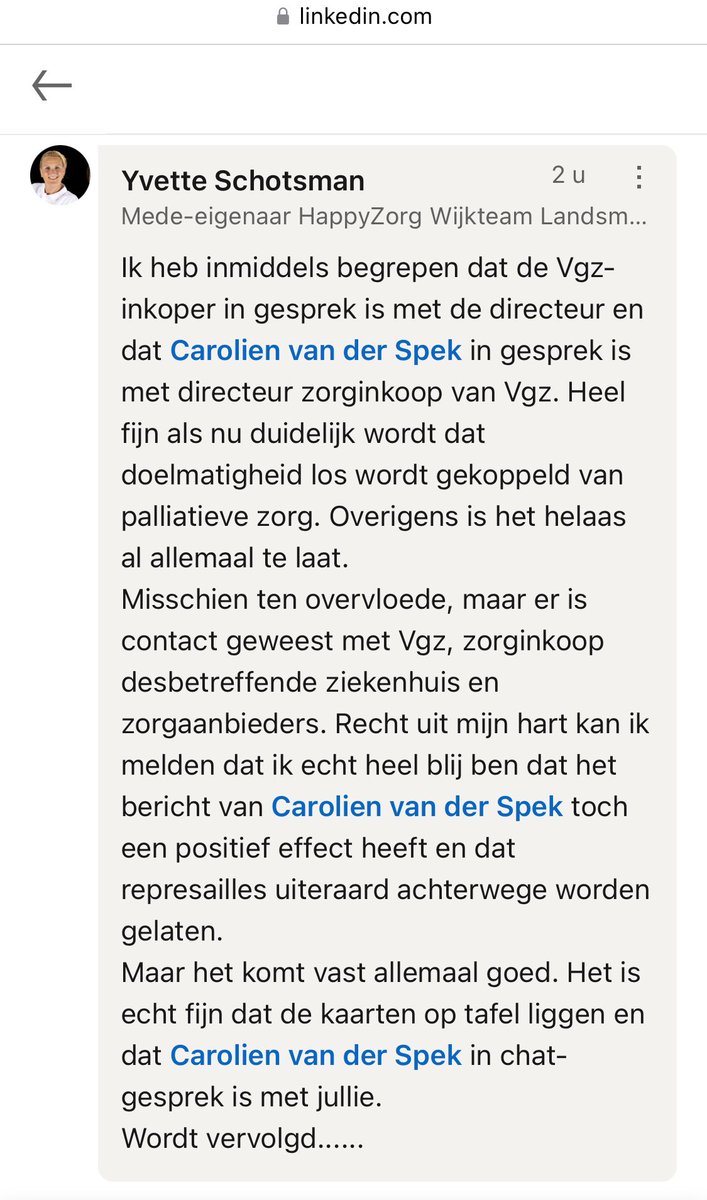
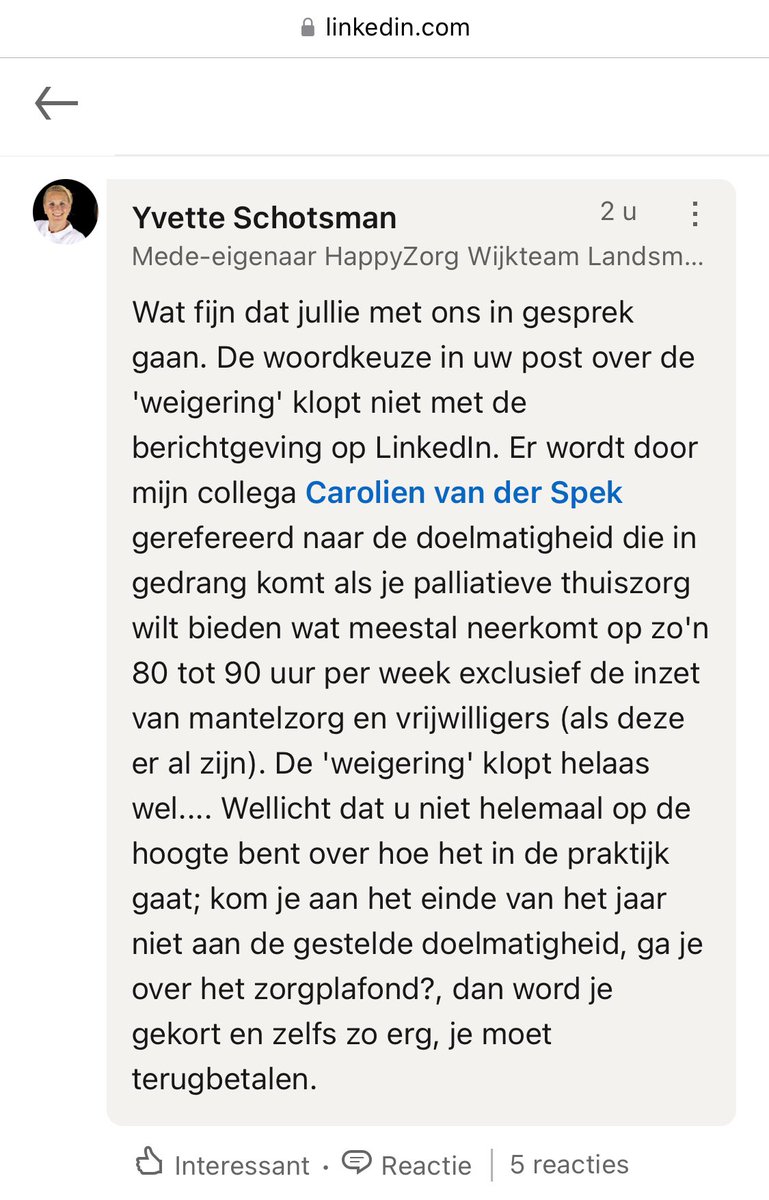
@GoosHofstee @VGZ Dit is de damage control reactie van VGZ, dat dit soort structurele misstanden liever niet in media ziet verschijnen (zoals de andere geld- en reputatiegedreven zorgverzekeraars ook niet).
Helaas is het allemaal te laat geweest voor de jongeman.
Met je “komen tot een oplossing”.

Nederlands
@lucpluijmen76 @GoosHofstee @VGZ Zorgadviseurs zouden aan de achterdeur onnodig zijn als er niet zoveel knippen op de voordeur zouden zitten. Het systeem van toegangsbeperking icm toegangsbemiddeling lijkt om kosten terug te brengen en een soort hardheidsclausule toe te passen als er imagoschade dreigt, zoals nu
Nederlands
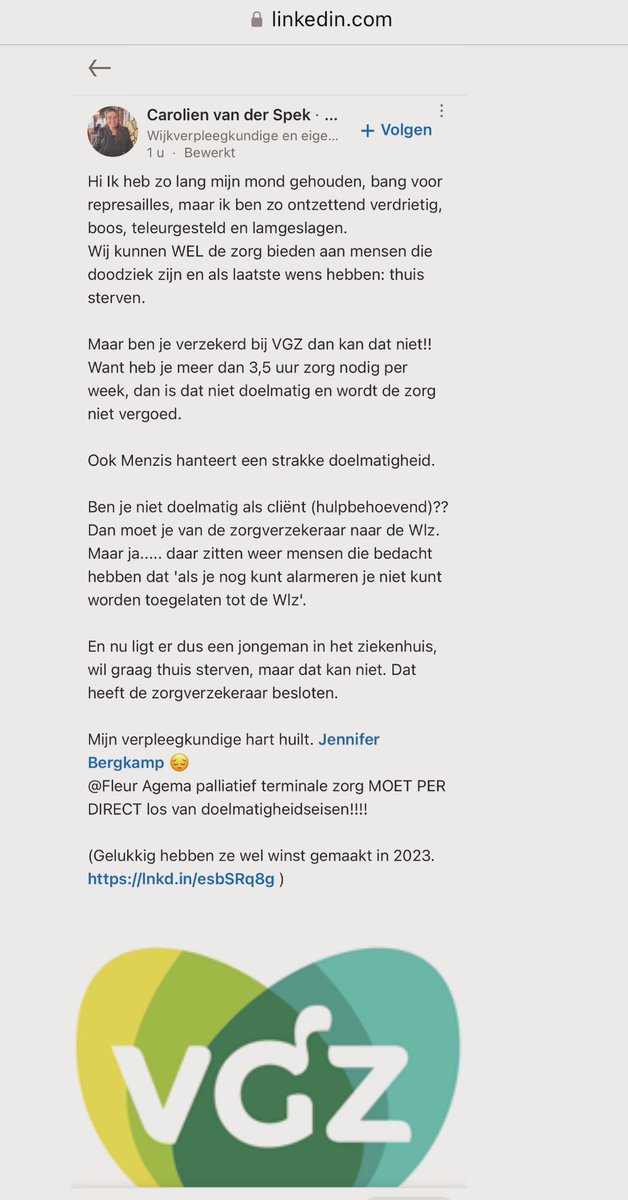
“En nu ligt er dus een jongeman in het ziekenhuis, wil graag thuis sterven, maar dat kan niet.
Dat heeft de ZORGVERZEKERAAR besloten.”
Oproep nummer 28.637:
Vervang dit zorgstelsel !!!!
(linkedin.com/posts/carolien…)
Nederlands
Doelmatigheid is nooit een doel op zich in de zorg, maar meer een voorwaarde voor bestendig houden van de zorg. Laat nu bij palzorg de enige bestendigheid zijn om deze palzorg stevig te verankeren. Het eindig zijn van zorg is immers inherent aan palzorg. #waarisdemenselijkheid
Luc Pluijmen@lucpluijmen76
“En nu ligt er dus een jongeman in het ziekenhuis, wil graag thuis sterven, maar dat kan niet. Dat heeft de ZORGVERZEKERAAR besloten.” Oproep nummer 28.637: Vervang dit zorgstelsel !!!! (linkedin.com/posts/carolien…)
Nederlands
Iran, Libya, Yemen an the USA all happen to be oil exporting countries. #spuriouscorrelations
#DrillBabyDrill.
#DrownBabyDrown.
Ben Coates@bencoates1
Only four countries in the world are now not signed up to the Paris climate change agreement: Iran, Libya, Yemen and the United States. nytimes.com/2025/01/22/opi…
English

@MarcGr8 @lucpluijmen76 @VGZ Er zijn 10.000 gespecialiseerde zorgverleners die geen opdracht meer krijgen omdat ze zzp’er zijn.
Mensen zat dus, daar ligt het niet aan…
Nederlands
Gr8Xit أُعيد تغريده
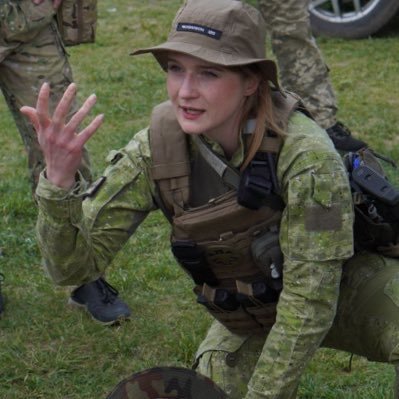
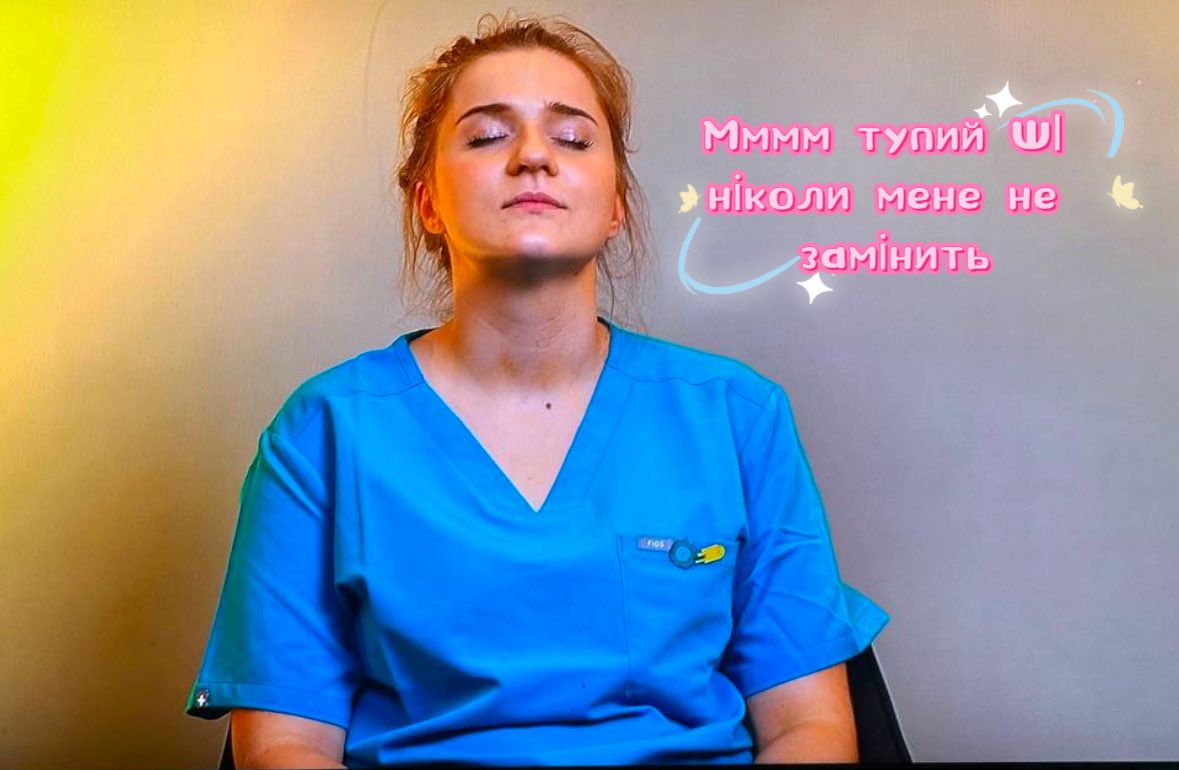
Дорогі 👩🏻🎤 борці з ШІ, я хочу нагадати вам одну професію, яку точно-точно не замінить ШІ, вона завжди буде актуальна, і робота знайдеться завжди, вчитись всього 3 роки
МЕДСЕСТРА!
Чудова професія зі 100% захистом від ШІ, абсолютно серйозно, вступайте в цьому році
Українська
Not a once-in-a-generational storm, but a generational storm: a storm taking place in our generation.
Brace yourselves:
Climate change is coming.
Volcaholic 🌋@volcaholic1
Doesn't get more bizarre than this!
English
De Minister van Landbouw neemt na de uitspraak van de rechter een half jaar uitstel en stelt een commissie in. #DoctrinevanWinsemius
Nederlands
@Peloquin1977 @JayneBeeTee @RussOnPolitics @MeidasTouch Greetings from the Netherlands too.
x.com/MarcGr8/status…
Gr8Xit@MarcGr8
"Tatenloses Abwarten und stumpfes Zuschauen sind keine christlichen Haltungen." (Dittrich Bonhoeffer. German theologist and freedom fighter, executed by order of Hitler april 9, 1945)
English
English

Wow. Bishop Mariann Edgar Budde fearlessly calls out Trump and Vance to their faces. This is heroic.
English
We can substantially agree upon Donald Trump being a rapist.
#Trumpisarapist
theguardian.com/us-news/2023/a…
English
Een training tav vooroordelen had blijkens onderzoek geen enkel effect op het gedrag van agenten. Ik vrees dat we deze uitkomst moeiteloos kunnen veralgemenen naar andere landen en naar andere beroepsgroepen met vooroordelen in de groepscultuur. Stoppen maar met deze lapmiddelen?
Steve Stewart-Williams@SteveStuWill
A massive study involving more than 14,000 police officers found that implicit bias training had no effect on “racial and ethnic disparities in stops, arrests, summonses, frisks, searches, and/or use of force.” [Link below.]
Nederlands
Gr8Xit أُعيد تغريده

A massive study involving more than 14,000 police officers found that implicit bias training had no effect on “racial and ethnic disparities in stops, arrests, summonses, frisks, searches, and/or use of force.”
[Link below.]

English
China heeft geleerd vd tech-giganten hoe je dit moet aanpakken en biedt OpenAI voor 3% van wat de concurrentie in de VS er voor vraagt.
#marketforces
Arnaud Bertrand@RnaudBertrand
Most people probably don't realize how bad news China's Deepseek is for OpenAI. They've come up with a model that matches and even exceeds OpenAI's latest model o1 on various benchmarks, and they're charging just 3% of the price. It's essentially as if someone had released a mobile on par with the iPhone but was selling it for $30 instead of $1000. It's this dramatic. What's more, they're releasing it open-source so you even have the option - which OpenAI doesn't offer - of not using their API at all and running the model for "free" yourself. If you're an OpenAI customer today you're obviously going to start asking yourself some questions, like "wait, why exactly should I be paying 30X more?". This is pretty transformational stuff, it fundamentally challenges the economics of the market. It also potentially enables plenty of AI applications that were just completely unaffordable before. Say for instance that you want to build a service that helps people summarize books (random example). In AI parlance the average book is roughly 120,000 tokens (since a "token" is about 3/4 of a word and the average book is roughly 90,000 words). At OpenAI's prices, processing a single book would cost almost $2 since they change $15 per 1 million token. Deepseek's API however would cost only $0.07, which means your service can process about 30 books for $2 vs just 1 book with OpenAI: suddenly your book summarizing service is economically viable. Or say you want to build a service that analyzes codebases for security vulnerabilities. A typical enterprise codebase might be 1 million lines of code, or roughly 4 million tokens. That would cost $60 with OpenAI versus just $2.20 with DeepSeek. At OpenAI's prices, doing daily security scans would cost $21,900 per year per codebase; with DeepSeek it's $803. So basically it looks like the game has changed. All thanks to a Chinese company that just demonstrated how U.S. tech restrictions can backfire spectacularly - by forcing them to build more efficient solutions that they're now sharing with the world at 3% of OpenAI's prices. As the saying goes, sometimes pressure creates diamonds.
Nederlands