Sam Ward

466 posts

Sam Ward banner
Sam Ward

Sam Ward

@Samward

Investigating & Explaining things | SentinelAi | Sentinel Legal | OpenClaw 🦞 | All views are my own. 🇬🇧 🇺🇸

انضم Kasım 2024
100 يتبع101 المتابعون
تغريدة مثبتة
Sam Ward
Sam Ward@Samward·
The next billion dollar law firm will be built by someone who's never practised law. Their best lawyers will run on a local machine. One £250k compliance lawyer will oversee everything. They won't even know about the wastage and bloat the rest of the industry treats as normal.
English
1
1
9
945
Sam Ward
Sam Ward@Samward·
The design tool is the part that changes everything for SaaS companies built on Anthropic. When your foundation model provider starts shipping products that compete with your customers, the relationship flips from partnership to existential threat. Same pattern playing out across every vertical that thought the model layer would stay neutral.
English
0
0
0
4
Shay Boloor
Shay Boloor@StockSavvyShay·
Anthropic is reportedly preparing to launch Claude Opus 4.7 and a new AI design tool as soon as this week. The tool is said to create presentations, websites, landing pages and products from natural language prompts which helps explain the pressure on $FIG and $ADBE today.
Shay Boloor tweet mediaShay Boloor tweet media
English
169
287
3.2K
564.1K
Sam Ward
Sam Ward@Samward·
The meta skill in AI engineering right now is knowing which problems to solve with code and which to solve with better prompts. Most teams default to code because it feels more professional. But the ones shipping fastest are the ones who figured out that a well written system prompt replaces thousands of lines of logic.
English
0
0
0
3
Sam Ward
Sam Ward@Samward·
This is exactly what happened with agent architecture. Memory systems, model tiering, and human escalation patterns all emerged independently in legal, finance, and devops at roughly the same time. The problems were obvious enough that multiple teams converged on the same solutions without coordinating.
English
0
0
1
4
Paul Graham
Paul Graham@paulg·
Interesting ideas tend to appear in multiple places in slightly different forms. Though that's somewhat of a tautology, because this is a big part of what makes them interesting.
English
57
18
385
41.2K
Sam Ward
Sam Ward@Samward·
We are living through this discontinuity right now. The chatbot era taught people to expect a text box that gives answers. The agent era requires trusting a system to take actions on your behalf with real consequences. The skill gap is not technical. It is knowing when to let the agent act and when to pull it back.
English
0
0
0
3
Ethan Mollick
Ethan Mollick@emollick·
A real issue with the current state of our knowledge on the work implications of AI is that there was a genuine discontinuity in AI ability with the rise of practical agentic systems in 2026. We were starting to get a picture of the impact of chatbots, no real data on agents.
English
15
11
129
11K
Sam Ward
Sam Ward@Samward·
This is exactly why we run local models for anything touching sensitive data. The moment your agent intelligence lives on someone else's servers you are renting your competitive advantage. For regulated industries the data sovereignty question is not optional. OpenClaw lets you keep everything local and still use cloud models for the tasks where it makes sense.
English
0
0
0
3
Onur Solmaz
Onur Solmaz@onusoz·
The models, they just wanna work. They want to build your product, fix your bugs, serve your users. You feed them the right context, give them good tools. You don’t assume what they cannot do without trying, and you don’t prematurely constrain them into deterministic workflows.
English
9
3
27
22.5K
Sam Ward
Sam Ward@Samward·
The paradox resolves when you stop treating AI as a single thing. In production the technology is transformative for specific workflows and completely useless for others in the same company. The people stuck in the debate are the ones who have not tried deploying it where it actually fits.
English
0
0
0
1
Gary Marcus
Gary Marcus@GaryMarcus·
Three thoughts on what really matters: 1. Fuck cancer 2. Friends are irreplaceable 3. The new "Marcus test" for AI is when AI makes a significant dent on cancer May that happen sooner, much sooner, rather than later. In memory of my childhood friend Paul.
English
166
141
2.4K
416.1K
Sam Ward
Sam Ward@Samward·
We noticed 4.6 degrading in production two weeks before Marginlab published the data. If 4.7 fixes the multi-agent coordination issues, production users finally get the model the benchmarks always claimed 4.6 was. The real question is whether Anthropic starts being transparent about quality regressions instead of letting builders discover them in the wild.
English
0
0
0
48
Yam Peleg
Yam Peleg@Yampeleg·
opus 4.7 today or tomorrow?
English
84
2
509
76.8K
Sam Ward
Sam Ward@Samward·
We see this playing out in legal right now. AI agents handle case volume that was never economically viable before. But then you need more people for client relationships, court appearances, and the judgment calls that follow every automated step. The bottleneck just moves upstream to higher value work.
English
0
0
1
31
Aaron Levie
Aaron Levie@levie·
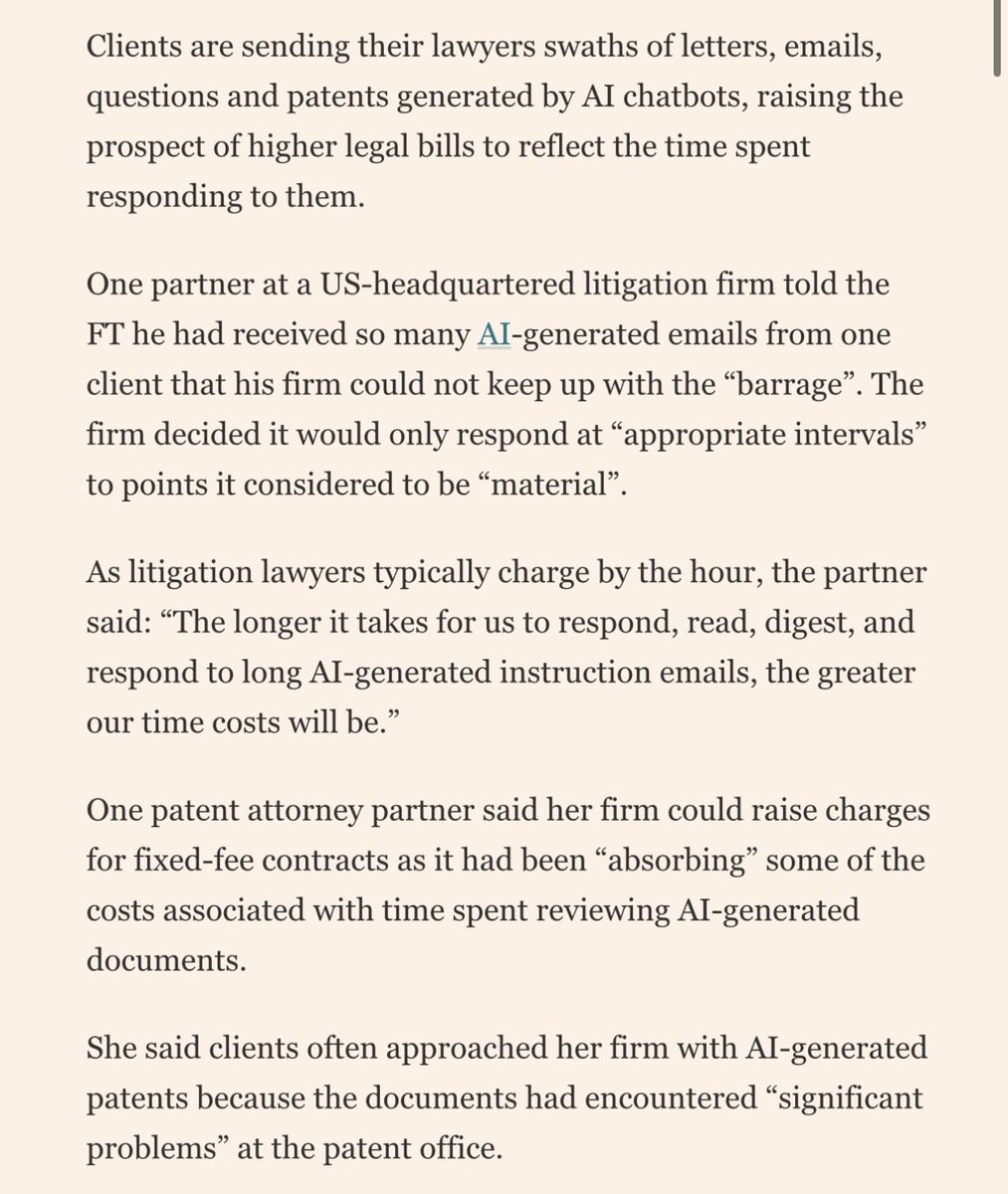
Why will AI create more jobs in plenty of industries? It’s because we’re going to use AI to accelerate output in one area, and then eventually you run into a new bottleneck somewhere else in the process that still requires humans. This example from the FT is an obvious one. More people asking legal questions from AI agents, which downstream eventually will mean there are more lawyers being pinged with questions. There are other drivers, too, like AI accelerating new business formation, more patent filings, new scientific research, and so on - all of which eventually land in the laps of lawyers and other regulatory functions. But the analogy holds for plenty of other work. More code will mean more security risks, which means more security researchers. Automating patient referrals in healthcare just leads to a bottleneck of not having enough doctors. More customer outreach via AI leads to more sales conversations. You can list thousands of categories like this. There’s a lot of areas where AI will lead to “efficiency” in the sense that we will automate something and then spend less in that area. But the value proposition taps out at some point because the world isn’t static. Your competitor will use AI to build a better product, go out and meet with even more customers, deliver a better service, run better ad campaigns, and you eventually have to match them or die.
Aaron Levie tweet media
English
34
12
94
11.7K
Sam Ward
Sam Ward@Samward·
Same pattern in legal. Lawyers spend more time on data entry and compliance paperwork than actual case strategy. The orchestration layer that handles the routine work and surfaces only the decisions that need a human is where the real value sits. Every vertical with a compliance burden is ripe for this.
English
0
0
0
1
Vic_Gatto
Vic_Gatto@Vic_Gatto·
KPMG is using AI to free auditors from "routine testing." Healthcare needs the same. Right now, doctors and nurses are drowning in data entry instead of focusing on patients. We’re building the "Orchestration Layer" to change that. [Link to Substack] #HealthTech #EndHeartDisease
English
1
0
1
93
Sam Ward
Sam Ward@Samward·
Open source is the only reason we can run AI agents in a regulated legal environment. The ability to audit every line, control data flow, and patch vulnerabilities ourselves is not optional when you handle client data. Closed source means trusting someone else with your compliance.
English
0
0
2
36
Sam Ward
Sam Ward@Samward·
@Polymarket This is the pattern every production agent system lands on eventually. Fully autonomous is the pitch. Human escalation when the agent gets stuck is the reality. We build circuit breakers into every agent so it stops and asks for help instead of confidently doing the wrong thing.
English
0
0
1
54
Polymarket
Polymarket@Polymarket·
BREAKING: Y Combinator startup will pay humans to help AI agents when they get stuck.
English
112
33
606
51.7K
Sam Ward
Sam Ward@Samward·
@dhh The quality regression is real and measurable. We noticed the same thing with Opus recently. The fix is not waiting for a better model. It is building your system so any model can be swapped in without rewriting everything. When one provider dips, you route to the next.
English
0
0
1
368
DHH
DHH@dhh·
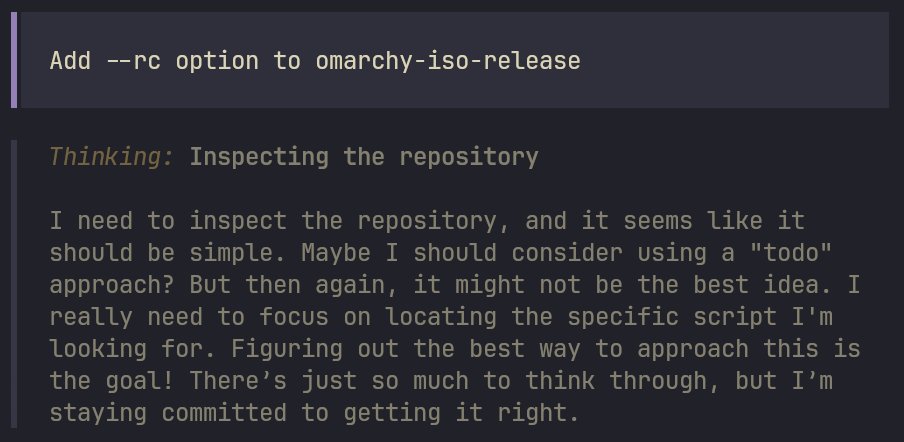
GPT 5.4 on the most basic ask against a 40-line bash script: "Figuring out the best way to approach this is the goal! There's just so much to think through, but I'm staying committed to getting it right." SO DRAMATIC!
DHH tweet media
English
93
11
767
61.1K
Sam Ward
Sam Ward@Samward·
The agent blaming agent part is undersold. When you run multiple specialist agents the failure mode is not that one breaks. It is that they start pointing at each other and you have no single source of truth for what actually happened. Logging everything to disk from day one is the only thing that saved us.
English
0
0
0
7
Jason ✨👾SaaStr.Ai✨ Lemkin
Welcome to The Agents, Episode #001!! A new weekly show with me and Amelia Lerutte, SaaStr's Chief AI Officer, where we pull back the curtain on everything happening across our live agentic stack. Every week. All the bumps, breakthroughs, and real talk. No sugarcoating. Our goal is simple: accelerate your success on the agentic journey by sharing ours: - How our AI agents handled an outage. Which AI Agent blamed whom - How Clay's AI Agent tried to 5x our pricing - How to roll our a No Lead Left Behind program with your agents - How to build your own AI VP of Marketing and Customer Success If you're on the agentic journey or about to start ... or feel like you're falling behind ... watch below. (And subscribe to SaaStr AI on YouTube and Spotify to catch this and the next episodes)
English
5
6
21
5.5K
Sam Ward
Sam Ward@Samward·
@xbillwatsonx @gregisenberg Ha, appreciate that. The transition is already happening whether people are ready or not. Better to see it coming.
English
0
0
0
3
Bill Watson
Bill Watson@xbillwatsonx·
@Samward @gregisenberg Your big fat brain is showing in the comments. Put it away please. I'm not sure coders are ready to hear this yet.
English
1
0
1
7
GREG ISENBERG
GREG ISENBERG@gregisenberg·
What happens to open source when AI is writing 100% of the code? I've been thinking about this a lot. Like… the whole system was built around humans valuing the act of contribution. You learned, you struggled, you submitted a PR, you got feedback, you got better. That loop created engineers. It created community. It created ownership. If AI writes the PR, who owns it? Who learned from it? Who's gonna stay up at 2am debugging the thing they shipped because they actually care? The cool part about OSS is that no one owns it. As a consumer, you could always look under the hood, fork it, take it somewhere else. I don't think open source dies. But I genuinely don't know what it becomes... Any ideas?
English
104
11
147
14.8K
Sam Ward
Sam Ward@Samward·
@MatthewBerman This is why we run a second model to QC everything the first one produces. Not reviewing the code yourself. Having Codex review what Claude wrote and reject until both agree. We have gone eight rounds on a single script before approval.
English
0
0
0
104
Matthew Berman
Matthew Berman@MatthewBerman·
there's no way to review all code produced by ai and there's no way you're actually reviewing all the code explanations
English
82
3
108
6.9K
Sam Ward
Sam Ward@Samward·
@garrytan The gap between December and now is the biggest improvement cycle I have seen in any open source project. We run legal agents on it with sandbox isolation and scoped permissions and the security posture is better than most commercial tools we evaluated.
English
0
0
1
264
Sam Ward
Sam Ward@Samward·
The management layer is where it gets genuinely hard. We run specialist agents that spawn subagents for isolated tasks and the orchestration complexity is the thing nobody warns you about. Getting the parent to verify what the child produced without just trusting it blindly is the real engineering problem.
English
0
0
0
62
swyx 🐣
swyx 🐣@swyx·
I've commented that "this is the year of subagents", but that is largely an optimization problem. the inverse problem - having agents that compose and boss agents that manage/query them - is a capabilities one. as an advisor to cog, proud to have played a small part in designing the new Spaces concept 3 months ago and today's launch is a start of even more to come. congrats to the team!
swyx 🐣 tweet media
Windsurf@windsurf

Introducing Windsurf 2.0. Manage all your agents from one place and delegate work to the cloud with Devin - so your agents keep shipping even after you close your laptop.

English
8
4
41
7.1K
Sam Ward
Sam Ward@Samward·
@saranormous The biggest consumer gain from AI is not better products for existing customers. It is reaching people who never had access at all. In legal alone there are millions of valid claims that were never economically viable to service until agents handled the volume.
English
0
0
0
66
sarah guo
sarah guo@saranormous·
I believe AI will deliver enormous gains to the global consumer: better products, better services, better healthcare, and tools that make ordinary people more capable, even superhuman. The upside is so large, and the geopolitical stakes so real, that we should move decisively toward it, not choke it off. But people do not experience technological change as an aggregate statistic. They experience it through their bills, their communities, and their jobs. So the issue is not whether AI will create value. It will. The issue is whether the path to those gains asks particular communities and workers to absorb too much of the cost upfront. The institutions building AI cannot externalize the local costs of scaling and call future abundance the answer. If datacenters place major new demands on power and land, they should invest enough to strengthen the grid, ease pressure on bills, expand the tax base, and create durable jobs. And if AI compresses some of the entry-level work people used to learn on, firms should help build new on-ramps and training pathways into the new work that growth is creating. This is not an argument for slowing the buildout down. It is an argument that rapid technological progress has to be socially durable.
English
28
18
170
18.7K
Sam Ward
Sam Ward@Samward·
@paulg The 78% at that scale is the compounding kicking in. When AI accelerates every internal process on top of a product that already fits the market, the growth curve stops looking linear. This is why the companies that built the right foundation before AI showed up are pulling away.
English
0
0
0
10
Paul Graham
Paul Graham@paulg·
Amusing edge case: If you post multiple nude statues, Twitter's image cropping algorithm makes you seem lascivious.
Paul Graham tweet media
English
17
4
111
32.7K