Brian Whetten

528 posts

Brian Whetten banner
Brian Whetten

Brian Whetten

@WhettenBrian

SV Founder in the 90's back before it was cool President of Core Coaching and Author of Yes Yes Hell No Just trying to keep up with my wife and daughters

Agoura Hills CA انضم Mart 2022
238 يتبع368 المتابعون
تغريدة مثبتة
Brian Whetten
Brian Whetten@WhettenBrian·
My first subsatck post. Searching for Black Swans. Thanks to @EpsilonTheory, @tomowenmorgan and @FrederikNeckar for the inspiration. --- I received my initiation into the flaws of capitalism in September of 2000. In July of that year, our Silicon Valley software company went public, raising $60 million on NASDAQ. In August, I turned 30 and experienced my second full burnout. And in September, the market crashed, taking our company’s valuation down with it. In the space of a month, we went from a $400 million market cap to less than 10% of that. This was a profitable company, with blue chip customers, which was suddenly trading for less than half the value of our cash on hand. The market giveth, and the market taketh away.
Brian Whetten tweet media
English
2
0
18
743
Tom Morgan
Tom Morgan@tomowenmorgan·
@fed_speak Just fucking regulate the algos. This shit is not that hard. But the market cap destruction prevents anyone from hitting the button.
English
2
0
7
461
Julia Turc
Julia Turc@juliarturc·
Why so many of us feel career-homeless in tech: >Startups full of fraud, grifters and short-term thinking >FAANG full of politics and slightly behind >Frontier labs in a race with no morals >Academia full of title collectors >Content creation ridden by AI fakes and sensationalism Who is starting the renaissance and how do I get in touch with them?
English
301
263
4K
206.3K
Brian Whetten
Brian Whetten@WhettenBrian·
@RBehiel You have fantastic intuition / truth sense and I love that you are letting that pull you where it wants to take you...that's how the next wave of discoveries are going to be generated in physics, rather than by reason and effort alone, I suspect...
English
0
0
1
8
Brian Whetten
Brian Whetten@WhettenBrian·
@RBehiel Nice. Thank you! I'm letting that sit. Love the explorations you're feeling into.
English
2
0
1
36
Richard Behiel
Richard Behiel@RBehiel·
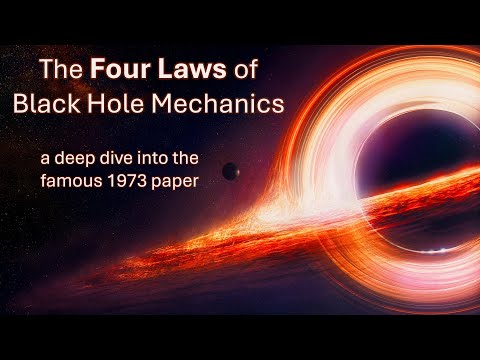
Black holes have laws. In 1973, Bardeen, Carter, and Hawking wrote down the framework that made that statement precise, and it later became black hole thermodynamics. This is a 7-hour deep dive going through their reasoning step-by-step. The physics is intense, but if you want to see for yourself the actual ideas involved, not just a summary, this video is for you. The video is timestamped, so you can easily jump around and pick up where you left off. Think of it like a book in video form. There’s a link to the paper in the video description. youtu.be/54n0WofSNno
YouTube video
YouTube
English
19
54
271
19K
Brian Whetten
Brian Whetten@WhettenBrian·
I like the knots in the aether idea ...it feels aligned / on course. One thing I noticed / was pulled to this week was how the prime numbers emerge out of the zeta function via analytic continuation and how if a complex function is differentiable and continuous, the angles between lines (before and after a function) are preserved, with one "little" exception = the roots that go to zero, where the angle can become an integer multiple of what it was ... a little discrete knot in folded space, perhaps?
English
0
0
1
57
Brian Whetten
Brian Whetten@WhettenBrian·
@RBehiel It seems like there is also something deep here around the nature of infinity and how the universe uses / processes / holds infinities
English
0
0
0
14
Richard Behiel
Richard Behiel@RBehiel·
Well, there are a couple of things. Black holes are really fascinating because they push general relativity to the limit. It’s surreal to think about the concept of curved spacetime and an event horizon. So I wanted to explore that. It also seems like a great way to practice general relativity, getting some hands-on experience with GR which often feels like a very abstract and intimidating subject. Focusing in on a particular paper is a good exercise, and this is a foundational paper, so it seemed like a good choice. Secretly, I’m also intrigued by the idea that the elementary particles might be naked singularities, like defects in spacetime. It’s a fringe idea, and there are different variations of it floating around. But in any case, I figured studying black holes would be useful context for thinking more about that idea. One of the mysteries that haunts me is what exactly the elementary particles are. Having dealt with fluxons in a previous job, quantized supercurrent whirlpools which behave much like matter, I can’t shake the feeling that the elementary particles must be some kind of topologically stabilized field configurations, knots in the aether, so to speak. But that’s a whole other tangent, and an area full of speculation. I like to explore those ideas every now and then, but so far all I’ve come up with are half-baked concepts without any testable predictions.
English
2
0
5
189
Brian Whetten
Brian Whetten@WhettenBrian·
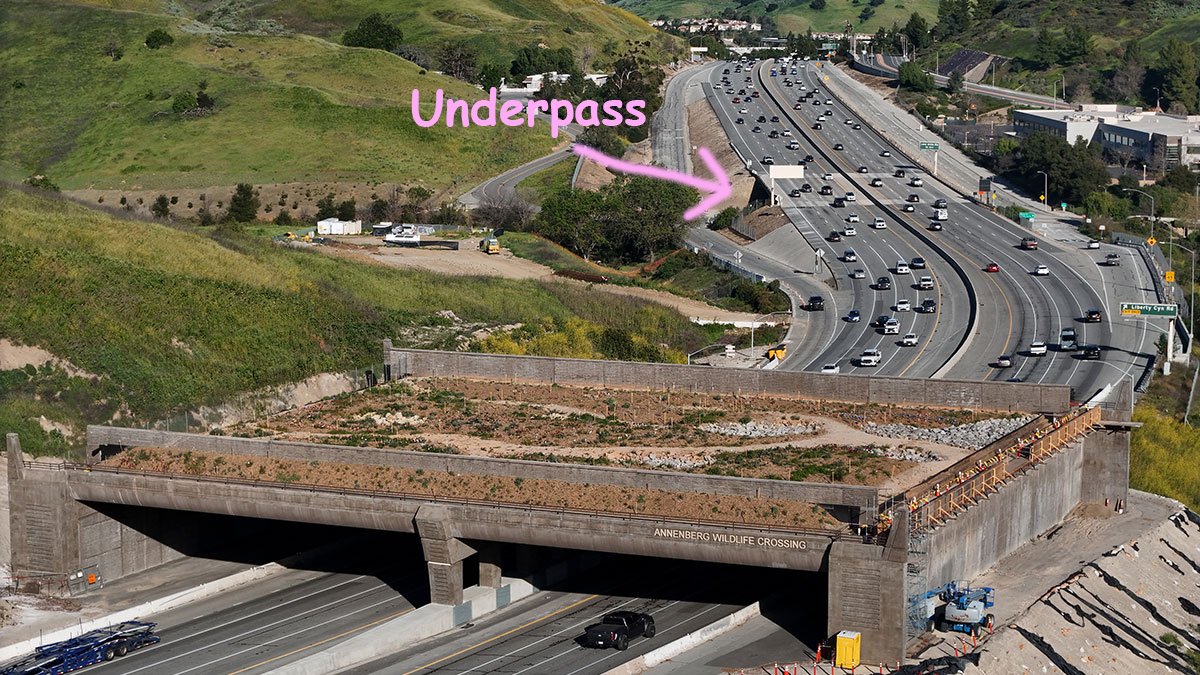
I live a mile from this project. There's already an underpass a few hundred feet away. So it's not $114M to create a way for the animals to cross the freeway safely. It's $114M to make their journey a couple minutes shorter.
Brian Whetten tweet media
Christopher F. Rufo ⚔️@christopherrufo

EXCLUSIVE: Gavin Newsom promised to build a bridge for cougars and butterflies in the middle of Los Angeles. The project has turned into another boondoggle, with broken deadlines and costs exploding to $114 million. This is Newsom's bridge to nowhere. city-journal.org/article/califo…

English
0
0
0
61
Brian Whetten
Brian Whetten@WhettenBrian·
@RBehiel @roryisconfused And even more odd than that is that at each stage of human development we are able to discover coherent, qualitatively different ways of understanding these patterns.
English
0
0
1
14
Rory McCarthy
Rory McCarthy@roryisconfused·
It is odd tbf that there’s something rather than nothing I think
English
39
7
361
17.8K
Josh Macin
Josh Macin@MacinJoshua·
I drank ayahuasca 31 times, did 20 mushroom ceremonies, and spent $150k+ chasing healing through hallucinogens. There's a truth about plant medicines that the entire community avoids: (1/22) (hint: it's not God that you're connecting to)
Josh Macin tweet media
English
121
80
729
311.3K
Brian Whetten
Brian Whetten@WhettenBrian·
@ItIsHoeMath @redpillb0t Honest question: when did you become so bitter? You have a lot of wisdom and the capacity to do good with it - to create value both for yourself and others. It seems like you took a turn for the worse this year. What happened?
English
1
0
1
304
hoe_math = PsychoMath
hoe_math = PsychoMath@ItIsHoeMath·
This is not even true. The testing is extensive and conclusive, and they have a higher than average ability with manipulating words but a lower than average ability in structure and building. As a people, they are not able to create anything great like white people can, but they are able to lie until they own it.
English
125
201
4.8K
54.5K
redpillbot
redpillbot@redpillb0t·
Jordan Peterson says Jews are in positions of power due to their high IQ and being smarter than others
English
418
79
595
127.4K
Brian Whetten
Brian Whetten@WhettenBrian·
Hi Tim, I'm still grateful for the funding and support I got from you and your team back in the 90s (via Labrador and Draper Richards). I agree with you on this. Then to add to it: - This is also the #1 predictor of outsized success I've seen for founders of companies in commoditized / non-tech markets - At least in part, this trait is developed not just born - There appear to be at least some ways to train this in founders / embed it in company cultures
English
0
0
0
126
Tim Draper
Tim Draper@TimDraper·
How to think about the founder who won’t take “No.” for an answer. Regulatory barrier? They find a workaround. Technical limitation? They build around it. Market rejection? They pivot the approach. Funding door slams? They find another way in. Too many investors see this and think, "Difficult. Stubborn. Won't listen." I see it differently, "Problem solver. Unstoppable. Will find a way." The smooth-talking sales founder who charms everyone is often the bigger risk. The enthusiasm and charisma is great for getting funding, but doesn’t always translate to the ability to find their way around barriers. When building a startup, finding ways around barriers is the single most important skill. Don’t give up on the first, “No.” The founder who sees barriers as challenges to overcome... that's who builds something special.
English
71
38
292
16.8K
Brian Whetten
Brian Whetten@WhettenBrian·
Hypothesis: there's a strong correlation between level of value created in the generation of the wealth, by the wealthy people who are spending it, and their level of peace / tolerance / go with the flow vs. people who deep down don't trust they've created more value than wealth, who tend to be very controlling and insecure.
English
1
0
0
79
Brian Whetten
Brian Whetten@WhettenBrian·
@Aella_Girl Fantastic post. Also, it sounds like you're just about ready to start reading about Spiral Dynamics.
English
1
0
7
2.3K
Aella
Aella@Aella_Girl·
I've been getting real into history in the past few years, and have been real humbled at how many incorrect assumptions I held. 1. I sort of assumed people in the past had more freedom from their governments, but they absolutely did not. The people with the guns consistently oppressed people without, basically as much as they could get away with. 2. Democracy is an insane invention. It feels sort of default or obvious now, and I sort of assumed that... people in the past all kinda wanted something like democracy but were oppressed by their monarchs, but this is not the case. Much of the time, calls for democracy were radical, even among the suffering unrepresented lower classes. If you went back in time and said "every man should have the right to vote" people would go 'whoah there are you insane? that would absolutely destroy civilization!' 3. Most big moves to make things better were way less radical than you think. People would get very mad at the king for being terrible, but instead pushing to overthrow the king, would just... want the king to sign a nice constitutional document or something. Progress was mostly made in smaller increments; people generally did *not* think big at all. And even when radical moves did happen, people just sorta quietly waited until everything died down and reverted them. Like, you know how they guillotined the King and Queen in the French Revolution? Well basically as soon as it all died down (and uh, post napoleon) they just put the monarchy back on the throne and continued onwards as usual. It took like another four revolutions and almost a century to actually get to a stable republic. 4. Things were local. Today I have a concept of large cause areas like 'the environment' or 'war crimes on the other side of the world', but in general, pushes for change were extremely local. People really do not see beyond what will benefit them and their own communities. The entire 'working class' would ostensibly want the same rights and seem to united, except the artisan class would dump the farmers the instant it was convenient, etc. Like, at one point one of the lead slaves of the Haitian revolution, who helped start the whole thing and led an army, tried to sell his fellow slave fighters back into slavery in exchange for getting special treatment from the rulers. 5. The US revolution was way derpier than I thought, but also way more impressive compared to how derpier everything else was. the US is actually an extremely special and anomalous thing in history, and "selecting for intense high-risk people away from the control of established governments" was a magic spark that almost never happens. The key people somehow seemed more intelligent and principled than most other people in history who ended up in decisionmaker chairs. 6. Sometimes history feels inevitable, like someone would have filled the role of 'conservative chancellor' vs 'charismatic revolutionary' no matter what, but it really struck me how much history occasionally just got curbstomped into a different dimension by individual people or random happenstance. Like, assassinations (Aurelian, Caesar), powerful people suddenly becoming mentally ill (Robespierre), and just crazy high powered superpeople (Napoleon, Alexander the Great). 7. The mobs and common people are often very stupid. They get paranoid, they believe completely ridiculous conspiracies that were obviously not true if you thoguht for two seconds, they misinterpret normal facts as evidence the ruling class is evil. e.g. at one point a mob was tryin to send representatives to the king with a petition, then they saw the doors getting locked, and flipped their absolute shit. But - the doors got locked at that same time every day, it was routine and had nothing to do with their representative, but the mob didn't care, didn't stop to think critically, and just exploded. 8. Mobs are really hard to predict. Things happen fast, tensions are high, and they might switch their allegiance, suddenly become violent, or just get tired and disperse. It's super high variance. 9. You can just abuse the people you rule over for a really long time. I sorta thought you had to be careful with how poorly you treat your peasants or they'd revolt, but revolts are kinda uncommon? and the common people can just absorb a shockingly high amount of mistreatment. Probably this is happens during slow boils - the taxes are raised very slowly, the regulatory policies are a gradual squeeze. Cruelty does actually pay off sometimes. You can terrorize a populace sustainably. 10. There was often a tension between freedom and order. Lots of people justified tightening the hand of the rulers by spreading fear about lack of order. Sure, man should be free - but obviously not free enough to cause chaos by failing to respect the law, or social propriety, or those above him, obviously. 11. Competent people often didn't last long in positions of power, because their competence threatened people around them. If a general started winning too many battles and getting too much love from his army, then the rulers back home would start getting antsy and worrying about a coup. This was justified, because powerful, well-loved generals did in fact tend to do a lot of coups. 12. Militaries were not aligned with their governments, often. In the US the concept of the military acting independent of our government is pretty foreign, but much of history was plagued by the armies going rogue, doing their own assassinations of rulers, putting their own guys on thrones, etc. And sometimes oppression of the common people was downstream of rulers having to basically bribe their armies to let them stay in power. 13. I was surprised by how much monarchies were not dictatorships. I'd assumed that kings basically could tell people to do whatever and those people would have to do it (and sometimes this was the case), but often the king would have to get the support of key influential people beneath him, and sometimes follow laws to do this. Like the english revolution in the 1600's iirc had the king repeatedly trying to follow laws to raise tax and the influential people refusing to vote to allow him to raise the tax, and the king got really huffy. 14. Absolute power really, really does corrupt. People in power often forgot their past allegiances and lost moral compunctions after attaining power. They tend to go to extreme lengths to hold onto that power, and often would rather die than give up that power. Most people's kindness is actually just a cope for weakness. 15. But every once in a while, you do find the rare person who lets power go voluntarily; e.g. George Washington, or Diocletian who resigned his emperorship and then retired to grow cabbages. 16. The common people often would get shafted on economic policy, they'd suffer, and then would often make very stupid demands that would not solve their suffering whatsoever. To be clear, the ruling class did also pass stupid economic policy, but my point is that suffering underneath the consequences did not necessarily give people better insight into what economic policy would be better. 17. Humans intentionally operating selflessly at large scales is basically not a thing. History is just what happens when each piece on the chessboard fends for itself. Sometimes a piece can do it more cleverly, in a way that appears to coordinate with others, but it will abandon that coordination as soon as it's no longer useful. The punishment for failing to jump off a sinking ship is usually death. 18. Everything is so, so complicated. Basically no single ideology value set today really feels like it would cleanly be the right option to take in the past in all cases. For almost every value you hold, you can find instances in the past where holding that value would have gotten you and everyone you loved killed.
English
172
253
2.8K
231.5K
Brian Whetten
Brian Whetten@WhettenBrian·
Dean Radin, IONS, etc. have been at this for decades. The problem isn't with the science or even the funding. It's with the listening. Until a new shared Story shows up that can transcend materialist reductionism while still including it (honoring it rather than fighting it) there's no place for new information that doesn't fit inside the old Story. It doesn't compute. Doesn't meme. Doesn't spread. Materialist reductionist science and capitalism 1.0 created the first global Story. Before that we were fighting over 7 or so major Stories - the great religions. Before that, we had thousands. The positive purpose of left brain reductionism is that it strips out enough stuff that the whole world can agree on it. To date, there has been an absolute failure to create a new Story that can both be something that unifies us globally while ALSO including a broader range of truth. Green/liberal/woke/"equality no matter what the cost!" has looped out into ideology rather than birthing something that can unify rather than divide. Trump is a symptom of that failure.
English
0
0
3
50