MC

4.3K posts

MC

MC

@behemothMB

انضم Mart 2023
43 يتبع25 المتابعون
MC أُعيد تغريده
Lindsey Hilsum
Lindsey Hilsum@lindseyhilsum·
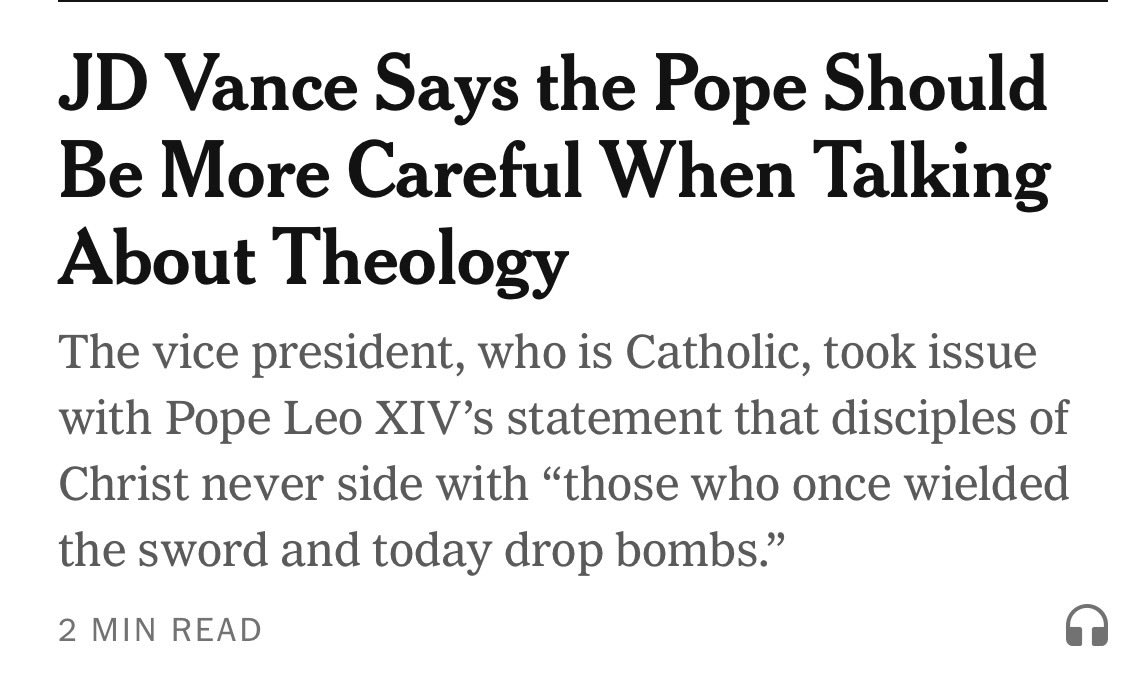
NYT headline for the ages
Lindsey Hilsum tweet media
English
138
1.9K
14.2K
368.7K
MC أُعيد تغريده
Sina Toossi
Sina Toossi@SinaToossi·
👇 This is an important window into how Iran is viewing the current diplomatic track. A post-Islamabad interview with Majid Shakeri, an advisor to Mohammad Bagher Ghalibaf, who led Iran’s delegation in Islamabad and headed talks with JD Vance. It offers a revealing look into how the Iranian side, especially Ghalibaf’s camp, is assessing the process. He says the first round was fundamentally about each side evaluating the other. But he highlights a core “problem” with the US delegation: “it neither has clear goals nor does it have the necessary mandate and the necessary ability for decision-making.” At the same time, he claims that for everything raised, “a solution truly existed.” His overall assessment of the round is telling: it was “not completely failed or completely won,” and no one expected that in a single round, a “result would immediately be created.” On escalation, he addresses Trump’s blockade threat. He says it is unclear whether it is a bluff or not. But in either case, he suggests it does not fundamentally alter Iran’s position, where the Strait of Hormuz remains its key leverage. More striking is his description of Iran’s economic posture. He argues Iran has long prepared for a blockade scenario. With imports reduced during the war, it now has more resources and liquidity, including proceeds from oil sold at sea. And this line stands out: “parallel to the war” the “the sale of Iranian oil no longer has any connection to the Dirham or any type of infrastructure susceptible to sanctions or American pressure.” If true, that is a significant shift given Iran’s previous dependence on UAE-linked financial channels. He adds that oil trade and currency exchange are now happening at the point of sale, for example in China. He also points to a broader logistical shift, saying Iran has diversified away from southern and western routes toward land-based and other alternatives, and that this transition is already complete for vital goods. On a wider geopolitical level, he argues a US blockade would “expand the game” by pulling in China more directly, ultimately to Iran’s benefit. He also notes that pressure on the Strait of Hormuz and shifts toward Red Sea export routes increase the leverage of actors like the Houthis. His closing assessment is blunt. He characterizes US decision-making currently as irrational and argues Washington is pursuing a path that raises costs for both sides while making the situation more entrenched and difficult to resolve.
English
8
37
83
11.8K
MC أُعيد تغريده
Hamidreza Azizi
Hamidreza Azizi@HamidRezaAz·
#Iran|ian Perspectives on the U.S. Naval Blockade Iranian debate over the U.S. naval blockade is far from unified. Instead, several competing analytical frameworks have emerged, each offering a different reading of Washington’s intent, the blockade’s feasibility, and its likely trajectory. 🔹One view sees the blockade as the start of a “semi-war” phase. 🔹After failing militarily and diplomatically, Washington is turning to a third tool, namely sustained maritime pressure aimed at cutting Iran’s exports, reshaping control over the Strait, and increasing leverage. 🔹In this reading, the blockade is not an endpoint but a transition, i.e., either a substitute for full-scale war or a stepping stone toward it. There is, however, a structural risk that this “escalation” may ultimately erode control for all actors involved. 🔸A second camp is more skeptical. It frames the blockade less as a coherent strategy and more as signaling, arguing the U.S. lacks the capacity or willingness to absorb the costs of enforcing such a high-risk operation long-term. 🔸From this perspective, the move is reactive, and a response to strategic deadlock. If Washington could impose outcomes militarily, it would not be experimenting with costly and globally disruptive alternatives. 🔹A third interpretation views the blockade primarily as coercive diplomacy. The objective is not sustained enforcement, but leverage, i.e., pressuring Iran into concessions while preserving a pathway for de-escalation under the cover of negotiations. 🔹Here, inconsistency in U.S. messaging – shifting from maximalist threats to narrower targeting – is seen as evidence of improvisation rather than a fully developed strategy. 🔸A more alarmed group, however, treats the blockade as a de facto act of war. In their view, it already violates the ceasefire and risks becoming normalized if left unanswered, gradually eroding Iran’s strategic position. 🔸This camp also situates the move within a broader pattern: using the ceasefire to constrain Iran while incrementally shifting realities on the ground, including in maritime and regional theaters. 🔹Another line of analysis expands the scope further, arguing that the blockade is not just about Iran, but about the global economy. 🔹In this view, by raising energy costs, Washington may be attempting to force major consumers – especially in Asia – to align against Tehran. 🔸Finally, the official state narratives emphasize resilience. 🔸They highlight Iran’s land-based trade routes, alternative corridors (e.g. via Pakistan), and stockpiled reserves, arguing the costs will fall more heavily on global markets than on Iran. ➡️Across these views, the common thread is uncertainty. The blockade is not a bounded measure, but a move that risks setting off parallel tracks of pressure and escalation without a defined endpoint.
English
0
62
206
39.8K
MC أُعيد تغريده
PaolaBC!82
PaolaBC!82@PBoscoloc·
@IRTruePromise Non ha detto quello che avete scritto . Togliete le virgolette . Dice che è inaccettabile l attacco di Trump al Papa . Non scrivete sciocchezze ,perdete di credibilità.
Italiano
8
20
527
43.6K
MC أُعيد تغريده
Amerikanets 📉
Amerikanets 📉@ripplebrain·
Here's a ship. Maybe it's carrying Iranian oil, maybe it's not even a tanker, maybe it visited an Iranian port, maybe it's from the UAE, maybe it passed the Iranian blockade, maybe it passed the American blockade, maybe it's just spoofing its location, maybe it's on its way to China, maybe it never left the strait, maybe everyone is lying about it, maybe it doesn't exist at all
English
17
32
551
12.9K
MC أُعيد تغريده
Drop Site
Drop Site@DropSiteNews·
There is no credible evidence that Iranian authorities “killed at least 42,000 innocent, completely unarmed, protestors” in the riots and protests two months ago. HRANA, a widely cited Iran rights monitor, reported on January 27 that protests had led to 42,324 arrests, not 42,000 killings. The group, which is funded in part by the U.S. government, published on February 23 a ~1,350-page report, it’s most comprehensive account, which documented 7,007 deaths overall — broken down as 6,488 adult protesters, 236 minors, 207 security force members, and 76 non-participants. Iranian authorities have noted 3,117 deaths because of the actions of armed rioters who infiltrated the protests, and about 3,000 arrests.
Rapid Response 47@RapidResponse47

English
488
3.1K
12.3K
567.2K
Phil Stewart
Phil Stewart@phildstewart·
NEW - A U.S. destroyer interdicted two oil tankers attempting to leave Iran on Tuesday and instructed them to turn around. The ships had left Chabahar port on the Gulf of Oman and were contacted via radio communication. w/@idreesali114
English
41
243
1.2K
503.3K
MC أُعيد تغريده
John
John@quesoliker·
@phildstewart @idreesali114 Awesome. I love when the price of everything rises because of the military I pay for. I get fucked twice!
English
32
6
239
12.7K
MC أُعيد تغريده
Francesca Albanese, UN Special Rapporteur oPt
One of the most gentle souls the genocide has brought into my life is Ahmed ShihabEldin, journalist of rare strength, integrity & compassion. US-born Kuwaiti citizen, Ahmed has been imprisoned by Kuwaiti authorities for his work since 3 March. Journalism is not a crime #FreeAhmed
Committee to Protect Journalists@pressfreedom

CPJ calls on Kuwaiti authorities to immediately and unconditionally release Kuwaiti-American journalist Ahmed Shihab-Eldin, detained under new security and fake news laws. Read more: cpj.org/2026/04/cpj-ca… #FreeAhmed #FreeAhmedEldin

English
96
5.1K
11.2K
229.4K
MC أُعيد تغريده
hieropomp
hieropomp@hieropomp·
@DougAMacgregor No, she hasn't suspended the Agreement. She suspended its automatic renewal. It continues to apply for a six-month notice period, to expire mid-October - unless the government reverses course or negotiates something new. Big deal, but not THAT big.
English
0
1
1
1K
MC أُعيد تغريده
Censored Humans
Censored Humans@CensoredHumans·
BREAKING : Trump & Netanyahu are exposed Journalist : How are you sure about Iran not building nukes? Joe Kent 🇺🇸: "America's 18 intelligence agencies, all agreed that Iran had no capacity to develop a nuclear bomb" 🤯 "But that Israel was telling us that they would be able to assemble ten bombs in two weeks" This man has got so much courage on his side. Respect for him 🫡
English
612
11.3K
39.5K
998.8K
MC أُعيد تغريده
Siavash 🇮🇷
Siavash 🇮🇷@Siavashgg·
I really don’t understand how you can miss the fact that JD Vance, Witkoff, and Kushner are practically Israel’s employees, while BB openly and proudly brags that the entire American negotiating team reports to him on a daily basis. I genuinely don’t know how you expect Iran to reach a deal with an administration that has completely capitulated to all of Israel’s demands, or how you can even imagine Israel accepting sanctions relief or any durable peace between Iran and the US. I often find myself agreeing with your analysis, but this one is completely out of touch, Trita, and I have no idea how you missed this. It is absolutely derogatory whether Iran wants a deal or not. A deal with a United States whose policy is occupied by another country’s national interests is not a serious proposition.
English
11
9
183
5.2K
Trita Parsi search. ..
Why the Iran ceasefire may have shifted the dynamics back in Trump's favor Diplomacy between Washington and Tehran has not yet unraveled, despite JD Vance’s theatrical departure from last week’s talks in Islamabad. Trump now signals that the two sides could reconvene within days in the Pakistani capital. Whether negotiators return to the table or continue their exchanges through quieter, remote channels before the ceasefire lapses, one reality appears to have shifted: Trump has clawed back a measure of momentum—and with it, leverage—over Iran, largely by virtue of the ceasefire. Here’s why. Trump entered this moment politically cornered and strategically constrained. Surging gasoline prices were inflicting acute domestic pain, eroding his standing at home. More critically, he faced a barren escalation ladder. Each conceivable move—strikes on Iran’s oil infrastructure, attacks on civilian targets, the seizure of Persian Gulf islands, or covert operations to capture enriched uranium—carried the near-certainty of forceful Iranian retaliation. Such responses would not merely match his escalation but compound it, deepening his economic exposure, amplifying political risk, and entangling him further in a perilous and unwinnable strategic bind. Nor could he simply extricate the United States from the conflict on his own terms. Absent an understanding with Tehran, Iran retained both the capacity and the incentive to continue targeting Israel and vulnerable U.S. assets across the Gulf. Trump needed Iran’s permission to get out of the war. The ceasefire, however, has subtly altered that equation. Trump may no longer need a formal nod from Tehran to step back. If he disengages now—without a comprehensive agreement—Iran will almost certainly maintain its grip over the Strait of Hormuz, a strategic setback for Washington. Yet Tehran is unlikely to resume direct military operations against U.S. targets in the Persian Gulf. To do so, in the absence of renewed American strikes, would cast Iran as the aggressor, inviting severe and potentially coordinated repercussions—not only from Washington but from wary global powers such as Russia and China. Moreover, the balance of needs has tilted. Iran now appears to need an agreement more than the United States does. Trump has already secured his central objective—the escape from a war he was ill-advised to begin—while Iran, despite accruing leverage through its command of the Strait, remains far from realizing its broader ambitions: meaningful sanctions relief, a definitive and enduring end to hostilities, and perhaps even the contours of a more stable, constructive relationship with Washington. Tehran’s decision to dispatch its largest, most senior, and most expansive delegation to Islamabad for direct talks with the American vice president reflected a striking confidence—that it occupied its strongest negotiating position vis-à-vis the United States since 1979. Yet to convert that moment of perceived ascendancy into little more than a cessation of U.S. bombardment would fall short of its aspirations. Even if Washington were to acquiesce to Iran’s control of the Strait, such an outcome would pale against the far more consequential gains Tehran believes are within reach. Instead, Iran needs to translate this leverage not only into a durable end to the war, but ideally, into a new peace: One that delivers sweeping sanctions relief and inaugurates a more stable, mutually defined economic and political relationship with Washington. Such an arrangement would serve as a bulwark against renewed conflict. The economic imperative is especially stark: sanctions relief is indispensable to reconstruct a country now burdened with damage running into the hundreds of billions of dollars. As I have argued before, sanctions relief is not merely an economic demand—it is a strategic necessity. Without it, Iran risks a condition of chronic erosion, a slow but steady weakening that would leave it exposed. That vulnerability, in turn, could invite further attacks. It was, after all, the misperception of Iranian weakness that helped open the window for initial strikes. But Trump does not, in any fundamental sense, require any of this. The United States can endure without a formal agreement with Iran and without the benefits of an economic relationship with Tehran. To be sure, a negotiated settlement would better serve long-term American interests: the nuclear constraints Trump seeks can only be credibly secured at the negotiating table. Abruptly abandoning diplomacy while leaving Iran in undisputed control of the Strait would also unsettle key regional allies. Yet these are strategic preferences, not immediate necessities. Trump’s calculus is far more transactional and far less patient. He can point to the damage already inflicted on Iran’s nuclear infrastructure and conventional forces, proclaim a hollow victory, and disengage. He has already emphasized that the United States no longer depends on Persian Gulf oil, insulating it from the direct economic consequences of Iran’s toll regime. As a result, the burden shifts outward: the Strait becomes a problem for European and Asian powers—countries that Trump has noted declined to rally to his side when he sought their help in prying the waterway from Tehran’s grip. The window now open offers Tehran a chance to convert battlefield leverage into lasting strategic gain. To let it close would mean forfeiting not just incremental progress, but the possibility of reshaping its economic and geopolitical position. By contrast, the United States, having already secured a tenuous exit ramp through the ceasefire, has less at stake in the short term. Walking away, therefore, is politically and strategically easier for Trump than for his Iranian counterparts. Both can live with diplomatic failure, but Tehran has more gains to lose. How Tehran chooses to navigate this narrowing corridor—whether it presses its advantage or overplays its hand—will be interesting to see.
English
234
268
1.1K
303.8K
MC أُعيد تغريده
Iran Consulate - Hyderabad
Iran Consulate - Hyderabad@IraninHyderabad·
The Strait of Hormuz isn’t social media. If someone blocks you, you can’t just block them back.
English
2.1K
21.4K
110.4K
2.8M