Andrew Brough

1.4K posts

Andrew Brough

Andrew Brough

@digital__zen

Solving digital innovation challenges in Web3, AI, and Blockchain. Striving for a better world.

United Kingdom انضم Nisan 2009
391 يتبع771 المتابعون
Andrew Brough أُعيد تغريده
IOTA
IOTA@iota·
➡️ IOTA Inside ⬅️ We are incredibly honoured to be a part of @TWINGlobalOrg, alongside other illustrious partners like @InstituteGC. Listen to what Tony Blair has to say about our shared vision of advancing global trade for everyone. #TWINFoundation
English
141
290
730
2.2M
Andrew Brough أُعيد تغريده
IOTA
IOTA@iota·
🌐 Our new website is live. A fresh look. A sharper focus. Your home for IOTA technology on the #IOTA network — explore the Move-based tech stack, EVM, and network infrastructure. More to come – this is just the beginning. 🔗 iota.org
English
53
217
651
66.9K
Andrew Brough
Andrew Brough@digital__zen·
@ThreshedThought @JustineRutland Encouraging to see Camden Road showing improvement. Today, I had a delicious lunch from repurposed surplus, made at Charlie’s Angels Kitchens. Love the concept. Highly recommend popping in.
English
0
0
5
51
Mike Martin MP 🔸
Mike Martin MP 🔸@ThreshedThought·
Fantastic walkabout with Cllr ⁦@JustineRutland⁩, Deputy Leader of TWBC, discussing ideas for the town centre.
Mike Martin MP 🔸 tweet media
English
4
5
30
7.9K
Nicole | Bloom 🌸
Nicole | Bloom 🌸@cheerful_nicole·
Breaking my rule of not releasing on a weekend, to keep my promise of 3 exciting releases for @bloomwalletio in June. #Ethereum support is here! Now I will be on a well needed holiday for the next week 🏕️🫶
English
9
16
106
2.5K
Andrew Brough أُعيد تغريده
Sebastiaan de With
Sebastiaan de With@sdw·
10 years ago, I got divorced, lost my job, so me and my buddy got on our motorcycles and rode North to the Alaskan Arctic until the road ran out.
Sebastiaan de With tweet media
English
1.1K
5K
101.9K
16.8M
Andrew Brough
Andrew Brough@digital__zen·
@albertogalca @Jonnotie @WHOOP @ouraring Sleep is definitely a tangible gain. Example is a smart feature with a 1hr window for the alarm that dynamically wakes you as soon as you have hit your sleep target. I can sacrifice an early morning for a better sleep without any intervention, but still wake-up on time.
English
0
0
1
35
Alberto
Alberto@albertogalca·
@digital__zen @Jonnotie @WHOOP @ouraring For example? What did you change from your routine? The feature I am most interested in is sleep tracking. Basically because it is the one with the most room for improvement I feel I have.
English
1
0
1
42
Jonno Riekwel 🇳🇱 🇳🇿
Back to weightlifting so I survive past my 40s. It’s been 2 years since last time at the gym.
Jonno Riekwel 🇳🇱 🇳🇿 tweet media
English
7
0
23
3.6K
Andrew Brough
Andrew Brough@digital__zen·
@Jonnotie @albertogalca @WHOOP @ouraring I think it’s worth it too. I use the data (which is accurate) to make measured changes to my routines that wouldn’t have been otherwise possible. The app UX definitely needs improvement though.
English
1
0
1
37
Andrew Brough
Andrew Brough@digital__zen·
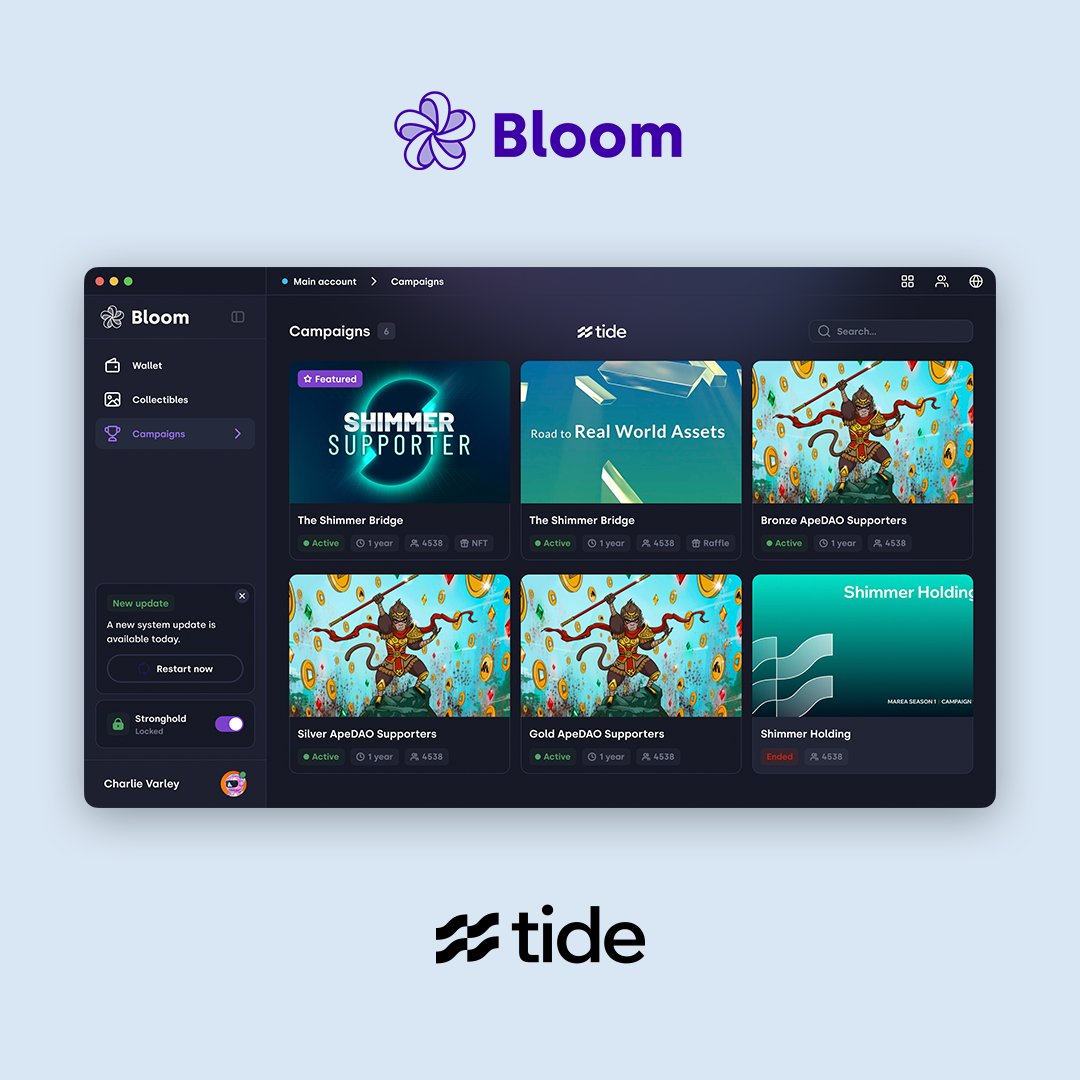
Lots of gamification similarities to the fun #tide integration on #shimmer. This has a nice account abstraction, so it's a super-fast sign up. If you want to try it use the link or input the code below. Code: QEHKHYJ grvt.io/exchange/sign-…
English
0
0
0
129
Andrew Brough
Andrew Brough@digital__zen·
Exploring GRVT ahead of the ZKSync airdrop! Pretty neat experience.
English
1
0
1
261
Andrew Brough
Andrew Brough@digital__zen·
Very happy to see that @figma released Typography Variables this week, taking client theming to next level. We've been busy finalising some cutting-edge design system work with the awesome @_Demia team leveraging these features.
GIF
English
0
0
2
224
kristin
kristin@half_seriousss·
But seriously. When is @figma dropping typographic variables and extended collections. Y’all said end of 2023. 👀
English
1
0
2
367
Jacob Miller
Jacob Miller@pwnies·
@half_seriousss @figma Those delays are on me, and I definitely apologize for it. We ended up having to do some under the hood work that caused some delays, but will definitely make the experience better in the long run. Keep your eyes peeled for a typographic vars related event soon however 👀
English
1
0
8
287
Andrew Brough
Andrew Brough@digital__zen·
Long term supporter of BTC fundamentals, so this is a great move by the team. Look forward to ongoing collaboration w/ Bloom <> Digital Zen.
English
0
1
14
611
Andrew Brough أُعيد تغريده
designerDAO
designerDAO@designerDAO_·
Web3 is so unserious! I mean, a JPG of a rock sells for 500K. As an industry that doesn't take itself too seriously, builders constantly struggle to grow past their niche. I talk to web3 design vet Andrew Brough in this month's episode. buff.ly/4bzZW2S
designerDAO tweet mediadesignerDAO tweet media
English
0
2
3
353
Andrew Brough
Andrew Brough@digital__zen·
@andrewchen Valuable insights that apply to so many areas of tech careers. Thanks for sharing.
English
0
0
1
72
andrew chen
andrew chen@andrewchen·
How to break into Silicon Valley. If you work in tech, you'll never regret spending 3-5 years in the Bay Area. ^^ this is advice I've been giving to people for years, and it's shaped by my own experience -- after all, I moved to the Bay Area in 2007 and it completely changed my life. How? - I met tons of incredible people, some of whom went on to create major products and found unicorn companies. Most are still building - I was introduced to many investors who today run some of the major VC firms and investor networks - learned so much! - made life long friends - formed fundamental aspects of my world view Because of the recent AI boom, I've been meeting a lot of folks who are new to SF. Many folks very intentionally want to build out their network and get rooted in the Bay Area, and to fully immerse themselves in tech. I learned so much in my first few years and wanted to pass along some of my lessons. In particular: - personal viral loop: Asking people for more people - ask for advice and listen - why it's helpful to "have a thing" - know what you bring to the table - find your cult - how blogging/tweeting is helpful - why I avoid conferences/events - building a network while you sleep I first moved to the Bay Area as a 25 year old nerd with a light resume and big tech dreams. I knew exactly 2 people, and that was it. But very intentionally, I wanted to build a strong professional network and to learn from people. The first thing I did was to be intentional and methodical about it, by asking the two people I knew to please sit down and suggest 5 to 10 people for me to meet -- an they did a number of email intros for me. The amazing thing about SF tech culture was that this worked! Although the intros were very light on context, people were willing to grab coffee and share what they were working on, and what they've learned over the last couple years. After each meeting, I would follow up with a few bullet points on what I learned from the conversation, and then ask for two or three more people to meet. This was like building my own personal viral loop, where every chat turned into a few more chats. For my first six months in the Bay Area, I ended up meeting 3 to 5 new people every day. I learned an incredible amount. I can confirm this is still possible, as others I know have done it in recent years. You might ask, what do you end up talking about? What value can you add as someone who's just moved to the area and is starting in tech? The answer is, you simply ask for advice. People move to the Bay Area from all over the world because they're incredibly passionate about what they're building. They love talking about that. and if you have something that you're passionate about too, and ask for advice, you were sure to get a lot of it. The culture in the SF tech community is very open and the intro culture makes it easy to chat with a variety of new people. For me, I was coming from Seattle, and I asked people about various mysteries of the tech industry I didn't understand as an outsider. Why were there so many consumer successes in the Bay Area but not elsewhere? How does angel investing and VC work? Why don't they build more houses/offices in the Peninsula? And so on. That said, the conversations are more productive when you have "a thing." What I mean by that is that all of these conversations and networking are more useful when you are starting a company, creating a new podcast, are working on a new project or book, or something else. When you have a directed goal in mind, then the conversations often are more valuable for all parties involved, because you were making yourself an expert in a particular area and your questions are more relevant. Otherwise you will surely encounter very busy people who simply refuse to "grab coffee" to "catch up" because it's a poor use of time. I encourage you to be on a quest of your own, and even better a particularly interesting quest, so that your conversations with people can be as productive as possible. In my case, I was very interested in the state of the art on growing users, metrics, network effects, and marketing. I asked everyone about this topic, and began to develop my own ideas that I would share freely. Eventually, it became clear that a few small communities orienting the PayPal mafia were the furthest along in their thinking. And that's how I ended up being exposed first to concepts like retention curves, DAU/MAU, viral loops, and so on. These ideas were interest to me, because my professional experience leading up to that point was actually an adtech. I had previously worked in online ads, with customers from WSJ, CBS, MySpace, etc, and had even gotten a patent filed on ad targeting (yes, US7747676B1). I had a superpower in my domain knowledge of CAC, A/B testing, funnel optimization, lead gen, etc, and began to merge all of this thinking with consumer products. In 2007 this was cutting edge at a time when product success was often measured by vanity metrics such as the total registrations for a product. This bit of specialized knowledge was what I brought to the table, and I talked about some of those learnings and ideas, and how they might apply to products. Sometimes I'd get intros to interesting people simply because of this expertise, which I appreciated. I sometimes joke that the Bay Area is ruled by cults. Back in 2007, there was a cult surrounding quantified self, which intersected with lots of folks kicking off Crossfit, keto, Soylent, and other health trends. There were people building robots and hardware. The PayPal mafia was a thing, but look a little closer, and there was a huge network of Stanford CS people and even Canadian mafias. And Burning Man people. In 2007, YCombinator was just getting off the ground, and I was lucky to meet many of the early folks back when they were living in North Beach on strictly ramen diets. Today, those cults have evolved but they still exist -- there is a huge advantage in finding one that suits you, or even better, starting one. Years later I joined Uber and had the idea one day there would be an ex-Uber cult. I think that's happened, and there's been countless founders, investors, and builders from that network. In the first year, I learned the importance of writing things down. The other thing I started to do right away was to write down everything that I was learning. I started a real/professional blog at the beginning of 2007 on the Blogger platform and initially, I got writers block because I was trying to come up with amazing and grandiose ideas that I would share with the world. My first month, I had 20 email subscribers, from friends and family I forcibly subscribed. But eventually, I created a more successful strategy for myself, where I would simply document what I was learning. It turned out that if one person told you a unique idea I would treat it like it was a secret (or at least, I would ask permission). It was often the case that a dozen people would talk about the same idea, and there was simply consensus memes floating around in the ether, and I focused on writing those down. I find that a lot of my blogging has been less about inventing brand new ideas, but instead simply collecting and expanding on the current tech zeitgeist. A few months in, Robert Scoble linked to my blog from his, and that helped a ton. (Thank you!) It was with this attitude that I began to write about viral loops, growth, hacking, measuring retention, and product/market fit, and all the other concepts that came to defined my writing. There is a virtuous cycle in talking to interesting people, writing down expanded versions of ideas that come up, thus being exposed, to more interesting people, and rinsing and repeating. This core loop helped power the growth of my professional network over the first few years. In later years, I added a dash of advising and investing. 15+ years later it's weird to think that accidentally developing a habit of writing and blocking would still be with me today. In fact, this habit is so powerful that I recommend doing it above and beyond almost any other professional "networking" activity. Of course today you might be making videos or podcasts instead of writing. Or if you're an engineer, publishing your code on GitHub. It's all the same concept. Putting your work into the world, whether it's text or video or code, and letting that engage the world. In this way, you are building your network while you sleep. People find you and your work and your ideas, so that you don't have to put in time for 1 million coffee meetings. And in particular, I find writing to be much more powerful than going to conferences. One thing you'll notice about the SF tech industry is that there are endless events and conferences. Whereas a secondary startup hub might have a major tech event once every month or two, SF has them every day. There's office warmings, product launches, new AI meetups, hangouts at Dolores, big splashy conferences, hackathons, and so on. There are endless varieties. However over time, I've found them to be less scalable than writing. They are fun, and it's much easier to have a one on one conversation than it is to create a content. When you really think through how much time you spend getting to a conference, all the time between sessions, and when you speak how few people are actually in the audience listening. Contrast to any kind of digital platform where you can write a blurb and 1000s of people see your ideas. Going back to my original assertion, I think it is hard to regret 3-5 years working in SF. Many people say it's not a great place to live -- and sometimes that seems true. Other folks hate the monoculture. However you can always move home, and when you do, you'll always be the person with Silicon Valley tech experience. And furthermore, the learning curve is so strong, particularly for startup founders, as is the network of capital and peers. It's a one of a kind place, and I highly recommend founders spend a few years even if they don't intend to stay in the long run.
English
86
192
1.8K
478.8K
Andrew Brough
Andrew Brough@digital__zen·
👨‍💻 Design Systems in #Web3: Making Sense of Beautiful Chaos. The good, bad and plain beast-level ugly around #designsystems, because as projects race to scale, many teams overlook critical foundations in favour of quick shipments. link.medium.com/FH4KzQbCFGb
Andrew Brough tweet media
English
0
1
2
139