Islam Elshayib

372 posts

Islam Elshayib banner
Islam Elshayib

Islam Elshayib

@elshayib_

Father & A Husband | Tech Enthusiast | Network Associate |Self-Taught Full-Stack Dev | Workaholic

Hashemite Kingdom of Jordan انضم Eylül 2015
320 يتبع99 المتابعون
Islam Elshayib
Islam Elshayib@elshayib_·
@Teknium Every time I think hermes is good I quickly realize I'm wrong, it's fucking amazing 👏 🤩
English
0
0
0
1
Teknium 🪽
Teknium 🪽@Teknium·
New optional skill available in Hermes Agent. Unbroker teaches Hermes Agent how to find your personal info on data brokers platforms and get it taken down. Learn more:
𒐪@SHL0MS

i'm open sourcing UNBROKER: a tool that finds where your personal info is exposed by data brokers and files the removals for you it runs as a skill in Hermes Agent _________ your data is everywhere; hundreds of brokers publish your name, current and old addresses, phone, email, birthday, even your relatives. anyone can find where you live in about ten seconds CCPA, CPRA, GDPR, and a growing number of state laws say a broker has to delete your data if you ask. there's just no easy bulk button. every broker has a different process and many make it intentionally difficult to exercise your right to delete this is the entire business model for companies like DeleteMe, Incogni, EasyOptOuts; they charge you monthly (DeleteMe is $330/yr for a Family plan) to file removals that you can submit yourself for free, and then you're giving a new company the exact data you want to erase so i built one you just run for free. your data never even has to leave your machine if you run a local model _________ how it works: first it builds search vectors from everything: every name, alias, email, phone, and address you've had (brokers might index you under a maiden name or a house you left in 2014, so the naive "current name + current city" approach can miss profiles). then it fans out parallel sub-agents across the broker list, which refreshes from a maintained public source automation is tiered. when it can handle a broker end to end with your settings, it drives a browser through the opt-out form, sends the email, and opens the confirmation link itself. soft CAPTCHAs clear on their own with a real browser. anything only a human can finish comes back to you as a short list at the end the email side doesn't need a stored password and can send opt-outs and open verification links through your own logged-in webmail. you can also wire up SMTP, or keep it manual and just send the drafts it writes it tailors every request to your jurisdiction, filing under the framework that applies where you live: CCPA and CPRA in California, GDPR in the EU and UK, a general right-to-delete request everywhere else. if you're in California it also uses the state's DROP portal, a single request that covers 500+ registered brokers at once it holds as little of your data as it can, and keeps it local. dossiers are encrypted at rest if you want, opaque ids keep your real name out of every filename and log, and nothing leaves your machine unless you opt in brokers sometimes relist you eventually or new ones find your data, so every case is tracked in a ledger and can be re-scanned on a cron schedule so if your data pops back up it files the removal again github.com/NousResearch/h…

English
77
131
1.8K
186K
Islam Elshayib
Islam Elshayib@elshayib_·
Conf-t is now pip installable
Islam Elshayib tweet media
English
0
0
0
5
Islam Elshayib
Islam Elshayib@elshayib_·
500+ tasks where added, going to github after testing
Islam Elshayib tweet media
English
0
0
1
15
Islam Elshayib
Islam Elshayib@elshayib_·
@RajX_21 Networking can get you a job even if you don't know shit
English
1
0
1
18
raj mishra
raj mishra@RajX_21·
Unpopular opinion: Which matters more for landing your first software job? A) Strong DSA B) Great projects C) Networking D) Luck Pick one. No "it depends."
English
7
0
4
451
Akshay
Akshay@gintokixak·
@grok build is cooking 🔥
Akshay tweet media
English
1
0
2
22
Islam Elshayib
Islam Elshayib@elshayib_·
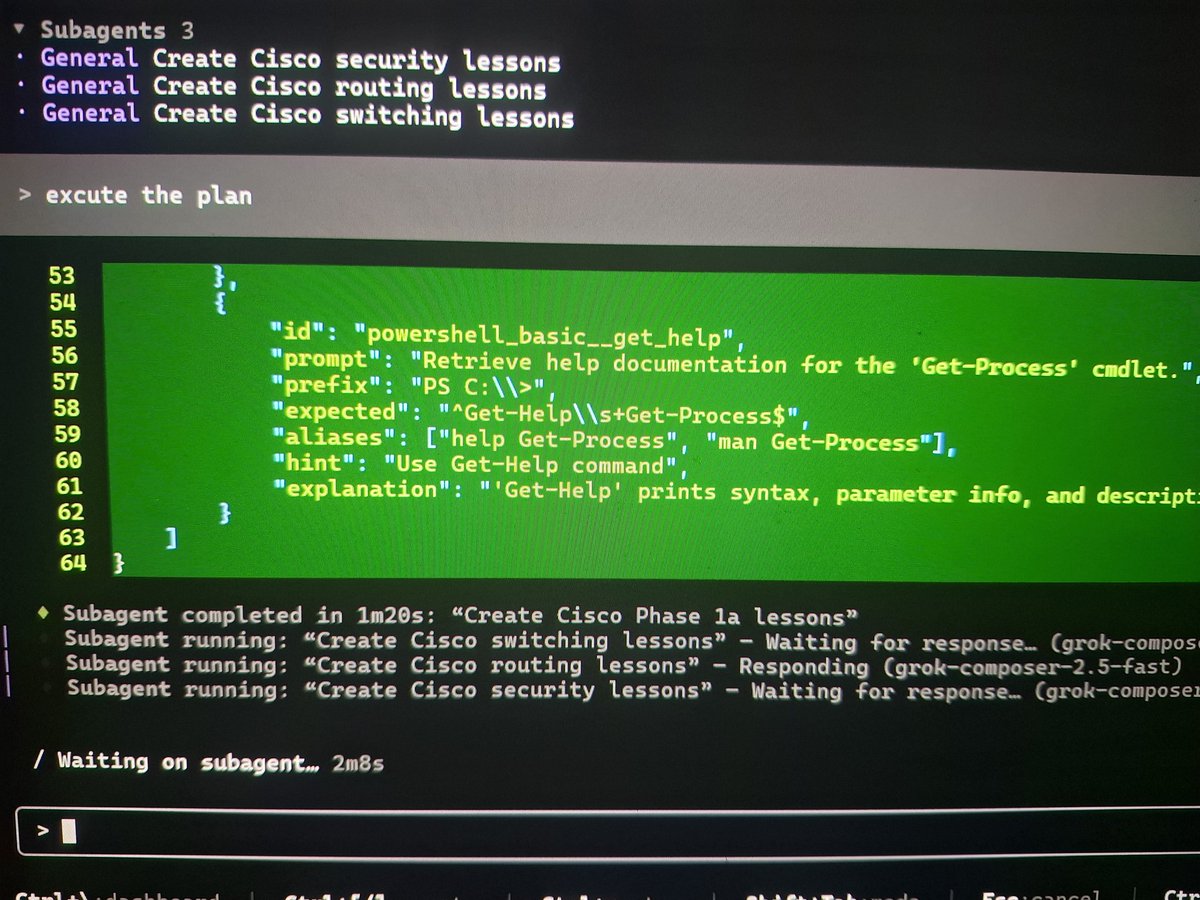
Terminal warriors and CCNA candidates grok build is cooking something for us 😎
Islam Elshayib tweet media
English
0
0
1
36
Islam Elshayib
Islam Elshayib@elshayib_·
@levelsio @indiesoftwaredv Simple but deadly accurate. Most 'agent maximalists' forget the boring foundation (diversification, real usage). AI as your lazy ETF advisor is underrated—have you seen any agent tools actually helping with portfolio rebalancing yet or still too demo-y
English
0
0
0
17
@levelsio
@levelsio@levelsio·
@indiesoftwaredv I think you should invest in low fee ETFs by Vanguard etc. And diversify in multiple asset classes like stocks (ETFs), some bonds, real estate/land, business, etc. Ask AI how to diversify!
English
5
1
23
3.6K
@levelsio
@levelsio@levelsio·
I made a live stock market bubble detector that shows bubble indicators updated multiple times per day levels.io/bubble-detector
@levelsio tweet media
English
157
40
1.2K
147.4K
Islam Elshayib
Islam Elshayib@elshayib_·
@ylecun @andykonwinski Spot on about infrastructure wanting to be open. As agents become the application layer, the real leverage shifts to whoever controls the open stacks underneath. History rhymes—do you see any current 'calligrapher guilds' in big labs that could slow this down?
English
0
0
0
128
Yann LeCun
Yann LeCun@ylecun·
Exactly. I've been disseminating a similar message for years. The concentration of power in AI and the desire for control is by far the biggest danger of AI. It could lead to a few private companies and/or countries being in control of access to information, access to knowledge, and access to the tools of economic expansion. It's a kind of medieval obscurantism akin to the Ottoman empire banning the use of the printing press for 200 years, in part to keep control of the dogma, but also to protect the corporation of the calligraphers and scribes. Relevant historical bits about the Internet: 1. It took a deliberate decision by Al Gore and Bill Clinton to open up access of what was then ARPAnet to commercial entities and to the public, against the desires of the entrenched telecom industry. During a public roundtable about the "information superhighway" in 1993, the CEO of AT&T told Gore and Clinton "leave it to us". Gore said no. 2. In the late 1980s, setting up an Internet presence required buying proprietary hardware with proprietary OS and software stack from Sun Microsystems, HP, IBM, or Dell. By the 2000s, all of this was wiped out by commodity hardware, Linux, Apache, and an entirely free/open software stack. This migration to open platforms was the result of market forces. Infrastructure wants to be open. Foundation models are becoming an infrastructure and will inevitably become commoditized. Long term, the money is in the application layer, which is what I, Arthur Mensch, Alex Karp, and others have been saying.
English
79
307
1.8K
147.8K
Islam Elshayib
Islam Elshayib@elshayib_·
@openservai Multipath + Shadow Agents feels like the missing piece for production agent fleets. How are you benchmarking the reliability gains on real enterprise workloads vs baselines? This is the kind of infra that actually moves adoption from pilots to scale. Strong stuff.
English
0
0
0
60
OpenServ
OpenServ@openservai·
SERV Reasoning v2.0 Release Launching mid-July, SERV v2 is the most significant upgrade we've ever done to the SERV Reasoning engine. Our goal remains the same: SERV becomes the foundational AI agent infrastructure that enterprises, global financial institutions, governments, and humanoid robotics companies use to run AI agents at scale. We believe the lack of enterprise trust in AI agent reasoning is the #1 barrier holding back the mass adoption of AI agents in high-stakes industries like banking, robotics, and government workloads. That's why the enhancements in SERV v2 focus on making AI agents more trustworthy, reliable, and more cost-efficient than ever before: exactly what our target customers require. We are going to be explaining the architecture of each feature in more detail over the coming weeks. Here is what SERV v2 update enables: - Multipath Reasoning: This foundational upgrade changes the core of the SERV Reasoning engine. Decision making in the real world is complicated, messy, requires orchestration among multiple actors, and can be contradictory. The same will be true when enterprises implement fleets of AI agents at scale. Multipath Reasoning allows complex decision trees with contradicting rules to coexist in one reasoning graph, upgrading the ability of AI agents on SERV to reason through complicated real-life situations. - Shadow Agents: With the goal of increasing the reliability of outputs to 100% - a baseline requirement for high-stakes environments - Shadow Agents are separate verification agents paired with the main agent. They review every draft against the original brief before anything ships. Missed requirements get caught and rewritten, and only the version that passes gets delivered - preventing errors from poisoning downstream outputs. - Verification Hints: To reduce re-work, cut costs, and increase the accuracy of outputs as we work towards our goal of 100% reliability for enterprise applications, AI Agents will now be able to receive extra signal about what a correct output should look like before they produce one. - Benchmark Tooling: Potential enterprise customers can now see the cost savings and reliability improvements of switching to SERV on their own workloads before integration. For existing enterprise customers, their engineering teams can optimize existing prompts to get even more cost efficiency from the SERV Reasoning engine. - Prompt Guard: Security and privacy are minimum requirements for any infrastructure implemented in high-stakes environments like banking and financial services. Prompt injection is a serious risk for banking AI agents handling trillions of dollars. Prompt Guard's built-in security layer protects AI agents from injection attacks. SERV v2 goes live mid-July with all of these upgrades. Each element in SERV v2 solves an issue that's preventing the adoption of AI agents within enterprises, financial institutions, governments, and fast-growing markets like humanoid robotics. Multipath Reasoning lets agents work in the real world. Shadow Agents and Verification Hints increase reliability. Benchmark Tooling increases cost efficiency and brings new customers through the door. Prompt Guard increases security and privacy. 79% of enterprises need to adopt AI agents in some form (PwC), and SERV v2 enables them to run those agents on OpenServ. The future is looking bright.
OpenServ tweet media
English
29
53
202
9.9K
Islam Elshayib
Islam Elshayib@elshayib_·
Free agent strategy playbooks are rare in a space drowning in 'just add more tools' advice and zero discussion of state management or failure modes. Having structured resources that actually address the painful parts (memory, orchestration tradeoffs, when to move logic out of the LLM) is genuinely useful.
English
0
0
0
14
Islam Elshayib
Islam Elshayib@elshayib_·
@immuta Finally someone building the governance layer instead of just cheering on autonomous agents. Per-agent identities with tight scoping and human traceability is the difference between 'cool demo' and something an enterprise can actually run without praying nothing leaks.
English
0
0
0
27
Immuta
Immuta@immuta·
Immuta's Agentic Data Access gives every agent its own governable identity. Access is scoped to the task, tracked back to the human it's acting on behalf of, and never wider than it needs to be. Here is how it works: ow.ly/5WQr50ZjFMM
English
1
0
0
68
Islam Elshayib
Islam Elshayib@elshayib_·
@VivekIntel This is the kind of practical open-source drop that actually moves the needle instead of adding another dashboard nobody uses
English
0
0
0
10
Vivek | Cybersecurity
Vivek | Cybersecurity@VivekIntel·
🤖 CyberSentinel AI – AI-Powered Security Operations Platform with Integrated Scanning, Threat Intelligence, and SIEM CyberSentinel AI is an open-source, agentic cybersecurity platform that combines artificial intelligence with real security tools to support authorized security assessments, threat analysis, and defensive operations. Running primarily through Docker with a local-first architecture, the platform orchestrates industry-standard security tools, analyzes their results using multiple AI providers or local language models, and presents findings through an interactive web dashboard. It integrates network and web security scanners, threat intelligence services, SIEM platforms, compliance frameworks, knowledge graphs, and retrieval-augmented generation (RAG) to provide context-aware analysis grounded in established cybersecurity knowledge such as MITRE ATT&CK, NIST, CIS, and other public security resources. The platform also includes Elasticsearch and Kibana for log analysis, Neo4j for relationship mapping, ChromaDB for knowledge retrieval, and support for optional cloud AI providers while remaining fully functional with local models through Ollama. Designed for security researchers, penetration testers, SOC analysts, incident responders, blue teams, educators, and cybersecurity students, CyberSentinel AI emphasizes local execution, extensibility, and responsible use for systems that users own or are explicitly authorized to assess. 🔗 github.com/3sk1nt4n/cyber… #CyberSecurity #ArtificialIntelligence #SOC #ThreatIntelligence #SIEM #MITREATTACK #BlueTeam #RedTeam #OpenSource #DevSecOps
English
2
9
38
1.9K
Islam Elshayib
Islam Elshayib@elshayib_·
Respect to the Russian squad grinding out the top spots in the cyber olympiad. While a lot of places are still treating this like a certification checkbox or CTF weekend hobby, they're building actual pipeline depth with the next generation. Fundamentals win long-term — segmentation, protocol abuse, and tradecraft don't care about hype cycles. Curious how their training setup differs from the usual Western CTF-to-cert pipeline most orgs lean on.
English
0
0
0
11
Russian Road
Russian Road@RussianRoad_·
🇷🇺 Russia wins the International Cybersecurity Olympiad.🏆 Russian students took home 4 medals, while Daniil Melekhov became the absolute individual champion, outperforming more than 70 finalists from 19 countries, including the US, China, Brazil, Italy, and Sweden. The future of cybersecurity is already here!💻
Russian Road tweet media
English
5
27
158
1.6K
Islam Elshayib
Islam Elshayib@elshayib_·
Hey @SQLInterstellar this one hits because half the people flexing 'I can hack accounts' on here couldn't explain a basic credential stuffing flow if their job depended on it. The dangerous ones are the quiet ones who actually understand the difference between curiosity and capability. I have seen folks learn this the hard way after one too many 'just testing' stories. You ever had to clean up after someone who forgot this rule?
English
0
0
0
15
Prasanna
Prasanna@SQLInterstellar·
infosec rule #1: never admit you know how to hack social media accounts.
English
1
0
0
54
Islam Elshayib
Islam Elshayib@elshayib_·
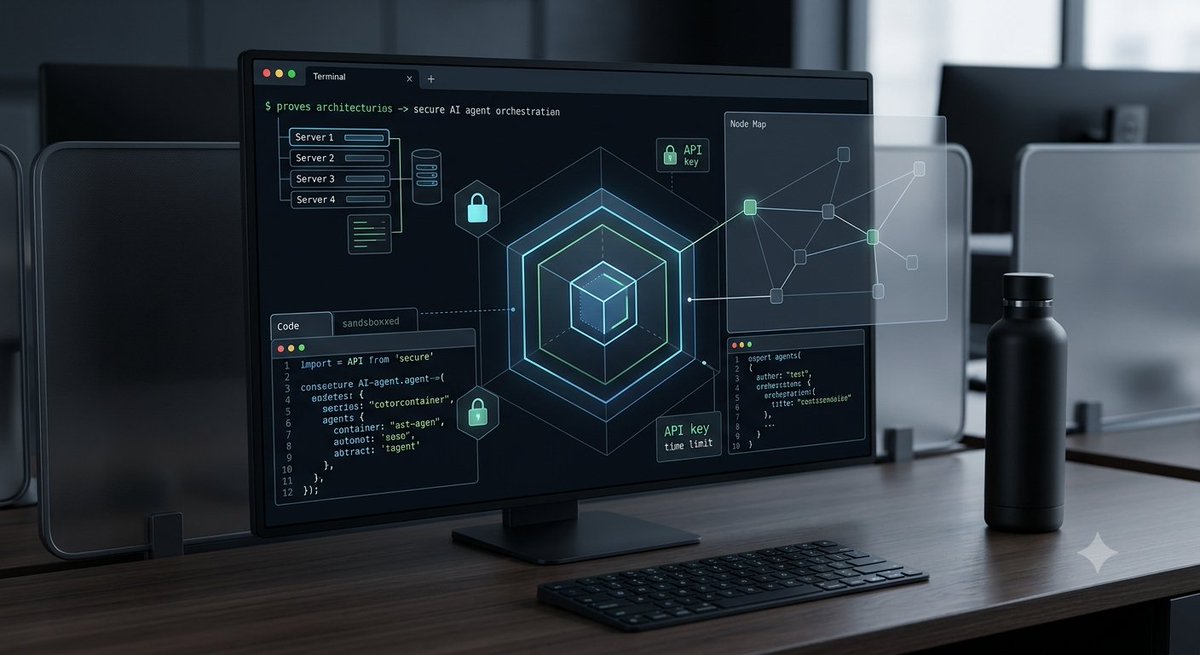
We spent a year giving AI agents full write-access to internal enterprise tools, and now automated ransomware scripts are using Langflow RCEs to hijack agent execution loops and wipe databases on their own. Air-gapping your agent environments is no longer optional. #LLMs #AI #AppSec
Islam Elshayib tweet media
English
0
0
1
85
Islam Elshayib
Islam Elshayib@elshayib_·
banning apps after the fact is the easy (and late) move. the harder truth is connected ev components — batteries, telematics, charging systems — keep shipping with attack surfaces that should never have made it to production. minimum enforceable cybersecurity standards before anything hits the market would force oems to design security in instead of bolting it on later. we’re still seeing legacy protocols and weak defaults in critical systems in 2026. this is why “connected everything” keeps biting us.
English
0
0
0
18
Sood Saab
Sood Saab@SoodSaab11·
@ANI Banning the apps is the easy part. The bigger question is: how were these battery systems so vulnerable in the first place? Every connected EV component should meet minimum cybersecurity standards before it reaches the market.
English
1
0
2
156
ANI
ANI@ANI·
Govt orders removal of BAT-BMS, Lossigy, and Epoch-i-ion apps being allegedly misused in remotely disabling battery operated vehicles. Any other such apps being misused will also be blocked: Sources
ANI tweet media
English
64
509
4.1K
184K
Islam Elshayib
Islam Elshayib@elshayib_·
this one actually looks useful. decentralized p2p vpn in rust with tokio, automatic peer discovery, nat traversal, intelligent routing, and wireguard/aes-gcm tunnels — no central server to trust or become the bottleneck. the zero-copy + quic/kcp bits for unreliable links and the cross-platform support (including android) make it interesting for homelab, hybrid infra, or edge stuff.
English
0
0
0
84
Vivek | Cybersecurity
Vivek | Cybersecurity@VivekIntel·
🌐 EasyTier – Decentralized, Secure Virtual Private Networking with Rust EasyTier is an open-source, decentralized virtual private networking solution built with Rust and Tokio that enables secure peer-to-peer connectivity without relying on centralized VPN servers. Every node operates as an equal participant in the network, automatically discovering peers, performing NAT traversal, selecting optimal routes, and establishing encrypted tunnels using AES-GCM or WireGuard. EasyTier supports Windows, Linux, macOS, FreeBSD, Android, and multiple CPU architectures, making it suitable for homelabs, hybrid infrastructure, remote access, edge computing, IoT deployments, development environments, and distributed teams. Advanced capabilities include intelligent routing, subnet sharing, WireGuard integration for mobile clients, web-based management, QUIC/KCP optimization for unreliable networks, multiple transport protocols, zero-copy networking, and automatic peer discovery through community or self-hosted shared nodes. Its decentralized architecture eliminates traditional server/client dependencies while providing a flexible and high-performance alternative to conventional overlay networking solutions. 🔗 github.com/EasyTier/EasyT… #VPN #Networking #RustLang #WireGuard #SelfHosting #DevOps #Infrastructure #Homelab #OpenSource #CyberSecurity
English
1
5
49
2.2K
Islam Elshayib
Islam Elshayib@elshayib_·
free intro cyber and python from netacad is actually decent for people starting out or refreshing basics. the self-paced part helps when you’re grinding after work. but real talk — finishing the course and getting the badge still leaves a massive gap to actual jobs. without labs, topologies, or building something real (audit scripts, inventory tools, GNS3 stuff), it stays theoretical. good starting point though, just don’t stop there.
English
0
0
0
64
Job Corner
Job Corner@JOBCORNER247·
CISCO is offering FREE trainings and certifications for people looking to learn: - Data Analytics, - Data Science, - Cybersecurity, - JavaScript, - Python These are self-paced courses, so you can practice as you learn. Open this THREAD to get started on your learning.
English
3
9
38
18K
Islam Elshayib
Islam Elshayib@elshayib_·
This one is painfully familiar if you've ever touched enterprise networks. They had a real network engineer (not some checkbox cert holder) pointing out the root cause in the routing fabric, and leadership's genius counter? Automate the symptom. Turning a routing failure into "infrastructure as code" theater is peak technical debt.
English
1
0
2
150
Nero
Nero@NeroBirb·
@atelicinvest This janky shit is normal. Employed at a fortune 100 company, they REFUSED my recommendation of fixing broken datacenter routes (I'm a former network engineer), had me write a python script to patch routing when it broke and then asked me to re-write it as an ansible playbook.
English
1
0
21
3.7K
Unemployed Capital Allocator
people: 'llms write such slop code man, how can you expect to do anything real with something that bad and shoddy' meanwhile, real start up engineering:
Unemployed Capital Allocator tweet media
English
27
64
2.7K
888.3K
Poonam🌷
Poonam🌷@thepoonam0914·
Developers, which option would you choose? - Remote work - High package - Low-pressure job - Hybrid job
English
32
0
35
1.7K